

1 Michelin Key · Forbes Recommended
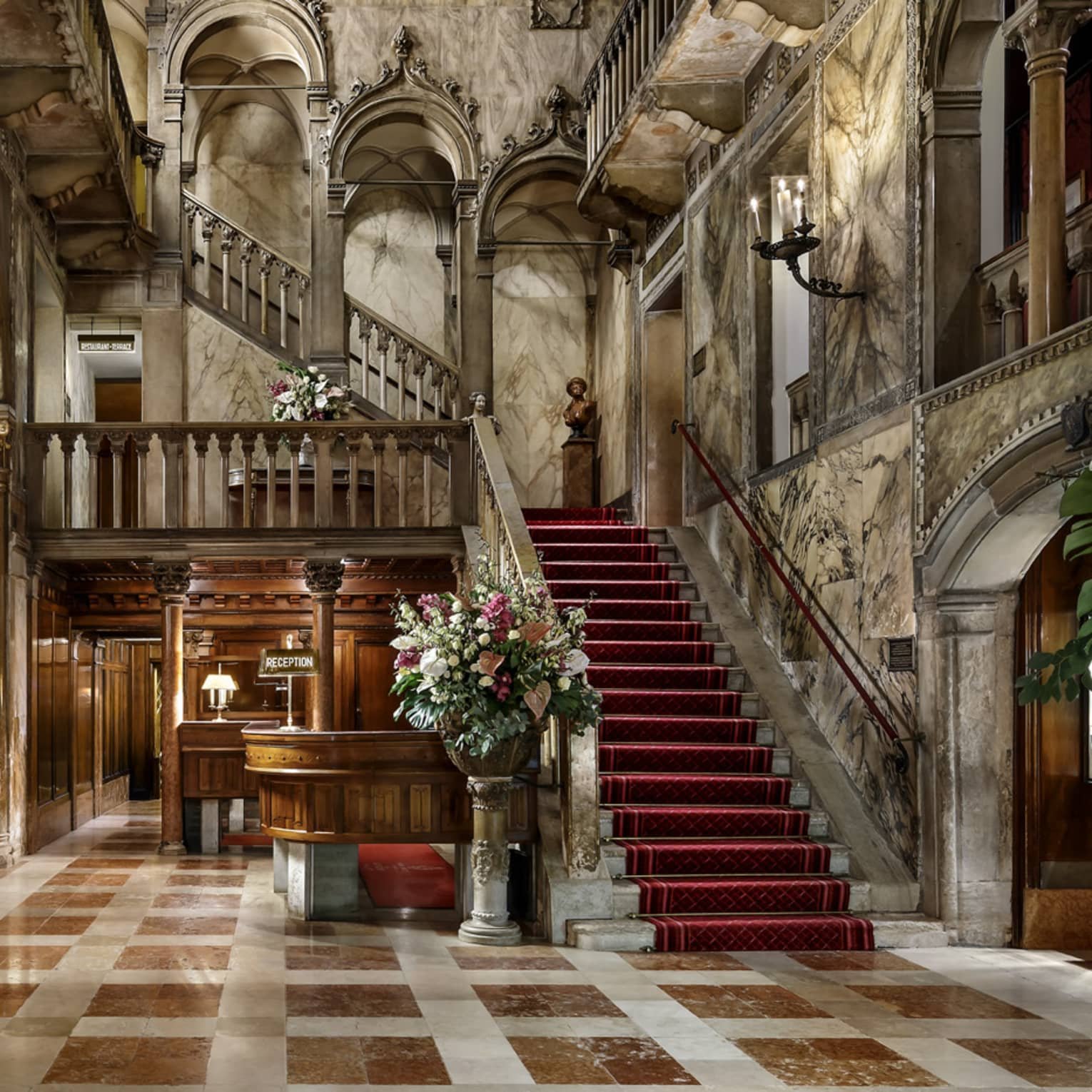
On the Riva degli Schiavoni, a stone's throw from St. Mark's Square, Hotel Metropole Venice occupies a building whose layers of history, convent, orphanage, Vivaldi's music school, wartime hospital, now inform one of Venice's most densely curated stays. Sixty-seven rooms house the Beggiato family's personal collections of crucifixes, Belle Époque evening bags, and Art Deco featherwork, while the Oriental Bar sits in the original chapel where Vivaldi once taught. Rates from around $485 per night.

Pearl is the En Primeur Club membership app, where members save venues, book tables and use the concierge.
A Building That Has Been Many Things, and Remembers All of Them
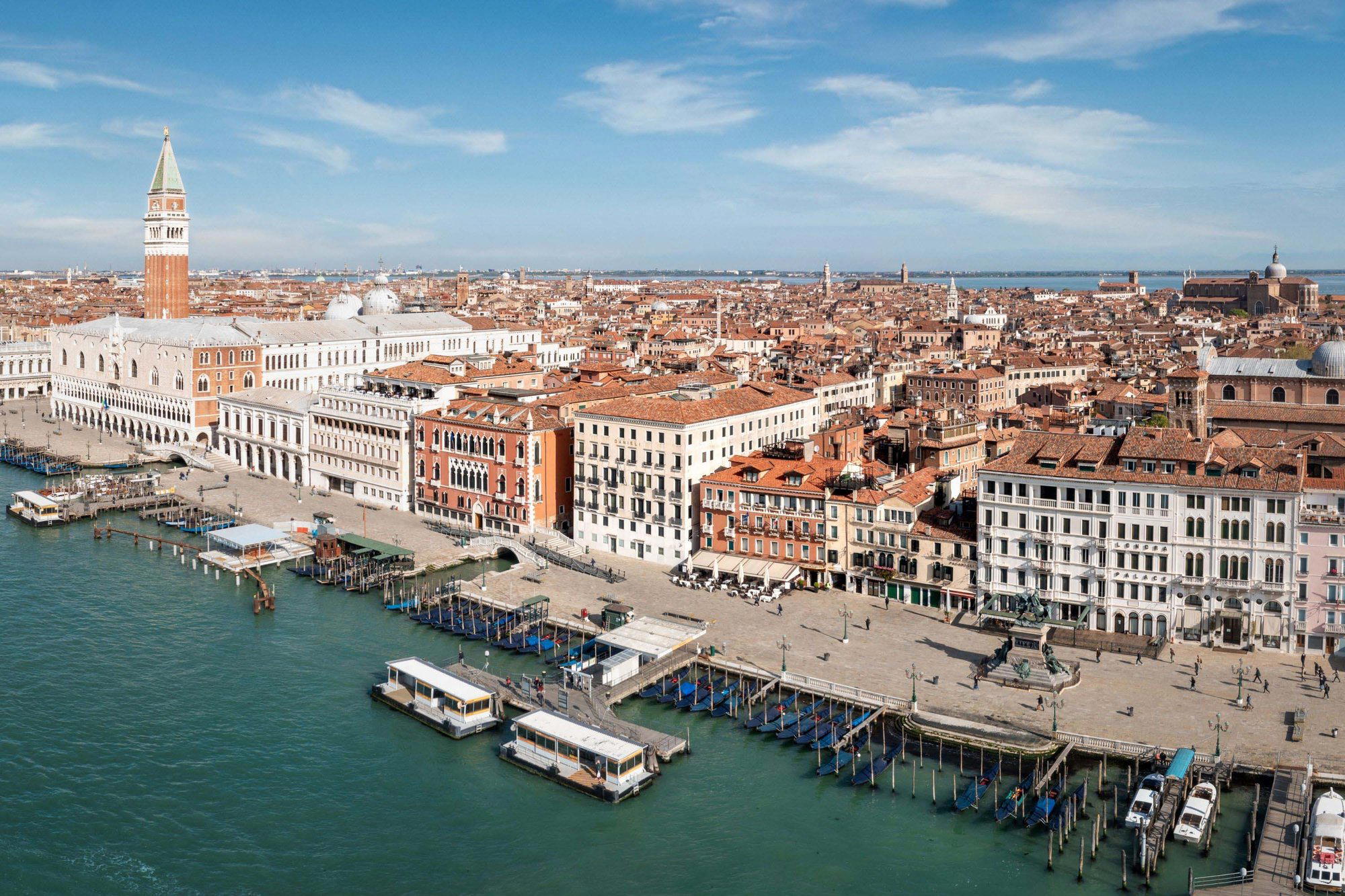
The approach along the Riva degli Schiavoni already signals that Venice's relationship with grandeur is spatial as much as architectural. The promenade opens toward the lagoon, with St. Mark's Basin on one side and a continuous facade of palazzi, hotels, and residential buildings on the other. Hotel Metropole sits within this sequence at Riva degli Schiavoni 4149, and arriving here is a different experience from arriving at a purpose-built luxury hotel: the building's compressed history, convent, orphanage, music school, wartime hospital, is legible in the way the rooms accumulate rather than expand, the way collections appear in corridors rather than lobbies, the way scent (black pepper, specifically, emanating through the Belle Époque parlor) functions as a threshold before the eye has time to adjust.
Among Venice's Riva degli Schiavoni properties, the Metropole occupies a particular niche. The Aman Venice and Hotel Gritti Palace operate in the register of grand palazzo restoration, where the architecture itself is the primary statement. The Cipriani, A Belmond Hotel, Venice separates itself geographically on Giudecca. The Metropole instead occupies a more personal register: family-owned since the Beggiato acquisition, it is curated around the owners' private collecting interests rather than a branded design language. That distinction is consequential. The collections of Belle Époque evening bags, Art Deco hand-painted feathers, crucifixes (the largest Italian collection, according to the hotel's own documentation), corkscrews, and nutcrackers are not decorative conceits but a private sensibility made semi-public. Each floor carries its own collection in the corridor, meaning the hotel reads differently depending on where you sleep.
The Oriental Bar: Where Vivaldi Taught and Teatime Now Runs
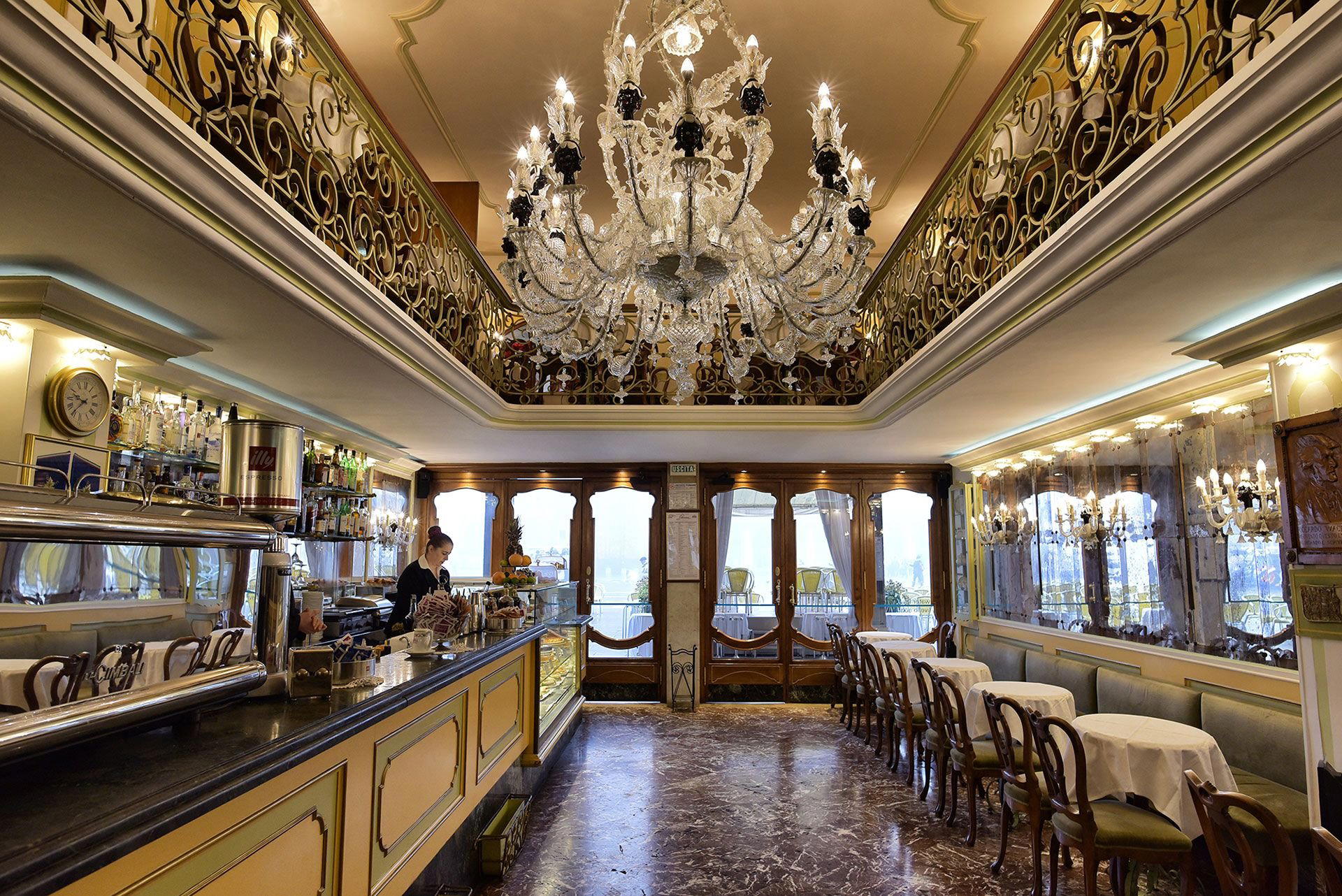
The editorial angle that keeps recurring in serious writing about the Metropole is the Oriental Bar, and the reason is not nostalgia, it is that the space performs a genuine function in how global culinary and cultural traditions get absorbed into Venetian hospitality. Venice's historic position as the western terminus of the Silk Road means that the city's relationship with the East is structural, not decorative; spice markets, Byzantine iconography, and Oriental motifs are part of the urban fabric, not imports. The Oriental Bar formalizes this by occupying the original chapel where Antonio Vivaldi taught music to the orphans housed here, and channeling the Silk Road trade tradition through a teatime program built on sourcing and preparation knowledge from across Asia and the Middle East.
The tea education offered here is specific enough to function as a short course: green tea brewed for three to four minutes, leading paired with fish; black tea steeped at 90 degrees for five minutes, served alongside caprino cheese and beef seasoned with Italian herbs. These are not arbitrary pairings, they reflect a broader logic of bitter and astringent compounds interacting with fat and protein, applied across two culinary traditions simultaneously. Soft music and candlelight complete the room's sensory register, but the substance is the pairing intelligence, which places this teatime program in a different category from the Europeanized tea service found at most luxury hotels.
The Met Restaurant and Lagoon Views
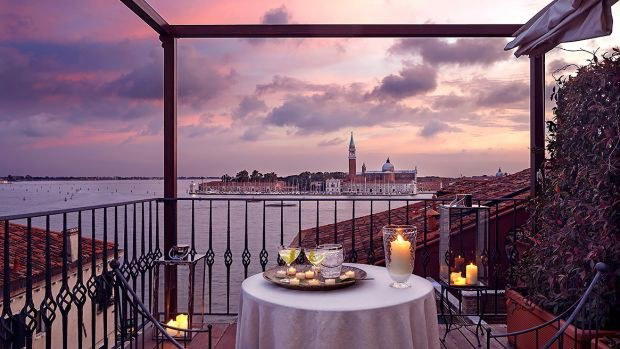
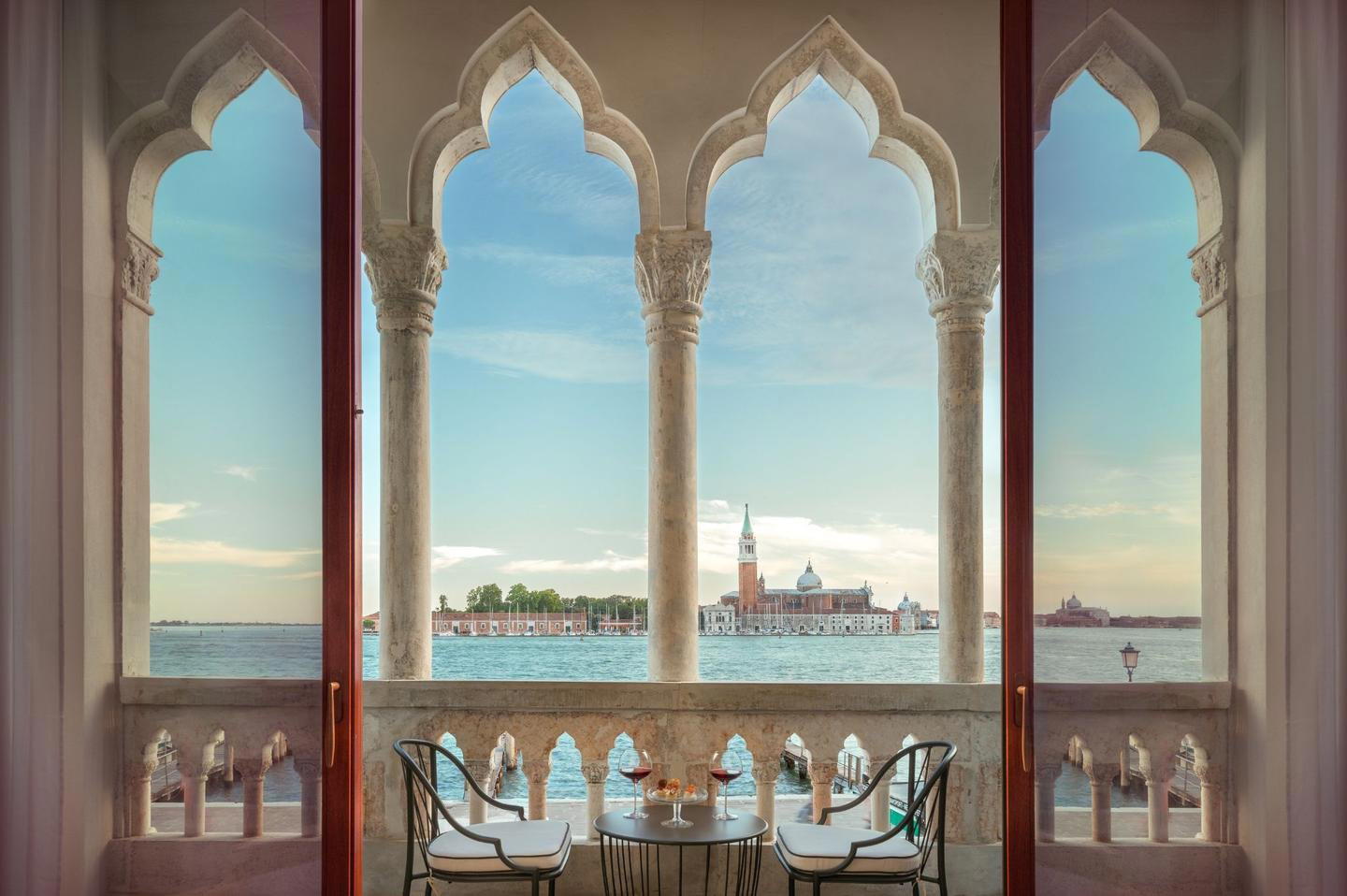
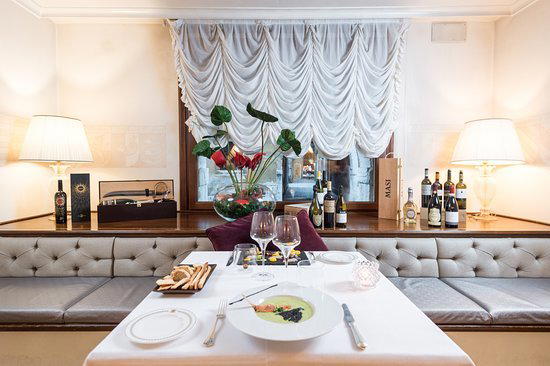
Metropole's dining program anchors on the Met Restaurant, which commands what inspectors have noted as one of the stronger lagoon views in Venice relative to St. Mark's Square. In a city where dining rooms are often oriented inward, around courtyards, toward canals rather than open water, a lagoon-facing outlook at this proximity to the Piazza changes the character of a meal in ways that are more practical than romantic: you are reading the light, the boat traffic, the tide, the weather. That is a distinctly Venetian experience, and the Met trades on it without requiring the restaurant to carry the full weight of the hotel's identity.
Nearby, Harry's Bar on the Piazza San Marco docks sits to the right of the Metropole's entrance, historically significant as the birthplace of the Bellini cocktail, and a useful orientation point for guests arriving via the Alilaguna water transport from Venice Marco Polo Airport. The Alilaguna stop is walking distance from the hotel, meaning luggage can roll directly from the boat into the lobby, which is a logistical advantage that anyone who has navigated Venice's bridge-and-bridge relationship with wheeled bags will appreciate.
Sixty-Seven Rooms, Multiple Worlds
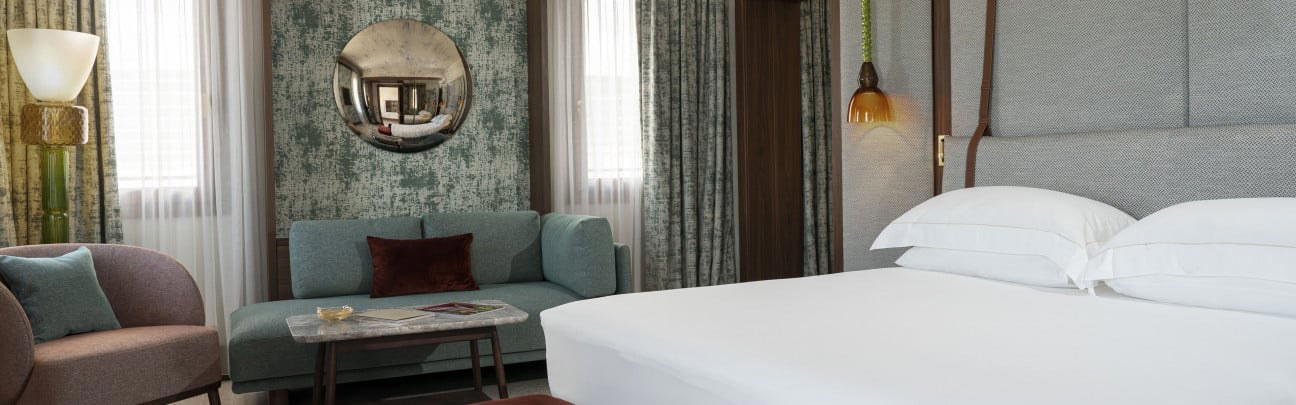
With 67 rooms, the Metropole sits in a scale range that allows for genuine individual character without becoming a boutique property in the stripped-back sense. Room categories split between lagoon views, canal views, and garden orientations, with a roof terrace suite for those for whom the view is the non-negotiable. Interiors follow an Old World European idiom, drapes, wallpaper, bedspread, and table linens calibrated to match within each suite, with Gilchrist and Soames bath amenities in the bathrooms. The effect is of a place that has decided what it is and executes it consistently, rather than gesturing toward multiple aesthetic registers.
For comparison within Venice's mid-to-upper tier of independent properties, Ca' di Dio and Londra Palace Venezia occupy similar promenade positions with different design philosophies, while Il Palazzo Experimental and Nolinski Venezia angle toward a more contemporary hospitality sensibility. Corte di Gabriela operates at a smaller scale entirely. The Metropole's point of difference among these is not price or location but the specificity of its curatorial personality, which rewards guests who engage with the collections and spaces rather than treating the hotel as a base of operations.
February Carnival and the Spa Dimension
Venice's February carnival is the calendar event that most transforms the city's public character, and the Metropole runs a themed party each year during the period, a programming decision that aligns the hotel with the city's ritual calendar rather than positioning itself apart from it. Rates from approximately $485 per night apply in the broader pricing context, though carnival season commands a premium consistent with city-wide patterns. A spa and wellness center rounds out the amenity set, placing the property within a tier of Venetian hotels where the in-house offering extends beyond the room.
For readers building a broader Italian itinerary, the Metropole's register of family-owned character and accumulated history has parallels elsewhere in the country. Castello di Reschio in Lisciano Niccone and Rosewood Castiglion Del Bosco in Montalcino offer estate-scale alternatives in Umbria and Tuscany. For coastal contrasts, Borgo Santandrea on the Amalfi Coast and Il San Pietro di Positano sit in a similarly specific, design-led category. Those drawn to city hotels with strong cultural programming might also consider Four Seasons Hotel Firenze in Florence or Portrait Milano for northern Italian reference points. Further afield, Casa Maria Luigia in Modena represents the food-forward country house model, while Bulgari Hotel Roma and Passalacqua in Moltrasio cover Rome and the Lakes respectively. See our full Venice guide for the broader dining and hospitality picture across the city's neighbourhoods. For international comparisons in the family-curated luxury category, Borgo Egnazia in Savelletri di Fasano, JK Place Capri, Corte della Maestà in Civita di Bagnoregio, and Il Pellicano in Porto Ercole each operate in adjacent registers of Italy's privately held, character-driven hospitality. Outside Italy, The Fifth Avenue Hotel in New York City, Aman New York, and Amangiri in Canyon Point offer reference points across different scales of the same curator-led approach to luxury hospitality.
Category Peers
Comparable venues nearby, for context on price, style, and recognition.
| Venue | Cuisine | Price | Awards | Notes |
|---|---|---|---|---|
| Hotel Metropole VeniceThis venue (the venue you are viewing) | Family-run historic boutique hotel with eclectic antique decor | Not listed | 1 Michelin Key · Forbes Recommended | Not listed |
| Palazzo Venart Luxury Hotel | Restored 16th-century Venetian palazzo blending historic grandeur with modern luxury | Not listed | 1 Michelin Key · Virtuoso Luxury Hotel Partner | Santa Croce |
| Violino D'Oro | Venetian boutique in historic 1700 building renovated 2023 | $500–750 | 1 Michelin Key · Mr & Mrs Smith Seal of Approval | San Marco |
| Ca’ di Dio | Historic Venetian palace reimagined with 21st-century luxury, blending austere architectural elements with refined contemporary design and locally sourced materials. | $750–1,000 | 1 Michelin Key · Mr & Mrs Smith Seal of Approval | Castello |
| Londra Palace Venezia | Historic Venetian palace blending tradition with modern touches | Not listed | 1 Michelin Key · Relais Chateaux Award | Castello |
| Palazzo Maria Formosa | Historic Venetian palazzo seamlessly blending centuries-old architecture with contemporary luxury and refined minimalism. | $750–1,000 | 1 Michelin Key · La Liste Top Hotels | Castello |
Recognition history
Dated appearances from independent guides and award organizations, with the underlying list record or original source where available.
Michelin 1 Key
Michelin
Forbes Recommended
Forbes
Full recognition history (4 entries)
Forbes Recommended
Forbes
Michelin 1 Key
Michelin
Continue exploring
More in Venice
Hotels in Venice
All hotels in Venice →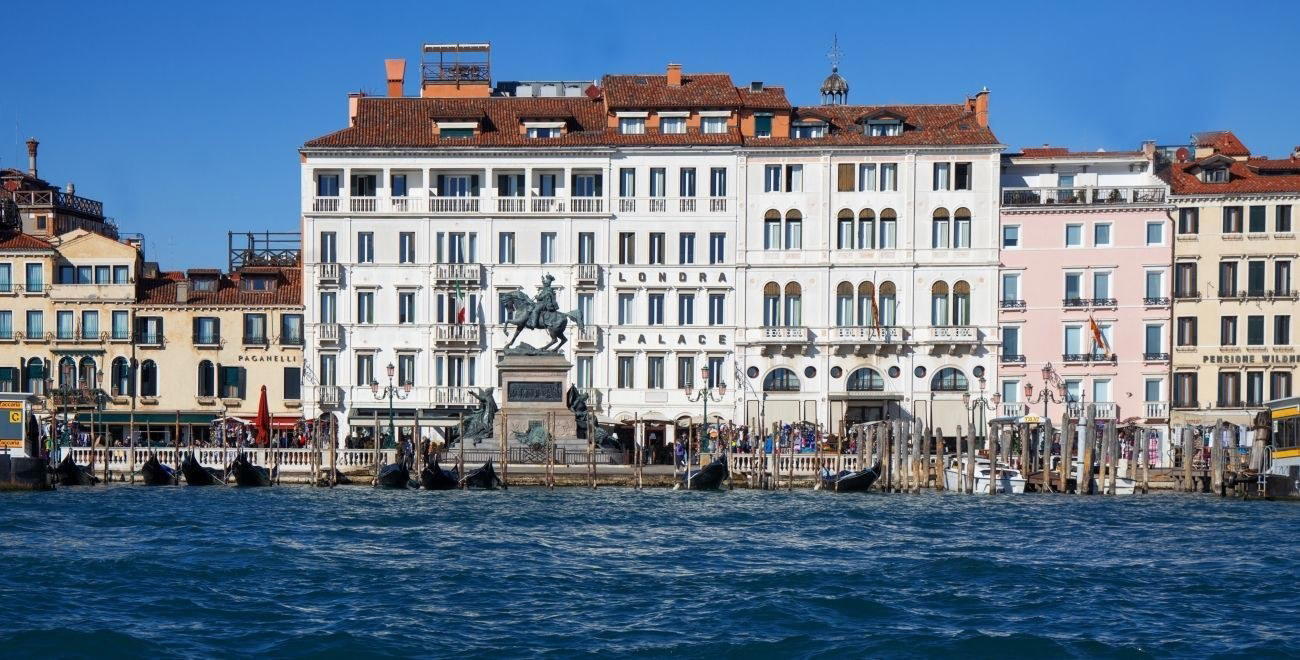
Bars in Venice
All bars in Venice →
Restaurants in Venice
All restaurants in Venice →

Details
- Romantic
- Elegant
- Ornate
- Sophisticated
- Classic
- Honeymoon
- Romantic Getaway
- Anniversary
- Celebration
- Destination Wedding
- Waterfront
- Historic Building
- Panoramic View
- Terrace
- Wi Fi
- Spa
- Pool
- Room Service
- Concierge
- Restaurant
- Bar
- Massage
- Garden
- Waterfront
- Garden
- Elevator
- Step Free Entrance
Ornate and eclectic with rich textiles, antique treasures, oriental influences, and a warm, intimate atmosphere.