Weingut Dr. Loosen


World's 50 Best #16 · Falstaff Winery - 5 Stars
Weingut Dr. Loosen belongs to the Mosel conversation where Riesling, slate, slope exposure, and patient cellar work matter more than luxury staging.

Pearl is the En Primeur Club membership app — saves, bookings, and concierge access live there. Same editors, same standards.
- Address
- St. Johannishof, B53, 54470 Bernkastel-Kues
- Phone
- +49 6531 3426
- Website
- drloosen.de
- Directions
- Get directions
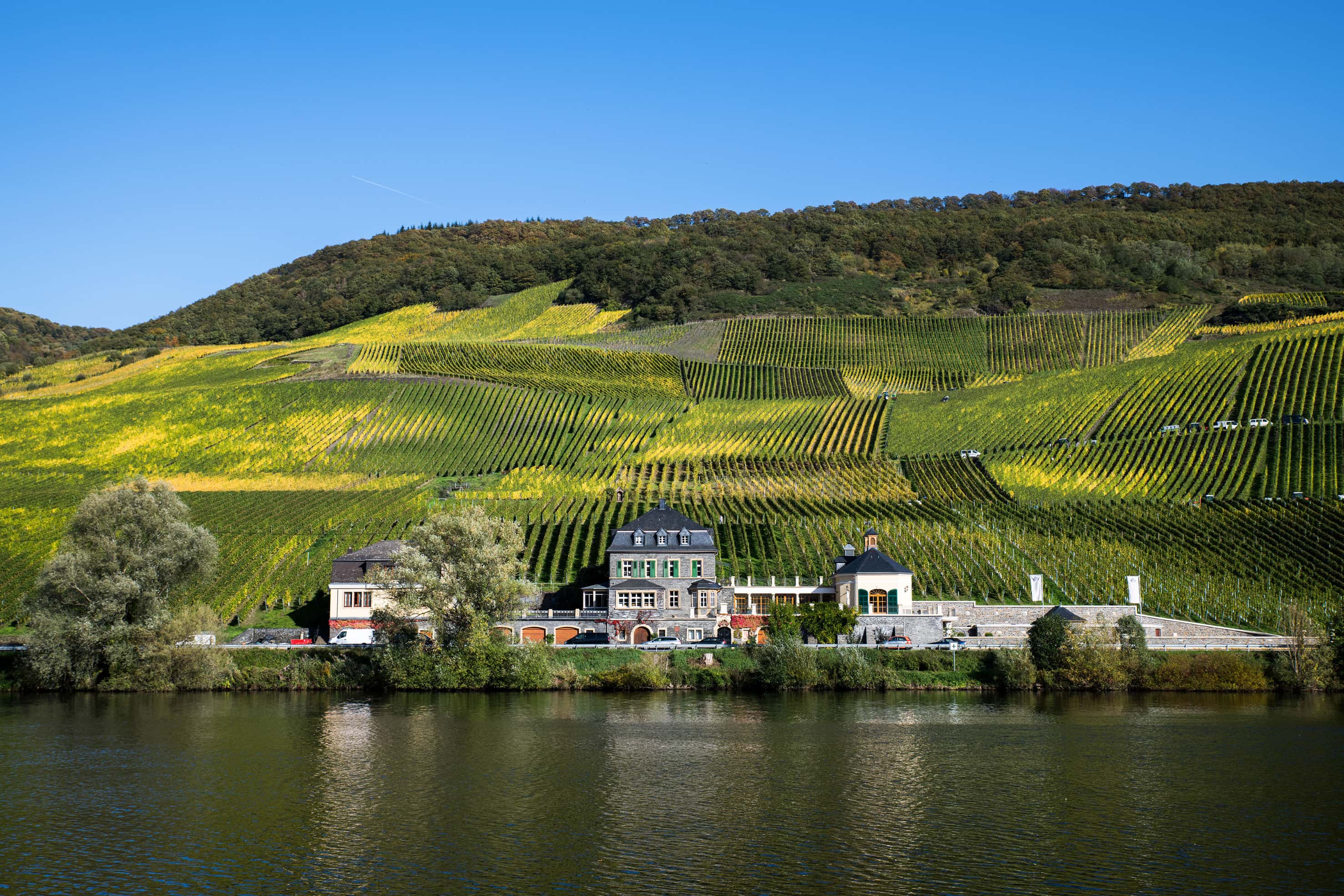
The Mosel setting before the glass
Approaching St. Bernkastel-Kues sits in a river corridor where the Mosel bends through steep vineyard country, and the drama of the place comes from gradient rather than grandeur. This is Riesling territory built on exposure, stone, drainage, and the slow accumulation of small climatic differences from one slope to the next. Weingut Dr. Loosen belongs to that context: a producer whose reputation makes sense only when seen against the Mosel’s narrow river valley, its slate soils, and the region’s long habit of translating site into acidity, fragrance, and tension.
In Bernkastel-Kues, seriousness looks different. It is measured through precision, vineyard hierarchy, ageability, and the ability to make sweetness, dryness, and acidity feel like structural decisions rather than stylistic gimmicks.
Why terroir is the real subject here
The Mosel is one of Europe’s clearest arguments for terroir because the wines often carry their site information without needing muscular extraction. Steep slopes collect light; slate stores and reflects warmth; river proximity tempers cold; and the valley’s marginal climate gives Riesling the long growing season it needs to develop aroma while holding acidity. In many wine regions, terroir can become a vague prestige word. In the Mosel, it is more practical. A few degrees of exposure, a change in soil texture, or a shift in slope angle can alter ripeness, line, and perceived weight in the glass.
This is the frame through which Weingut Dr. Loosen should be read. The estate is not simply a stop on a German wine itinerary; it is evidence of why Bernkastel-Kues has remained central to Riesling literacy. Travelers comparing German regions will notice the contrast quickly. The Pfalz often gives Riesling and Pinot varieties more breadth and warmth, as seen in producers such as Weingut Müller-Catoir in Neustadt an der Weinstraße and Weingut Von Winning in Deidesheim. Rheinhessen’s limestone-driven conversation has a different cadence, with Weingut Wittmann in Westhofen often used as a reference point for dry, site-led German wine. The Mosel, by comparison, keeps returning to lift, delicacy, and the charged relationship between sugar and acid.
Riesling after the old stereotypes
Riesling’s reputation has long been complicated by misunderstanding. Outside Germany, many drinkers still reduce the grape to sweetness, when the actual range runs from bone-dry to botrytised dessert wines, from featherweight Kabinett styles to long-lived bottles with decades of cellar potential. The Mosel sharpened that spectrum because its climate historically made residual sugar a natural counterweight to acidity. That balance is not a compromise; it is one of the region’s central languages.
Dr. Loosen’s relevance sits inside this broader correction. The estate’s recognition by Pearl in 2025 places it in a premium category, but the more interesting point is category education. A visit here makes sense for travelers who want to understand how Riesling can be architectural without being heavy, how low alcohol can coexist with intensity, and why sweetness on a Mosel label does not automatically mean simplicity. The subject is not fashion. It is calibration.
Within the Mosel itself, comparisons help. Weingut Willi Schaefer in Graach an der Mosel sits in the nearby conversation around delicacy and classical Mosel proportion. Weingut Clemens Busch in Pünderich adds another Mosel lens, often discussed through site expression and a different part of the river’s personality. In the Saar, Weingut Van Volxem in Wiltingen gives travelers a related but distinct reading of cool-climate Riesling. Together, these names show why a Mosel itinerary should not be treated as a collection of cellar doors. It is a study in micro-regional dialects.
Bernkastel-Kues as a wine base
Bernkastel-Kues has the advantage of being legible to wine travelers without losing its regional specificity. The town sits in a compact Mosel corridor where vineyard names, river crossings, and cellar addresses form a navigable pattern. The address for Weingut Dr. Loosen, St. For visitors, that matters. Mosel wine travel is less about grand estates with theatrical entrances and more about moving between villages, slopes, and producers whose differences become clearer over several appointments.
Travelers planning around Bernkastel-Kues should treat the winery as part of a wider day rather than a casual drop-in. This is especially relevant in German wine regions, where many serious producers work around vineyard, cellar, and trade schedules rather than continuous hospitality hours. The practical move is simple: verify visit availability in advance, allow time for local driving or transfers along the B53, and build the day around fewer, more focused tastings rather than a crowded checklist.
For broader planning, EP Club’s local pages can help structure the non-wine parts of the trip: Our full Bernkastel-Kues restaurants guide, Our full Bernkastel-Kues hotels guide, Our full Bernkastel-Kues bars guide, Our full Bernkastel-Kues wineries guide, and Our full Bernkastel-Kues experiences guide. In a town where the wine program can define the day, the value of good sequencing is not cosmetic. A late lunch, a short transfer, or an overnight within reach of the river can change how much attention remains for the wines.
How to think about the tasting
Instead, the relevant approach is to taste across the Riesling spectrum if the opportunity allows. Dry wines can show how the estate handles line and mineral impression without residual sugar as a visible frame. Off-dry and sweeter expressions can show the region’s classical balance between acid and sweetness. Mature bottles, if available through an official tasting, can explain why Mosel Riesling has such a strong cellar culture among collectors.
That range is the point. Visitors who arrive with a narrow idea of Riesling as either sweet aperitif or sharp dry white miss the central argument. The Mosel’s hierarchy is not only about ripeness level; it is about how site, vintage, and cellar choices interact. A well-structured tasting should make those distinctions easier to hear. It should also place Bernkastel-Kues in conversation with other German regions rather than treating German wine as a single category. The Nahe’s crystalline intensity can be explored through names such as Weingut Jakob Schneider in Niederhausen, while the Rheingau offers another historical Riesling register through Weingut Georg Breuer in Rüdesheim am Rhein. These comparisons make Dr. Loosen more intelligible, not less distinctive, because they show what the Mosel does with a lighter hand.
Premium wine travel has become more comparative. A visitor who has seen architectural Rioja at Bodegas Ysios in Laguardia or polished Napa hospitality at Cakebread Cellars in Rutherford may arrive in the Mosel expecting the same vocabulary of scale. Bernkastel-Kues offers a different kind of authority. The prestige is less dependent on monumental buildings or expansive tasting rooms and more dependent on slope identity, producer continuity, and the reputation of Riesling among serious drinkers.
This difference matters for expectations. The Mosel is not a substitute for Napa, Rioja, or the Pfalz. It rewards attention to detail, labels, vineyard references, and vintage conditions. For travelers who judge a winery visit by visual spectacle alone, the region may feel understated. For travelers who want terroir to be audible in the glass, this is precisely the appeal. Weingut Dr.
Planning notes for serious travelers
The available venue data gives the address as St. It does not list a phone number, website, opening hours, price range, seat count, or formal booking method. That absence should shape planning rather than be ignored. Confirm access before travel, avoid assuming walk-in tastings, and leave enough margin between appointments for Mosel roads and village parking. Spring and autumn are often important seasons in European wine regions because vineyard work and harvest timing can affect availability, but visit conditions should be checked directly for the chosen date.
Budget planning also requires caution. With no price range in the record, travelers should not assume tasting fees, bottle pricing, or formats. In practical terms, that means the visit is better suited to travelers who want focused Riesling education than to those seeking a casual drinks stop. The reward lies in understanding why the Mosel’s steep vineyards have produced such durable fascination among collectors, sommeliers, and wine travelers.
How It Stacks Up
| Venue | Price | Awards |
|---|---|---|
| Weingut Dr. LoosenThis venue — the venue you are viewing | $10–20 | World's 50 Best #16 · Falstaff Winery - 5 Stars |
| Lingua Franca | $50–100 | Not listed |
| Kloster Eberbach | $20–30 | Not listed |
| Weingut A. Christmann | Not listed | Falstaff Winery - 5 Stars |
| Weingut Allendorf | $20–30 | Falstaff Winery - 3 Stars |
Recognition history
Dated appearances from independent guides and award organizations, with the underlying list record or original source where available.
World's 50 Best Vineyards #16
World's 50 Best
Falstaff Winery - 5 Stars
Falstaff
Full recognition history (8 entries)
World's 50 Best Vineyards #9
World's 50 Best
World's 50 Best Vineyards #12
World's 50 Best
World's 50 Best Vineyards #14
World's 50 Best
World's 50 Best Vineyards #46
World's 50 Best
World's 50 Best Vineyards #15
World's 50 Best
World's 50 Best Vineyards #10
World's 50 Best
Continue exploring
More in Bernkastel-Kues
Wineries in Bernkastel-Kues
Browse all →
Bars in Bernkastel-Kues
Browse all →
Restaurants in Bernkastel-Kues
Browse all →
Details
- Classic
- Rustic
- Scenic
- Elegant
- Wine Education
- Solo Exploration
- Vineyard Tour
- Historic Building
- Organic
- Vineyard
- Riesling
- Weissburgunder
- Still White
- Cave Tasting
- English
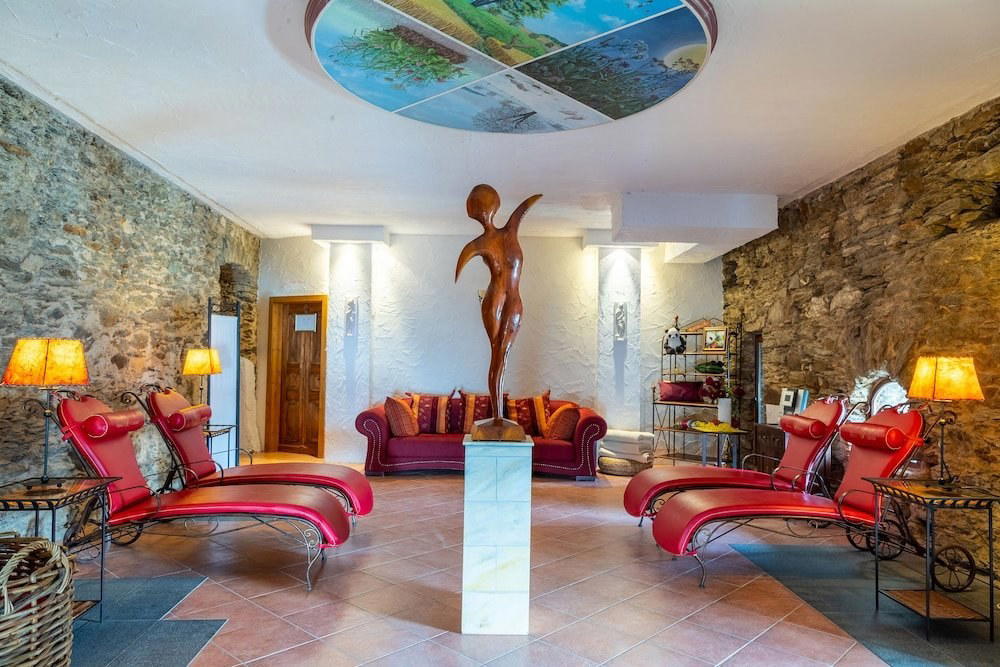
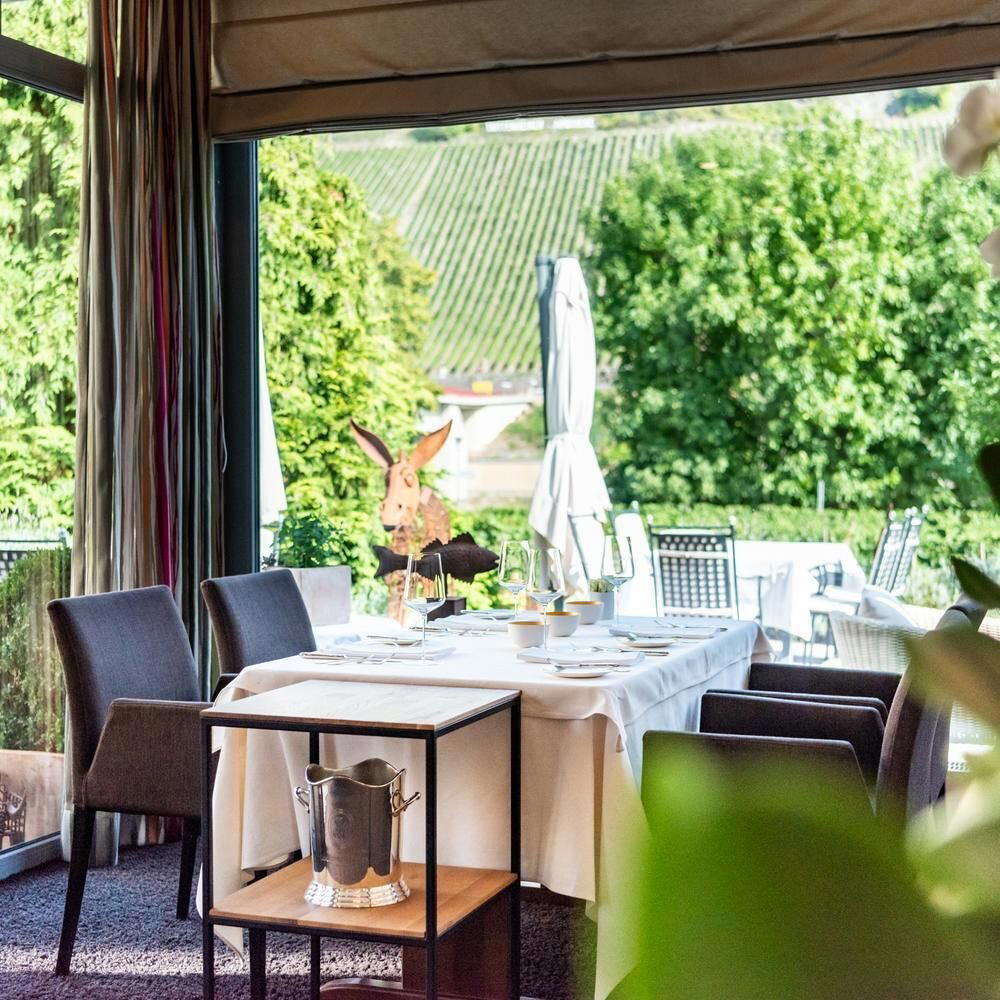
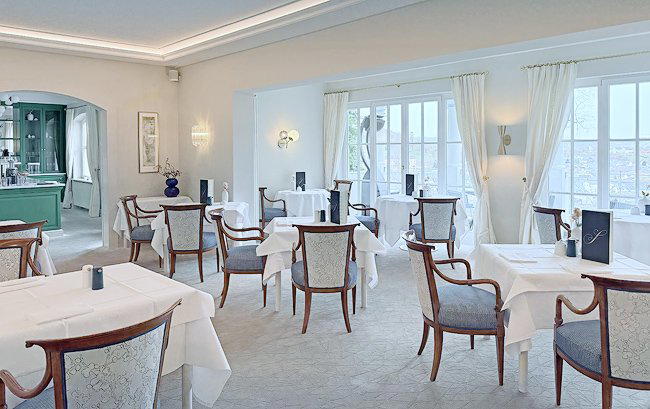
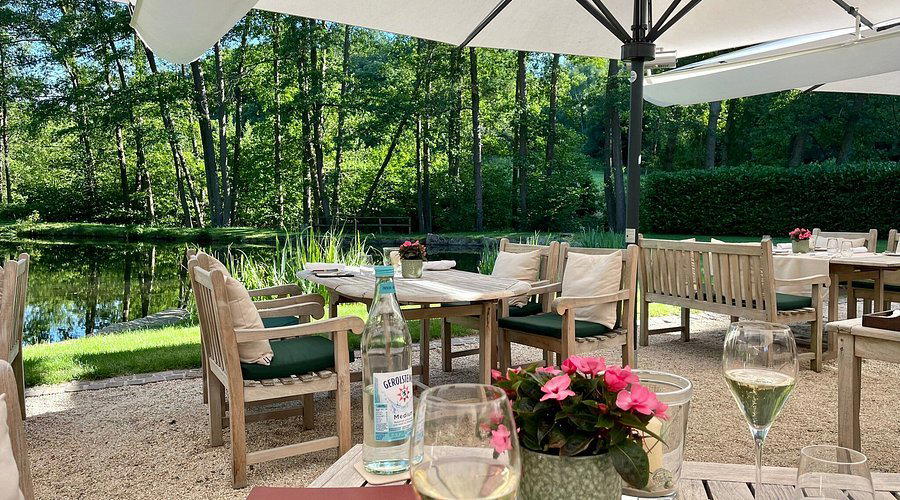
Cozy, minimalist German style with knowledgeable staff providing informative tastings in a welcoming atmosphere.