
Schloss Johannisberg has occupied its Rhine-facing hill since vines were first planted here in 817, and its claim as the world's first dedicated Riesling winery dates to 1720.
Pearl is the En Primeur Club membership app — saves, bookings, and concierge access live there. Same editors, same standards.
- Address
- Schloss Johannisberg, 65366 Geisenheim
- Phone
- +49 6722 70090
- Website
- schloss-johannisberg.de
- Directions
- Get directions
 Saves & bookings on Pearl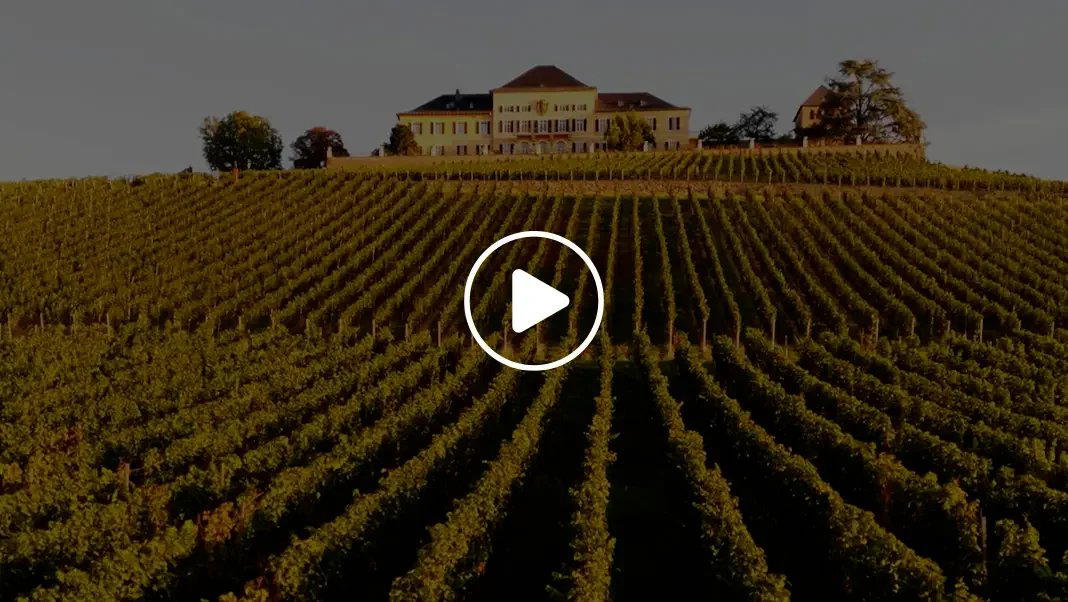
A Hill That Defined a Grape
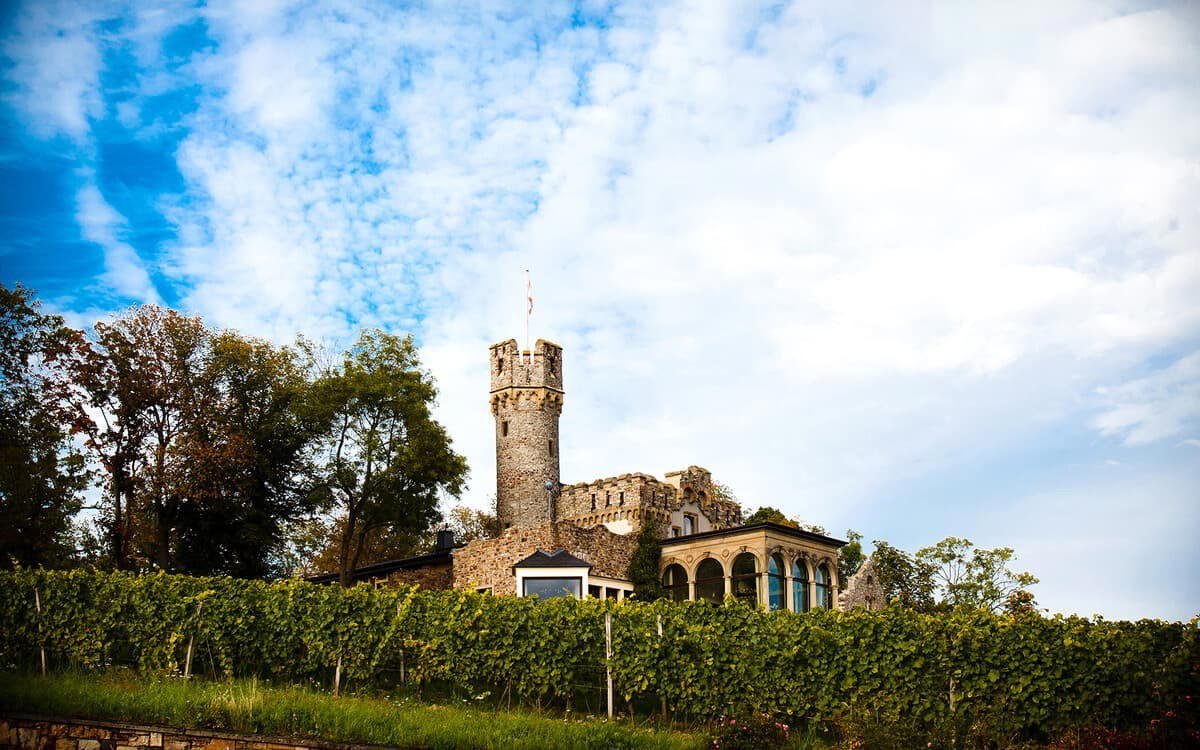
Approach Schloss Johannisberg from the valley floor and the geometry of the place becomes immediately legible: a neoclassical palace sitting at the crown of a south-facing slope, the Rhine glinting below, and row after row of Riesling vines descending in uniform lines toward Geisenheim. The building reads as a declaration before you have tasted anything. That sense of deliberate positioning, physical and historical, is what separates Johannisberg from most wine estates in the Rheingau. The hill was not chosen; it was shaped over more than twelve centuries to produce one thing with as much precision as viticulture allows.
The Rheingau occupies a stretch of the Rhine where the river briefly runs east-west rather than north-south, and that reorientation means the north bank faces directly south. It is one of the few places in Germany where Riesling reliably accumulates the sugar necessary for complexity without losing the acidity that gives the variety its structural backbone. Schloss Johannisberg sits at roughly 150 metres above the river, exposed to maximum sunlight during the growing season while the Rhine itself moderates overnight temperatures. The geology beneath the estate is a layered combination of weathered quartzite and loess, soil types that drain efficiently and force roots deep enough to access mineral complexity rather than surface water. What ends up in the glass is, in measurable physical terms, a direct consequence of that site geometry.
The Riesling Benchmark, Set Here
In 1720, the estate was established as the first property in Germany dedicated exclusively to Riesling. That is not a marketing claim; it is a documented point in the variety's history, and it explains why Johannisberg remains a comparative reference when specialists discuss what Rheingau Riesling actually means as a category. The winery's influence on how Riesling is classified, vinified, and communicated extends well beyond its own label: the Spätlese category, for example, traces its formal origins to a late-harvest experiment conducted here in 1775 when a messenger authorising the harvest was delayed and grapes were picked overripe. The resulting wine established the commercial viability of intentionally late-harvested Riesling across the entire Rheingau.
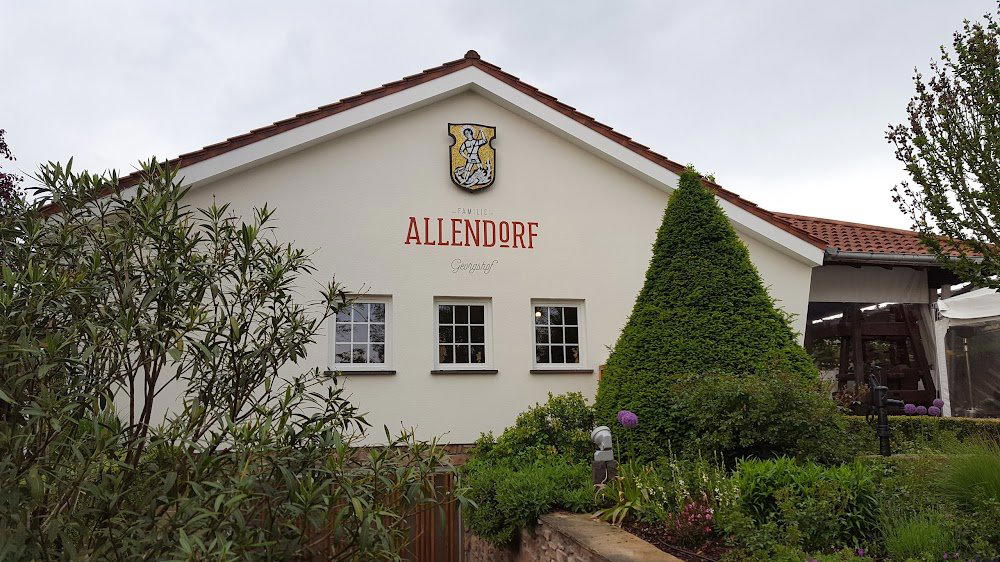
That historical weight places Johannisberg in a different competitive position than, say, Weingut Georg Breuer in Rüdesheim am Rhein, whose reputation was built more recently on dry Grosses Gewächs Rieslings, or Weingut Allendorf in Oestrich-Winkel, which operates across a broader portfolio of Rheingau sites.
How the Terroir Reads in the Range
The Johannisberg Rieslings are typically structured around a classification system derived from historical practice on the estate: coloured capsules signal ripeness level and residual sugar, ranging from dry through to the sweeter Auslese, Beerenauslese, and Trockenbeerenauslese tiers when conditions allow. This internal hierarchy mirrors the Prädikat system that Johannisberg's own history helped formalise, and it functions as a reading guide to how a single vintage expressed itself across the growing season on this specific slope.
Visitors often arrive expecting drama in the wines and find instead precision. Rheingau Riesling from a site this old and this well-positioned tends toward clarity over intensity: bright acidity, mineral tension, fruit that reads more as citrus or white stone than tropical register. The clay-loess upper sections of the Johannisberg slope produce wines with slightly more weight and texture than the quartzite-dominant lower parcels, which lean more acidic and linear. Those distinctions are visible across the range, though tasting notes are outside the scope of what EP Club can confirm without direct sourcing.
For broader context within German Riesling, the Rheingau model represented by Johannisberg sits differently from Mosel expressions such as those from Weingut Fritz Haag in Brauneberg or Weingut Clemens Busch in Pünderich, where steep slate slopes and a cooler climate produce finer, more tensile wines at lower alcohol. The Rheingau's loessier, warmer conditions generate more body and ripeness, and Johannisberg's south-facing hill sits at the extreme end of that tendency within its region. Pfalz producers like Weingut A. Christmann in Neustadt an der Weinstraße and Weingut Dr. Bürklin-Wolf in Wachenheim an der Weinstraße occupy yet another register, with sandstone and basalt soils that push Riesling toward a fuller, more textural profile.
The Estate as a Visit
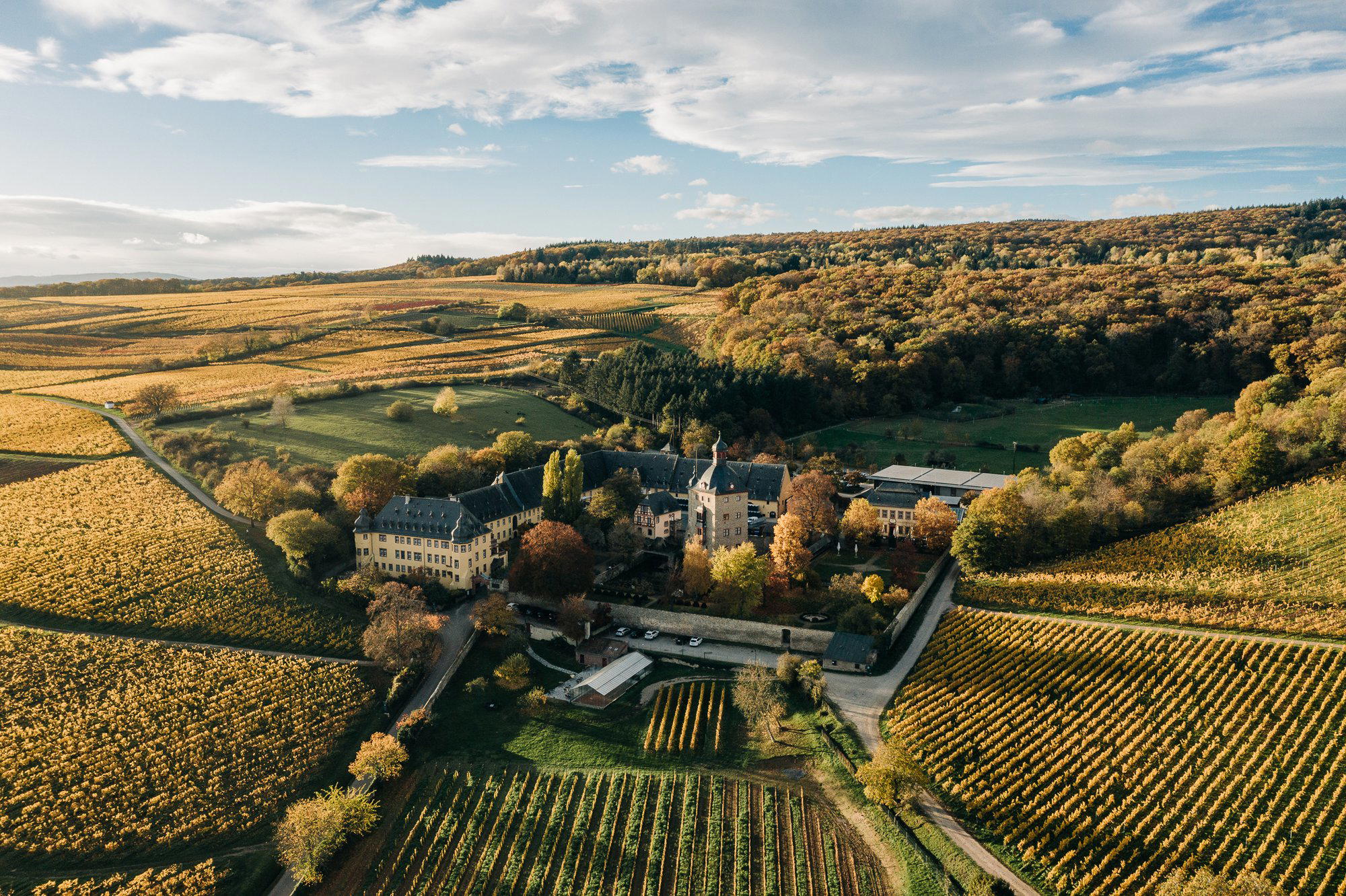
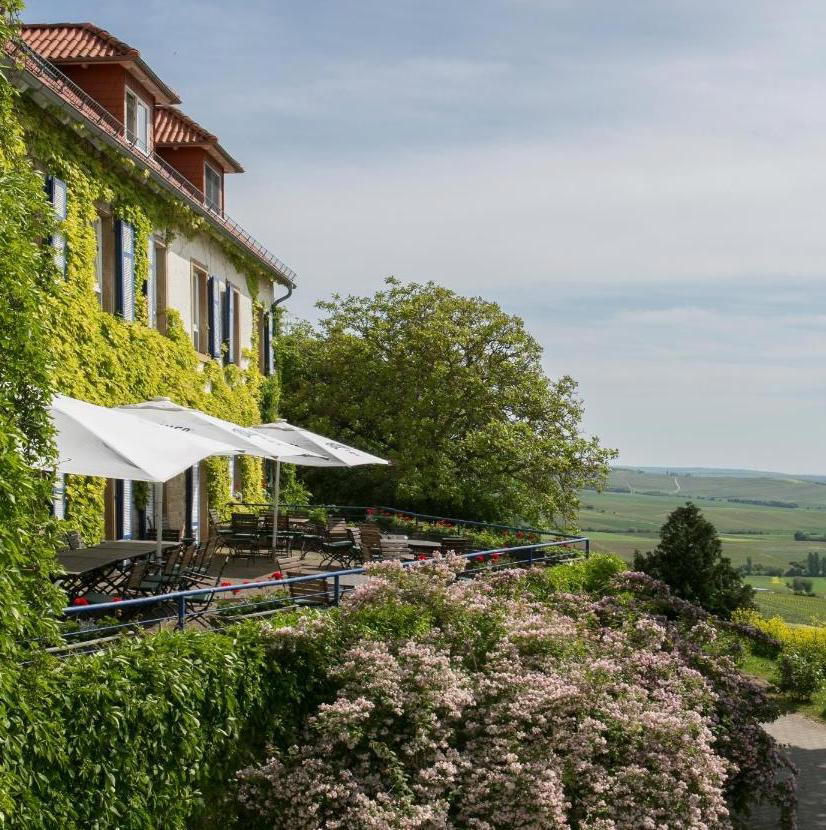
The practical experience of visiting Schloss Johannisberg is shaped by its physical scale and its dual function as both a working winery and a historic monument. The neoclassical main building and the surrounding estate are accessible to visitors, and the cellar beneath the palace is one of the architectural set pieces of German wine tourism: barrel-aging spaces cut into the hillside, with the kind of humidity and cool consistency that old Rhine estates accumulated before climate control was a consideration. The view across the Rhine bend from the estate terrace is frequently photographed angle in the Rheingau, and the approach road from Geisenheim through the vineyard is worth taking slowly.
The Rheingau as a region is compact and manageable by car or bicycle along the Rhine-side route. Kloster Eberbach in Eltville sits roughly fifteen kilometres to the east and offers a complementary monastic-estate experience with different vineyard holdings and a large-format tasting infrastructure. Together the two properties represent the institutional anchors of Rheingau wine history, and visiting both in a single day is achievable.
Johannisberg's address places it above Geisenheim, which sits along the B42 Rhine route between Rüdesheim to the west and Oestrich-Winkel to the east. Frankfurt is approximately sixty kilometres northeast; Wiesbaden roughly thirty kilometres east. The estate is reachable by train to Geisenheim followed by a short uphill drive or taxi. Visitors considering a longer German Riesling circuit might also compare it with producers in adjacent wine regions: Weingut Bassermann-Jordan in Deidesheim and Weingut Battenfeld-Spanier in Hohen-Sülzen anchor the Pfalz's fine-wine offer, while Weingut Bürgerspital zum Heiligen Geist in Würzburg and Weingut Grans-Fassian in Leiwen map Franken and Mosel respectively. For contrast at the international level, Weingut Heymann-Löwenstein in Winningen shows what terroir-driven German wine looks like in a different geological and stylistic register entirely.
At-a-Glance Comparison
Comparable venues nearby, for context on price, style, and recognition.
| Venue | Cuisine | Price | Awards | Notes |
|---|---|---|---|---|
| Fürst von Metternich-Winneburg’sche Domäne Schloss JohannisbergThis venue — the venue you are viewing | Winery | Not listed | World's 50 Best #12 | Not listed |
| Weingut Dr. Loosen | Riesling, Weissburgunder | $$ | World's 50 Best #9 | Bernkastel-Kues |
| Schloss Vollrads | Riesling | $$$ | World's 50 Best #33 | Oestrich-Winkel |
| Schloss Johannisberg | Riesling | $$$$ | World's 50 Best #2 | Johannisberg |
| Evening Land Vineyards | Winery | Not listed | Not listed | Salem |
| Walter Scott Wines | Winery | Not listed | Not listed | Salem |
Recognition history
Dated appearances from independent guides and award organizations, with the underlying list record or original source where available.
World's 50 Best Best Vineyards #12
World's 50 Best
Continue exploring
More in Rheingau
Wineries in Rheingau
Browse all →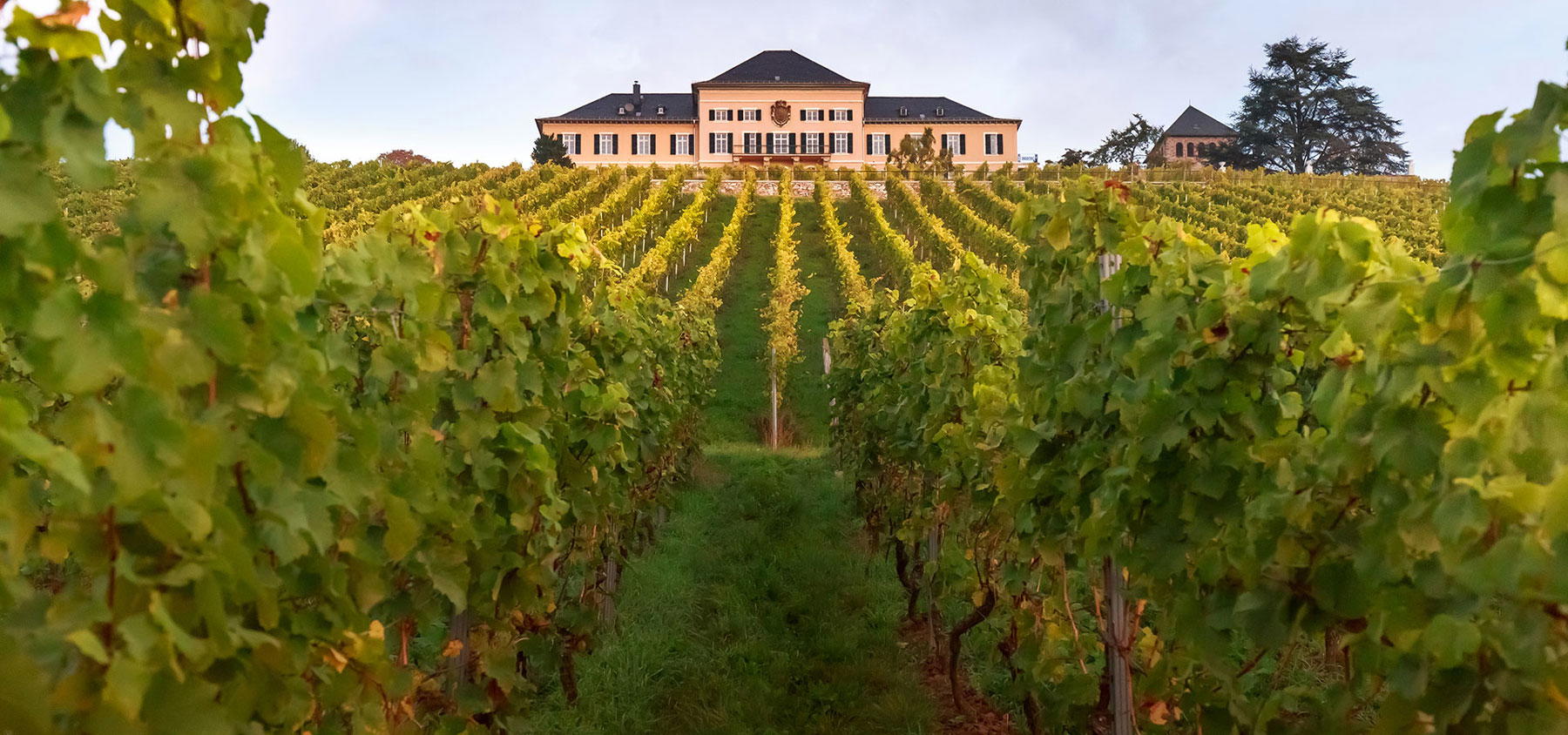
Bars in Rheingau
Browse all →

Restaurants in Rheingau
Browse all →
At a Glance
- Historic
- Scenic
- Elegant
- Sophisticated
- Classic
- Wine Education
- Special Occasion
- Group Outing
- Solo Exploration
- Historic Building
- Estate Grounds
- Vineyard Tour
- Private Tasting
- Vineyard
- Garden
- Rheingau
- Riesling
- Still White
- Private Tasting
- By Reservation
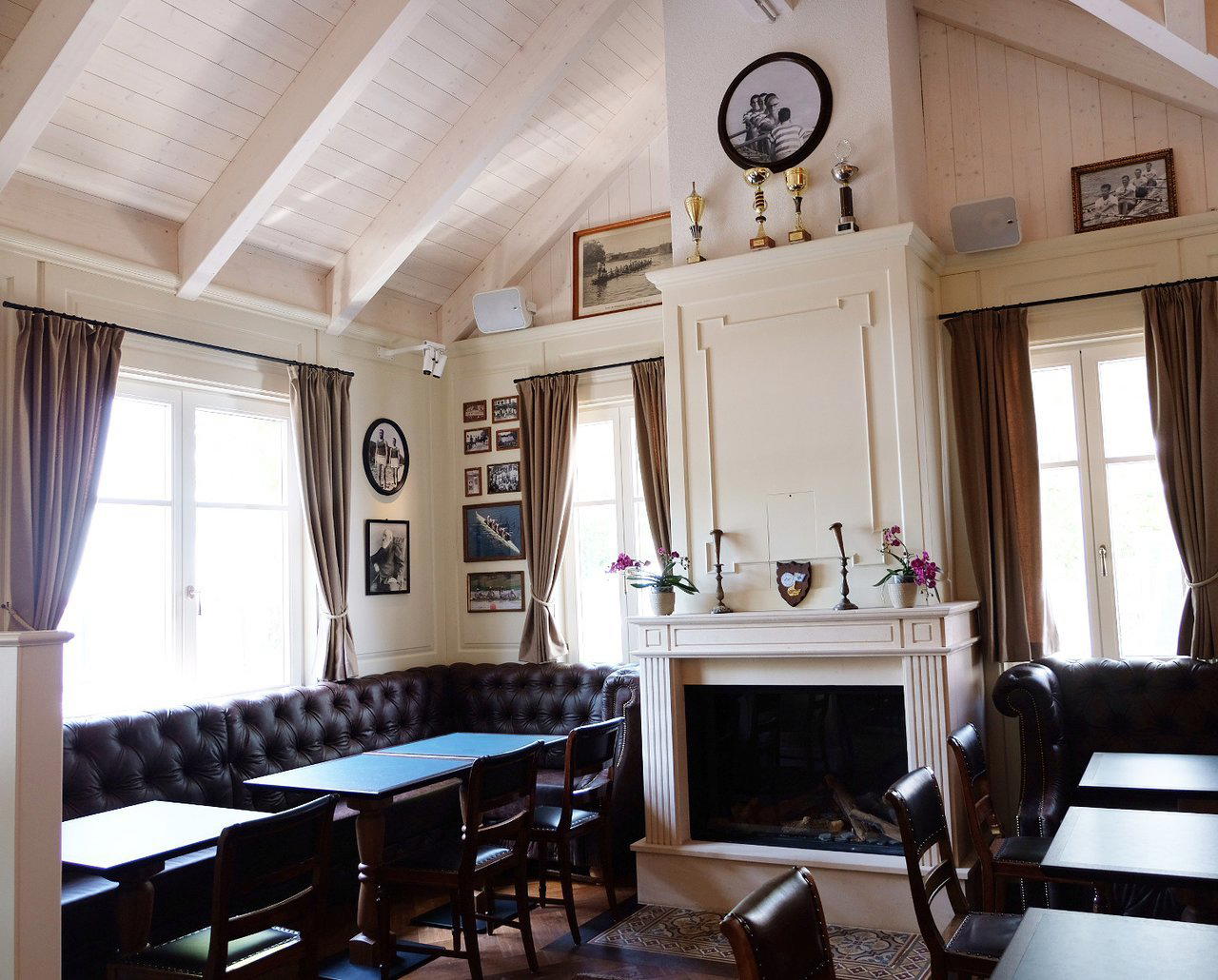
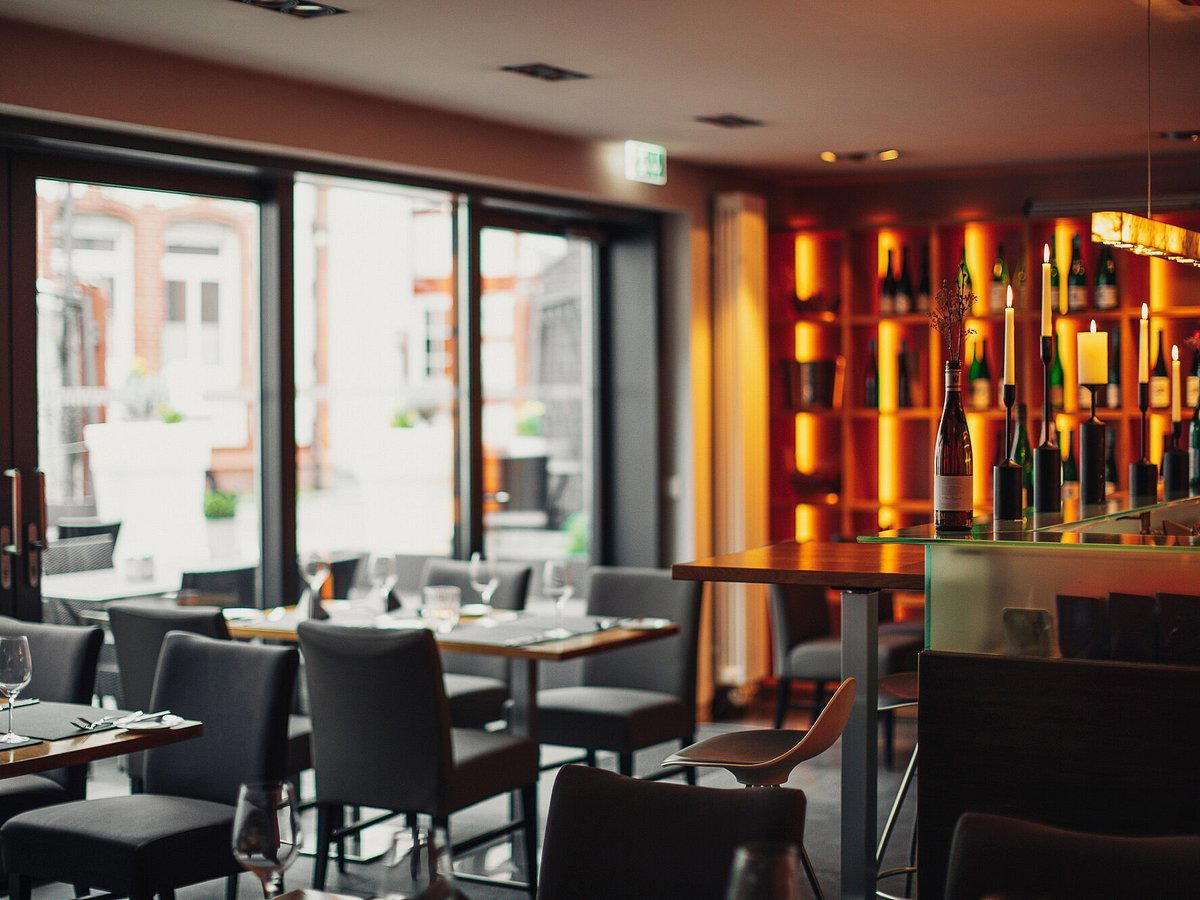
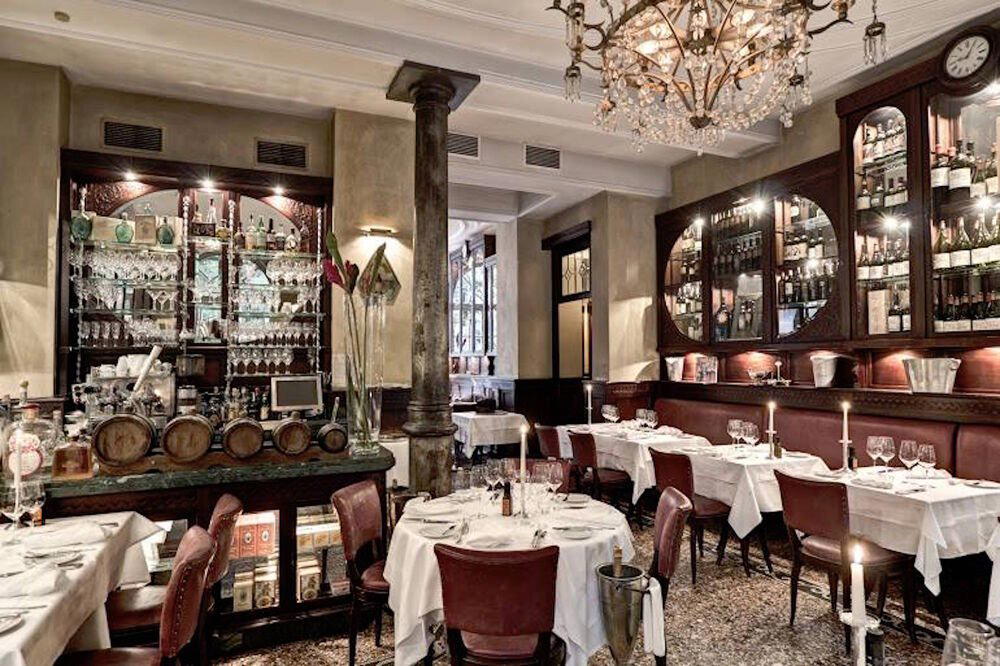
Historic, prestigious estate atmosphere centered on Riesling production, with a castle setting and vineyard views.