
Falstaff Winery - 5 Stars
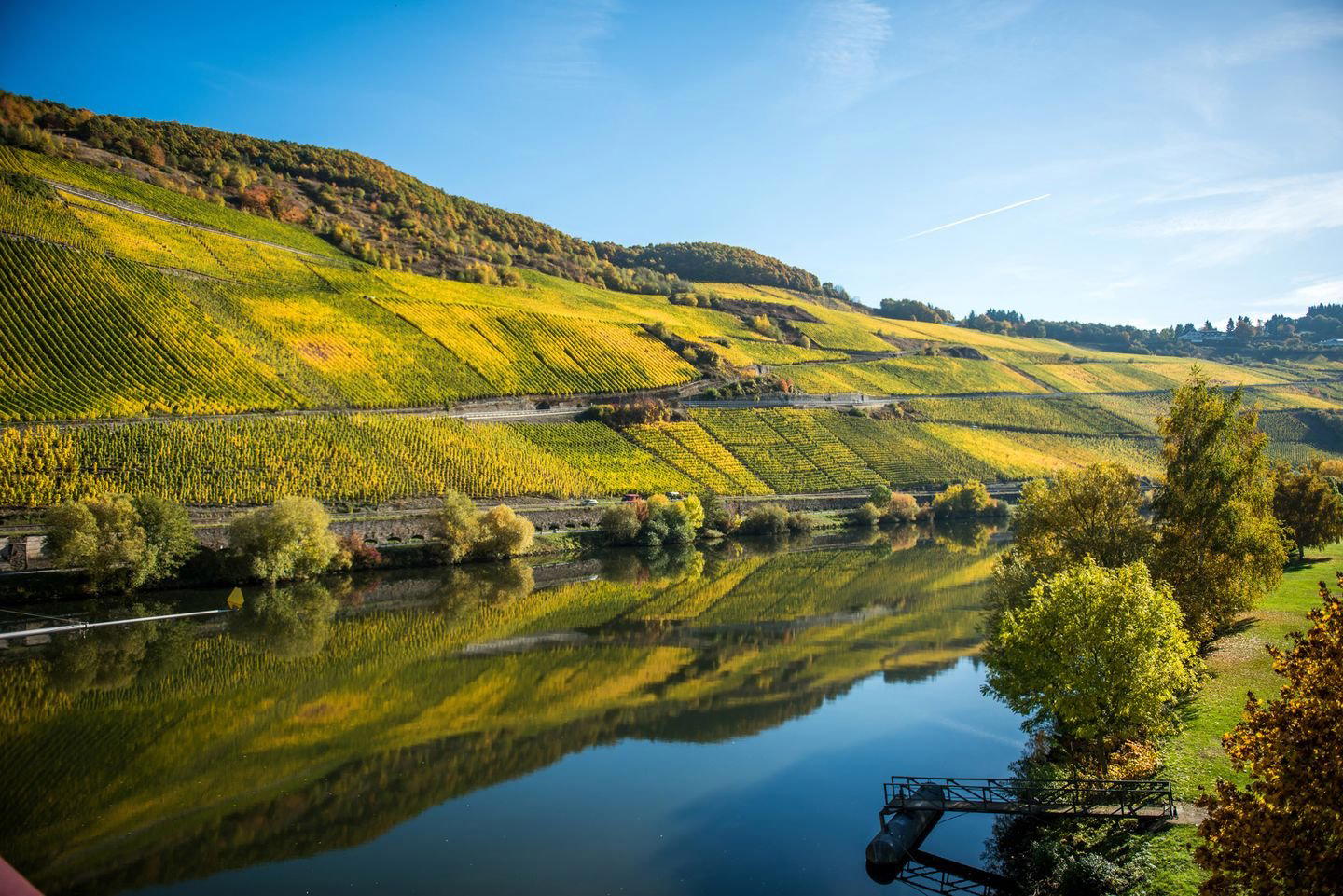
Weingut Van Volxem occupies a commanding position on the Saar's steep slate vineyards, producing dry Rieslings from some of the region's oldest and most demanding sites.

Pearl is the En Primeur Club membership app, where members save venues, book tables and use the concierge.
The Saar and the Case for Dry Riesling
Germany's Mosel-Saar-Ruwer wine triangle is leading understood as three distinct sub-regions with different characters rather than a single continuous style. The Mosel's middle reach, from Bernkastel down through Traben-Trarbach, earns the loudest international attention, but the Saar, a cold, exposed tributary running south from Konz, has long produced wines with a structural intensity the warmer reaches of the Mosel cannot replicate. That intensity comes at a cost: in difficult vintages, Saar Rieslings historically struggled to ripen without retaining levels of residual sugar that soften the wine's edge. Over the past two decades, however, climate shift and a generational preference for dry-style expression have repositioned the Saar as a serious address for Großes Gewächs, Germany's highest classification for dry wines from classified single vineyards. Weingut Van Volxem sits at the centre of that repositioning.
The estate's home at Zum Schlossberg 347 in Wiltingen places it on the flank of the Scharzhofberg, one of the Saar's most storied vineyard blocks and a name that appears on bottles from Weingut Egon Müller, Van Volxem's most closely watched neighbour and the producer whose auction prices have defined international perceptions of Saar Riesling for a generation. The two estates work from overlapping ground but arrive at very different stylistic conclusions, Egon Müller's reputation is built overwhelmingly on Auslese and above, wines carrying significant residual sugar and built for decades of cellaring, while Van Volxem has staked its identity on dry expression from the same historically exceptional sites.
Vineyard Depth and Site Logic
Wiltingen's vineyards are not uniformly exceptional. The Scharzhofberg's upper slopes, where the slate is thinnest and sun exposure is most acute, produce the most concentrated fruit; the lower sections yield a broader, less tense wine. Van Volxem controls parcels across the Wiltingen appellation, including sites beyond Scharzhofberg, giving the estate a range of materials from which to construct wines at different price and ambition levels. This is the structural logic underlying most serious German estates: a portfolio that runs from village-level Riesling up through site-specific Großes Gewächs, with the flagship bottlings coming from the most demanding parcels.
Across Germany's premium Riesling belt, this tiered approach is consistent. Producers such as Weingut Fritz Haag in Brauneberg on the Mosel's Brauneberger Juffer, Weingut Clemens Busch in Pünderich working the slate terraces of the Marienburg, and Weingut Grans-Fassian in Leiwen all operate within this model, using single-vineyard designations to communicate site quality in a way that parallels Burgundy's Premier and Grand Cru hierarchy. Van Volxem applies that same logic from the Saar's specific conditions: thin blue-grey Devonian slate, steep gradients that force hand harvesting, and a continental microclimate that extends the growing season and builds acidity at the expense of early sugar accumulation.
The Dry Style and Its Place in a Broader German Conversation
The argument for dry Saar Riesling is an argument about terroir expression against sweetness as a masking agent. When residual sugar is absent, the wine's minerality, its tension between fruit and acid, and its site-specific character have nowhere to hide. The Pfalz has made similar arguments for decades: estates such as Weingut Dr. Bürklin-Wolf in Wachenheim an der Weinstraße, Weingut Bassermann-Jordan in Deidesheim, and Weingut A. Christmann in Neustadt an der Weinstraße produce dry Rieslings from classified Pfalz sites that compete directly in the international market for serious German whites. The Rheingau has its own dry-style proponents, from Kloster Eberbach in Eltville to Weingut Georg Breuer in Rüdesheim am Rhein, while Franconia's Weingut Bürgerspital zum Heiligen Geist in Würzburg and Weingut Battenfeld-Spanier in Hohen-Sülzen push biodynamic dry-style production from further south. Against that national backdrop, Van Volxem's contribution is to bring the Saar, a region whose international fame had been largely built on sweet and off-dry production, into the dry-style conversation at a credible level.
That contribution is now recognised formally. The award operates as a peer-comparison signal: at this level, the estate's wines are expected to show both site precision and stylistic consistency across vintages, not simply a single successful release.
What Draws Serious Collectors Here
Wiltingen as a village offers little in the way of destination dining or accommodation infrastructure. It is not a town you visit for a long weekend of wine tourism in the style of, say, the Rhineland's broader circuit. The draw is specific: direct access to wines from historically classified Saar sites, often available at prices below what equivalent site-quality production from the Mosel's premium addresses commands. For collectors who track German Riesling closely, the Saar's relative obscurity outside specialist circles has historically meant allocation availability that the Mosel's most famous addresses cannot match. That dynamic has been changing as Van Volxem's international profile grows and demand from export markets, particularly East Asia and North America, absorbs more of the production. Timing matters: approaching the estate for visits or allocations in the period immediately after harvest, typically November through January, when the prior vintage has just been assessed but before export bottlings are committed, has historically offered the most access.
For comparative context within Wiltingen and the immediate Saar corridor, Weingut Egon Müller remains the reference point for sweet and off-dry production from the Scharzhofberg, with auction prices for Trockenbeerenauslese reaching levels that place the estate in a category of its own globally. Van Volxem does not compete in that category; instead, it competes in the dry-wine segment where comparative reference points sit in Burgundy and Alsace as much as within Germany itself. This is a meaningful distinction for a buyer deciding how to approach the Saar: the two estates answer different questions.
Planning a Visit
Weingut Van Volxem is located at Zum Schlossberg 347, 54459 Wiltingen, in the Saar Valley in Rhineland-Palatinate. Wiltingen sits roughly equidistant between Trier and Saarbrücken, with Trier offering the nearest range of hotels and restaurants of any scale; the drive from Trier to Wiltingen runs through the Saar Valley on roads that follow the river closely, taking approximately twenty to thirty minutes depending on conditions. Rail access to Wiltingen is limited, and a car is effectively necessary for exploring the broader Saar vineyard network. For a wider sense of what Wiltingen and its surrounding addresses offer, our full Wiltingen restaurants and venues guide maps the area's broader offering.
Collectors who want to position Van Volxem within a wider portfolio of serious German producers might also consider production from Weingut Allendorf in Oestrich-Winkel in the Rheingau, or look further afield to see how Riesling philosophy translates into entirely different terroir contexts at Accendo Cellars in St. Helena or Aberlour in Aberlour for spirit-world parallels in how a single raw material can carry the full weight of a producer's identity.
Cost and Credentials
Comparable venues nearby, for context on price, style, and recognition.
| Venue | Cuisine | Price | Awards |
|---|---|---|---|
| Weingut Van VolxemThis venue (the venue you are viewing) | Wiltingen, Riesling, Pinot Blanc | $50–100 | Falstaff Winery - 5 Stars |
| Weingut Egon Müller | Wiltingen, Riesling | Not listed | Falstaff Winery - Listed |
| Weingut Willi Schaefer | Graach, Riesling | $50–100 | Falstaff Winery - Listed |
| Bethel Heights Vineyard | Eola-Amity Hills, Pinot Noir, Chardonnay | Not listed | Not listed |
| Weingut Carl Loewen | Leiwen, Riesling, Pinot Blanc | $50–100 | Falstaff Winery - 4 Stars |
| Weingut Schäfer-Fröhlich | Bockenau, Riesling, Pinot Blanc | Not listed | Falstaff Winery - 5 Stars |
Recognition history
Dated appearances from independent guides and award organizations, with the underlying list record or original source where available.
Falstaff Winery - 5 Stars
Falstaff
Continue exploring
More in Wiltingen
Wineries in Wiltingen
All wineries in Wiltingen →

Bars in Wiltingen
Browse all →
Restaurants in Wiltingen
Browse all →
Details
- Elegant
- Scenic
- Sophisticated
- Classic
- Wine Education
- Romantic Getaway
- Group Outing
- Special Occasion
- Barrel Room
- Vineyard Tour
- Estate Grounds
- Terrace
- Panoramic View
- Historic Building
- Design Destination
- Private Tasting
- Biodynamic
- Organic
- Sustainable
- Vineyard
- Mountain
- Riesling
- Pinot Blanc
- Chardonnay
- Pinot Noir
- Still White
- Sparkling
- Guided Tasting
- Vineyard Walk
- Barrel Room Tour
- German
- English
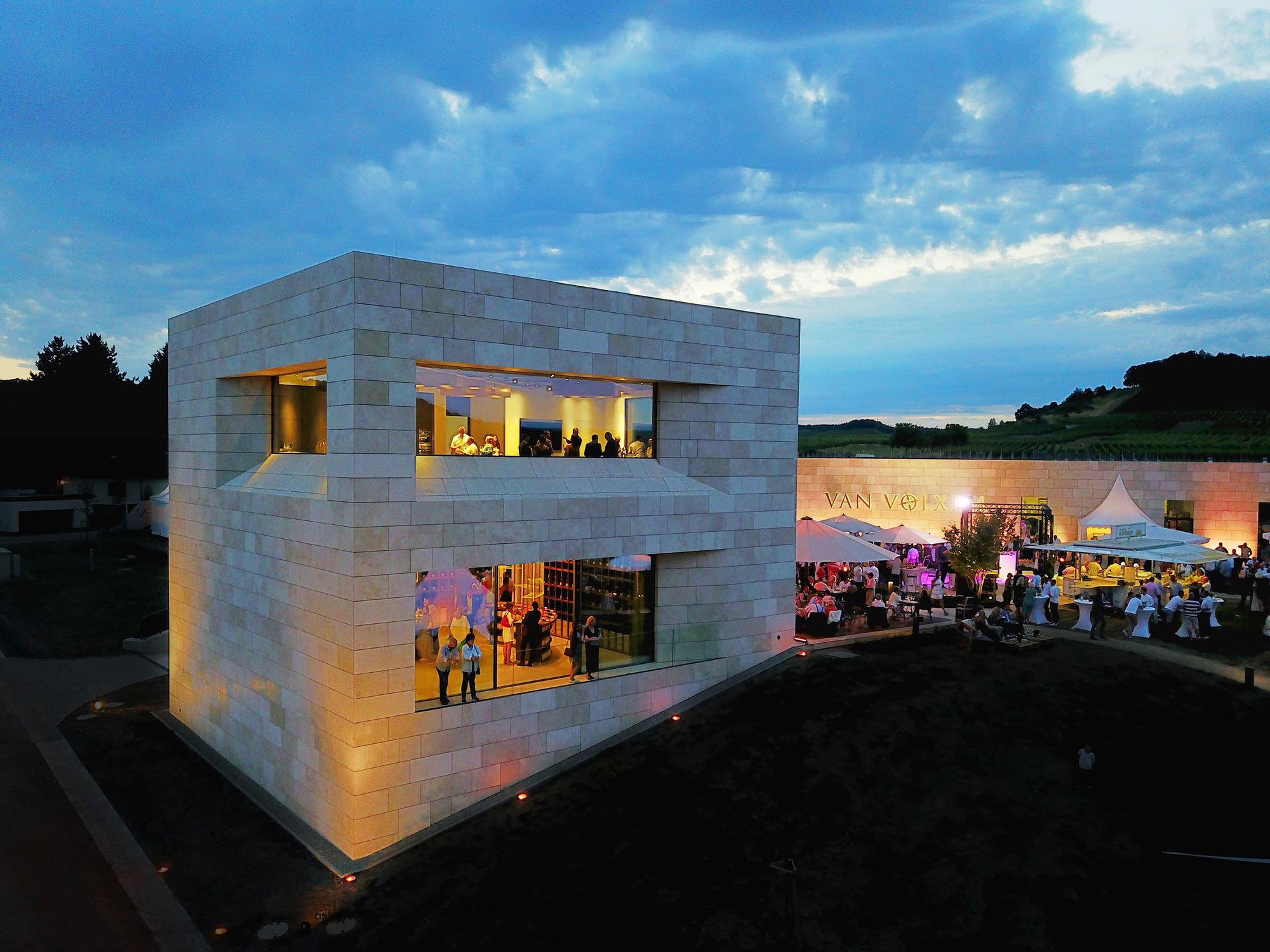
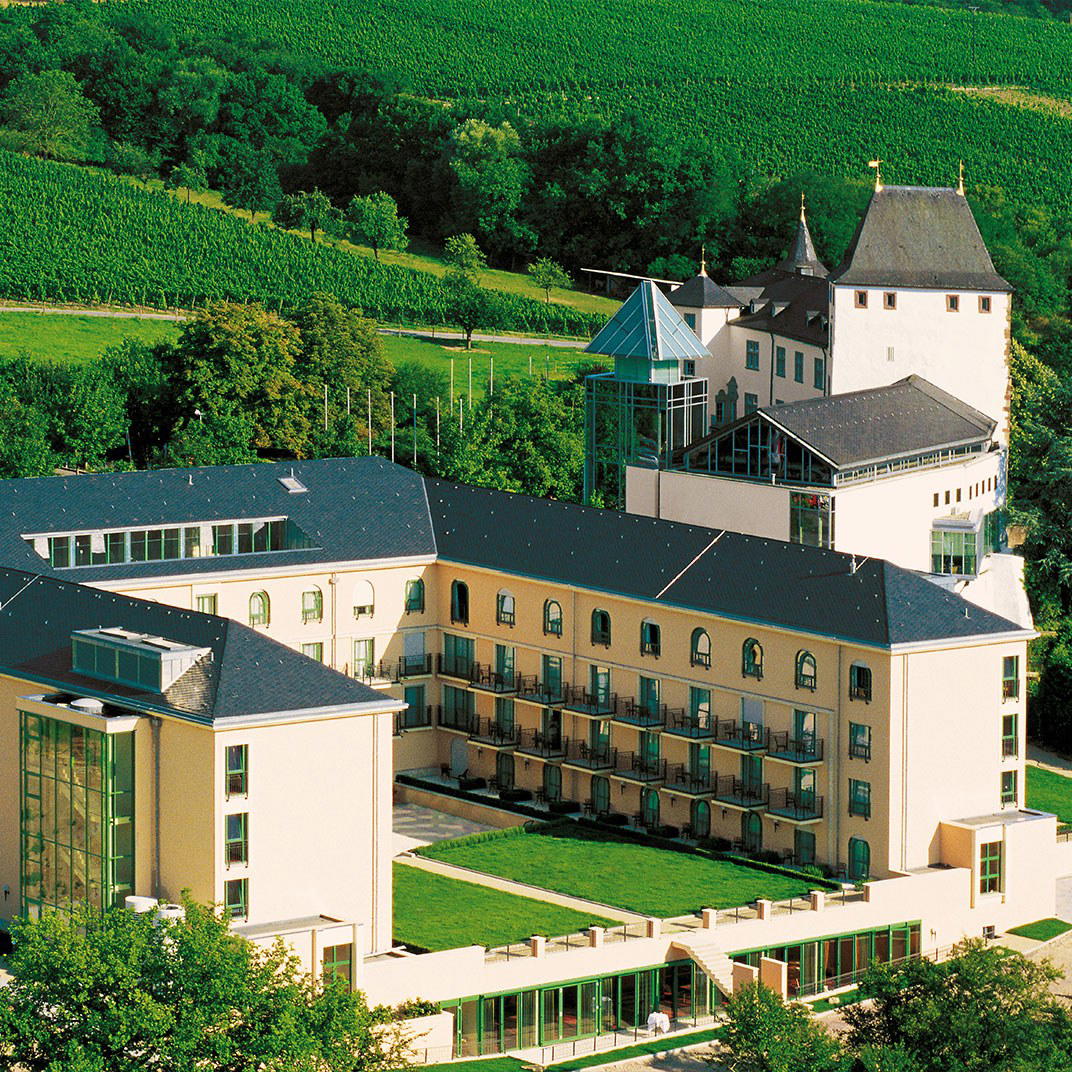
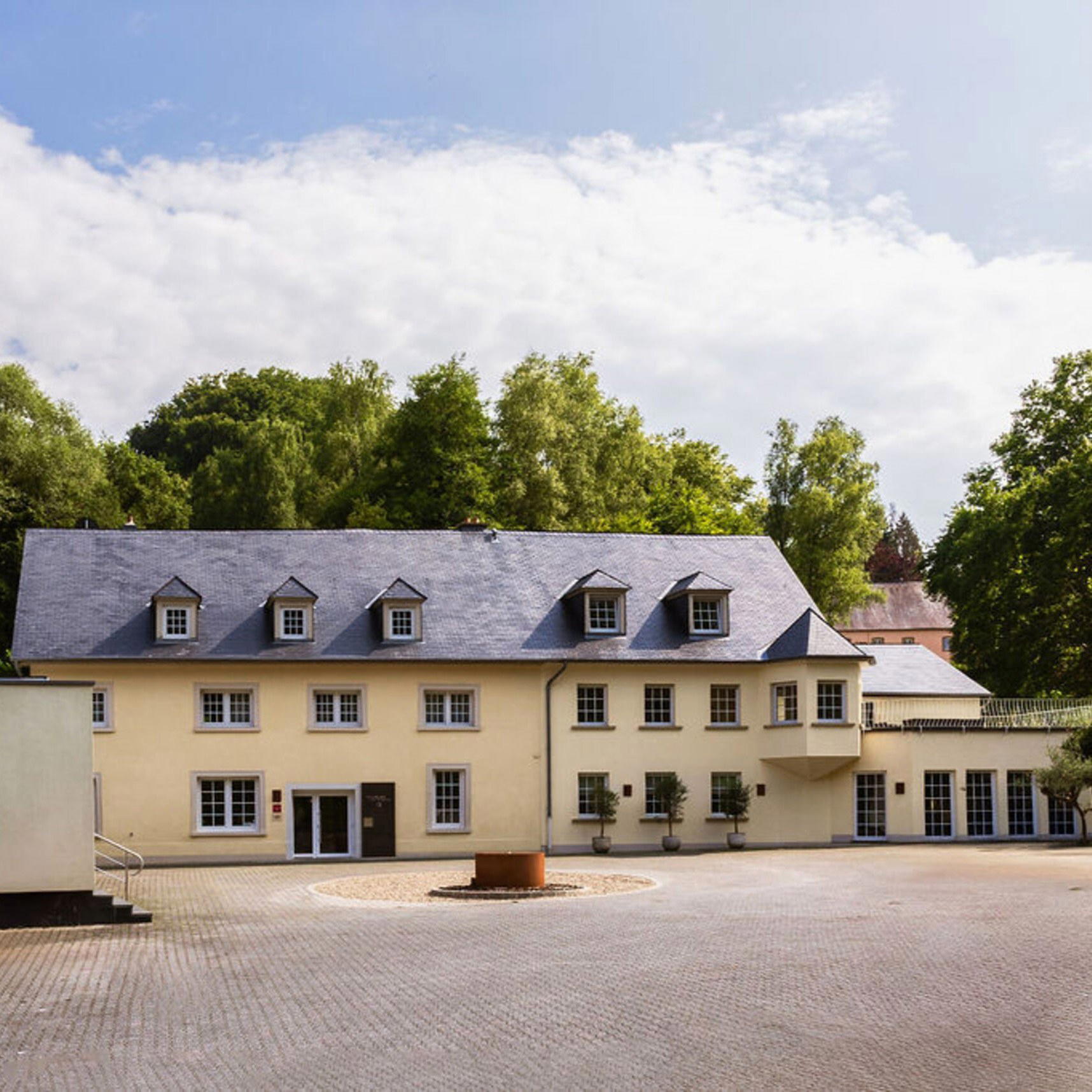
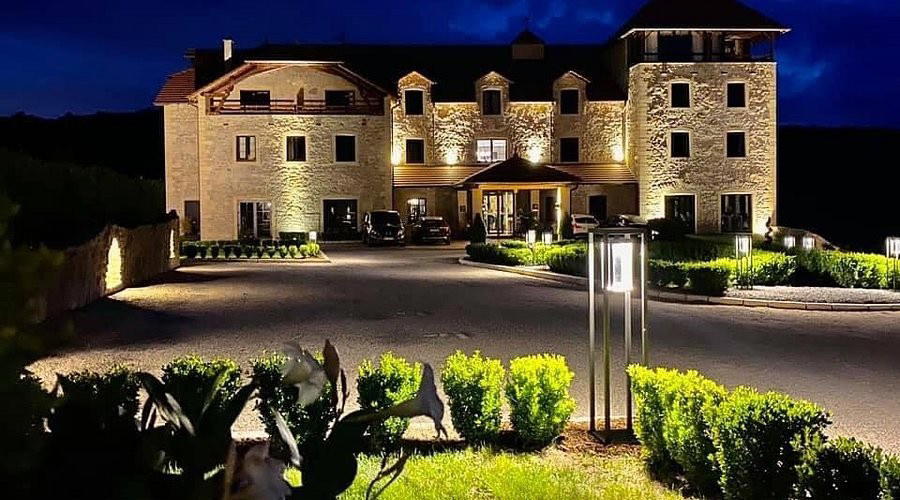
Modern architectural landmark with warm travertine facades and castle-like tower design, offering a sophisticated yet welcoming atmosphere that balances contemporary design with historic wine-making traditions.