
The Bundaberg Rum Distillery on Hills Street sits at the intersection of Queensland's subtropical agriculture and more than a century of molasses-to-spirit craft. Awarded Pearl 3 Star Prestige in 2025, it occupies a distinct position among Australian spirits destinations where raw material provenance and production heritage are the primary draw. Plan your visit through the distillery's official channels for current tour availability.
Pearl is the En Primeur Club membership app — saves, bookings, and concierge access live there. Same editors, same standards.
- Address
- Hills St, Bundaberg East QLD 4670
- Phone
- +61 7 4348 3443
- Website
- bundabergrum.com.au
 Saves & bookings on Pearl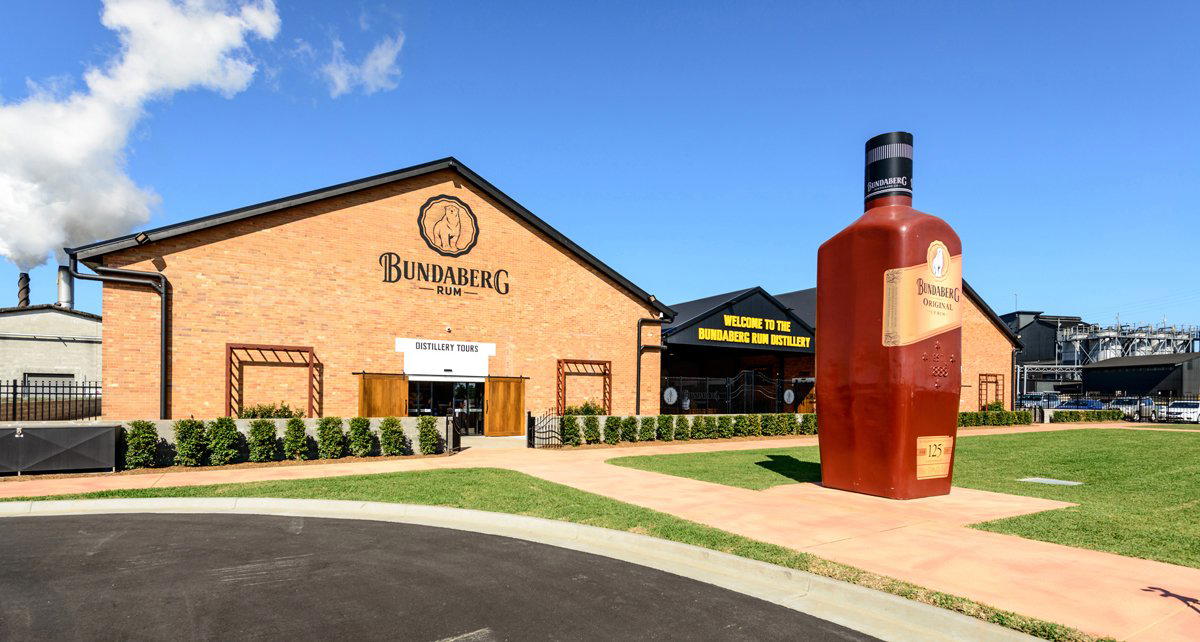
Where Queensland's Sugarcane Belt Meets the Still
Bundaberg Rum Distillery is a working distillery in Bundaberg, Queensland, with casual dress and reservations recommended. Hills Street, Bundaberg East, is not a glamorous address, but that's somewhat the point. Australian rum production is rooted in the practicalities of the sugarcane industry, and the distillery's location in the heart of Queensland's cane-growing country reflects a production logic that predates tourism by decades. The warehouses, the fermentation vessels, the visible infrastructure of a working distillery, these are not set-dressed for visitors. They are the actual apparatus of a spirit that has been made in this town for well over a century.
That physical presence matters in a way that separates Bundaberg from the newer wave of Australian craft distilleries. Where operations like Archie Rose Distilling Co in Sydney were designed from the outset with a visitor experience in mind, Bundaberg's distillery evolved its tourism program around a production site that already existed. The sequence is reversed, and it shows in ways that serious spirits travellers tend to appreciate.
Terroir in a Cane-Growing Region
Australian rum occupies an unusual position in the global spirits conversation. Unlike Caribbean producers who compete on island terroir and heritage appellations, Queensland rum has historically sold on flavour and accessibility rather than provenance storytelling. That is beginning to shift. The sugarcane grown in the Bundaberg region, in the broad coastal plains between the Burnett River and the Coral Sea, benefits from a climate that produces cane with a specific molasses profile: high in colour, dense in fermentable sugars, and carrying the subtropical warmth of the growing season into the fermentation stage.
This is, in the language of wine criticism, a form of terroir expression. The raw material is place-specific in a way that imported molasses distillation is not. What the cane absorbs from Bundaberg's red volcanic soils, the humidity of its summers, and the Burnett River's irrigation system becomes the starting point for every barrel in the warehouse. Whether that argument translates to the final bottled spirit at the level it does in, say, Henschke's single-vineyard Eden Valley expression is a debate worth having, but the raw material provenance is genuine and documentable.
For travellers who have spent time at Australian wine producers, the structured Rieslings of Angove Family Winemakers in Renmark, the estate-driven Pinots of Bass Phillip in Gippsland, or the Chardonnays of Cape Mentelle in Margaret River, the step toward a spirits producer making similar place-based arguments is a natural one. Bundaberg is the most legible version of that argument in the Queensland context.
A Prestige-Tier Destination in a Regional Setting
The 2025 Pearl 3 Star Prestige award signals something worth paying attention to. In the EP Club rating framework, a Pearl 3 Star designation sits at the upper end of the prestige tier, placing the distillery in a comparable set that includes serious regional producers across Australia. For a spirits destination that operates outside the major metropolitan circuits, Sydney, Melbourne, the Barossa, a prestige rating carries additional weight, because the visitor is making a deliberate detour rather than absorbing the venue as part of an existing city itinerary.
That detour logic is worth examining. Bundaberg sits in Queensland's Wide Bay region, several hours north of Brisbane by road. It is not a wine region in the conventional Australian sense, and it does not share the cultural infrastructure of the Barossa, the Hunter Valley (home to producers like Brokenwood), or the King Valley (where Brown Brothers operates). What it has instead is a single dominant producer with genuine depth of heritage and a production site that is worth visiting on its own terms.
The regional isolation, paradoxically, strengthens the case. Distillery visits in established wine country often compete with dozens of cellar doors. In Bundaberg, the distillery occupies a different category entirely. Kalki Moon Distilling, also based in Bundaberg, represents the newer craft end of the local spirits scene, but the two operations address different visitor interests and different scales of production. Taken together, they make Bundaberg a more substantive spirits destination than its Queensland regional city status might initially suggest.
Australian Rum in Broader Context
Australian spirits as a category has expanded considerably over the past decade. The craft distillery movement that produced operations like Archie Rose in Sydney has run in parallel with growing international recognition for Australian rum, gin, and whisky. Against that backdrop, the Bundaberg Rum Distillery represents a different and older strand: production at scale, with a regional identity strong enough to function as a shorthand for Australian rum in export markets across decades.
That scale and recognition place it in a different peer conversation from boutique producers, closer in spirit (if not in category) to heritage wine estates like All Saints Estate in Rutherglen or Leading's Wines in Great Western, where longevity and regional rootedness are themselves part of the product's meaning. The distillery's production heritage is not a backstory layered onto a visitor experience; it is the visitor experience, made legible through the tour format and the working site itself.
For context on how heritage-scale Australian producers compare to newer entrants, Casella Family (Yellow Tail) in Griffith and Blue Pyrenees Estate in Pyrenees offer instructive parallels in the wine world. And for those tracing spirits heritage internationally, Aberlour in Aberlour, or the estate-model precision of Accendo Cellars in St. Helena in a wine context, shows how provenance-led production communicates across categories and continents.
Planning Your Visit
The distillery's address at Hills Street, Bundaberg East, places it within the eastern residential and industrial fringe of the city, accessible by car from the Bundaberg CBD in under ten minutes. Visitors should confirm tour formats, hours, and booking requirements directly before travelling. Given the distance many visitors will travel to reach Bundaberg, confirming availability before arrival is advisable.
Comparison Snapshot
Comparable venues nearby, for context on price, style, and recognition.
| Venue | Cuisine | Price | Awards | Notes |
|---|---|---|---|---|
| Bundaberg Rum DistilleryThis venue — the venue you are viewing | Bundaberg | $$ | ||
| Kalki Moon Distilling | Bundaberg | $$ | Svensson Heights | |
| Baldwin Distilling Company | Winery | , | Canberra | |
| Grandad Jack's Craft Distillery | Winery | $$ | Burleigh Heads | |
| Beenleigh Artisan Distillery | Logan | $$ | Eagleby | |
| The Story Wines | Syrah, Shiraz | $$ | , | Moorabbin |
Continue exploring
More in Bundaberg
Wineries in Bundaberg
Browse all →
At a Glance
- Iconic
- Historic
- Industrial
- Group Outing
- Celebration
- Wine Education
- Historic Building
- Barrel Room
Industrial and historic atmosphere with engaging, humorous guides and lively tasting bar featuring rich rum aromas.