
Falstaff Winery - Listed
Bass Phillip occupies a distinct position in Australian fine wine: a small Gippsland estate producing Pinot Noir and Chardonnay that consistently draws comparison with premier Burgundy producers.. The address is Leongatha South, but the wines travel considerably further.

Pearl is the En Primeur Club membership app — saves, bookings, and concierge access live there. Same editors, same standards.
- Address
- 16 Hunts Road, Leongatha South, VIC 3953, Australia
- Phone
- +61356643366
- Website
- bassphillip.com
- Directions
- Get directions
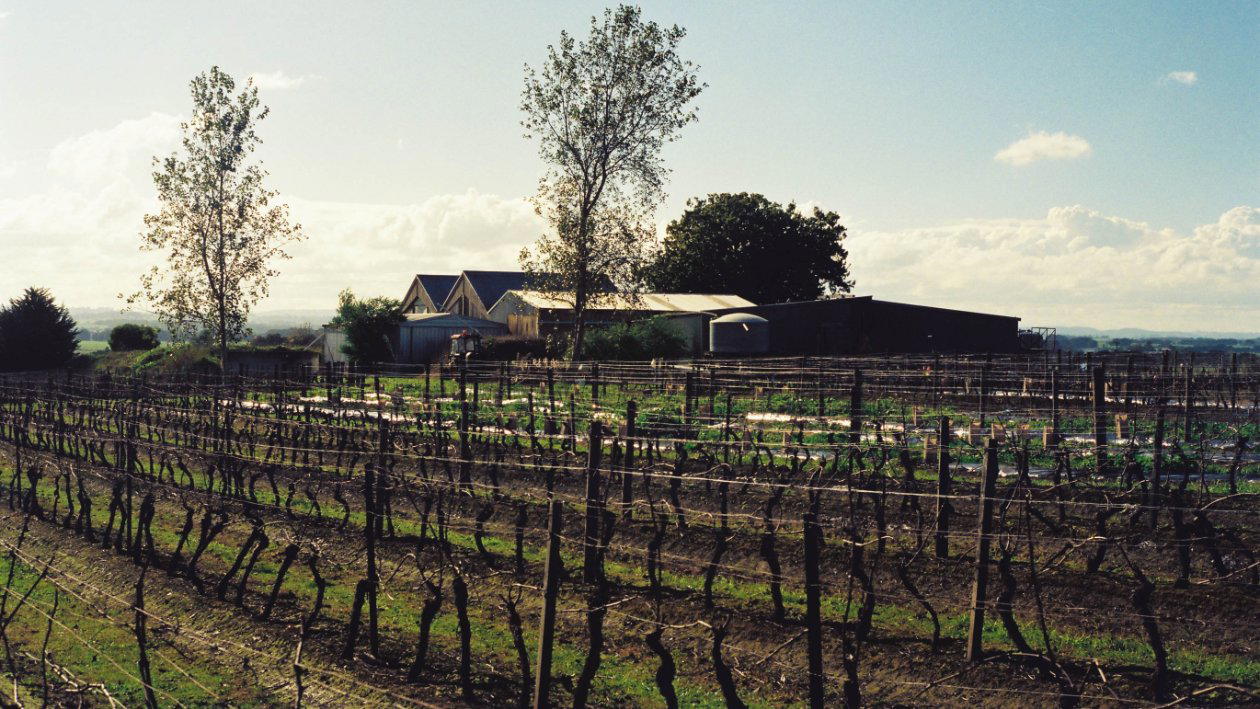
Where South Gippsland's Cool Climate Makes Its Argument
The road to Leongatha South winds through dairy country, past paddocks that look nothing like any obvious conception of fine wine territory. That contrast is part of the point. South Gippsland sits at a latitude and elevation that delivers a growing season long enough to build complexity in Pinot Noir and Chardonnay without the heat that strips tension from both varieties. The maritime influence from Bass Strait moderates temperatures through summer, and the red volcanic soils of this particular corridor hold moisture differently from the alluvial plains that dominate much of regional Victoria. Bass Phillip, at 16 Hunts Road, sits within that specific geography, and the wines it produces are, in practical terms, the strongest argument the region has made for its own seriousness.
For more on what Gippsland offers across food, drink, and place, see our full Gippsland restaurants guide.
The Terroir Case for South Gippsland
Australian fine wine conversation has long been dominated by a handful of regions: the Barossa, Eden Valley, Clare, Margaret River, the Yarra. Gippsland sits outside that established centre of gravity, which is partly why Bass Phillip's reputation is built almost entirely on the quality of what's in the glass rather than the promotional weight of a well-known appellation. The estate receives no particular tourism infrastructure boost, no anchor of a famous neighbour, and no regional shorthand that sells itself. What it has instead is a site that produces Pinot Noir with a structural discipline and mid-palate density that most Australian regions cannot replicate, and a Chardonnay program that earns comparison with producers working at much higher volumes and much greater public visibility.
The cool-climate case for Pinot Noir in Australia has been made most persuasively by a short list of producers. In the Yarra Valley, properties like those that influenced the Burgundy-trained generation of Australian winemakers have set one benchmark. In the Adelaide Hills, a similar argument has been constructed around elevation. South Gippsland's version of that argument is quieter and more geographically isolated, which makes Bass Phillip's sustained critical recognition over decades more instructive, not less.
Allocation, Scarcity, and What That Signals
Small-production Australian estates that operate on allocation occupy a different market position from cellar-door-led businesses. That model creates a particular kind of scarcity: not manufactured, but structural, a function of site size and a deliberate commitment to quality-over-volume production.
For collectors accustomed to planning around Burgundy's en primeur calendar, the parallel is instructive. Bass Phillip's wines require forward planning and a willingness to engage with a waiting list rather than a walk-in purchase. The estate's international reputation has grown steadily among buyers who treat Australian Pinot with the same seriousness they extend to Chambolle or Gevrey, and within that group, the wines hold their value and their place on cellaring lists well.
Contrast this with the volume-led end of Australian wine production: producers like Casella Family (Yellow Tail) in Griffith or Angove Family Winemakers in Renmark operate at a scale and a price point where the commercial logic is entirely different. Neither comparison diminishes either producer; they are simply solving different problems.
Among Australian fine wine producers, a small group has built reputations that travel internationally without the support of large marketing operations. Leading's Wines in Great Western does this through the Grampians' old-vine Shiraz tradition. Brokenwood in the Hunter Valley built its name over decades through Semillon and Shiraz with clear regional identity. Bird in Hand in the Adelaide Hills represents the cool-climate southern tier of South Australia. Bass Phillip's position within this broader picture is as the producer that has done the most to make South Gippsland legible as a serious fine wine address on its own terms.
The Henschke and Penfolds comparison is also worth framing correctly. Both are institutions with long histories and multi-regional production. Bass Phillip operates at a fraction of that scale and with a single-site focus that makes the comparison more useful as a contrast than a peer grouping. Clarendon Hills in McLaren Vale offers a closer structural parallel: small, critically acclaimed, Pinot-curious but Shiraz-dominant, with an international collector following built through quality rather than scale.
Further afield, Blue Pyrenees Estate in the Pyrenees and Brown Brothers in the King Valley both work in cooler Victorian corridors, though with substantially different production philosophies and commercial models. For spirits drinkers who approach Bass Phillip's latitude from a different angle, Archie Rose Distilling Co in Sydney represents another expression of the Australian craft premium tier, as does Bundaberg Rum Distillery in Bundaberg at a very different point on the spectrum. The point is that Australian producers with genuine critical standing exist across categories and regions; Bass Phillip's distinction is the specificity of its focus.
For reference across the global fine wine context, producers like Cape Mentelle in Margaret River, Castle Rock Estate in Porongurup, and All Saints Estate in Rutherglen all occupy distinct positions within Australian wine geography. Bass Phillip's closest international parallel, in terms of site commitment and variety focus, remains the small Burgundy domaine model, specifically the Côte de Nuits producer who farms a few hectares of classified land and sells through a direct mailing list to a loyal international clientele. For Scotch whisky enthusiasts who understand that geography-specific model, Aberlour in Aberlour offers a useful analogue from a different category.
Planning a Visit
At-a-Glance Comparison
Comparable venues nearby, for context on price, style, and recognition.
| Venue | Cuisine | Price | Awards | Notes |
|---|---|---|---|---|
| Bass PhillipThis venue — the venue you are viewing | Pinot Noir, Chardonnay | Not listed | Falstaff Winery - Listed | Not listed |
| Thistledown Wines | Grenache, Shiraz | $50–100 | Not listed | McLaren Vale |
| Mount Mary | Cabernet Sauvignon, Merlot | Not listed | Falstaff Winery - Listed | Coldstream |
| Coldstream Hills | Pinot Noir, Chardonnay | $50–100 | Not listed | Gruyere |
| Domaine Chandon - Australia | Chardonnay, Pinot Noir | $50–100 | Not listed | Coldstream |
| Garagiste | Chardonnay, Pinot Noir | Not listed | Not listed | Mornington Peninsula |
Recognition history
Dated appearances from independent guides and award organizations, with the underlying list record or original source where available.
Falstaff Winery - Listed
Falstaff
Continue exploring
More in Gippsland
Restaurants in Gippsland
Browse all →
Details
- Elegant
- Rustic
- Quiet
- Scenic
- Intimate
- Sophisticated
- Wine Education
- Solo Exploration
- Special Occasion
- Vineyard Tour
- Estate Grounds
- Barrel Room
- Biodynamic
- Organic
- Sustainable
- Vineyard
- Garden
- Pinot Noir
- Chardonnay
- Gamay
- Still Red
- Still White
- Private Tasting
- English
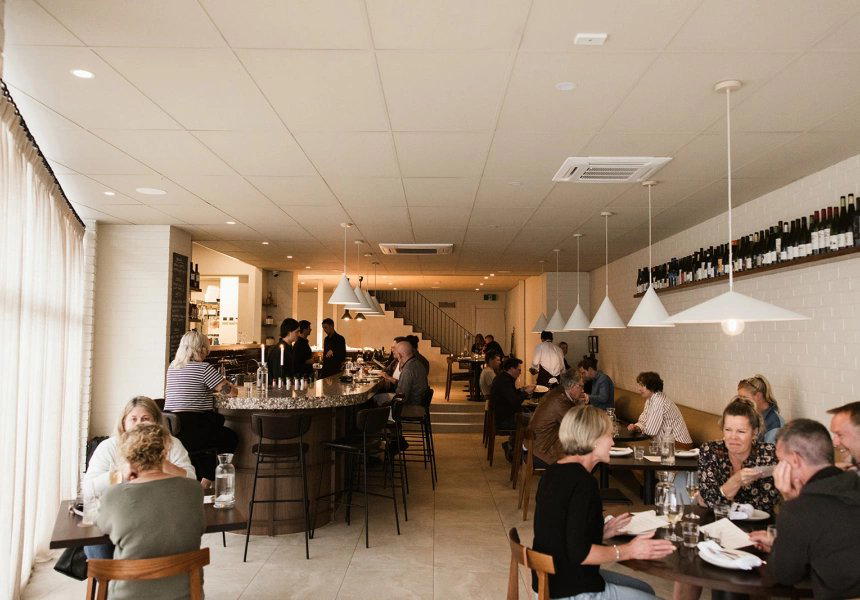
Serene and elegant atmosphere amid organic vineyards with a focus on natural, minimal-intervention winemaking.