Blue Pyrenees Estate sits at the cooler end of Victoria's Pyrenees wine region, where granitic soils and significant diurnal shifts shape wines with more structural tension than the broader Central Victoria average.

Pearl is the En Primeur Club membership app — saves, bookings, and concierge access live there. Same editors, same standards.
- Address
- 656 Vinoca Rd, Avoca VIC 3467
- Phone
- +61 3 5465 1111
- Website
- bluepyrenees.com.au
- Directions
- Get directions
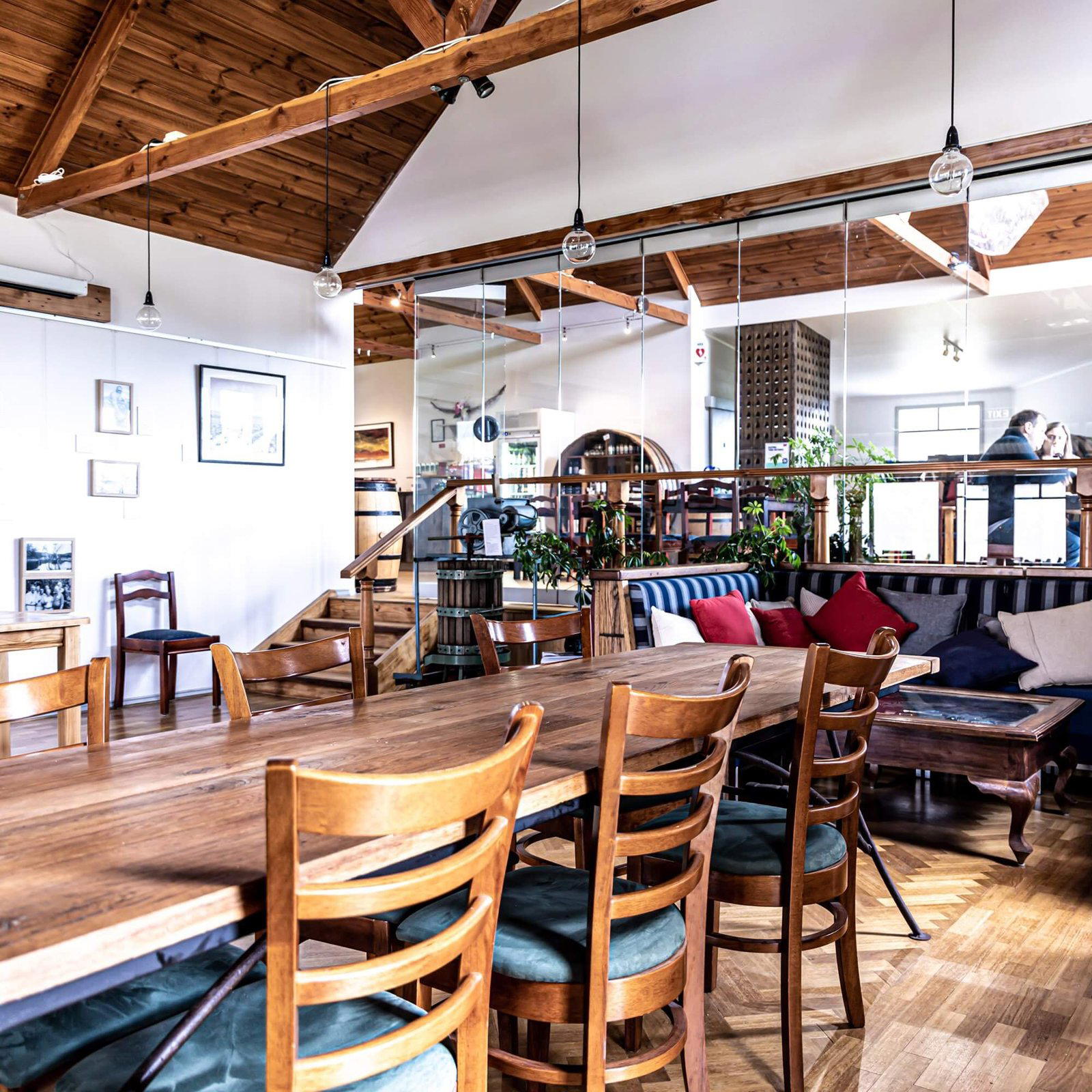
Where the Pyrenees Plateau Speaks in the Glass
The Pyrenees region of Victoria sits at elevations that most Australian wine tourists underestimate. The ranges here are not dramatic in the alpine sense, but they introduce enough altitude and east-facing aspect to produce growing conditions that diverge sharply from the warmer plains to the south and west. The diurnal temperature range across the growing season is significant: warm enough for full ripening, cool enough at night to lock in acidity that many Central Victorian regions struggle to retain.
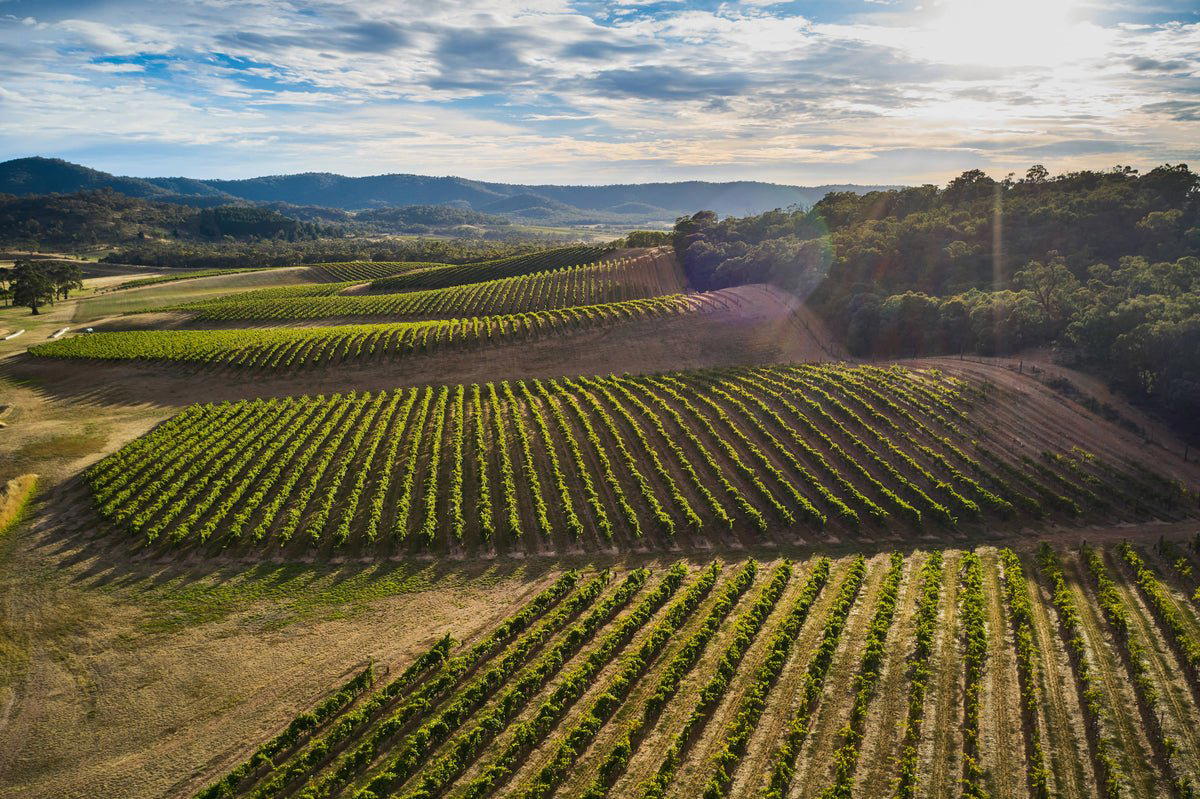
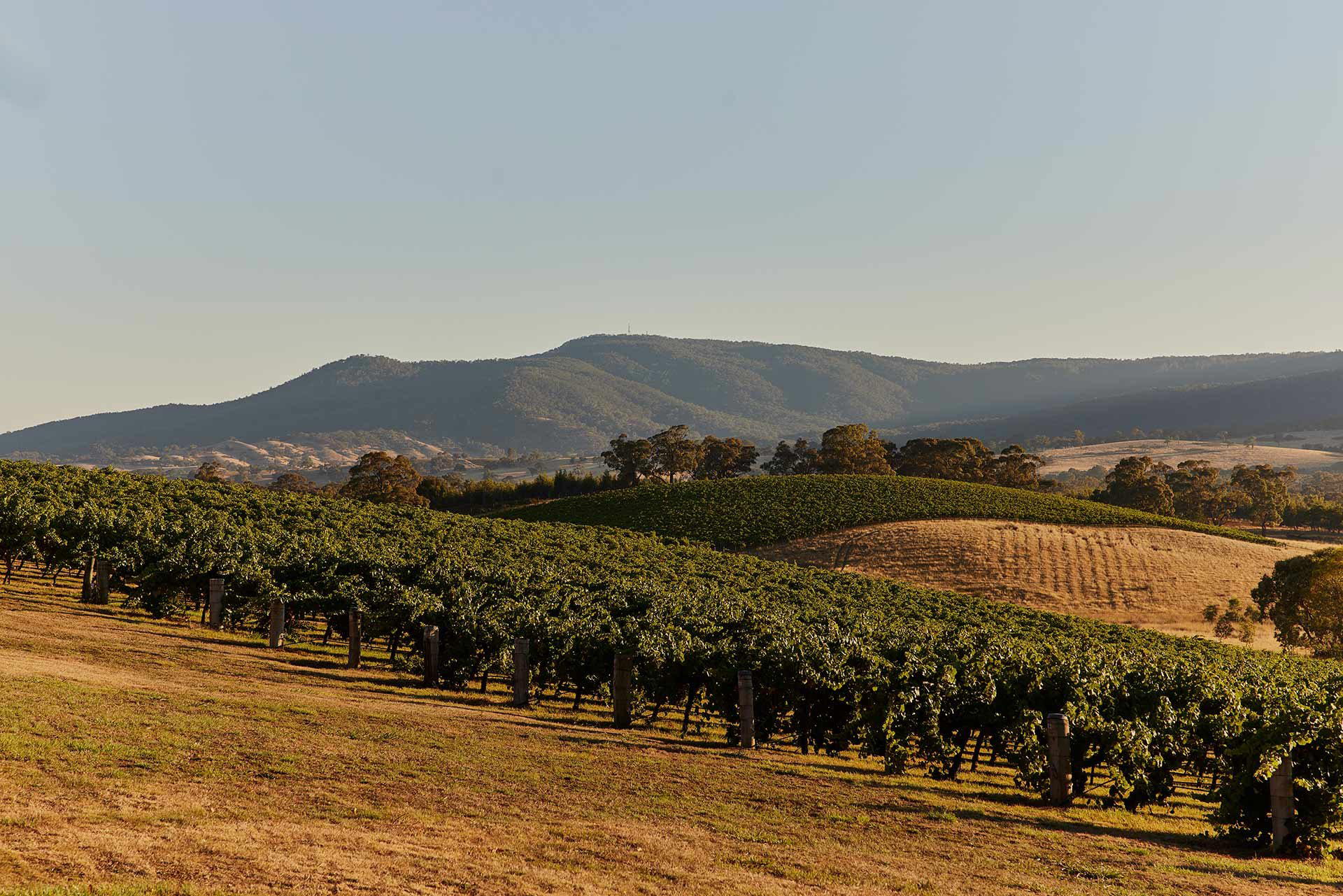
Arriving at the property, the visual register is one of space and granite. The estate sits in open country, with the surrounding terrain carrying that particular grey-brown mineral palette of weathered volcanic and granitic rock that characterises this part of the Victorian Highlands. It is not decorative country in the soft-focus sense, but it is legible: the land tells you something about what will be in the glass before you have poured a drop. That legibility is part of what the Pyrenees has built its reputation around, and Blue Pyrenees Estate belongs firmly within that tradition.
The Pyrenees GI is a small region by Australian standards, with a total planted area that keeps it well below the production volumes of the Barossa or McLaren Vale. That scale produces a peer group of estates where individual site expression matters more than brand volume. Dalwhinnie and Taltarni Vineyards anchor the region's established reputation, with Taltarni drawing particular attention for its sparkling production alongside its still wines. Blue Pyrenees Estate operates across a similar range of the region's characteristic varieties, with Shiraz and Cabernet Sauvignon among the red expressions that have historically defined Pyrenees identity.
For context, the same Prestige recognition tier covers producers like Bass Phillip in Gippsland, whose Pinot Noir work has set benchmarks for cool-climate viticulture in Victoria, and Leading's Wines in Great Western, a producer whose longevity and site-specificity carry their own form of authority. Sitting alongside those names is not incidental.
Terroir as the Primary Variable
What makes the Pyrenees a useful case study in Australian terroir is the degree to which its wines diverge from the conventional warmth that defines the country's most exported style. The granitic and basaltic soils across the sub-region drain freely, reducing vine vigour and concentrating root systems in ways that tend to produce wines with more defined structure and less of the generous mid-palate weight that warm-climate Australian reds are often associated with internationally. The result is a category of red wine that ages more predictably and rewards cellaring more systematically than its warmer-region counterparts.
This structural character shows up consistently across the Pyrenees peer group. Estates in the region that have pursued restrained extraction and moderate alcohol levels have found that the wines develop over time in ways that mirror, loosely, the behaviour of southern Rhône reds or mid-weight Bordeaux blends.
For readers approaching this region from other Australian benchmark areas, the comparison with Brokenwood in Hunter Valley or Cape Mentelle in Margaret River is instructive: each of those producers works in a region with a very different soil and climate profile, and the contrast sharpens what is specific to Pyrenees viticulture. The tannin structure here is not Brokenwood's silky Hunter Shiraz, and it is not Cape Mentelle's coastal-influenced Cabernet. It is its own thing, formed by altitude, granite, and a continental thermal range that produces wines with backbone and restraint in roughly equal measure. The region's wine tourism infrastructure is functional rather than lavish: this is not the Yarra Valley's proximity to the city, and it is not the Barossa's high-investment cellar-door theatre. What it offers instead is concentrated access to producers at an estate scale, in a landscape that has not been overrun by the volume tourism that changes the character of how wine is poured and discussed at cellar door. Given the region's production scale and the estate's Prestige-tier positioning, it is worth confirming opening hours and any booking requirements before making the drive. Visitors who combine the estate with Dalwhinnie and Taltarni Vineyards in a single itinerary will have a comprehensive read of what the Pyrenees GI currently offers at its most serious level. For a broader view of the region, including restaurant options and accommodation context, the full Pyrenees guide provides the planning layer that a winery-only visit can miss.
The Pyrenees sits within a broader circuit of Victorian and South Australian wine regions that reward sequential visits. All Saints Estate in Rutherglen to the northeast offers a sharp contrast in variety focus, with fortified wines forming the core of its historical identity. Brown Brothers in King Valley extends the Victorian highlands circuit in a different direction. Angove Family Winemakers in Renmark, Bird in Hand in Adelaide Hills, and further afield, Archie Rose Distilling Co in Sydney, Bundaberg Rum Distillery in Bundaberg, and international reference points like Aberlour in Aberlour or Accendo Cellars in St. Helena illustrate the range of serious producers that earn Prestige-tier recognition in their respective categories and regions.
Comparable Spots, Quickly
Comparable venues nearby, for context on price, style, and recognition.
| Venue | Cuisine | Price | Awards | Notes |
|---|---|---|---|---|
| Blue Pyrenees EstateThis venue — the venue you are viewing | Shiraz, Cabernet Sauvignon | Not listed | Not listed | Not listed |
| Dalwhinnie | Shiraz, Cabernet Sauvignon | Not listed | Falstaff Winery - Listed | Moonambel |
| Taltarni Vineyards | shiraz, cabernet sauvignon | Not listed | Not listed | Pyrenees |
| Syrahmi | Shiraz, Pinot Noir | $50–100 | Not listed | Tooborac |
| The Story Wines | Syrah, Shiraz | Not listed | Not listed | Moorabbin |
| Seppelt Great Western | Shiraz, Chardonnay | Not listed | Not listed | Great Western |
Continue exploring
More in Pyrenees
Wineries in Pyrenees
Browse all →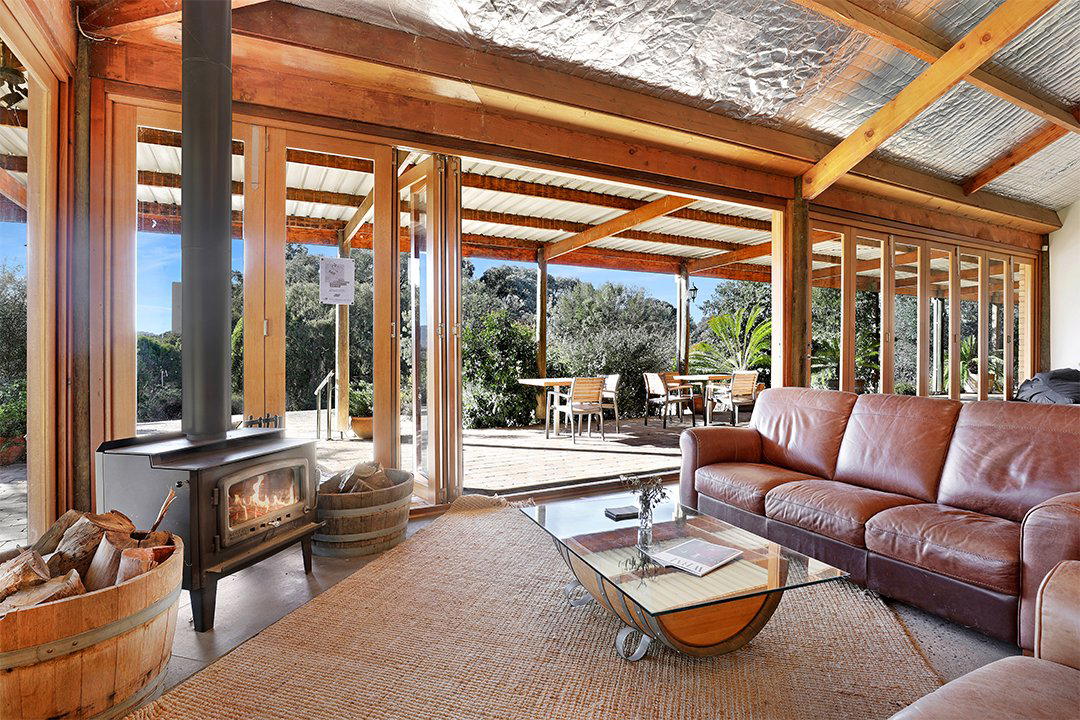
Restaurants in Pyrenees
Browse all →
Details
- Scenic
- Rustic
- Elegant
- Classic
- Group Outing
- Wine Education
- Celebration
- Vineyard Tour
- Estate Grounds
- Terrace
- Picnic Area
- Sustainable
- Vineyard
- Mountain
- Shiraz
- Cabernet Sauvignon
- Chardonnay
- Merlot
- Pinot Noir
- Still Red
- Still White
- Sparkling
- Cellar Door Tasting
Relaxed and welcoming cellar door with gorgeous vineyard and hill views, cozy indoor fire in winter, and alfresco lawn seating in warmer months.