
MONA Pavilions sits within the grounds of the Museum of Old and New Art on the Derwent River, offering a lodging experience inseparable from one of Australia's most provocative contemporary art institutions. Michelin Selected in 2025, the property occupies a category of its own in Hobart's accommodation scene, where the museum's galleries, restaurants, and programming function as an extended living room for guests.
Pearl is the En Primeur Club membership app — saves, bookings, and concierge access live there. Same editors, same standards.
- Address
- 655 Main Rd, Berriedale TAS 7011, Australia
- Phone
- +61 3 6277 9911
- Website
- mona.net.au
- Directions
- Get directions
 Saves & bookings on Pearl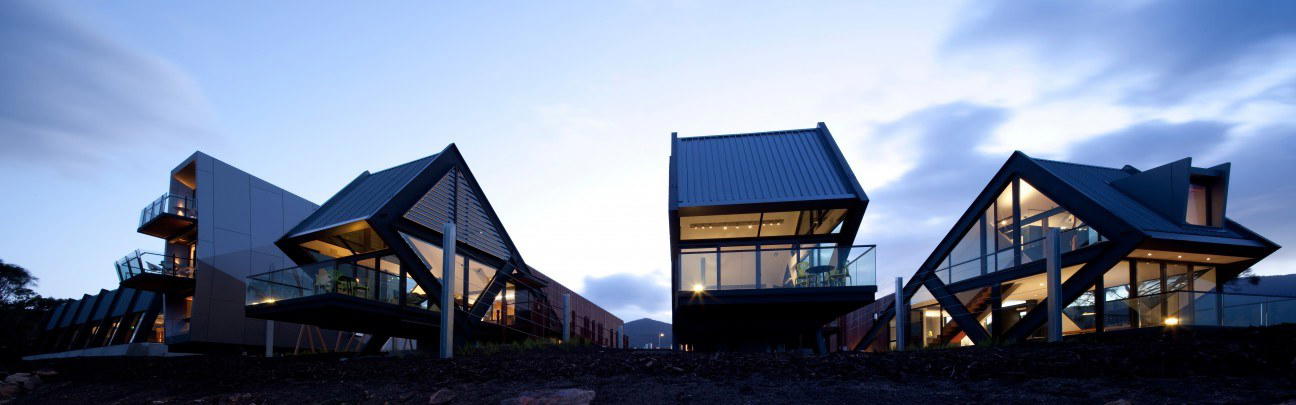
Art as Architecture: Arriving at Berriedale
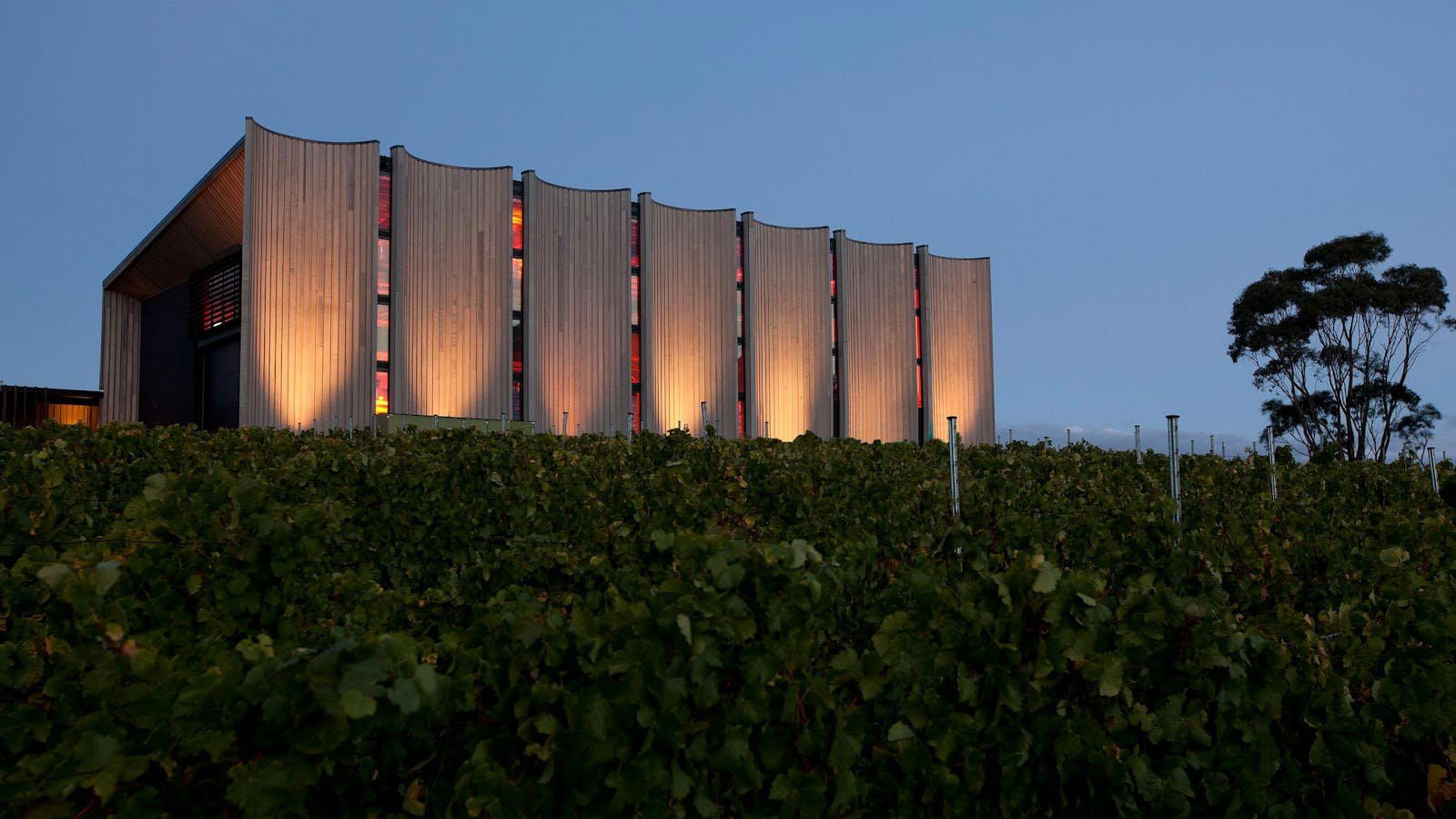
The approach to MONA Pavilions sets the terms immediately. You travel north along the Derwent River, past the vineyards of the Moorilla estate, before arriving at 655 Main Road Berriedale at a property where the museum is not adjacent to the hotel but inseparable from it. The pavilions themselves sit on the MONA site, meaning guests do not visit the art, they sleep inside it. That structural fact places the property in a category that has no direct equivalent elsewhere in Hobart's accommodation market.
Hobart's premium hotel tier has expanded considerably over the past decade. The Tasman brought a Heritage Hotels property to the waterfront; MACq 01 Hotel built its identity around colonial maritime narrative; The Henry Jones Art Hotel on Hunter Street occupies a converted jam factory with an established art-hotel model. MONA Pavilions operates differently from all of them. Where those properties bring art into hospitality as a design layer, here the hospitality exists because the art institution came first. That inversion changes what a stay means.
The Museum as Extended Living Room
The Museum of Old and New Art opened in 2011, financed by professional gambler and collector David Walsh, and quickly became among the more discussed art institutions in the Southern Hemisphere, not for its scale alone but for its curatorial provocation. The underground galleries contain approximately 3,000 works ranging from ancient Egyptian artefacts to contemporary installations designed to unsettle rather than decorate. For guests of the pavilions, this is not a day-trip addition to an itinerary; it is the primary context of the stay.
The access structure for pavilion guests differs from that of general museum visitors, who arrive largely by ferry from Hobart's waterfront or by road. Staying on-site means the museum's hours operate differently for you, and the crowds that gather at the main entrance are a separate experience from what guests encounter. In Australian hospitality terms, this positions MONA Pavilions alongside properties like Southern Ocean Lodge in Kingscote and Emirates One&Only; Wolgan Valley, places where the site itself is the proposition, not the room category or the restaurant name.
The Dining Programme: MONA's Table
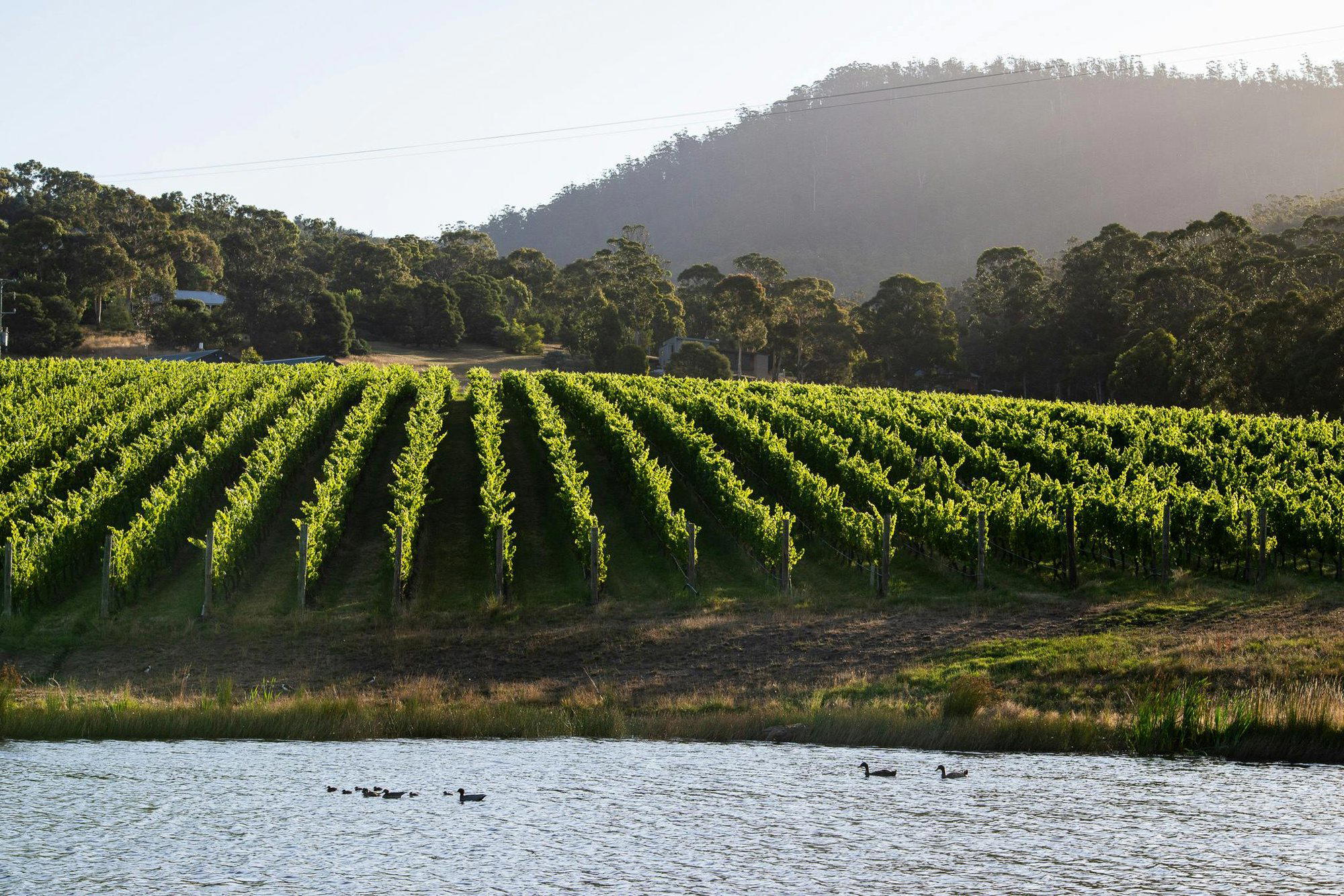
Food and beverage programme at MONA has always been treated as part of the curatorial offer rather than a commercial afterthought, which is relatively unusual for an Australian regional museum. The Moorilla estate produces wine on the same land, giving the property a viticultural identity that few art institutions globally can claim. The on-site restaurants operate within the same design logic as the galleries: considered, deliberately provocative in places, and oriented toward Tasmania's produce base.
Tasmania's food identity has developed a specific character over the past fifteen years. The state's cool-climate agriculture, clean water systems, and proximity to Bass Strait seafood have given its leading restaurants a larder that coastal mainland cities genuinely envy. Hobart's dining scene, covered in our full Hobart restaurants guide, has attracted serious culinary attention as a result. At MONA, this translates into a dining programme where Tasmanian provenance is structural, not decorative.
The property's food and beverage offer is meaningfully different from what guests find at city-centre competitors. The Islington Hotel and Moss Hotel both deliver polished in-house dining within the urban grid. MONA's restaurants operate with the estate's wine production as a direct input and the museum's programming calendar as a scheduling variable, meaning the dining experience during a major event like Dark Mofo is categorically different from a quiet midweek stay in autumn.
Michelin Recognition and What It Signals
MONA Pavilions holds a Michelin Selected designation in the 2025 Michelin Hotels guide, which represents the guide's formal acknowledgment of properties that meet a defined standard of hospitality quality without necessarily sitting at the starred restaurant tier. In the Australian context, Michelin's hotel selections carry particular weight because the guide's presence in the country is recent and the selection pool is still small. The designation places the hotel alongside properties receiving the same formal recognition in Sydney, Melbourne, and other Australian cities, including Capella Sydney and The Calile in Brisbane.
Within the art-hotel category specifically, Michelin recognition confirms what the property's comparable set in other markets have established: that design-led, institution-adjacent accommodation can meet the same hospitality benchmarks as conventional luxury hotels. Internationally, the closest structural comparisons might be found at properties like Badrutt's Palace Hotel in St. Moritz or Hôtel de Paris Monte-Carlo, where the institution surrounding the rooms is as much the product as the rooms themselves, though MONA's aesthetic register is a deliberate inversion of those properties' classical luxury codes.
Domestically, the art-hotel model has a smaller but coherent peer group. Art Series, The Watson in Adelaide and The Olsen Melbourne, Art Series in South Yarra both operate within this genre, as does the aforementioned Henry Jones in Hobart. What separates the hotel from that cohort is that it is not a hotel that commissioned art for its walls; it is a museum that built a hotel on its grounds. The distinction is not semantic.
Planning a Stay
The pavilions are located at 655 Main Road Berriedale, approximately 10 kilometres north of Hobart's CBD. Particularly atmospheric arrival is by MONA ferry from Hobart's waterfront, which runs on a schedule tied to museum operating hours, check the MONA website for current timetables before booking transport. Driving is the more flexible option and car hire from Hobart Airport makes the property accessible as a base for wider Tasmanian travel.
Timing matters significantly here. MONA's programming calendar drives demand: Dark Mofo in June and MONA FOMA in January and February generate high occupancy and a specific social atmosphere on-site. Guests seeking a quieter engagement with the galleries and estate are better served by shoulder periods in autumn (March through May) or early winter. The Moorilla cellar door is a worthwhile itinerary anchor regardless of season.
For travellers comparing Hobart's premium accommodation, the decision between the hotel and city-centre options like The Tasman or MACq 01 is essentially a question of what you are booking. A Hobart hotel with good access to Salamanca Place and the waterfront is one proposition. A stay inside an art institution with its own wine estate, programming calendar, and designated Michelin recognition is another. They are not competing for the same guest in the same way.
Booking and Cost Snapshot
Comparable venues nearby, for context on price, style, and recognition.
| Venue | Price | Awards | Notes |
|---|---|---|---|
| MONA PavilionsThis venue — the venue you are viewing | $$$$ | 5-Star | Not listed |
| Moss Hotel | $$$ | 4-Star | Salamanca Place, Boutique heritage warehouse conversion with modern comforts. |
| The Henry Jones Art Hotel | $$$$ | Michelin 1 Key | Hobart CBD, Restored 19th-century waterfront warehouse turned luxury art hotel |
| MACq 01 Hotel | $$$$ | Michelin 1 Key | Hobart waterfront, Waterfront storytelling luxury hotel celebrating Tasmanian heritage |
| The Islington Hotel | $$$ | Michelin 1 Key | Hobart CBD, Heritage boutique with modern extensions |
| The Tasman | $$$$ | Michelin 1 Key | Hobart CBD, Blends Georgian heritage, Art Deco, and contemporary Pavilion buildings |
Recognition history
Dated appearances from independent guides and award organizations, with the underlying list record or original source where available.
Mr & Mrs Smith Smith Seal of Approval
Mr & Mrs Smith
Michelin Selected
Michelin
Continue exploring
More in Hobart
Hotels in Hobart
Browse all →
Bars in Hobart
Browse all →
Restaurants in Hobart
Browse all →
At a Glance
- Modern
- Sophisticated
- Scenic
- Elegant
- Whimsical
- Romantic Getaway
- Anniversary
- Weekend Escape
- Panoramic View
- Design Destination
- Pool
- Fitness Center
- Spa
- Sauna
- Restaurant
- Wi Fi
- Waterfront
- Pool
- Fitness Center
- Spa
- Sauna
- Restaurant
- Wi Fi
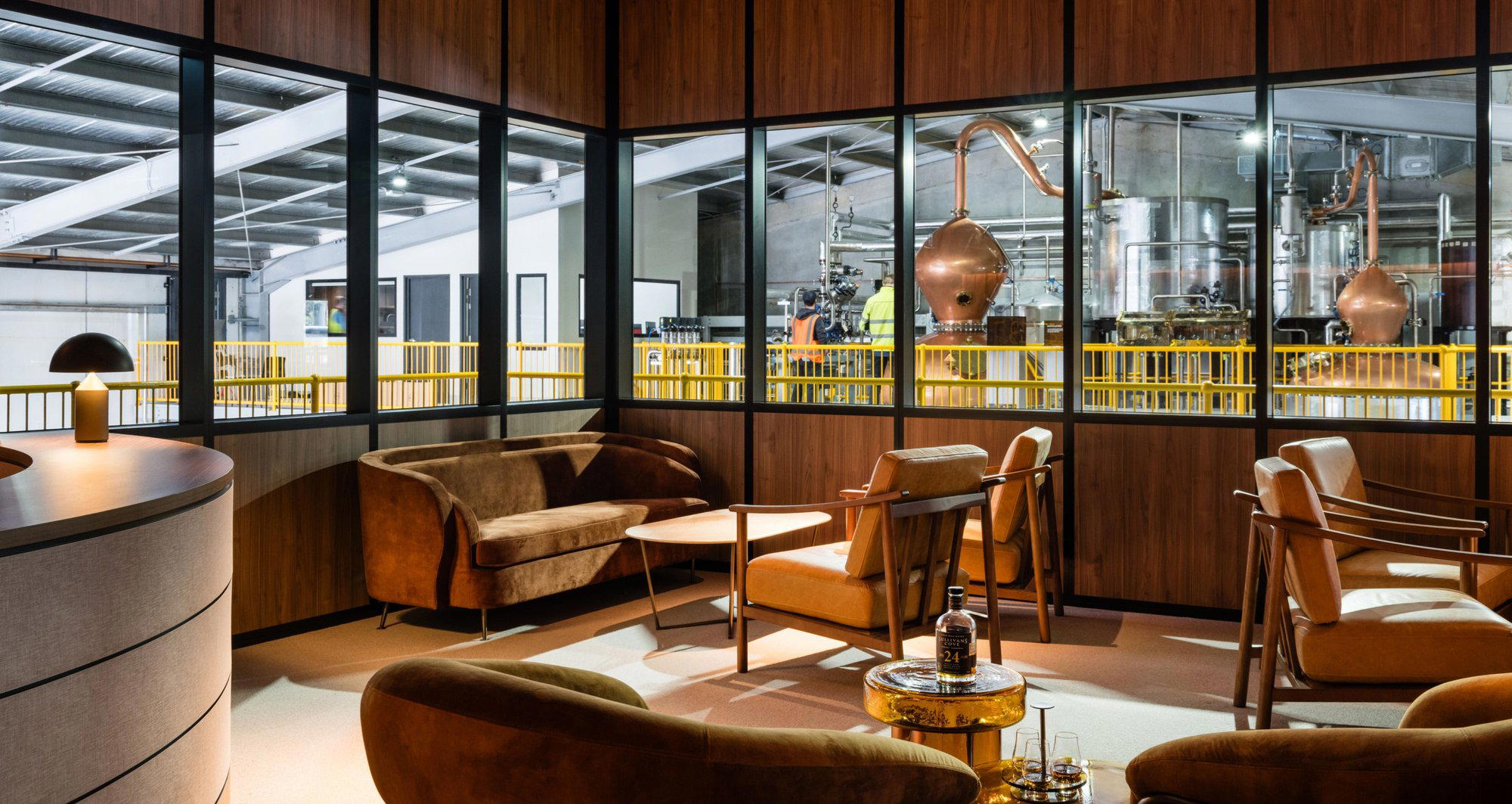
Sophisticated and serene with sharp geometric designs, stylish furniture, and a contemporary atmosphere enhanced by art and river views.