
Zenya is a small counter-only ramen shop in Niiza with a long run in Tabelog’s Ramen EAST 100 selections, including 2025. The appeal is not spectacle but discipline: a suburban Saitama ramen address where sourcing, portion scale, and a low-price format sit inside Japan’s serious everyday noodle culture.
Pearl is the En Primeur Club membership app — saves, bookings, and concierge access live there. Same editors, same standards.
- Address
- 埼玉県新座市野火止4-10-5
- Phone
- +81484796664
- Website
- tabelog.com
 Saves & bookings on Pearl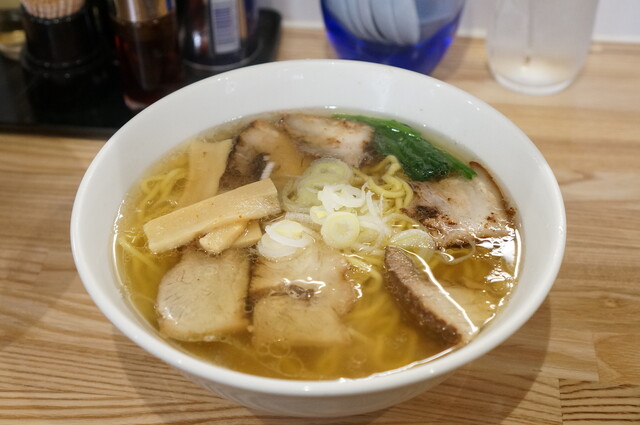
The approach to a serious suburban ramen counter in Japan has a different rhythm from a station-front chain. The room is small, the counter does the work, and the meal is built around speed, heat, and a narrow repertoire rather than theatrical service. In Niiza, that format matters because ramen is not treated as a consolation prize outside central Tokyo; Saitama’s strongest shops compete on broth clarity, noodle handling, and repeat custom from locals who know exactly what they came for.
Suburban ramen judged by restraint, not spectacle
Niiza sits on the JR Musashino Line, which gives its ramen scene a practical commuter logic: people eat before or after movement, not as part of a long dining itinerary. Zenya belongs to the counter-shop tradition where a compact room and short service window create pressure on execution. The meaningful credential is consistency. Selection for Tabelog Ramen EAST 100 in 2025 places it within a heavily scrutinized regional category, and its repeated appearances from 2017 through 2025 point to durability rather than a single season of attention.
That matters in ramen because reputation often rises and fades quickly. A shop can draw attention with a new style, a limited bowl, or a media cycle, but remaining in the conversation over years requires something less photogenic: procurement that holds steady, seasoning that does not drift, and a kitchen that can serve the same idea across many lunch services. For travelers used to Tokyo’s reservation economy, this is a different kind of luxury. The value is access to a mature local benchmark without the ceremony attached to fine dining.
The ingredient-sourcing story here is best understood through category rather than named suppliers. Ramen quality depends on a chain of decisions before the bowl reaches the counter: wheat choice and noodle texture, the balance of animal or seafood-derived stock, tare salinity, fat control, and topping restraint. In a small shop, those decisions are exposed. There is little space for a sprawling menu to hide inconsistency. A counter-only setting makes the kitchen’s priorities legible, and Zenya’s long award presence suggests that regulars and evaluators are responding to reliability in that narrow lane.
Why Niiza's ramen scene rewards precision
Tokyo often dominates English-language ramen planning, but the eastern Japan ramen map is broader than the capital’s central wards. Saitama, Chiba, Kanagawa, and the outer Tokyo suburbs have produced a strong culture of destination ramen: small shops near residential stations, limited seating, local queues, and menus that do not need to court tourists. Niiza fits that pattern. The city is close enough to Tokyo for a deliberate detour, yet far enough from the usual hotel-and-shopping circuit to keep the meal grounded in local routine.
That difference affects expectations. This is not the setting for a long tasting progression or a polished hospitality arc. It is a short, focused meal in which the bowl has to carry the entire argument. The useful comparison is not with high-spend restaurants, but with other low-price Japanese specialists: udon counters, curry shops, bakeries, and patisseries where repetition creates authority. In the wider casual tier, places such as Shinfula, PATISSERIE ORANGE, ROI LEGUME Asaka honten, Asaka Bakery Asakadai ten, and Udon Dokoro Ohana show how the suburbs around Saitama and Tokyo reward narrow specialization at accessible prices. Zenya’s distinction is that ramen, as a category, leaves even less room for delay or imprecision once the bowl is served.
For a broader view of the city’s dining context, see Our full Niiza restaurants guide. The surrounding travel picture is thinner than in Tokyo, but the planning frame still helps: Our full Niiza hotels guide, Our full Niiza bars guide, Our full Niiza wineries guide, and Our full Niiza experiences guide map the area beyond a single meal.
A compact counter with low tolerance for loose planning
The practical reading is simple: a small counter ramen shop works on its own terms. Reservations are unavailable, seating is limited, and cash planning matters because cards, electronic money, and QR code payments are not accepted. The shop has operated since 1999 and later moved from its earlier Nobidome address, which gives it the profile of a local institution without needing a broad dining room or expanded format.
Travelers building a Japan food itinerary should treat Zenya as a focused ramen stop rather than the anchor for a full day. Its strength lies in how much it says about suburban ramen culture: a low-cost bowl, a compact counter, a residential setting, and an award trail long enough to separate habit from hype. For readers comparing Japanese casual dining across cities, useful contrasts include -Grilled beef Sukiyaki- KAMAKURA TANUKIAN 鎌倉 たぬき庵 in Kamakura, . 鮪と炭火焼き うお炭 秋葉原店 in Tokyo, .cafe in Osaka, .know in Kumamoto, (Shoku) Vietnam in Kawasaki, [Curry Senmon Ten] Maruyama Kyoju. in Sapporo, [ki:] in Kyoto, #肉といえば松田 奈良本店 in Kashihara, 1/3 HAMBURGER FACTORY in Kanazawa, 1000 in Yokohama, and 1000mヒュッテ 1000m Hut in Kutchan. Overseas Japanese-leaning casual formats, including Jōdo Saké Bar in Los Angeles and Onigiri Time in Pasadena, underline the same point from another angle: tight formats succeed when sourcing, repetition, and service speed are aligned.
Side-by-Side Snapshot
Comparable venues by cuisine and price in the same metro.
| Venue | Cuisine | Price | Notes |
|---|---|---|---|
| ZenyaThis venue — the venue you are viewing | Classic Shio Ramen Shop | $ | Not listed |
| Yoshinoya (吉野家 178号線豊岡店) | Japanese Beef Bowl (Gyudon) | $ | 下陰 |
| Ramen Nikkou | Traditional Ramen & Tsukemen | $ | Hikone City |
| Umemura | Japanese Soul Food | $ | Koto |
| 中華そば 速水 | 和歌山ラーメン | $ | 緑ヶ丘 |
| Mamezou | Classic Japanese curry house | $ | Kichijoji |
Recognition history
Dated appearances from independent guides and award organizations, with the underlying list record or original source where available.
Tabelog 100 #34 · No. 34
Tabelog · Tabelog 100 - Ramen - EAST - 2025
Continue exploring
More in Niiza
Restaurants in Niiza
Browse all →


Bars in Niiza
Browse all →



Hotels in Niiza
Browse all →




Wineries in Niiza
Browse all →
At a Glance
- Well Known
- Cozy
- Classic
- Solo
- Casual Hangout
- Family
- Chefs Counter
- Standalone
A compact house-converted ramen shop with only counter seats, a relaxed and unpretentious atmosphere, and the buzz of ramen fans lining up for highly regarded shio bowls.