
Yoshisumi places Gyoda’s everyday noodle culture in a serious regional frame: udon, tempura and donburi at a modest price point, with recognition from Tabelog 100 Udon EAST in 2024, 2022 and 2020. The appeal is not luxury theatre, but the precision and consistency that turn a local wheat-noodle shop into a destination for Saitama dining completists.
Pearl is the En Primeur Club membership app — saves, bookings, and concierge access live there. Same editors, same standards.
- Address
- 埼玉県行田市棚田町2-3-6
- Phone
- +81485552676
- Website
- tabelog.com
 Saves & bookings on Pearl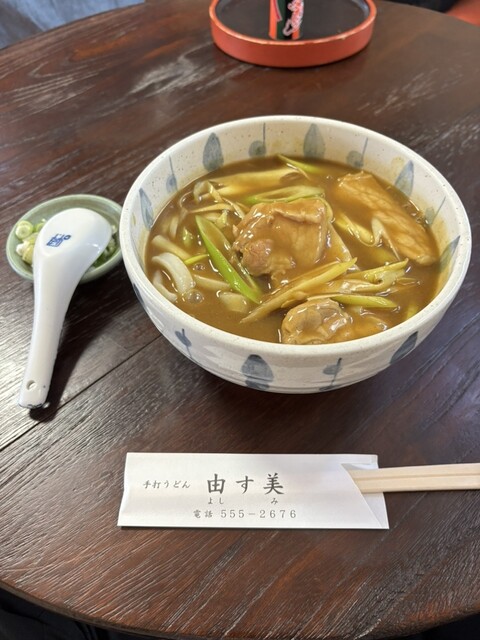
Approaching a house-style restaurant in Gyoda changes the tempo before the first bowl arrives. The city sits outside the dense restaurant circuits of Tokyo, and that distance matters: udon here reads less as a trend and more as a local staple, judged by regular use rather than social-media novelty. Yoshisumi belongs to that quieter category of Japanese dining where the room, the price tier and the noodle tradition all point in the same direction: wheat, broth, frying oil and rice bowls handled with enough discipline to earn repeat recognition beyond its immediate neighbourhood.
Gyoda udon, judged by the craft of restraint
Eastern Japan’s udon culture is often misunderstood by visitors who arrive expecting the ceremony of sushi or the maximalism of ramen. The measure is different. A serious udon shop has to make inexpensive ingredients feel exacting: flour, water, salt, stock and garnish, with tempura or donburi acting as supporting structure rather than distraction. That ingredient logic gives the category its force. Wheat noodles do not hide behind luxury produce, so texture, timing and balance carry the meal.
Yoshisumi’s Tabelog 100 Udon EAST selection in 2024, with prior selections in 2022 and 2020, places it inside a regional conversation that stretches well beyond Gyoda. The award matters because udon is a democratic field in Japan; recognition in this category tends to reward consistency and local loyalty as much as spectacle. A Tabelog score of 3.67 also signals a restaurant that has moved beyond neighbourhood convenience without entering the rarefied pricing codes of omakase dining.
The menu categories give the clearest reading of the house: udon, tempura and donburi. That trio is not accidental. Udon supplies the central grammar, tempura tests frying discipline, and donburi anchors the meal in rice-bowl practicality. In Saitama, where wheat cultivation and everyday noodle shops have long sat close to domestic eating patterns, this kind of format carries more cultural information than a longer menu would. The point is range within a narrow lane, not breadth for its own sake.
A family-lineage noodle shop rather than a chef-stage restaurant
Japan’s regional noodle rooms often operate outside the personality-led dining model that dominates international coverage. Yoshisumi is run by the fourth-generation owner of a long-established soba restaurant near Gyoda City Station, a detail that functions less as biography than as context. Soba and udon are different crafts, but both depend on repetition, water control, dough handling and a customer base that notices small changes. That background explains why this is better read as a lineage shop than a chef-driven stage.
The setting reinforces the point. A 29-seat room with long-table and raised-table seating puts it closer to family and friends dining than to hushed counter theatre. Children are welcome, private rooms are not part of the format, and the non-smoking policy keeps the room aligned with contemporary casual dining expectations. None of that makes the experience grand. It makes it legible: a local restaurant with enough structure to serve regulars, road-trippers and noodle-focused diners without changing its basic identity.
Compared with out-of-metro casual peers such as Kuma Tamaya, Golden Tiger, boulangerie Matsuoka and Jinenjo, the price band sits in the same low-cost bracket, but the udon award history gives Yoshisumi a clearer reason for a detour. Kuruma appears in the wider out-of-metro comparison set, yet the editorial distinction here is category specificity. This is not a general-purpose stop inserted into an itinerary for convenience; it is a wheat-noodle address whose recognition is tied to a defined Japanese food form.
How to place it in a Gyoda itinerary
Gyoda rewards travellers who are willing to look beyond metropolitan dining shorthand. The city’s food appeal is not built around luxury tasting menus; it sits in practical restaurants, local carbohydrates and formats designed for repeat use. For a broader map of the area, start with Our full Gyoda restaurants guide, then use Our full Gyoda hotels guide, Our full Gyoda bars guide, Our full Gyoda wineries guide and Our full Gyoda experiences guide to build the rest of the day around the meal rather than treating it as an isolated stop.
Travellers comparing casual Japanese dining across regions can read Yoshisumi alongside a wider national set: -Grilled beef Sukiyaki- KAMAKURA TANUKIAN 鎌倉 たぬき庵 in Kamakura for beef-led tradition, . 鮪と炭火焼き うお炭 秋葉原店 in Tokyo for urban seafood and charcoal cooking, .cafe in Osaka for café-format contrast, .know in Kumamoto for regional breadth, (Shoku) Vietnam in Kawasaki for imported casual cuisine, [Curry Senmon Ten] Maruyama Kyoju. in Sapporo for specialist curry, [ki:] in Kyoto for Kyoto’s tighter contemporary register, #肉といえば松田 奈良本店 in Kashihara for meat-focused dining, 1/3 HAMBURGER FACTORY in Kanazawa for Japan’s burger subculture, 1000 in Yokohama for port-city contrast, 1000mヒュッテ 1000m Hut in Kutchan for mountain dining, Jōdo Saké Bar in Los Angeles for the overseas sake-bar lens, and Onigiri Time in Pasadena for another everyday Japanese form translated abroad.
The editorial case is simple: choose Yoshisumi when the aim is to understand how a modest udon restaurant can carry regional credibility without adopting luxury signals. The spend is low, the category is focused, and the award history is specific enough to separate it from a routine noodle stop. For travellers who care about ingredient culture, that is the lesson: wheat noodles can be as revealing as premium fish or wagyu when the format is treated with seriousness.
A Quick Peer Check
Comparable venues by cuisine and price in the same metro.
| Venue | Cuisine | Price | Notes |
|---|---|---|---|
| YoshisumiThis venue — the venue you are viewing | Japanese Udon | $ | Not listed |
| Nakakooriten Kakigori | Japanese Kakigori (Shaved Ice) | $ | Shingu |
| Chitose Udon | Osaka Nikusui Udon | $ | Namba |
| Rishiri Ramen Miraku (利尻らーめん 味楽) | Rishiri-Style Yaki Shoyu Ramen | $ | Kohoku-Ku |
| Golden Tiger | Ramen & Tsukemen Shop | $ | Kumagaya |
| Fujidana Udon Kawagoe ten | Traditional Musashino Udon | $ | Shinjuku-cho |
Recognition history
Dated appearances from independent guides and award organizations, with the underlying list record or original source where available.
Tabelog 100 #90 · No. 90
Tabelog · Tabelog 100 - Udon - EAST - 2024
Continue exploring
More in Gyoda
Restaurants in Gyoda
Browse all →




Bars in Gyoda
Browse all →




Hotels in Gyoda
Browse all →



Wineries in Gyoda
Browse all →
At a Glance
- Cozy
- Classic
- Family
- Casual Hangout
- Standalone
- Sake Program
A modest, house-restaurant style spot with a relaxed, stylish-but-unpretentious feel that suits casual local noodle meals.