
Fujidana Udon Kawagoe ten belongs to Kawagoe’s serious everyday-food tier: udon and tempura, table seating, no-private-room simplicity, and recognition from Tabelog’s Udon EAST 100 selection. The draw is not ceremony but noodle craft, the kind of regional Japanese meal where wheat, broth, frying, and timing carry the argument.
Pearl is the En Primeur Club membership app — saves, bookings, and concierge access live there. Same editors, same standards.
- Address
- Japan, 〒350-1124 Saitama, Kawagoe, 新宿町Arajukumachi, 4 Chome−1−5
- Phone
- +81 49-247-7887
- Website
- rakuten.co.jp
 Saves & bookings on Pearl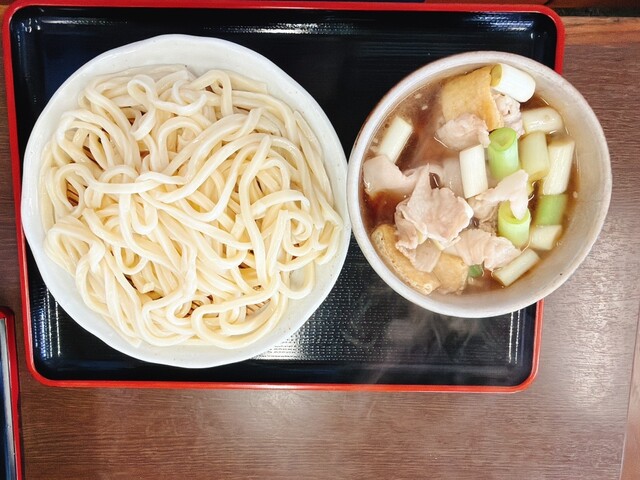
Approach Kawagoe’s Arajukumachi side and the mood shifts from sightseeing Kawagoe to working Kawagoe: lower buildings, car access, and a lunch trade that rewards places built around one staple, not a broad menu. Here, udon has a different authority from kaiseki or sushi. It is judged by repetition: wheat character, noodle tension, dipping or soup balance, and how cleanly tempura fits beside the bowl. Fujidana Udon Kawagoe ten sits in that practical, ingredient-led tradition, where value depends less on decoration than on making a familiar format feel exact.
Kawagoe’s dining identity is often flattened into old-storehouse sightseeing and sweet-potato snacks, but its stronger everyday tables sit across station-adjacent streets, residential corridors, and car-friendly addresses. That matters for udon, which thrives beyond heavy tourist footfall because volume, turnover, and local habit are part of the craft. A 2024 place on Tabelog’s Udon EAST 100 list enters a specific field: not luxury dining, but noodle shops measured against a deep eastern Japan bench, where small differences in texture and sourcing separate casual lunch from destination bowl.
Wheat, tempura, and the discipline of a narrow menu
Udon is often described too casually outside Japan, as if thickness defines it. The better reading starts with wheat. Regional shops build reputations on how flour, hydration, kneading, resting, cutting, and boiling align in service. The noodle must carry chew without heaviness, while broth or dipping sauce supports rather than covers it. Tempura belongs naturally in this grammar, adding fat, crunch, and seasonal vegetable or seafood cues without turning the meal into a formal tasting sequence.
Fujidana Udon Kawagoe ten is listed in the udon and tempura category, placing it in the everyday-specialist camp rather than the multi-cuisine family restaurant bracket. Tabelog recognition is the key trust signal: selection for Udon EAST 100 in 2024, with prior selections in 2022 and 2020, indicates consistency across several cycles, a stronger clue than one viral dish. For travellers, the point is not novelty but understanding a Japanese noodle category on its own terms, where the main event is the relationship between wheat structure and supporting elements.
Comparisons within Kawagoe should stay category-aware. Ramen specialists such as Ganja Honten and low-cost local names such as Hasenuma operate in adjacent comfort-food territory, but ramen and udon ask different questions. Ramen foregrounds soup density, tare, fat, and noodle compatibility; udon gives more space to wheat itself. Hasenuma, Inaka Udon Tetsu, and Fujidana Udon Kawagoe ten are more useful reference points for reading Kawagoe through noodles rather than tourist dining shorthand.
A Kawagoe meal that belongs to local routine, not spectacle
The room is table-seating only, a detail that says much. This is not counter theatre, chef narration, or private-room dining. It belongs to everyday Japanese eating’s social side: families, friends, and small groups using a specialist kitchen for an accessible meal. Children are welcome, private rooms are not part of the format, and the house-restaurant setting keeps the focus on function rather than staging.
That local-routine character gives the address its travel value. Kawagoe has higher-spend dining, including eel houses and formal Japanese restaurants, but those are not always the clearest lens on how the city eats between errands, workdays, and repeat visits. Udon with tempura is more democratic: quick enough for lunch, specific enough to reward a detour, and technical enough that recognition from a noodle-focused list carries weight.
The ingredient-sourcing angle is quieter than at a chef-driven farm restaurant because the public identity is not built around named farms or producer storytelling. That restraint is typical of many Japanese noodle shops. The sourcing argument appears through category discipline: wheat noodles as the central object, tempura as companion rather than ornament, and a menu identity narrow enough for repetition to matter. In a city where visitors often prioritize Edo-period streetscapes, this meal redirects attention from scenery to craft.
For a wider Kawagoe itinerary, separate formats rather than rank them. Burger Cafe Honohono speaks to the city’s casual Western-influenced side, while amrit broadens the map beyond Japanese staples. Travellers building a food day should use Our full Kawagoe restaurants guide for the restaurant spread, then check Our full Kawagoe hotels guide, Our full Kawagoe bars guide, Our full Kawagoe wineries guide, and Our full Kawagoe experiences guide to decide whether Kawagoe is a day trip or overnight stop.
How to place it within a Japan-wide eating itinerary
The reason to include a specialist udon shop in a premium travel plan is not luxury; it is calibration. A traveller can understand Japanese dining by alternating highly codified meals with narrow everyday formats. A sukiyaki address such as -Grilled beef Sukiyaki- KAMAKURA TANUKIAN 鎌倉 たぬき庵 in Kamakura, a Tokyo grill-and-tuna venue like. 鮪と炭火焼き うお炭 秋葉原店 in Tokyo, or a casual Osaka stop such as.cafe in Osaka each expresses a different grammar of eating. Udon adds the wheat-noodle grammar: direct, affordable, and unusually revealing when handled by a recognized specialist.
That logic applies beyond Japan..know in Kumamoto, (Shoku) Vietnam in Kawasaki, and [Curry Senmon Ten] Maruyama Kyoju. in Sapporo show how focused casual categories can carry as much cultural information as expensive dining rooms. In the United States, Jōdo Saké Bar in Los Angeles and Onigiri Time in Pasadena make the same case from abroad: narrow formats work when sourcing, repetition, and service rhythm are treated seriously.
The restaurant is strongest as a targeted noodle stop for travellers who value Japanese regional eating beyond obvious prestige categories. The award history gives external validation; the format keeps it grounded. In Kawagoe, that combination is the point: a recognized udon-and-tempura specialist embedded in local routine, offering a clearer lesson in everyday Japanese craft than many grander meals.
In Context: Similar Options
Nearby venues at a similar price tier for orientation.
| Venue | Cuisine | Price | Notes |
|---|---|---|---|
| Fujidana Udon Kawagoe ten | Traditional Musashino Udon | $ | Shinjuku-cho |
| Kawagoe Bakery Rakuraku | Japanese-style Bakery & Bread Shop | $ | Kashiya Yokocho / Motomachi |
| VANITOY BAGEL Kawagoe ten | Bagel shop & café | $ | Kawagoe |
| Ramen Jiro Kawagoe ten | Ramen Jiro-style pork ramen | $ | Asahicho |
| Ganja Honten | Tsukemen / Ramen | $ | Shintomi-cho |
| PIZZERIA ROCCO | Traditional Neapolitan Pizza & Italian | $$ | Honkawagoe / Koedo Street area |
Recognition history
Dated appearances from independent guides and award organizations, with the underlying list record or original source where available.
Tabelog 100 #14 · No. 14
Tabelog · Tabelog 100 - Udon - EAST - 2024
Continue exploring
More in Kawagoe
Restaurants in Kawagoe
Browse all →


Bars in Kawagoe
Browse all →



Hotels in Kawagoe
Browse all →




Wineries in Kawagoe
Browse all →
At a Glance
- Lively
- Cozy
- Classic
- Solo
- Family
- Group Dining
- Casual Hangout
- After Work
- Standalone
- Historic Building
Current opening hours
- Monday
- 10 AM–3 PM
- Tuesday
- 10 AM–3 PM
- Wednesday
- 10 AM–3 PM
- Thursday
- 10 AM–3 PM
- Friday
- 10 AM–3 PM
- Saturday
- Closed
- Sunday
- Closed
Hours can change for holidays and private events. Last verified .
Bustling and energetic with a simple house-like interior, table seating only, and a casual, family-friendly atmosphere focused on quick turnover rather than lingering.