
Tabelog 100 #24
Our verdict
Chitose Udon occupies a specific lane in Osaka's noodle culture, where the city's deep affection for wheat-based dishes meets the kind of disciplined execution that rewards repeat visits. Set against a dining scene better known for Michelin-starred kaiseki and French tasting menus, this udon specialist operates in a quieter register, one that Osaka's locals have long understood as a mark of quality in its own right.

Pearl is the En Primeur Club membership app, where members save venues, book tables and use the concierge.
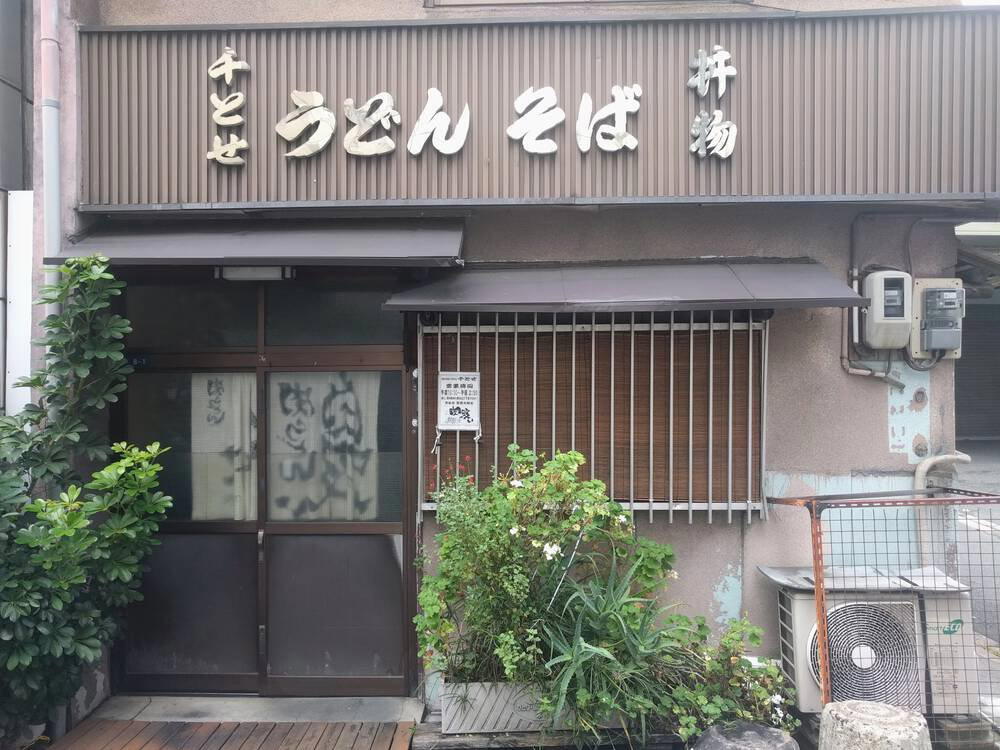
Osaka's Wheat Tradition and Where Udon Sits Within It
Osaka has always been a city that takes its noodles seriously. While Tokyo built its identity around soba and ramen, Osaka developed a parallel obsession with udon, thicker, softer, and served in broths that lean on delicate dashi rather than the heavily reduced stocks common further north. The city's udon culture sits inside a broader Kansai tradition that prizes restraint in the bowl: clear kombu-and-bonito broths, noodles with a particular chew, and toppings chosen to complement rather than dominate. It is a tradition that prizes substance over spectacle, and one that tends to reward venues that have spent years getting the fundamentals right.
Within this context, Chitose Udon occupies its own position in Osaka's dining map, a specialist in a city where specialism, at the noodle-shop level, still carries real weight. This is not the tier occupied by HAJIME or La Cime, where multi-course French innovation commands four-symbol price points. Nor does it sit alongside Kashiwaya Osaka Senriyama or Taian, where kaiseki formality structures the entire meal. Chitose Udon operates in the register where Osaka arguably feels most like itself: a counter or modest dining room, a focused menu, and cooking that makes no attempt to dazzle outside its discipline.
The Bowl as Editorial Statement
Udon, across the Kansai region, functions less as comfort food and more as a vehicle for broth craft. The noodle itself, its diameter, its surface texture, the degree of resistance at the centre, is the first signal of a kitchen's commitment to process. Noodles made in-house and cut to order behave differently from those delivered pre-formed; the way dashi is built, whether from single-origin kombu or blended stocks, determines the flavour register of everything that follows. These are decisions that visitors from outside Japan often underestimate, and that regular Osaka diners notice immediately.
Venues like Chitose Udon exist in a category where these foundational choices define the experience more than any headline ingredient or celebrated technique. In a dining culture that also produces venues like Fujiya 1935, where innovation is the stated agenda, the udon specialist represents the opposite value: accumulated precision rather than creative disruption. Both are legitimate positions in the city's dining ecology. They simply address different questions about what a meal is for.
The Kansai Noodle Scene in National Perspective
Japan's noodle culture is geographically stratified in ways that most international visitors only partially absorb. Fukuoka's tonkotsu tradition, examined at venues like Goh in Fukuoka, operates under entirely different premises from Kansai udon. Tokyo's high-end sushi counters, represented at the national level by venues such as Harutaka in Tokyo, occupy a different bracket of formality and price. Even within Kansai, the comparison between Osaka's udon culture and Kyoto's approach, visible in venues like Gion Sasaki in Kyoto, reveals distinct priorities: Kyoto tends toward refinement and ceremony; Osaka tends toward directness and flavour.
Chitose Udon fits within the Osaka model. The dining culture in this city has historically supported noodle specialists that do one thing well rather than diversifying into broader menus. That focus is a feature, not a limitation. It also means that the relevant comparison set for a venue like Chitose Udon is local and specific, other udon specialists in Osaka's central wards, rather than the multi-Michelin bracket where HAJIME and La Cime compete internationally.
What Drink Service Means at a Noodle Counter
The editorial angle of wine curation applies differently to a specialist udon venue than it does to the multi-course formats at restaurants like Atomix in New York City or Le Bernardin in New York City, where sommelier programs are central to the proposition. At a focused Japanese noodle counter, the drink logic is more likely to involve cold Sapporo or Kirin on tap, a short list of local sake filtered to match delicate dashi broths, or perhaps shochu for those who want something longer. The pairing philosophy at this level is not about cellar depth or allocation access, it is about not overpowering a broth that took hours to develop.
That restraint in the glass mirrors the restraint in the bowl. Osaka's serious noodle venues tend to discourage anything that competes with the primary flavour event. The parallel with high-end wine curation is this: the leading sommelier programs, from Tokyo to New York, are built around the idea that the drink should serve the food, not compete with it. At a udon counter, that principle is built into the format by default. Whether the pour is a cold draft or a delicate junmai, the logic is the same.
Planning a Visit: Practical Notes
Osaka is accessible via Shin-Osaka station on the Shinkansen network, connecting it to Tokyo in approximately two and a half hours and to Kyoto in roughly fifteen minutes. For visitors building a wider Kansai itinerary, the region also offers dining within day-trip range, including akordu in Nara and further afield, 餐廳庵乃 in Takashima. Osaka's central noodle venues typically operate across lunch and dinner services, with lunch the preferred entry point for first-time visitors, queues at well-regarded udon shops tend to form earlier in the day, and the broth is often at its clearest during the first service. The full Osaka restaurants guide covers the city's broader dining range, from neighbourhood noodle counters to the Michelin-starred tier.
For those building a Japan itinerary around specialist dining, the noodle shop category sits at a particular intersection of accessibility and depth. It requires no advance booking in most cases, operates at a price point that allows multiple visits, and offers a more unmediated read of local food culture than a formal tasting menu can provide. Venues at this level in Osaka, whether or not they carry formal recognition, are where the city's palate is most legible. Across Japan's specialist dining map, from 一本杉 川嶋製 in Nanao to 夕月亭山乃 in Sapporo and 庭羽屋 in Nishikawa Machi, the single-discipline format consistently signals a kitchen that has chosen depth over range. Chitose Udon follows that logic in one of Japan's most food-literate cities.
Frequently asked questions
Is Chitose Udon a good option for visitors coming to Osaka specifically to explore Kansai noodle culture?
Osaka is one of the most concentrated cities in Japan for udon specialisation, with the Kansai style distinguished by its dashi-led broth and softer noodle texture compared to Sanuki or Tokyo preparations. Chitose Udon, operating in that tradition, offers a grounded reference point for visitors building a working understanding of how Kansai noodle craft differs from the country's other regional schools. For context, Osaka's noodle scene has historically developed in parallel with its broader food culture, which the city has cultivated for centuries.
What do people recommend at Chitose Udon?
Chitose Udon operates within the Kansai udon tradition, where the broth and noodle texture are the primary measures of quality. In Osaka's noodle culture, regulars typically orient their orders around the house dashi preparation and noodle width, which vary by counter. Specific dish recommendations are best sourced on arrival, as the menu at specialist udon counters in this city tends to be concise and seasonally adjusted.
Can I walk in to Chitose Udon?
Osaka's specialist udon counters range from queue-and-pay standing formats to seated counters that fill quickly at lunch. Calling ahead is advisable if your visit falls on a weekend or public holiday.
What's Chitose Udon best at?
Chitose Udon sits within Osaka's Kansai udon tradition, a school defined by lighter, kombu-forward dashi rather than the heavier broths associated with Tokyo or Fukuoka. The format prioritises noodle craft and broth balance over elaborate toppings, which is the standard by which Kansai specialists are judged locally. That focus on fundamentals is what draws repeat visitors to counters of this type across the city.
Comparable Spots, Quickly
Comparable venues nearby, for context on price, style, and recognition.
| Venue | Cuisine | Price | Awards | Notes |
|---|---|---|---|---|
| Chitose UdonThis venue (the venue you are viewing) | Osaka Nikusui Udon | $10–20 | Tabelog 100 #24 | Not listed |
| isato | Ramen shop in Suita | $10–20 | Tabelog 100 #52 | Suita |
| Tori Soba Zagin Honten | Chicken ramen (tori paitan soba) counter | $10–20 | Tabelog 100 #97 | Nishi |
| Ramen Kasumi Awaza honten | Niboshi-focused ramen shop | $10–20 | Tabelog 100 #70 | Nishi |
| Chuka Soba Ibuki | Ramen & Tsukemen | $10–20 | Tabelog 100 #28 | Kita |
| Shouchiku Dou Suita yamada honten | Traditional Japanese Wagashi & Fruit Mochi | $1–10 | Tabelog 100 #65 | : Suita (Yamada area) |
Recognition history
Dated appearances from independent guides and award organizations, with the underlying list record or original source where available.
Tabelog 100 #24 · No. 24
Tabelog · Tabelog 100 - Udon - WEST - 2024
Continue exploring
More in Osaka
Restaurants in Osaka
All restaurants in Osaka →


Bars in Osaka
All bars in Osaka →
Hotels in Osaka
All hotels in Osaka →



Wineries in Osaka
Browse all →
Details
- Classic
- Cozy
- Casual Hangout
- Standalone
- Sake Program
- A La Carte
Current opening hours
- Monday
- 10:30 AM–2:30 PM
- Tuesday
- Closed
- Wednesday
- 10:30 AM–2:30 PM
- Thursday
- 10:30 AM–2:30 PM
- Friday
- 10:30 AM–2:30 PM
- Saturday
- 10:30 AM–2:30 PM
- Sunday
- 10:30 AM–2:30 PM
Hours can change for holidays and private events. Hours as of .
Casual, tucked-away spot in busy Namba with simple, comforting atmosphere focused on hearty broth and tender beef.