
Tabelog 100 #70
Our verdict
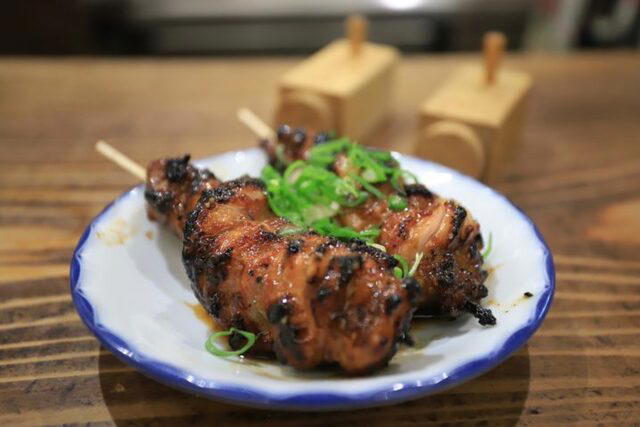
Yoshida Yama Seseri is an eight-seat counter yakitori and izakaya address in Kyoto’s Higashikujo area, selected for Tabelog 100 Yakitori WEST in 2024 and 2025. The appeal sits in its compact format: charcoal-led chicken cookery, a narrow reservation window, and a price tier that keeps it closer to local drinking culture than formal kaiseki.

Pearl is the En Primeur Club membership app, where members save venues, book tables and use the concierge.
The menu
What to order
- Seseri (chicken neck skewers)
- Kimo (chicken liver skewers)
- Tsukune (chicken meatball)
- Oden assortment
The approach belongs to a different Kyoto from temple-view dining rooms and hotel tasting counters. In Kyoto, the setting can feel more functional than ceremonial: modest restaurants, compact entrances, and evening rooms that make sense after work rather than after a museum itinerary. In that setting, yakitori reads as urban craft rather than tourist theatre. Smoke, proximity, and the rhythm of skewers over heat matter more than decoration.
Kyoto’s dining reputation is often filtered through kaiseki, tea, and seasonal formality, but the city’s serious eating culture also depends on smaller formats that compress skill into fewer gestures. Yakitori is one of them. The grammar is direct: grilled chicken skewers, salt or sauce, heat management, pacing, and the ability to turn a narrow format into a meal with shape. Yoshida Yama Seseri sits in that tradition, with recognition in the Tabelog Hyakumeiten source for 2025 and a listed score of 3.64, placing it in a category conversation rather than a neighbourhood-only category.
Kyoto yakitori in its compact, counter-led register
Yakitori has a democratic surface and a demanding core. At casual levels it can mean drinks, skewers, and noise; at serious levels it becomes a study in heat control and portion discipline. Kyoto adds its own tension. The city rewards restraint, yet yakitori depends on smoke and immediacy. The stronger addresses do not imitate kaiseki; they borrow its sequencing logic while keeping the informality of a tavern.
The close-range format matters because it removes distance between cooking and eating. There is little room for spectacle, and even less for menu sprawl. A room of this scale usually rewards diners who accept pacing as part of the meal: skewers arrive as a progression, not as a pile. That is why the category can feel more personal than larger izakaya rooms without becoming precious. The cooking is direct, the margin for error is narrow, and the experience depends on timing rather than luxury signals.
Recognition from Tabelog’s Hyakumeiten source is useful here because it identifies a category-specific peer group. This is not the same competitive field as Kyoto kaiseki, sushi counters, or hotel French dining. It is a yakitori-focused context, and that distinction helps frame expectations. The relevant question is not whether the room has ceremony, but whether the grill, pace, and ingredient handling justify attention in a city crowded with other dining traditions.
Kyoto makes the meal feel local rather than staged
Location changes the reading of a restaurant in Kyoto. Visitors often chase heritage-coded dining: traditional rooms, garden views, and menus that explain seasonality in formal terms. Yoshida Yama Seseri instead belongs to a more direct Kyoto register, one tied to evening appetite and repeat custom rather than a once-a-trip performance.
Yoshida Yama Seseri’s listed categories, yakitori, izakaya, and meat dishes, say more than a cuisine label. They place the meal in the borderland between specialist grill cooking and a drinking-room mood. That border is where many Japanese cities do some of their sharpest casual cooking. The meal can be focused without becoming rigid, and the price tier remains anchored to dinner rather than ceremony. For Kyoto, that makes the address a useful corrective to the idea that seriousness always arrives with lacquerware and a fixed seasonal script.
The practical reading is equally clear. A small-format restaurant rewards planning, and the setting rewards diners comfortable with small Japanese restaurant etiquette: arrive on time, order with attention, and treat the room as shared space. The listed dinner budget is JPY 5,000 - JPY 5,999, another reminder that small Japanese dining rooms can feel precise without leaning on luxury signals.
How to place it within a Kyoto food itinerary
For travelers building a Kyoto dining sequence, yakitori works well as a counterpoint to the city’s more formal meals. It can sit between other Kyoto plans or replace a second tasting menu with something tighter and more rooted in everyday night eating. The appeal is not breadth; it is concentration. A small grill-focused room can say as much about Kyoto’s present-tense food culture as a historic restaurant says about its inherited one.
Within EP Club’s Kyoto coverage, it belongs beside other compact specialist addresses rather than broad tourist dining. Readers comparing moods can look at other Kyoto dining rooms for different registers of the city’s eating habits. Broader planning sits in Our full Kyoto restaurants guide, while hotel, bar, winery, and activity context is covered through Our full Kyoto hotels guide, Our full Kyoto bars guide, Our full Kyoto wineries guide, and Our full Kyoto experiences guide.
For a wider Japan and Japanese-food context beyond Kyoto, EP Club also tracks regional contrasts across unnamed restaurants, bars, cafes, and casual counters. Those comparisons are less about similarity than calibration: Kyoto yakitori makes sense when seen against the wider Japanese habit of treating narrow formats with serious attention.
The editorial case for Yoshida Yama Seseri is therefore not excess. It is scale, category discipline, and place. Kyoto has many meals designed to explain tradition to outsiders; this one belongs to a simpler, sharper lineage in which the grill, the skewers, and the evening mood do the explaining.
Frequently asked questions
Where do I go for Yoshida Yama Seseri?
Kyoto.
What does dinner at Yoshida Yama Seseri typically cost?
Pricing at Yoshida Yama Seseri is listed as JPY 5,000 - JPY 5,999.
Do I need a reservation for Yoshida Yama Seseri?
A yakitori restaurant in Kyoto rewards planning, so it is sensible to contact the venue before going. The listed phone number is +81-90-6979-1444.
What's Yoshida Yama Seseri best at?
It is strongest as a yakitori-focused venue in Kyoto, with listed categories that include grilled chicken skewers, izakaya, and meat dishes. Its 2025 Tabelog Hyakumeiten recognition confirms its place in the category.
What if I have allergies at Yoshida Yama Seseri?
The venue is listed for yakitori, izakaya, and meat dishes, so guests with allergies should contact the restaurant before booking. The listed phone number is +81-90-6979-1444.
Budget and Context
Side-by-side context: comparable cuisine and price.
| Venue | Cuisine | Price | Awards | Notes |
|---|---|---|---|---|
| Yoshida Yama SeseriThis venue (the venue you are viewing) | Yakitori & Izakaya Counter near Kyoto Station | $30–50 | Tabelog 100 #70 | Not listed |
| 麺屋 裕 | Japanese Ramen (Crab Salt Ramen) | $10–20 | Not listed | Yamashina-ku, Japanese Ramen (Crab Salt Ramen) |
| Saikyo Yaki Kyoto Yamaroku | Traditional Kyoto Saikyo-yaki / Japanese | $10–20 | Tabelog 100 #80 | Shimogyō, Traditional Kyoto Saikyo-yaki / Japanese |
| Aje Matsubara honten | Yakiniku & Horumon (Offal) Barbecue | $30–50 | Tabelog 100 #42 | Shimogyō, Yakiniku & Horumon (Offal) Barbecue |
| è¸å « - Takohachi | Traditional Kappo | $50–100 | Michelin Plate | Nakagyō, Traditional Kappo |
| Zen Kasho In Kyoto muromachi honten | Traditional Japanese sweets & matcha cafe | $10–20 | Tabelog 100 #53 | Nakagyō, Traditional Japanese sweets & matcha cafe |
Recognition history
Dated appearances from independent guides and award organizations, with the underlying list record or original source where available.
Tabelog 100 #70 · No. 70
Tabelog · Tabelog 100 - Yakitori - WEST - 2025
Continue exploring
More in Kyoto
Restaurants in Kyoto
All restaurants in Kyoto →


Bars in Kyoto
All bars in Kyoto →

Hotels in Kyoto
All hotels in Kyoto →
Wineries in Kyoto
Browse all →
Details
- Cozy
- Intimate
- Rustic
- Date Night
- After Work
- Solo
- Casual Hangout
- Chefs Counter
- Standalone
- Open Kitchen
- Sake Program
- Beer Program
- A La Carte
- Small Plates
- Counter Dining
- Sake
- Shochu
- Beer
- Chuhai
A small, counter-only hideaway down an alley behind Kyoto Station, with a stylish yet relaxed interior that feels like a cozy house restaurant; guests sit close to the grill in a mellow, smoke-scented space suited to dates and intimate drinking-focused meals.