
Tabelog 100 #42
Our verdict
Aje Matsubara honten sits in Kyoto’s casual yakiniku and horumon lane rather than the city’s kaiseki conversation. Its appeal is structural: a grill-led meal built around offal, beef cuts, rice, sake and shochu, with Tabelog 100 Yakiniku WEST 2025 recognition confirming its place in the western Japan yakiniku tier.

Pearl is the En Primeur Club membership app, where members save venues, book tables and use the concierge.
The menu
What to order
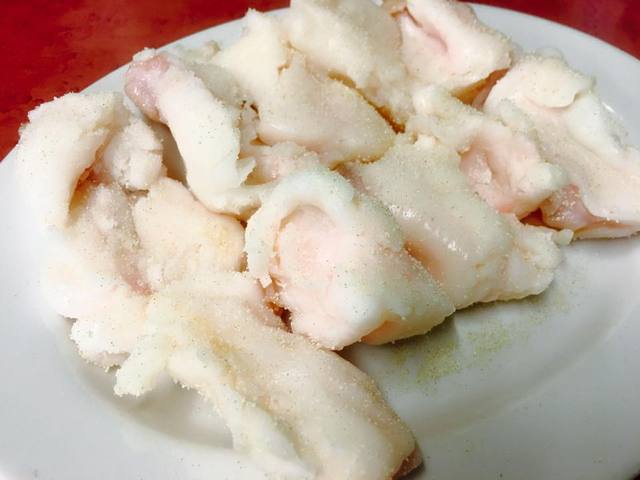
- Ganso hoso horumon (original offal)
- Horumon yakisoba
- Shio horumon assortment
- Wagyu yukhoe
The approach to Kyoto yakiniku is different from the approach to Kyoto kaiseki. The room announces itself through smoke, heat, table grills and the rhythm of groups ordering in rounds, not through ceremony or seasonal stillness. Aje Matsubara honten belongs to that more direct side of the city’s food culture, where the meal is assembled cut by cut and the table does part of the work.
Kyoto often gets flattened into temple-adjacent refinement, but the city also has a strong appetite for horumon, the Japanese offal tradition that rewards texture, fat, char and careful timing over luxury signaling. That context matters here. This is not a polished beef temple built around rarefied wagyu language; it is a 36-seat yakiniku room where tripe and Japanese barbecue define the category, and where the menu’s structure points the diner toward variety rather than a single trophy cut.
Horumon gives the menu its spine
The defining idea is offal-led yakiniku. Aje Matsubara honten is categorized around tripe and Japanese BBQ, and that tells experienced diners how to read the meal: start broad, order in waves, and treat the grill as a sequence of textures rather than a parade of premium labels. In Kyoto, horumon has long operated as a democratic counterweight to the city’s formal dining image. It is social, quick-moving and built for drinkers, with sake and shochu both part of the house’s listed drinks frame.
The menu architecture is the point. Yakiniku rewards pacing: lighter or sharper opening plates, salted cuts, richer sauced items, rice when the table needs ballast. Offal changes the register because chew, snap and fat become part of the ordering logic. The restaurant’s public highlights identify hoso-yaki as a signature item, placing small intestine at the center of the experience rather than treating it as a side note. That choice says plenty about Kyoto’s affection for affordable, flavor-dense grill rooms.
Tabelog selected Aje Matsubara honten for its Yakiniku WEST 100 list in 2025, with earlier selections listed from 2019 through 2024 across yakiniku and grill categories. That is a useful signal because Tabelog’s Hyakumeiten lists tend to reward durable local demand as much as destination gloss. A 3.68 score in this genre does not read like a tourist-facing accolade; it places the address in a competitive Kansai yakiniku conversation where consistency, value and repeat custom matter.
That makes it a different Kyoto decision from the city’s composed Japanese restaurants. Ryoriya Maekawa and Ryoriya Otaya sit closer to the ryoriya tradition, where sequence and season shape the meal. Takatsuji Kasui occupies a higher dinner-budget bracket. SPICE GATE points to Kyoto’s modern casual range. Aje Matsubara honten instead belongs to the grill-and-drink category, where the table is noisier, the ordering is less linear, and the pleasure lies in calibration: how much offal, how much beef, how much rice, how much drink.
Kyoto's casual grill culture, not a kaiseki substitute
The mistake is to treat this kind of restaurant as a cheaper version of formal Japanese dining. It is its own tradition. Yakiniku in Japan carries Korean influence, postwar urban appetite and a practical understanding of beef that extends beyond marbled show cuts. Horumon, in particular, asks diners to value parts of the animal that haute dining often edits out. In Kyoto, that gives the genre a specific charge: a city associated with restraint also knows how to eat from a hot grill with beer, rice and offal at the center.
For travelers building a Kyoto itinerary, the useful comparison is not only restaurant against restaurant, but meal type against meal type. A temple morning and a kaiseki dinner can make the city feel hushed and curated. A yakiniku evening changes the register. It is better for friends than for solemn ceremony, better for appetite than for tasting-menu concentration, and better for diners who understand that value in Japan often appears in compact rooms with narrow specialization.
Within EP Club’s Kyoto coverage, this is the address to file under casual depth rather than special-occasion polish. For nearby contrasts, 3TOKU6MI Shijo karasuma ten, 551蓬莱, [ki:], Abbesses and Aburi Mochi Honke Nemoto Kazariya show how wide Kyoto’s dining spectrum becomes once the frame moves beyond set-course Japanese cuisine. For broader planning, use Our full Kyoto restaurants guide, then cross-check the city through Our full Kyoto hotels guide, Our full Kyoto bars guide, Our full Kyoto wineries guide and Our full Kyoto experiences guide.
How to place it in a wider Japan itinerary
Aje Matsubara honten makes sense for diners who want a Kyoto meal with local intensity and less formality. The price band sits in a lower dinner bracket than many of the city’s ryoriya counters, but the award history gives it more credibility than a random grill stop. That combination is the draw: a narrow category, a social format and a reputation built inside western Japan’s yakiniku field.
It also helps to think beyond Kyoto. Beef-focused dining in Japan can mean sukiyaki, robata, steakhouse, offal grill or izakaya-adjacent charcoal cooking, and each format carries a different tempo. For a separate beef comparison, see -Grilled beef Sukiyaki- KAMAKURA TANUKIAN 鎌倉 たぬき庵 in Kamakura. For other casual Japanese-city references, EP Club also tracks. 鮪と炭火焼き うお炭 秋葉原店 in Tokyo.cafe in Osaka.know in Kumamoto, (Shoku) Vietnam in Kawasaki and [Curry Senmon Ten] Maruyama Kyoju. in Sapporo. The overseas Japanese-casual thread continues with Jōdo Saké Bar in Los Angeles and Onigiri Time in Pasadena.
The editorial read is simple: choose this for horumon-forward yakiniku, not for quiet luxury. The case rests on category clarity, repeated Tabelog 100 recognition and a menu that treats offal as the center of gravity. In a city where visitors often over-index on refinement, that makes the table feel usefully grounded.
Frequently asked questions
Where do I go for Aje Matsubara honten?
Aje Matsubara honten is located in Kyoto.
When is Aje Matsubara honten open?
Hours at Aje Matsubara honten: Mon: Closed; Tue: Closed; Wed: Closed; Thu: Closed; Fri: 5–11 PM; Sat: 4–11 PM; Sun: 4–11 PM.
What's the price range at Aje Matsubara honten?
Pricing at Aje Matsubara honten is listed as JPY 4,000 - JPY 4,999.
What's the defining dish or idea at Aje Matsubara honten?
The restaurant is built around tripe and yakiniku, which is how Tabelog categorizes it. Its 2025 selection in Tabelog 100 WEST for Yakiniku underlines that offal-led brief, and the JPY 4,000–4,999 price band keeps it grounded in Kyoto’s casual grill tradition.
Is Aje Matsubara honten good for vegetarians?
No. The menu focus is tripe and yakiniku, so the kitchen is centered on meat rather than vegetable-led dining. Vegetarians would be better served elsewhere in Kyoto, while this address at 美松会館 1F is a fit for diners who want horumon and Japanese BBQ.
Local
Comparable venues for context, by category and price tier.
| Venue | Cuisine | Price | Awards | Notes |
|---|---|---|---|---|
| Aje Matsubara hontenThis venue (the venue you are viewing) | Yakiniku & Horumon (Offal) Barbecue | $30–50 | Tabelog 100 #42 | Not listed |
| Ryoriya Maekawa | Modern Japanese Fine Dining | $100–150 | 1 Michelin Star · Tabelog Bronze #246 | Japanese |
| Grand Café FAUCHON | Contemporary French with Kyoto ingredients | $50–100 | Not listed | Not listed |
| Ryoriya Otaya | Kyoto Kaiseki Omakase | $50–100 | Michelin Bib Gourmand | Japanese |
| SPICE GATE | Japanese-style spice curry & dashi curry café | $10–20 | Tabelog 100 #64 | JPY 2,000 - JPY 2,999 JPY 1,000 - JPY 1,999 |
| Takatsuji Kasui | Seasonal Kyoto Izakaya | $50–100 | Tabelog 100 #32 | JPY 5,000 - JPY 5,999 |
Recognition history
Dated appearances from independent guides and award organizations, with the underlying list record or original source where available.
Tabelog 100 #42 · No. 42
Tabelog · Tabelog 100 - Yakiniku - WEST - 2025
Continue exploring
More in Kyoto
Restaurants in Kyoto
All restaurants in Kyoto →
Bars in Kyoto
All bars in Kyoto →
Hotels in Kyoto
All hotels in Kyoto →
Wineries in Kyoto
Browse all →
Details
- Lively
- Cozy
- Energetic
- Group Dining
- Casual Hangout
- After Work
- Late Night
- Celebration
- Solo
- Standalone
- Sake Program
- Beer Program
- Street Scene
- A La Carte
- Family Style
- Sake
- Shochu
- Beer
Current opening hours
- Monday
- Closed
- Tuesday
- Closed
- Wednesday
- Closed
- Thursday
- Closed
- Friday
- 5–11 PM
- Saturday
- 4–11 PM
- Sunday
- 4–11 PM
Hours can change for holidays and private events. Hours as of .