Black Pearl 1 Diamond
Our verdict
Yangzhouyan holds a Black Pearl 1 Diamond (2025) and sits in Beijing's Haidian district, where the city's dining scene extends well beyond its central-area concentration. The restaurant represents the refined end of Huaiyang-rooted cooking in a city more commonly associated with northern Chinese traditions, making it one of the more quietly deliberate choices on Beijing's current fine dining map.

Pearl is the En Primeur Club membership app, where members save venues, book tables and use the concierge.
Haidian's Fine Dining Position
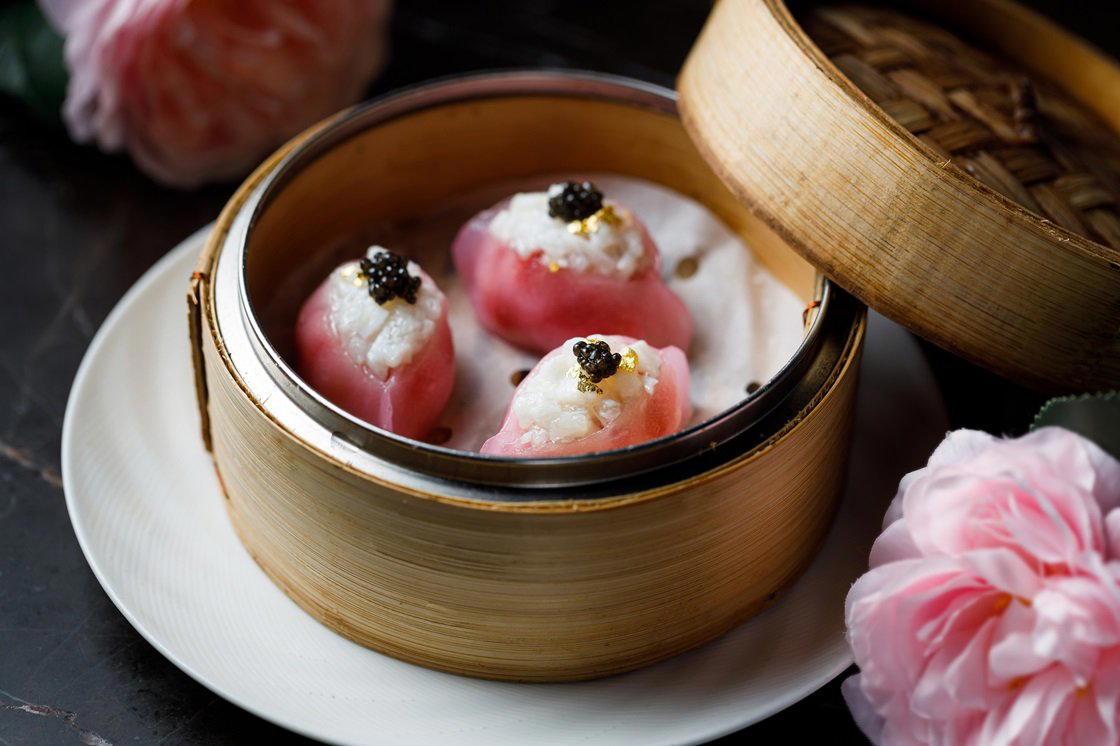
Beijing's premium restaurant geography has long been weighted toward Chaoyang, Dongcheng, and the CBD corridor. Haidian, better known for universities, technology campuses, and the Summer Palace, operates on a different rhythm, one where restaurants serve a more local, less tourist-facing clientele and where recognition, when it comes, tends to arrive later and stick longer. Yangzhouyan, at 117 Xi Si Huan Bei Lu, sits inside that dynamic. Its 2025 Black Pearl 1 Diamond places it in documented company with some of Beijing's more serious dining rooms, but it earns that standing in a district where fine dining has to work harder to be found.
The Black Pearl Guide, operated by Dianping and now considered one of China's most closely watched restaurant awards, distinguishes its diamond tiers by consistency and kitchen discipline rather than spectacle. A 1 Diamond placement in 2025 puts Yangzhouyan in a peer group that includes well-resourced operations across Chinese cuisine categories throughout the capital. In Beijing, that cohort is competitive: the same awards cycle has recognised venues ranging from Xin Rong Ji (Xinyuan South Road) in its Taizhou cuisine format to Chao Shang Chao (Chaoyang) in the Chao Zhou category. Yangzhouyan's position within that field says something about how a Huaiyang-oriented kitchen performs against regional peers operating at similar price ambitions.
The Cuisine Tradition at Stake
Huaiyang cooking, the style historically associated with the Yangzhou and Huai'an regions of Jiangsu province, occupies a specific position in Chinese culinary hierarchy. Considered one of the four principal schools of Chinese cuisine, it is built around knife technique, subtle seasoning, and a preference for ingredients that express their own character rather than carry heavy saucing. The style is less confrontational than Sichuan, less austere than certain Cantonese preparations, and more technically demanding than its gentle flavour profile might suggest. Achieving the benchmark texture on braised dishes or the correct clarity in stock-based preparations requires kitchen discipline that shows up clearly when it isn't there.
In Beijing, Huaiyang cooking has always occupied a somewhat imported role, it arrived historically through the imperial court and through the movement of Jiangsu merchants and officials northward. The cuisine's relative delicacy has sometimes made it a harder sell in a city whose own traditional food tends toward richer, more assertive preparations. That tension makes a venue like Yangzhouyan an interesting editorial case: it is arguing for a different register of flavour in a market that doesn't reflexively reach for it. Comparable positions in other Chinese cities are held by venues like Ru Yuan in Hangzhou, where Jiangnan traditions operate closer to their source, or 102 House in Shanghai, where refined Chinese dining operates in a more internationally competitive environment.
Service Architecture and the Team Dynamic
At the fine dining level across China, a consistent pattern has emerged: the front-of-house team increasingly carries as much responsibility for the meal's success as the kitchen. This is especially true in cuisine categories where the flavour vocabulary is unfamiliar to some guests, where dishes require explanation to land correctly, and where wine or tea pairing decisions shape how the food reads. Huaiyang cuisine, with its emphasis on subtlety and its reliance on temperature, texture, and seasoning balance, belongs precisely to that category.
The floor team at a Black Pearl-recognised Huaiyang operation in Beijing is doing real interpretive work: reading tables that may include guests with no particular background in the cuisine, guests who arrive with detailed expectations formed by other Jiangsu restaurants, and guests for whom this is deliberate exploration. The ability to move between those modes without visible gear-shifting is a service skill that good Chinese fine dining rooms have been developing seriously over the past decade. In this respect, Yangzhouyan's recognition signals not just kitchen performance but a full-room operation that holds together under scrutiny. That collaborative quality, where kitchen output and floor communication reinforce each other, is what separates documented award recipients from restaurants that cook well but lose the thread between the pass and the table.
For context on how that team dynamic plays out across different cuisine formats, the vegetarian-focused rooms like Lamdre and King's Joy in Beijing operate on a similar service logic, where the front-of-house must guide guests through a register of flavour that requires active explanation. Jingji, in the Beijing Cuisine category, presents a different version of the same challenge: local food with formal framing, where floor staff bridge the gap between the familiar and the fine-dining context.
Where Yangzhouyan Sits in the Broader Map
Regionally, the fine dining Chinese cuisine conversation in 2025 spans a wide geography. Xin Rong Ji in Chengdu anchors one end, where Taizhou cuisine operates in a Sichuan-dominant market. Chef Tam's Seasons in Macau and Imperial Treasure Fine Chinese Cuisine in Guangzhou represent Cantonese-adjacent operations with strong institutional backing. Dai Yuet Heen in Nanjing operates closer to the Huaiyang source region. Against that field, Yangzhouyan is making the case for the style in Beijing, a city where the competitive set is broad and where earning documented recognition in any category is not a minor achievement.
For reference, the international fine dining rooms that have set benchmarks for team discipline, venues like Le Bernardin in New York City or Atomix in New York City, have built their reputations partly on the consistency of their floor-kitchen alignment. Chinese fine dining is now working through an equivalent evolution, and Haidian, quietly, is part of that story.
Planning Your Visit
Logistics at a Glance
| Detail | Yangzhouyan | Xin Rong Ji (Xinyuan South Road) | Chao Shang Chao (Chaoyang) |
|---|---|---|---|
| District | Haidian | Chaoyang | Chaoyang |
| Awards (2025) | Black Pearl 1 Diamond | Black Pearl recognised | Black Pearl recognised |
| Cuisine | Huaiyang (Yangzhou) | Taizhou | Chao Zhou |
| Price tier | Not confirmed | ¥¥¥¥ | ¥¥¥¥ |
| Booking method | Confirm directly | Confirm directly | Confirm directly |
The address, 117 Xi Si Huan Bei Lu, Haidian, places the restaurant on the western fourth ring road, accessible by metro but requiring a short transfer from the major interchange stations. Plan accordingly, particularly for evening visits when western Beijing traffic can be unpredictable. For broader dining context in the capital, see our full Beijing restaurants guide, as well as our full Beijing hotels guide, our full Beijing bars guide, our full Beijing wineries guide, and our full Beijing experiences guide.
Frequently asked questions
What's Yangzhouyan's location?
Yangzhouyan is located at 117 Xi Si Huan Bei Lu, 117, Hai Dian Qu, Bei Jing Shi, China, 100081, Beijing.
What kind of recognition has Yangzhouyan received?
Yangzhouyan has received recognition including: Black Pearl 1 Diamond (2025).
What should I eat at Yangzhouyan?
Yangzhouyan is rooted in Huaiyang cooking, the tradition associated with Yangzhou and Huai'an in Jiangsu province, a style historically prized for knife technique, clean broths, and restrained seasoning. The kitchen's 2025 Black Pearl 1 Diamond recognition signals that the cooking meets a measurable standard of classical fidelity. Specific current dishes are not published in advance, so the table is the disclosure, arrive expecting the canon rather than a contemporary reinterpretation of it.
What's the best way to book Yangzhouyan?
No direct booking link or phone number is listed publicly for Yangzhouyan. For a Black Pearl-recognised venue in a residential Haidian address rather than a hotel corridor, a direct approach through the restaurant's front desk in Mandarin typically yields the most reliable result. Third-party platforms such as Dianping are commonly used for fine dining reservations across Beijing and are worth checking for availability.
Category Peers
A compact comparison to help you place this venue among nearby peers.
| Venue | Cuisine | Price | Awards | Notes |
|---|---|---|---|---|
| YangzhouyanThis venue (the venue you are viewing) | Not listed | Not listed | Black Pearl 1 Diamond | Not listed |
| Jing | Modern French with Asian Influences | $300–500 | 1 Michelin Star · Black Pearl 1 Diamond | French Contemporary |
| Xin Rong Ji (Xinyuan South Road) | Taizhou Chinese Fine Dining | $300–500 | 3 Michelin Stars · World's 50 Best #84 | Taizhou |
| Chao Shang Chao (Chaoyang) | Modern Teochew (Chaoshan) Fine Dining | $200–300 | Michelin Plate · La Liste Top Restaurants | Chao Zhou |
| Lamdre | Modern Plant-Based Chinese Vegetarian | Not listed | 2 Michelin Stars · World's 50 Best #17 | Vegetarian |
| Jingji | Imperial Beijing Royal Cuisine | $200–300 | 2 Michelin Stars · La Liste Top Restaurants | Beijing Cuisine |
Recognition history
Dated appearances from independent guides and award organizations, with the underlying list record or original source where available.
Black Pearl 1 Diamond
Black Pearl
Full recognition history (2 entries)
Black Pearl 1 Diamond
Black Pearl