


One of only two Chaozhou restaurants in mainland China to hold three Michelin stars, Chao Shang Chao in Beijing's Chaoyang district operates at the narrow intersection of classical Teochew technique and contemporary refinement. Under Executive Chef Yat Fung Cheung, the kitchen holds a 2026 La Liste ranking of 75 points, placing it firmly among China's most recognised fine-dining addresses.
 Discover on Pearl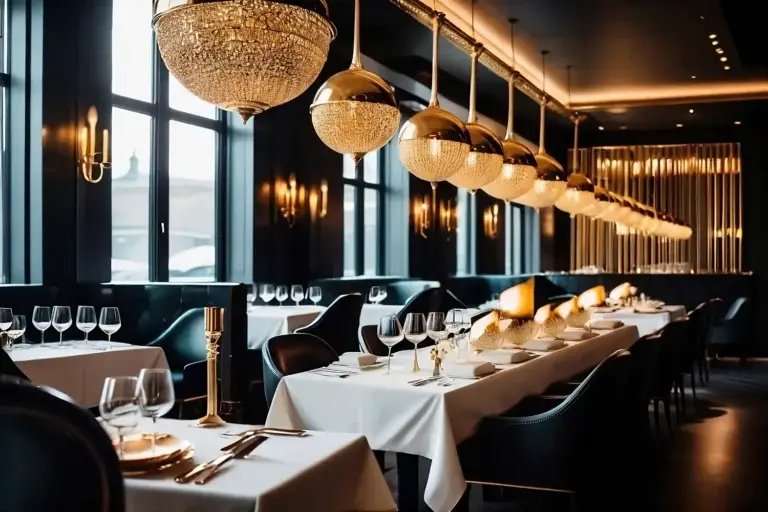
Chaozhou Cuisine at Its Most Formal: What Beijing's Three-Star Teochew Counter Tells Us About Regional Chinese Fine Dining
China's Michelin-starred tier is heavily weighted toward Cantonese and Beijing cuisine, which makes the three-star status of a Chaozhou kitchen in Beijing a meaningful data point rather than a quirk. Chaozhou — or Teochew — cooking originates in the eastern Guangdong region and carries a culinary identity distinct from its Cantonese neighbour: lighter broths, a precision approach to seafood, and a tradition of slow-braised meats that demands patience from both cook and diner. Transplanting that tradition to Beijing, a city whose dining identity skews toward roast duck and imperial-register cooking, positions Chao Shang Chao (Chaoyang) as something of a regional ambassador operating at the highest formal tier.
Within Beijing's four-symbol price bracket, Chao Shang Chao competes with addresses like Xin Rong Ji (Xinyuan South Road), which holds three Michelin stars for its Taizhou cuisine, and two-star houses including Jingji and King's Joy. The consistency of that three-star hold across 2024 and 2025, combined with a 2026 La Liste score of 75 points, places it at the short end of the list of Beijing restaurants whose credentials extend across multiple international evaluation frameworks simultaneously.
The shortlist, unlocked.
Hard-to-book tables, cellar releases, and concierge-planned trips.
Get Exclusive Access →The Chaoyang Address and What It Signals
Shenlu Street in Chaoyang puts the restaurant inside a district that has gradually become Beijing's highest-density zone for serious restaurant spending. Chaoyang's dining circuit attracts an audience that splits between expense-account corporate dining and a genuinely curious fine-dining public , a mix that suits the Teochew register well. The cuisine's emphasis on technique over spectacle, and on ingredient quality rather than elaborate presentation theatrics, tends to reward guests who arrive with context. The restaurant's sister address, Chao Shang Chao (Xicheng), operates in a different district, giving the brand a dual-location presence in the capital while keeping each address within its own neighbourhood logic.
Across mainland China, the tradition of transplanting Chaozhou technique to northern cities has a patchy record: the cuisine's dependence on specific seafood, carefully sourced produce, and the institutional knowledge of Teochew master-line chefs makes replication outside its native geography genuinely difficult. The three-star verdict from Michelin suggests this kitchen has met that challenge with consistency , the inspectorate does not award or maintain its highest tier on the basis of a strong opening season alone.
The Wine Program in Context: What Fine Teochew Demands from a Cellar
The editorial angle around wine at a Chaozhou fine-dining address in Beijing is worth examining on its own terms. Teochew cuisine presents specific challenges for wine pairing that differ from those facing Cantonese or Sichuanese kitchens. The cuisine's flavour profile is less aggressively spiced than Sichuan cooking and less sauce-dependent than Shanghainese preparations, which in theory opens more room for wine. But the precision of the broths, the salinity of preserved elements, and the subtle sweetness that runs through certain braised preparations demand a cellar curated with actual culinary knowledge rather than simply stocked for prestige.
Among the Chinese fine-dining tier operating at four symbols, wine programs have developed unevenly. Some kitchens at this level have invested in sommelier teams with formal training and meaningful cellar depth; others treat the wine list as an afterthought, stocked with international labels whose margins support the economics but whose selections don't engage with the food. At a restaurant where the kitchen operates under a chef with documented roots in Hong Kong's Cantonese fine-dining environment , Executive Chef Yat Fung Cheung trained in Hong Kong and previously led the kitchen at Ji Pin Xuan in Shanghai before taking the role here , there is at least a plausible institutional appetite for beverage programs that match the food's register.
The broader trend among Michelin three-star Chinese restaurants in mainland cities has been toward hiring sommeliers with experience in both European and Chinese fine-dining contexts, recognising that a guest spending at the four-symbol level in 2025 expects a considered approach to the full dining sequence, not simply to the food. Comparable Teochew-adjacent addresses in other Chinese cities , including Imperial Treasure Fine Teochew Cuisine in Guangzhou and Fleurs Et Festin , Chao Zhou in Xiamen , have each navigated this expectation differently. The Guangzhou address operates inside the Imperial Treasure group's established beverage infrastructure; the Xiamen kitchen sits in a city whose proximity to Taiwan gives it access to a different set of wine-adjacent cultural references.
At Chao Shang Chao in Chaoyang, the specific depth and curation of the cellar is not available in the public record, and EP Club's editorial policy is not to speculate on what a wine list contains without verified data. What can be said with confidence is that any restaurant maintaining three Michelin stars across consecutive years in a city as competitive as Beijing is operating its front-of-house to a standard consistent with that recognition , and wine service is a component of that assessment.
Chef Yat Fung Cheung: Credentials in Context
Executive Chef Yat Fung Cheung's professional lineage is relevant less as a personal narrative and more as a credential marker within the Cantonese and Chaozhou fine-dining hierarchy. His training in Hong Kong under a master-chef tradition, his previous executive chef role at Ji Pin Xuan in Shanghai, and his earlier experience at Kowloon Bay Royal Garden Chinese Restaurant place him within a recognisable line of southern Chinese culinary authority. That lineage matters for a Chaozhou kitchen because the cuisine's most demanding preparations , the slow braises, the cold crab technique, the precise management of umami-forward broths , are learned through institutional transmission rather than from recipe books. In that sense, Cheung's Hong Kong and southern China formation is a form of category certification.
For a broader view of how chefs with comparable Cantonese formation are operating across Chinese fine dining, Chef Tam's Seasons in Macau and Dai Yuet Heen in Nanjing represent adjacent cases in different cities and format contexts.
Placing Chao Shang Chao in Beijing's Broader Fine-Dining Map
Beijing's Michelin-recognised tier now includes kitchens representing regional Chinese cuisines that would have been less visible at this level a decade ago. The appearance of Taizhou cooking at three-star level through Xin Rong Ji, and the sustained recognition of Chaozhou cooking through Chao Shang Chao, signals a shift in the evaluative framework: the inspectorate is now assessing mastery of regional tradition as a legitimate criterion alongside the classical metrics of technique, consistency, and service. Vegetarian fine dining has also entered that tier, with Lamdre and King's Joy both holding Michelin recognition.
For travellers working through the wider range of regional Chinese fine dining across cities, comparable Michelin-recognised addresses include Ru Yuan in Hangzhou, Xin Rong Ji in Chengdu, 102 House in Shanghai, and Imperial Treasure Fine Chinese Cuisine in Guangzhou. Each represents a different regional tradition operating at formal-tier level in its respective city.
Planning a Visit: Practical Notes
Chao Shang Chao (Chaoyang) is located at 39 Shenlu Street, Chaoyang, Beijing, 100020. Given the restaurant's sustained Michelin three-star status and its position in one of Beijing's most active fine-dining districts, advance reservation is advisable , particularly for dinner services and for groups. The four-symbol price range places this firmly in Beijing's premium tier, consistent with peer-set expectations at three-star level. Specific booking channels, hours, and current menu pricing are not confirmed in EP Club's database at the time of publication; direct contact with the restaurant is recommended for current logistics. For a fuller picture of what Beijing's dining and hospitality tier looks like across categories, see our full Beijing restaurants guide, our full Beijing hotels guide, our full Beijing bars guide, our full Beijing wineries guide, and our full Beijing experiences guide.
39 Shenlu St, Chaoyang, Beijing, China, 100020
+86 10 8562 2614
Compact Comparison
A compact peer set to orient you in the local landscape.
| Venue | Notes | Price |
|---|---|---|
| Chao Shang Chao (Chaoyang) | This venue | ¥¥¥¥ |
| Jing | French Contemporary, ¥¥¥ | ¥¥¥ |
| Xin Rong Ji (Xinyuan South Road) | Taizhou, ¥¥¥¥ | ¥¥¥¥ |
| Lamdre | Vegetarian, ¥¥¥¥ | ¥¥¥¥ |
| Jingji | Beijing Cuisine, ¥¥¥¥ | ¥¥¥¥ |
| Lu Shang Lu | Shandong, ¥¥¥¥ | ¥¥¥¥ |
Need a table?
Our members enjoy priority alerts and concierge-led booking support for the world's most difficult tables.
Get Exclusive AccessThe shortlist, unlocked.
Hard-to-book tables, cellar releases, and concierge-planned trips.
Get Exclusive Access →