
Yakitori Tokoshima belongs to Tokyo’s serious neighborhood yakitori tier: small, counter-led, and shaped by repeat diners rather than spectacle. Its Sangenjaya address, 10-seat scale, JPY 8,000–9,999 dinner range, and repeated Tabelog 100 Yakitori selections place it above casual skewer houses while keeping the mood closer to a local room than a destination dining stage.
Pearl is the En Primeur Club membership app — saves, bookings, and concierge access live there. Same editors, same standards.
- Address
- Japan, 〒154-0024 Tokyo, Setagaya City, Sangenjaya, 2 Chome−8−10 ルナパーク三軒茶屋 105
- Phone
- +81 3-5486-3318
- Website
- tokoshima.jp
 Saves & bookings on Pearl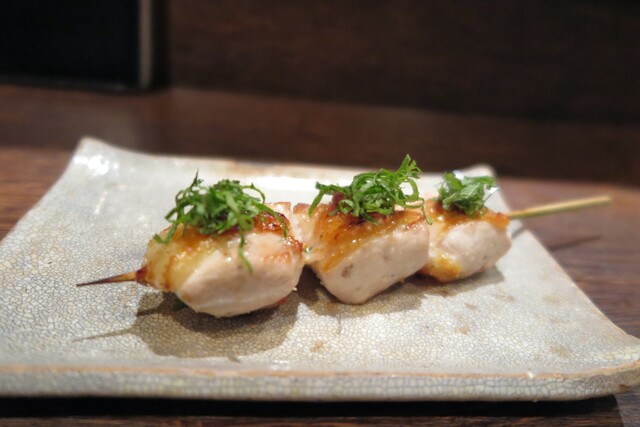
Sangenjaya changes texture after dark: station traffic thins into side streets, izakaya signs take over the eye line, and the better meals tend to happen in rooms that look modest from the pavement. Yakitori Tokoshima fits that Tokyo pattern: a small Setagaya counter where the point is not theatre, but repetition, timing, smoke control, and the kind of regulars’ confidence that turns a skewer restaurant into a weekly habit.
Tokyo’s yakitori culture has split into several lanes. There are casual beer-and-skewer shops built for volume, polished tasting-menu counters that price themselves against sushi and kappo, and a middle-to-upper neighborhood category where craft matters but the room keeps an izakaya pulse. Tokoshima sits in that last lane. Its Tabelog score of 3.73 and selection for Tabelog 100 Yakitori EAST 2025, after earlier selections in 2019, 2021, 2022, 2023, and 2024, give it a track record rather than a single-year flash.
A Sangenjaya yakitori room shaped by repeat diners
Sangenjaya is not Ginza, and that matters. The neighborhood’s dining strength is density rather than polish: gyoza shops, bakeries, cafes, sake rooms, curry counters, and late-night izakaya share the same walking radius. Compared with lower-priced nearby options such as Tokyo Gyoza Ro Sangenjaya ten or Komugi to Kobo Hamada Ya Sangenjaya honten, a serious yakitori counter in the JPY 8,000–9,999 range signals a different decision. This is dinner as a focused evening, not a quick stop between trains.
The room’s 10-seat scale is the editorial clue. At that size, a yakitori restaurant cannot hide behind menu breadth or room design. The experience depends on sequencing, heat, pacing, and the compact social contract of a counter: arrive ready to eat what the grill is built to do, and the evening makes sense. The presence of a small private room for two adds flexibility, but the main language here remains counter culture, where regulars usually understand the rhythm before the first order is placed.
That regulars’ perspective is useful because yakitori is often misread by visitors as a list of skewers rather than a discipline. In Tokyo, the better counters treat chicken as a structure: lean cuts, richer cuts, skin, offal, and vegetables all respond differently to flame and salt. Without naming unlisted dishes, the broader tradition explains why repeat custom matters. Diners return not only for favorites, but because the meal’s appeal lies in how the kitchen handles small variations across a familiar format.
Where the grill sits in Tokyo's yakitori hierarchy
Tabelog’s Hyakumeiten lists are not Michelin, and they do not function like star ratings. They are useful in a different way: they identify restaurants with sustained category relevance among Japanese diners and reviewers. For yakitori, that matters because Tokyo has a crowded field and a high tolerance for specialization. Tokoshima’s repeated inclusion across multiple years places it in a durable bracket of grill-focused restaurants rather than the churn of openings that attract attention for a season.
The izakaya classification is also telling. It keeps the restaurant connected to everyday Tokyo drinking culture rather than a strictly formal tasting-counter model. BYO drinks is listed as a service detail, which makes the room feel closer to a regulars’ address than a luxury dining script. For travelers, that distinction changes expectations: this is not the place to demand a grand narrative or elaborate chef biography. The value is in the narrowness of the format and the confidence of a small room that has earned repeat recognition in a demanding category.
Sangenjaya’s broader food map sharpens the comparison. Akaoni gives the area a serious sake reference point, CAFE Mame-Hico Sangenjaya honten anchors a slower daytime rhythm, and old-school sweets or bakery stops such as Imagawayaki Kashiwaya and Hamada Ya point to a neighborhood that rewards grazing as much as reservations. Against that backdrop, a compact yakitori counter with repeated category recognition feels less like an isolated destination and more like the evening expression of the district’s appetite.
How to read the room before committing
The practical question is not whether Tokyo has grander dining rooms. It does. The sharper question is whether a visitor wants Sangenjaya’s neighborhood version of seriousness: limited seats, a focused grill category, non-smoking service, and a price band that asks for attention without crossing into trophy-counter economics. That makes Tokoshima a strong fit for diners who already care about yakitori, or for travelers using one Tokyo dinner to understand why chicken skewers can carry the same precision demands as sushi or tempura.
It is less suited to groups looking for a sprawling menu or a high-visibility dining room. Private use is unavailable, parking is unavailable, and the format favors small parties. The listed occasion skews toward friends, which feels right for this category: yakitori at this level is conversational, compact, and better with diners who are willing to follow the kitchen’s tempo rather than treat the evening as a checklist.
For a wider Tokyo plan, place this meal inside Setagaya rather than forcing it into a central sightseeing day. Readers comparing neighborhood restaurants can start with Our full Tokyo restaurants guide, then branch into nearby or category-adjacent pages such as 124. KAGURAZAKA (Yakitori), 12/10 Shinjuku ten, . 鮪と炭火焼き うお炭 秋葉原店, 2D Cafe, and 3 Chome no Curry Ya San. For trip structure beyond restaurants, use Our full Tokyo hotels guide, Our full Tokyo bars guide, Our full Tokyo wineries guide, and Our full Tokyo experiences guide.
Japan’s regional dining pages are useful for calibrating price and format outside Tokyo: -Grilled beef Sukiyaki- KAMAKURA TANUKIAN 鎌倉 たぬき庵 in Kamakura.cafe in Osaka.know in Kumamoto, (Shoku) Vietnam in Kawasaki, [Curry Senmon Ten] Maruyama Kyoju. in Sapporo, and [ki:] in Kyoto. For Japanese drinking and casual formats abroad, compare Jōdo Saké Bar in Los Angeles and Onigiri Time in Pasadena.
Snapshot
Comparable venues to anchor price and recognition.
| Venue | Cuisine | Price | Notes |
|---|---|---|---|
| Yakitori TokoshimaThis venue — the venue you are viewing | Traditional Yakitori Counter | $$$ | Not listed |
| 立喰 鮨となり | Standing Sushi | $$$ | Azabujuban |
| サーモンアンドトラウト | Modern Japanese Punk Cuisine | $$$ | Setagaya |
| Na Camo guro | Duck-focused Japanese bistro & sukiyaki | $$$ | Meguro |
| Kirin | Yakitori | $$$ | Shibuya |
| Okashiya Ucchi | Seasonal Japanese cake & dessert shop | $$$ | Shibuya |
Recognition history
Dated appearances from independent guides and award organizations, with the underlying list record or original source where available.
Tabelog 100 #83 · No. 83
Tabelog · Tabelog 100 - Yakitori - EAST - 2025














At a Glance
- Cozy
- Intimate
- Lively
- Classic
- Date Night
- Casual Hangout
- After Work
- Solo
- Group Dining
- Chefs Counter
- Standalone
- Design Destination
- Open Kitchen
- Sake Program
- Beer Program
- Local Sourcing
Current opening hours
- Monday
- 5–10:30 PM
- Tuesday
- 5–10:30 PM
- Wednesday
- 5–10:30 PM
- Thursday
- 5–10:30 PM
- Friday
- 5–10:30 PM
- Saturday
- 5–10:30 PM
- Sunday
- Closed
Hours can change for holidays and private events. Last verified .
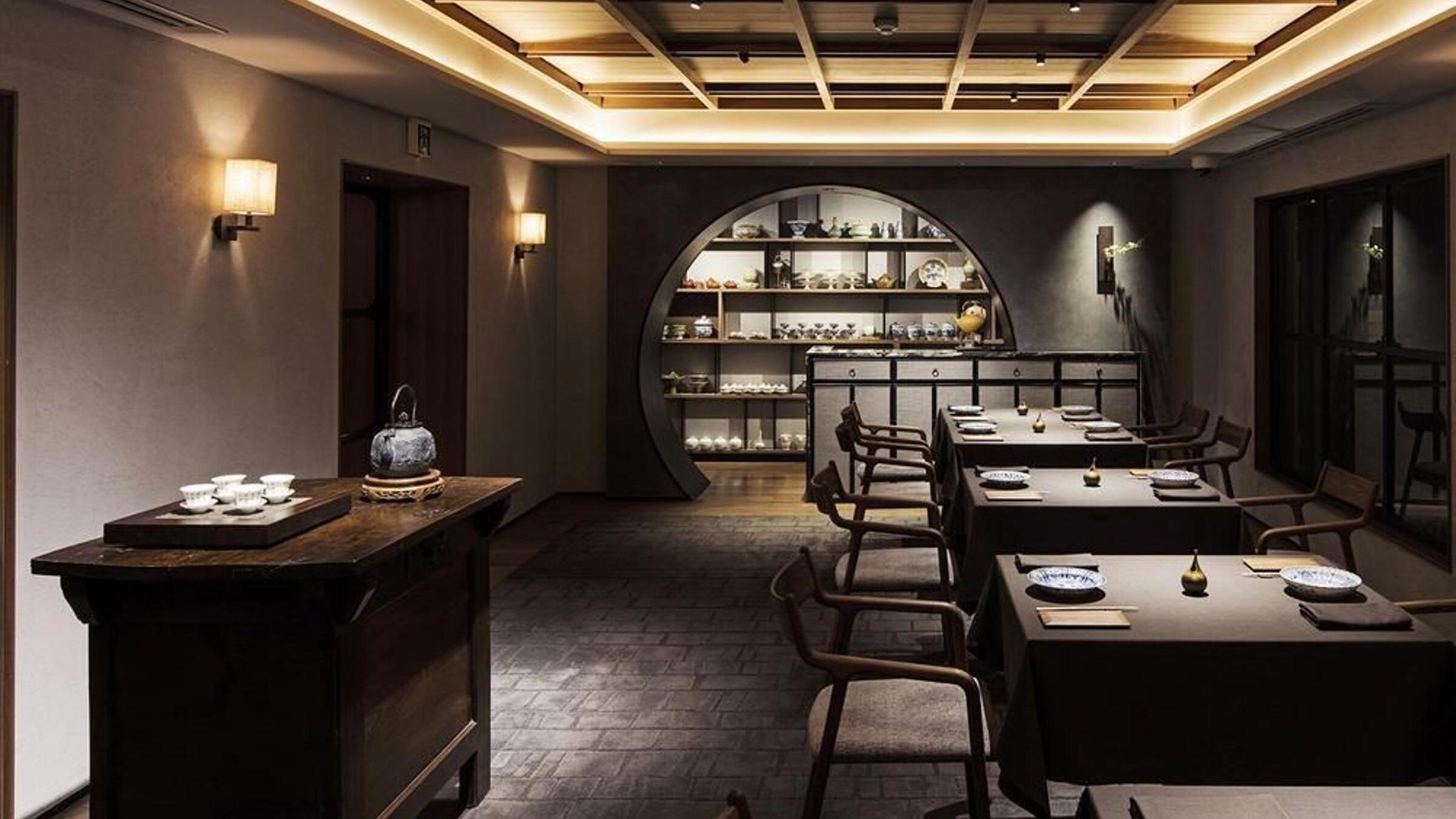
Warm, compact counter space centered on the charcoal grill, with a lively but relaxed atmosphere that feels like a classic neighborhood yakitori-ya rather than a formal restaurant.