
Na Camo guro sits in Nakameguro’s specialist poultry lane rather than Tokyo’s generic izakaya circuit, with Tabelog 100 Chicken cuisine recognition for 2025 and a format built around duck and chicken dishes. The room matters here: counter seating, small tables, and private rooms make it a compact, design-led option for diners who want poultry treated with the focus usually reserved for sushi or wagyu.
Pearl is the En Primeur Club membership app — saves, bookings, and concierge access live there. Same editors, same standards.
- Address
- Japan, 〒153-0051 Tokyo, Meguro City, Kamimeguro, 1 Chome−20−5 エーワンビル 2F
- Phone
- +81 3-5725-3378
- Website
- shop.ap-holdings.jp
 Saves & bookings on Pearl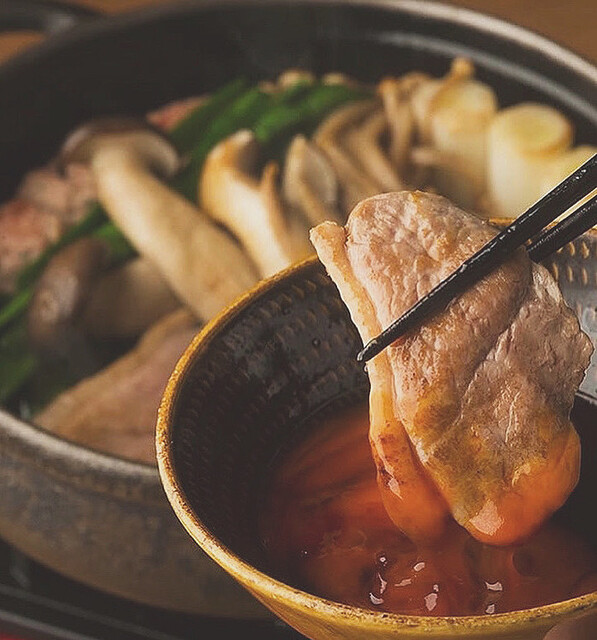
Approach in Nakameguro and the restaurant reveals itself less like a street-front dining room than a compact upstairs address, with the blue door acting as the cue. That physical discretion is part of the point. Tokyo’s poultry restaurants often split between smoke-forward yakitori counters and casual chicken specialists; Na Camo guro occupies a narrower lane, where the room, seating geometry, and course-led pacing give duck and chicken a more deliberate frame.
The award signal is useful because poultry in Tokyo can be hard to parse from the outside. Tabelog selected Na Camo guro for its 2025 Tabelog 100 Chicken cuisine list, a category that separates focused bird specialists from broader Japanese dining rooms. It is not competing with the city’s snack bars, noodle counters, or dessert cafés; it belongs closer to the serious poultry conversation that also includes yakitori specialists such as 124. KAGURAZAKA (Yakitori) and higher-spend chicken counters such as torisawa.
A compact poultry room where counter seats shape the meal
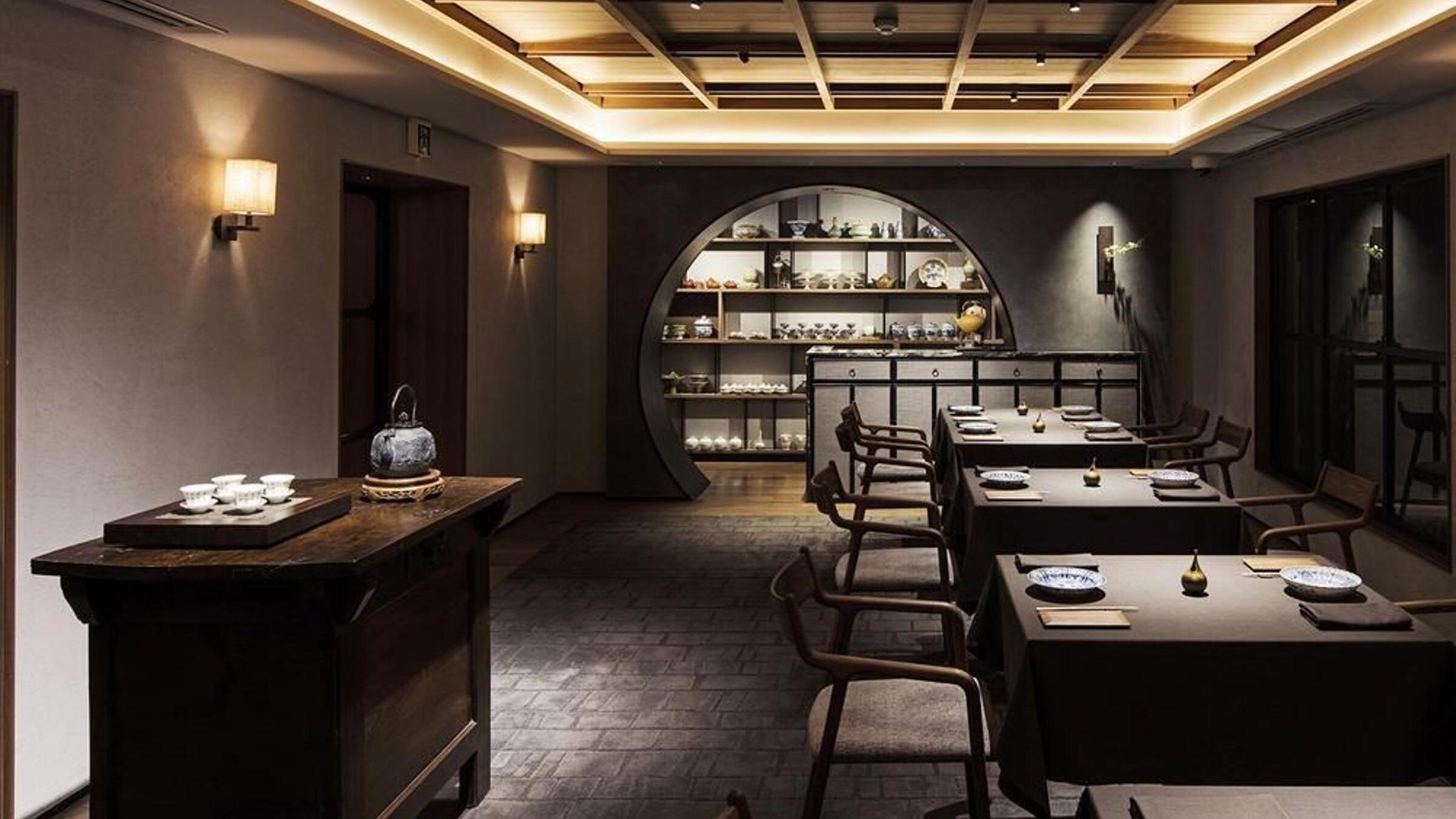
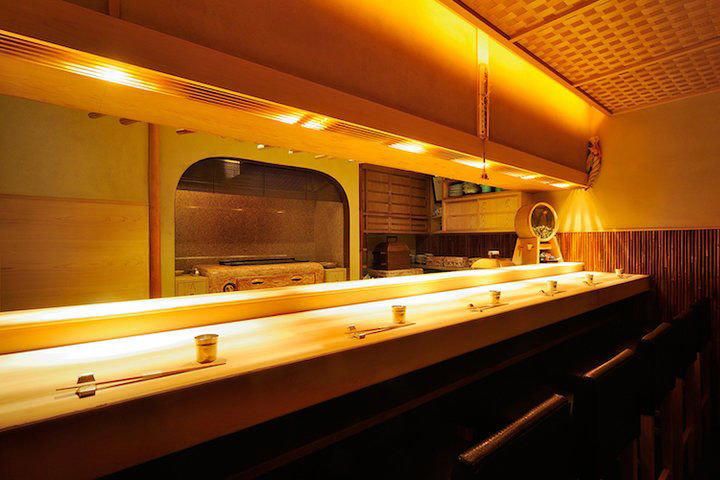
Tokyo dining rooms often disclose their priorities through layout before the first order arrives. Here, the 38-seat configuration matters: 16 counter seats, two four-person tables, and private rooms for four and six. That mix places the restaurant between two familiar Tokyo modes. It has enough counter energy to suit diners who want the cookery in view, but it also offers enclosed space for groups who do not want the rigidity of a tiny omakase counter.
That balance is part of Nakameguro’s appeal as a dining district. The area has long absorbed restaurants that would feel too mannered in Ginza and too anonymous in Shibuya: compact upstairs rooms, specialist counters, wine-aware kitchens, and casual addresses with serious regulars. In that context, Na Camo guro reads as a neighbourhood specialist rather than a destination temple. The distinction matters. The meal is framed by poultry, not ceremony.
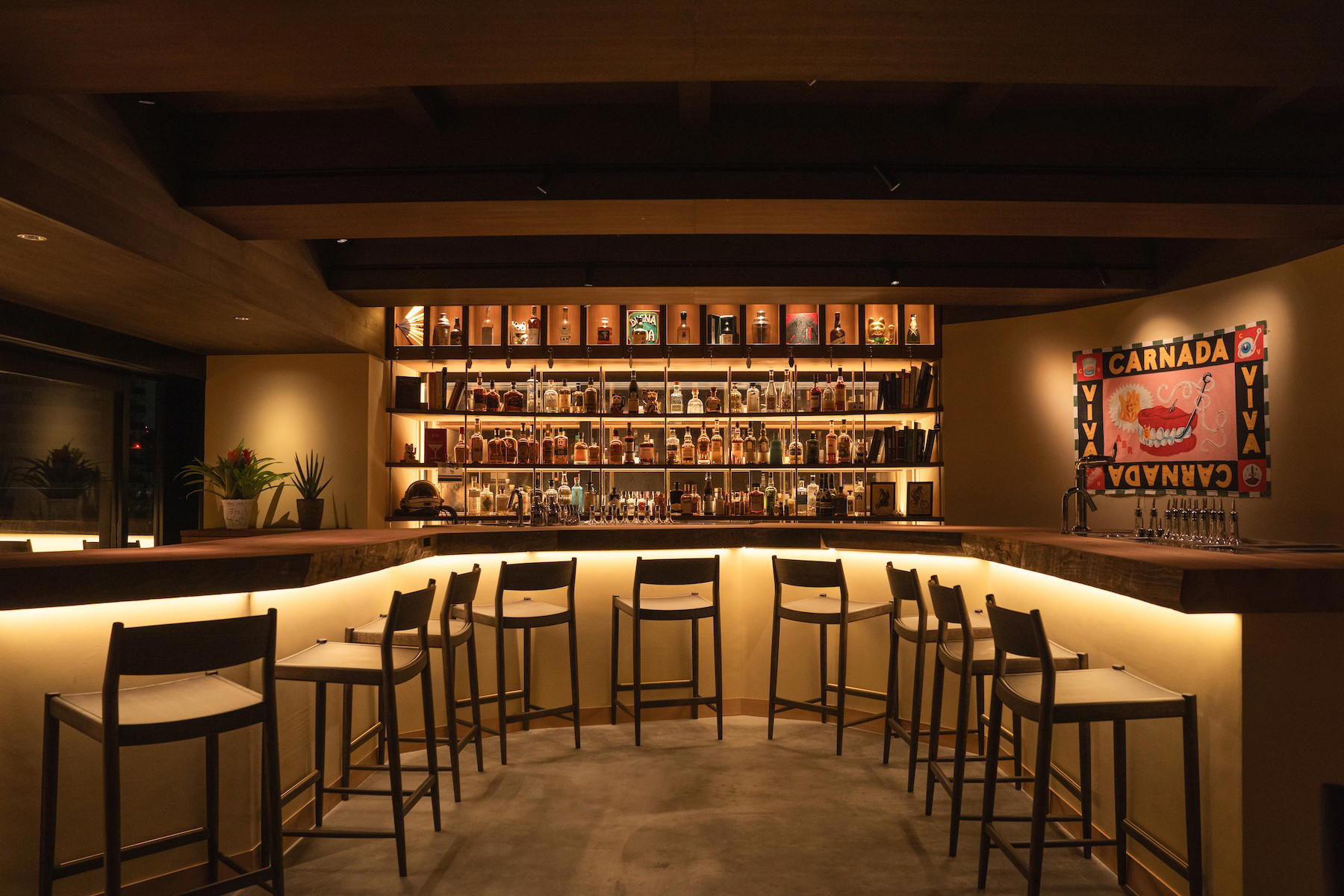
The design angle is practical rather than theatrical. Counter seating supports the Japanese habit of making technique visible, while the private rooms soften the format for celebrations and longer meals. The restaurant lists sommelier availability and a wine focus, which also moves it away from the beer-and-skewer shorthand often attached to chicken restaurants. This is still a Tokyo poultry address, but the room encourages a slower reading of the category.
Duck gives the format a sharper identity than standard yakitori
The stated course focus on Mojou Kamo gives the restaurant a clearer identity than a standard mixed-grill format. Duck changes the register of poultry dining: it brings more fat, more structure, and a different relationship with wine than leaner chicken cuts. Without needing the language of fine dining, the format asks diners to treat bird as the main argument rather than the prelude to something grander.
That is where the comparison with nearby casual addresses becomes instructive. Criollo Nakameguro ten and CAFÉ FAÇON Nakameguro honten serve a lower-spend café and sweets crowd, while Oniyanma Nakameguro ten is built for the speed and economy of udon. Those venues help define Nakameguro’s range, but they sit in different decision categories. The restaurant is for the evening when poultry is the plan, not a stop between errands.
Within Tokyo’s broader restaurant culture, this kind of specialization is one of the city’s great strengths. A single ingredient family can support a full evening when the room, beverage program, and pacing are aligned. The better question for diners is not whether they “like chicken,” but whether they want a meal organized around the many ways a kitchen can build depth from poultry. For that reader, the award category is more useful than a generic restaurant ranking.
The no-smoking policy and perfume restraint also fit the category. Poultry cookery, especially when paired with wine, loses clarity when the room is dominated by external scent. That kind of house rule can sound severe in isolation; in a compact room, it protects the meal for everyone present.
How it fits a Tokyo itinerary
For travellers mapping Tokyo by food genre, the restaurant works as a Nakameguro anchor rather than a citywide survey stop. It pairs naturally with a day that keeps to the west and southwest of central Tokyo, especially for visitors who want dinner in a neighbourhood with independent restaurants rather than a hotel-heavy district. Readers building a wider plan should cross-check it against Our full Tokyo restaurants guide, then use Our full Tokyo hotels guide, Our full Tokyo bars guide, Our full Tokyo wineries guide, and Our full Tokyo experiences guide to decide whether Nakameguro is the evening base or one stop in a larger route.
Tokyo’s dining depth also rewards contrast. A poultry-focused dinner can sit beside a broader itinerary that includes grilled fish and charcoal at. 鮪と炭火焼き うお炭 秋葉原店, Shinjuku dining at 12/10 Shinjuku ten, graphic café culture at 2D Cafe, and curry specificity at 3 Chome no Curry Ya San. Outside Tokyo, the same editorial logic applies: compare format, not just cuisine name, whether that means sukiyaki at -Grilled beef Sukiyaki- KAMAKURA TANUKIAN 鎌倉 たぬき庵 in Kamakura, café minimalism at.cafe in Osaka, contemporary dining at.know in Kumamoto, Vietnamese cooking at (Shoku) Vietnam in Kawasaki, curry in Hokkaido at [Curry Senmon Ten] Maruyama Kyoju. in Sapporo, Kyoto cooking at [ki:] in Kyoto, sake-bar dining at Jōdo Saké Bar in Los Angeles, or rice-ball specialization at Onigiri Time in Pasadena.
The editorial case is clear: choose the restaurant when the appeal is a compact room built around poultry, wine, and controlled pacing. It is not the broadest introduction to Japanese food, nor is it trying to be. Its value lies in taking a familiar ingredient category and giving it enough spatial and service structure to hold an entire evening in Nakameguro.
Price and Recognition
Comparable venues to calibrate price, style, and recognition.
| Venue | Cuisine | Price | Notes |
|---|---|---|---|
| Na Camo guroThis venue — the venue you are viewing | Not listed | $$$ | Not listed |
| Sake Hidejiro | Shibuya, Japanese Sake Omakase Izakaya | $$$ | Not listed |
| Shoto Ran Kan | Shibuya, Refined Japanese Izakaya | $$$ | Not listed |
| MO-MO-PARADISE Shibuya Koendori | Not listed | $$$ | Shibuya, Shabu-Shabu & Sukiyaki All-You-Can-Eat |
| Dashin Soan | Setagaya, Traditional Soba & Kaiseki | $$$ | Not listed |
| 乃木坂 しん | Minato, Modern Kaiseki | $$$ | Not listed |
Recognition history
Dated appearances from independent guides and award organizations, with the underlying list record or original source where available.
Tabelog 100 #36 · No. 36
Tabelog · Tabelog 100 - Chicken cuisine - 2025











At a Glance
- Cozy
- Romantic
- Intimate
- Modern
- Sophisticated
- Date Night
- Business Dinner
- Celebration
- Special Occasion
- After Work
- Group Dining
- Chefs Counter
- Private Dining
- Standalone
- Extensive Wine List
- Sommelier Led
- Farm To Table
- Local Sourcing
Current opening hours
- Monday
- 5–10:30 PM
- Tuesday
- 5–10:30 PM
- Wednesday
- 5–10:30 PM
- Thursday
- 5–10:30 PM
- Friday
- 5–10:30 PM
- Saturday
- 12–3 PM, 5–10:30 PM
- Sunday
- 12–3 PM, 5–10:30 PM
Hours can change for holidays and private events. Last verified .
Warm, intimate bistro-style atmosphere with counter and private rooms, focused on leisurely courses of premium duck and wine, suitable for dates and special occasions rather than casual family dining.