

Michelin Plate · Tabelog 100 #20
Our verdict
A Michelin Plate-recognised yakitori counter on Surugamachi in central Nara, Yakitori Mochizuki sits in the mid-price tier where charcoal craft meets considered drinking.

Pearl is the En Primeur Club membership app, where members save venues, book tables and use the concierge.
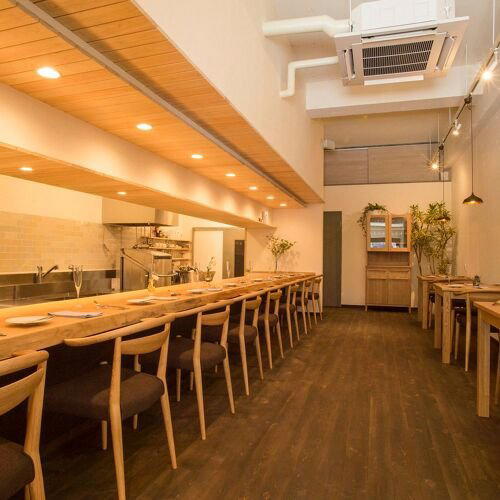
Charcoal and Smoke in a Temple City
Nara's dining reputation is built on kaiseki precision and the pilgrim's patience: long menus, formal rooms, and price points that track with the city's cultural weight. The yakitori tradition sits adjacent to all of that, operating in smaller, less ceremonious spaces where the interaction between grill and drink matters as much as any formal sequence of courses. Yakitori Mochizuki, at 32-14 Surugamachi, earns a 2025 Michelin Plate, which in the Guide's terminology signals a kitchen cooking well, consistently, without the multi-course architecture of the starred tier. For Nara, that matters: it extends the city's credible dining range downward in price without dropping in seriousness.
The address puts the restaurant inside a walkable cluster of Nara's eating and drinking options, close enough to the historic core that visitors moving between Kofukuji and the Naramachi district pass through the neighbourhood naturally. That proximity is a practical asset in a city where the most-recognised restaurants, kaiseki houses like Wa Yamamura or destination-format venues in the ¥¥¥ tier, demand more planning, earlier reservations, and a fuller evening commitment. Yakitori Mochizuki occupies a different register, one that rewards spontaneity more than its higher-price peers can afford to allow.
What Yakitori Means at This Level
Yakitori as a format has a deceptively wide range. At the entry end, it is convenience food: standing bars near train stations, pre-marinated cuts, industrial binchotan. At the other end, counters in Tokyo's Ginza or Minami-Aoyama, it becomes something closer to omakase, with single-breed birds, precise salt-to-tare rotation, and sake lists that rival those of high-end sushi counters. The Michelin Plate category positions Mochizuki above casual but below that rarefied tier. It is the range where technique and ingredient sourcing are taken seriously, but the environment retains the directness and informality that define yakitori's appeal in the first place.
In that mid-tier, the kitchen's relationship with fire is the distinguishing variable. Binchotan, the white charcoal used in serious yakitori operations, burns at temperatures that allow fat to render and skin to tighten without scorching, creating a flavour that gas grilling simply cannot replicate. The sequence of cuts, the balance of salt and tare applications, and the pacing of the skewers relative to the diner's drinking rhythm are all working parts of a format that looks simple but is not. A Michelin Plate signals the Guide's assessors found that working order intact.
Sake and the Case for Yakitori Pairing
Nara has a specific and underappreciated place in Japan's sake story. The region around the city is credited with some of the earliest documented sake brewing in Japan, predating the better-marketed prefectures by centuries. That history gives Nara-area restaurants a natural claim on sake programming that goes beyond a generic list. Whether individual yakitori counters act on that inheritance varies, but the structural argument for serious sake at a yakitori meal is consistent across the format: the char, salt, and umami notes in grilled chicken interact cleanly with junmai and junmai ginjo styles in a way that heavier pours, including most wine, tend to complicate.
Cold junmai served alongside salt-seasoned skewers produces a pairing dynamic that is difficult to improve on: the sake's clean acidity cuts through fat, while the umami of the chicken rounds any roughness in the rice spirit. Tare-glazed cuts, which carry more sweetness and caramelisation, shift the pairing logic toward slightly fuller, less austere styles. Shochu, particularly mugi (barley) or imo (sweet potato) varieties served with a small water addition, functions as an alternative, especially for drinkers who prefer a drier, more spirit-forward finish between courses.
For visitors building an itinerary around Kansai drinking, the regional comparison is instructive. Ichimatsu in Osaka and Torisaki in Kyoto operate in the same yakitori tradition, in cities with denser competition and higher baseline familiarity with the format.
Nara's Dining Context and Where This Fits
Nara's most-discussed restaurants are predominantly in the ¥¥¥ tier: akordu, the Spanish-inflected creative kitchen; Oryori Hanagaki and Tsukumo in the Japanese format; and NARA NIKON as a higher-price modern Japanese option. The ¥¥ band in Nara is where the city's everyday dining life happens, and where foreign visitors often find the gap between expectation and offer narrowest. Yakitori Mochizuki's Michelin Plate at this price point is the kind of signal that narrows that gap further: it identifies a kitchen that the Guide considers worth the attention of a traveller making deliberate choices.
For visitors whose Kansai trip already includes nights in Osaka or Kyoto, where the higher-end dining field is broader, restaurants like HAJIME in Osaka or Gion Sasaki in Kyoto represent the best of the regional range, Nara's contribution is often a day visit rather than a multi-night stay. Mochizuki becomes useful in that framing: a credible dinner option for those extending beyond the temples and deer park into the city's actual eating life, without requiring the long lead booking windows of the kaiseki tier. Elsewhere in Japan, the yakitori format has produced some of the country's tightest cooking and drinking experiences, from high-end counters in Tokyo (see Harutaka in Tokyo for the upper-register comparison) to more accessible spots in cities like Fukuoka and Yokohama.
See our full Nara restaurants guide for a complete view of the city's dining options across formats and price tiers, or explore Nara bars, Nara hotels, Nara wineries, and Nara experiences for broader trip planning. Tori Yamaguchi is the direct yakitori peer in the city and worth comparing on format and register.
Know Before You Go
- Address: 32-14 Surugamachi, Nara, 630-8357, Japan
- Cuisine: Yakitori
- Price range: ¥¥ (mid-range)
- Recognition: Michelin Plate 2025
- Booking: Specific booking method not confirmed; walk-in availability likely higher than starred-tier neighbours, but check locally ahead of a visit
- Hours:; verify directly before visiting
- Leading for: An accessible, Michelin-noted dinner with sake pairing potential, without the commitment of a full kaiseki evening
Frequently asked questions
Is Yakitori Mochizuki Michelin-listed?
Yakitori Mochizuki has received recognition including: Michelin Plate (2025).
How much does it cost to eat at Yakitori Mochizuki?
Pricing at Yakitori Mochizuki is listed as ¥¥.
What should I order at Yakitori Mochizuki?
Confirmed menu data for Mochizuki is not available, so dish-by-dish recommendations cannot be made here. What the 2025 Michelin Plate does confirm is a kitchen working at a consistent standard within the ¥¥ tier. At this level of yakitori, the approach to skewer selection and charcoal management typically drives the menu, so ordering broadly across the skewer sequence rather than selecting a single item is the sounder strategy.
What's the address for Yakitori Mochizuki?
Yakitori Mochizuki is located at 32-14 Surugamachi, Nara, 630-8357, Japan, Nara.
Do I need a reservation for Yakitori Mochizuki?
Booking ahead is advisable. Nara has a limited number of yakitori-focused venues operating at Michelin Plate standard, which concentrates demand on those that have earned the recognition. Mochizuki's 2025 Plate distinction puts it in a narrow peer group in the city, and at the ¥¥ price point it draws both locals and visitors who want grounded, high-quality dining without the ¥¥¥ commitment of Nara's kaiseki rooms.
What's the signature at Yakitori Mochizuki?
No single dish is confirmed in available data as a named signature. A Michelin Plate at the ¥¥ tier signals that the kitchen delivers reliably across its format rather than resting on one showpiece item. In yakitori at this standard, the quality of the charcoal sourcing, skewer timing, and the kitchen's read on each cut tend to be the actual differentiators, more so than any single named dish.
The Minimal Set
Comparable venues nearby, for context on price, style, and recognition.
| Venue | Cuisine | Price | Awards | Notes |
|---|---|---|---|---|
| Yakitori MochizukiThis venue (the venue you are viewing) | Japanese Yakitori | $50–100 | Michelin Plate · Tabelog 100 #20 | Not listed |
| nakamuraya | Contemporary Italian with Japanese Seasonal Ingredients | $50–100 | Michelin Plate | Naramachi, Contemporary Italian with Japanese Seasonal Ingredients |
| Houseki Bako | Japanese Kakigori Cafe | $10–20 | Tabelog 100 #85 | Nara, Japanese Kakigori Cafe |
| Housekibaco (Jewelry Box) | Japanese Kakigori Cafe | $10–20 | Tabelog 100 #85 | Naramachi, Nara Kakigori Specialty |
| 和食-タイ料理 ほんま家 | 和食-タイ料理 Fusion | Not listed | Not listed | 小西町, 和食-タイ料理 Fusion |
| Camino | Japanese-Italian Fusion | $50–100 | Michelin Plate | Nara, Japanese-Italian Fusion |
Recognition history
Dated appearances from independent guides and award organizations, with the underlying list record or original source where available.
Michelin Plate
Michelin
Tabelog 100 #20 · No. 20
Tabelog · Tabelog 100 - Yakitori - WEST - 2025
Full recognition history (3 entries)
Michelin Plate
Michelin
Continue exploring
More in Nara
Restaurants in Nara
All restaurants in Nara →


Bars in Nara
All bars in Nara →

Hotels in Nara
All hotels in Nara →


Wineries in Nara
Browse all →
Details
- Intimate
- Quiet
- Cozy
- Solo
- Date Night
- Special Occasion
- Chefs Counter
- Open Kitchen
- Standalone
- Omakase
- Counter Dining
- Set Menu
Small and focused, with a counter-style atmosphere suited to quiet, solo or intimate dining.