Yakiniku Ryukyunoushi Onnabekkan
Our verdict
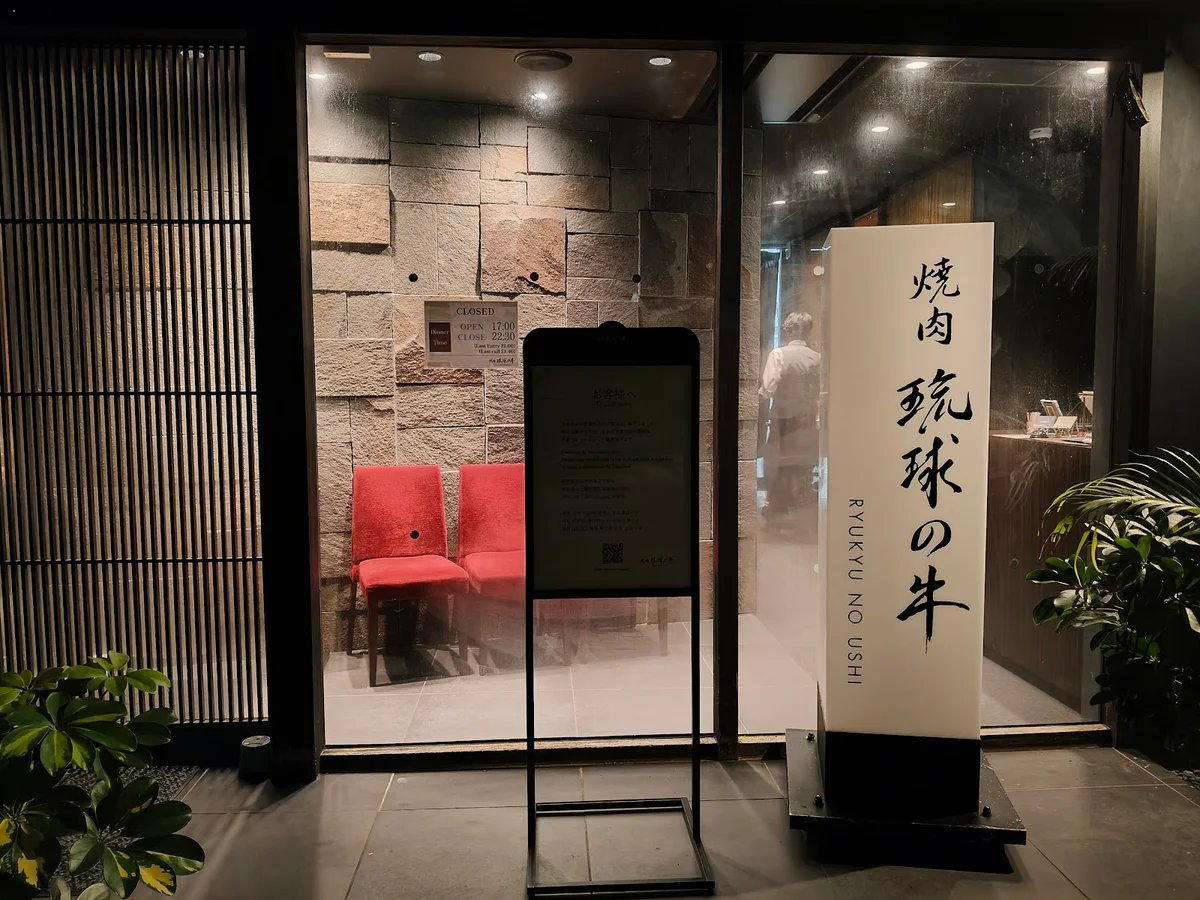
Yakiniku Ryukyunoushi Onnabekkan sits in Onna Village on Okinawa's central-west coast, placing it squarely within the island's tradition of beef grilling rooted in Ryukyuan livestock heritage. The address alone, Maeganeku, Onna, signals a destination outside Naha's restaurant corridor, making it a deliberate choice rather than a convenience stop. Comparable operators in Kunigami District include Ryukyu No Ushi and Shimabutaya Onna.

Pearl is the En Primeur Club membership app, where members save venues, book tables and use the concierge.
The menu
What to order
- Okinawa Wagyu beef course
- Aburi Sushi
- Beef tongue
- Ribeye
Onna Village and the Geography of Okinawan Yakiniku
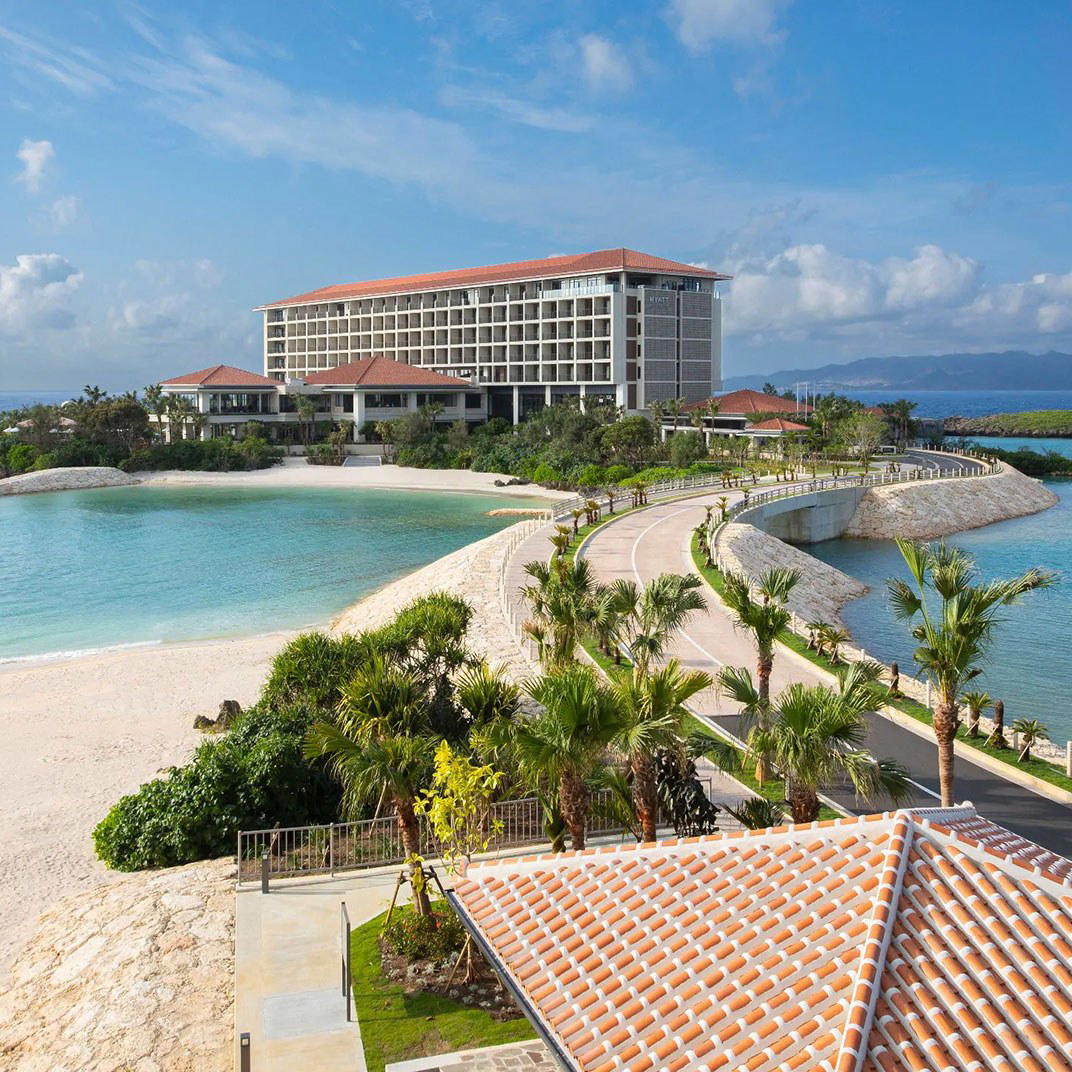
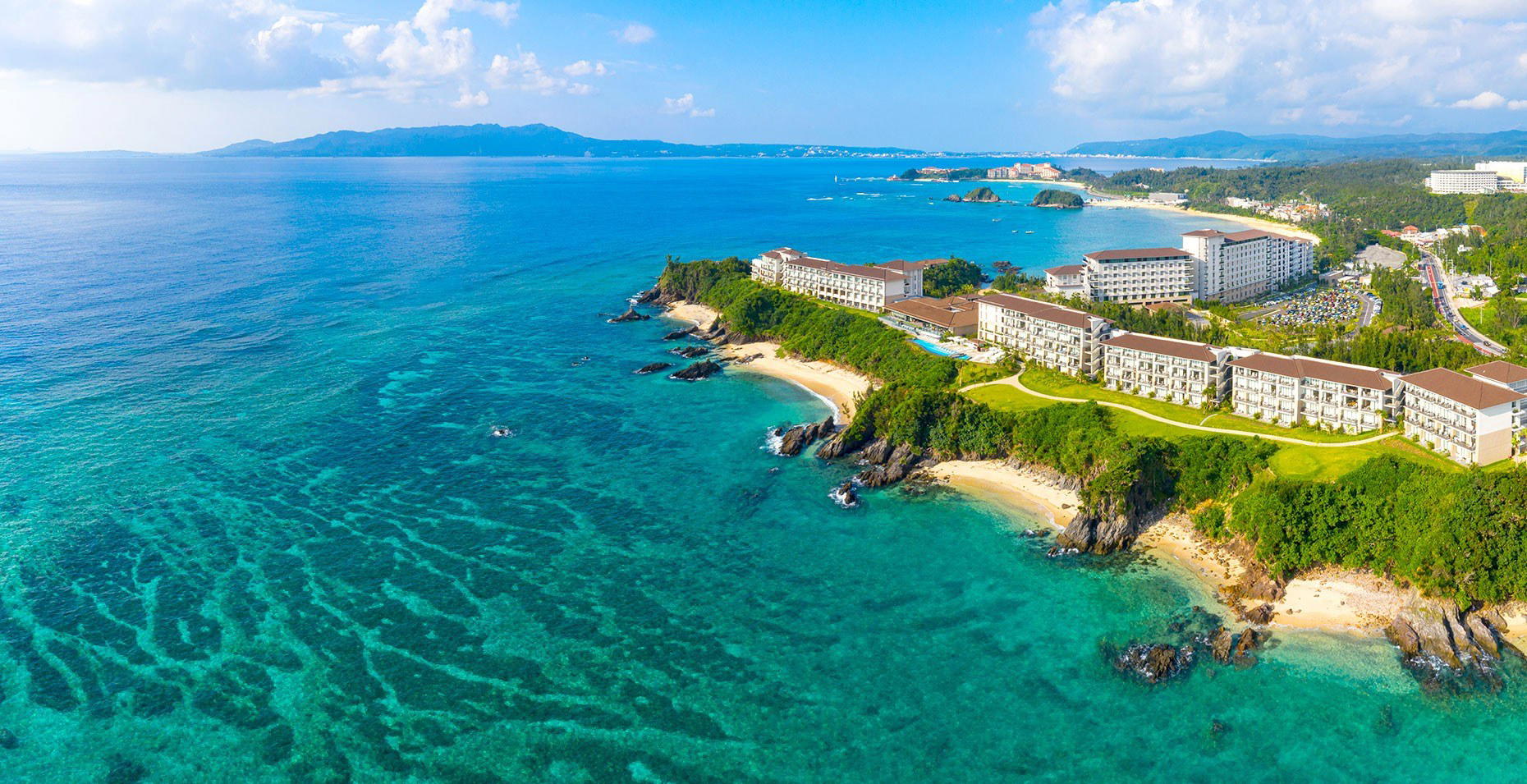
The road through Onna Village runs close to the East China Sea, with resort hotels stacked along the coast and the Yanbaru forest pressing in from the north. This stretch of National Route 58 is not where most visitors expect to find serious yakiniku: Naha and the prefecture's commercial dining core sit roughly an hour south, and the Kunigami District restaurants that operate above the tourist baseline tend to do so quietly, with little of the marketing machinery that sustains the island's better-known grilling addresses. Yakiniku Ryukyunoushi Onnabekkan, at 101-1 Maeganeku in Onna, occupies that quieter register. The Maeganeku area sits between the coastal resort zone and the hillside interior, which gives the address a removed quality that reinforces what the name already implies: this is a destination tied to place, not passing traffic.
Yakiniku as a dining format carries different weight in Okinawa than it does on the mainland. The prefecture has its own beef identity, shaped by the Ryukyuan cattle tradition and a subtropical climate that produces animals with distinct fat composition compared to the heavily marbled wagyu of Kagoshima or Miyazaki. At the same time, Okinawa's grill culture absorbed influences from the Ryukyuan court kitchen, where pork dominated, and from American military presence, which made beef more culturally legible on the island than in many mainland prefectures during the postwar decades. The result is a local yakiniku scene that sits between two reference points: the technically rigorous beef-centric formats you find in Osaka or Tokyo, and a more casual, communal grilling tradition specific to the island. For comparable regional approaches elsewhere in Japan, the editorial team has examined venues like Goh in Fukuoka and HAJIME in Osaka, where regional product identity shapes the dining format with equal deliberateness.
Where Onnabekkan Sits in the Kunigami District Scene
Ryukyu No Ushi operates under a name that directly references Ryukyuan cattle, signalling a similar positioning around local beef identity. Shimabutaya Onna takes a different angle, foregrounding island pork in a format that speaks more directly to the Ryukyuan culinary mainstream. Onnabekkan's name carries the suffix bekkan, which in Japanese hospitality terminology typically denotes an annex or separate hall, often associated with a more considered, sit-down dining experience rather than a fast-turnover grill format.
The broader Kunigami District dining picture reveals a prefecture where the restaurant infrastructure outside Naha is genuinely spread thin. Visitors making the drive north from the capital, whether headed to the Churaumi Aquarium, the Nakijin Castle ruins, or the Yanbaru National Park, pass through a corridor where dining decisions require more advance planning than a Naha evening would. In that context, Onnabekkan's position in Onna, roughly midway along the tourist route, gives it a practical gravity for travellers who want something more considered than a roadside teishoku.
For reference on how Japan's more celebrated dining destinations operate at a national level, the EP Club has profiled venues including Harutaka in Tokyo, Gion Sasaki in Kyoto, and akordu in Nara, each representing a different expression of Japan's capacity to embed strong regional product identity into refined dining formats. Okinawa's prefectural dining scene operates at a different scale and recognition level than those cities, but the underlying logic, using local cattle, local pork, and local growing conditions as the basis for a distinct dining identity, is consistent. Further afield, Le Bernardin in New York City and Atomix in New York City demonstrate how regional product conviction, applied rigorously, anchors a restaurant's identity in any market.
Planning a Visit: What the Location Requires
Getting to Maeganeku from Naha requires either a rental car or a reliance on the limited bus services along Route 58, and the car is the practical choice for the vast majority of visitors. The drive from Naha Airport runs approximately 50 to 60 minutes under normal conditions, placing Onnabekkan within the touring range of a full-day north-bound itinerary. Most visitors staying in the Onna resort corridor, at the concentration of international hotels between Onna and Motobu, are effectively on the doorstep, which makes an evening visit logistically direct for that subset of travellers.
The restaurant's absence from major aggregator platforms in widely available English-language databases suggests that walk-in assumptions may be riskier than at Naha establishments with stronger international visibility. Approaching the visit with a confirmed reservation is the practical recommendation. Other Kunigami District and Okinawa-area grill options worth cross-referencing include Blue Ocean Steak in Nakagami District, which operates in the adjacent prefecture zone with greater availability of English-language booking infrastructure.
For broader context on Japan's yakiniku and grill landscape beyond Okinawa, the EP Club's Japan coverage includes Birdland in Sakai, Bistro Ange in Toyohashi, and a set of destination-specific guides covering everything from Nanao to Sapporo, Takashima, and Nishikawa Machi. The full Kunigami District restaurants guide covers the district's dining map with greater granularity than any single venue profile can provide.
Frequently asked questions
What's the address for Yakiniku Ryukyunoushi Onnabekkan?
Yakiniku Ryukyunoushi Onnabekkan is located at 101-1 Maeganeku, Onna, Kunigami District, Okinawa 904-0414, Japan, Kunigami District.
Is Yakiniku Ryukyunoushi Onnabekkan a good option for visitors staying at Onna Village resorts?
The restaurant's address at 101-1 Maeganeku places it directly within Onna Village, the same coastal strip where the majority of Okinawa's large resort hotels are concentrated. For resort guests, this removes the long drive to Naha for quality yakiniku and offers a regionally specific alternative, Ryukyu cattle beef, that mainland Japanese yakiniku chains do not typically feature.
What should I order at Yakiniku Ryukyunoushi Onnabekkan?
The venue's name references Ryukyu cattle directly, which points toward Okinawan beef cuts as the core of the menu rather than imported wagyu from the mainland. At a yakiniku format, the sequencing typically moves from lighter cuts to fattier ones grilled tableside, though specific menu items and current offerings are best confirmed with the restaurant directly before visiting.
Can I walk in to Yakiniku Ryukyunoushi Onnabekkan?
The restaurant sits at 101-1 Maeganeku in Onna Village, a coastal address that draws both resort guests and travellers making a specific trip up Route 58. Walk-ins are possible, but given the location's distance from central Naha and the drive required to get there, calling ahead to check availability before making the journey is the practical approach.
What is Yakiniku Ryukyunoushi Onnabekkan known for?
Onnabekkan is identified with Ryukyu-breed cattle, a distinction the restaurant signals through its name, 'Ryukyu no Ushi' translates to 'cattle of the Ryukyu.' The Onna Village location, set within Kunigami District along the northern Okinawan coast, gives it a geographic separation from the more competitive yakiniku scene in Naha, making it a destination rather than a neighbourhood choice.
The Quick Read
Comparable venues nearby, for context on price, style, and recognition.
| Venue | Cuisine | Price | Awards | Notes |
|---|---|---|---|---|
| Yakiniku Ryukyunoushi OnnabekkanThis venue (the venue you are viewing) | Okinawa Wagyu Yakiniku | $50–100 | Not listed | Not listed |
| Ryukyu No Ushi | Okinawan Yakiniku | $50–100 | Not listed | Onna-son, Okinawan Yakiniku |
| Shimabutaya Onna | Okinawan Agu Pork Steamed Cuisine | $30–50 | Not listed | Onna Village, Kunigami District, Okinawan Agu Pork Steamed Cuisine |
| 6 | Innovative French | $150–200 | Not listed | Kouri, Nakijin Village, Innovative French |
| Sushi Morita (もり田) | Kyushu-mae Sushi | $50–100 | Not listed | Kokurakita-ku, Kyushu-mae Sushi |
| Torioka | Premium Yakitori Omakase | $50–100 | Tabelog 100 #70 | Azabudai, Minato Ward, Premium Yakitori Omakase |
Continue exploring
More in Kunigami District
Restaurants in Kunigami District
All restaurants in Kunigami District →

Details
- Family
- Date Night
- Open Kitchen
- Sake Program
- Local Sourcing
- A La Carte
- Set Menu
Current opening hours
- Monday
- 4:30–11 PM
- Tuesday
- 4:30–11 PM
- Wednesday
- 4:30–11 PM
- Thursday
- 4:30–11 PM
- Friday
- 4:30–11 PM
- Saturday
- 4:30–11 PM
- Sunday
- 4:30–11 PM
Hours can change for holidays and private events. Hours as of .
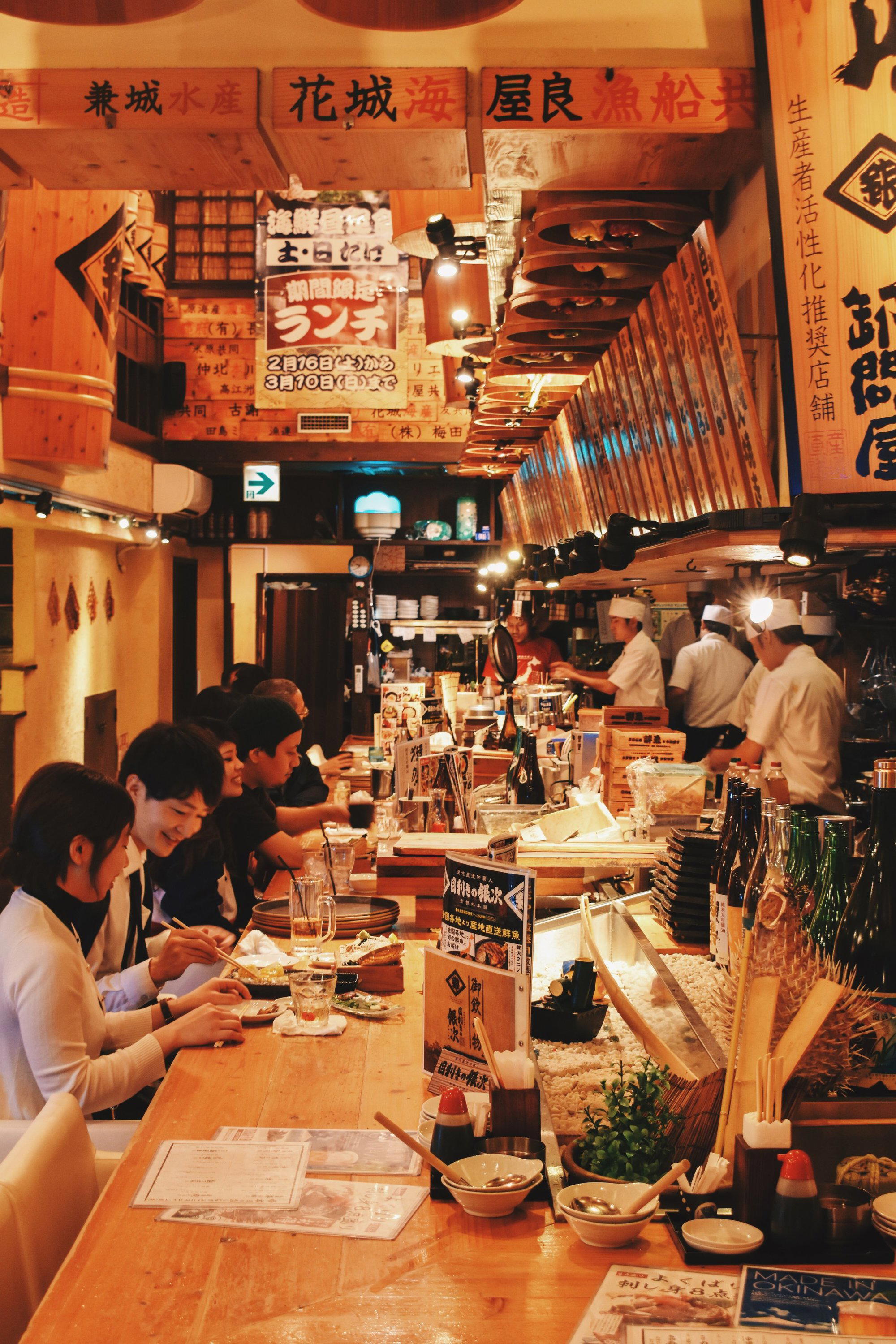
Comfortable grill atmosphere with potential smoke issues from ventilation; casual house-style setting.