Ryukyu No Ushi
Our verdict
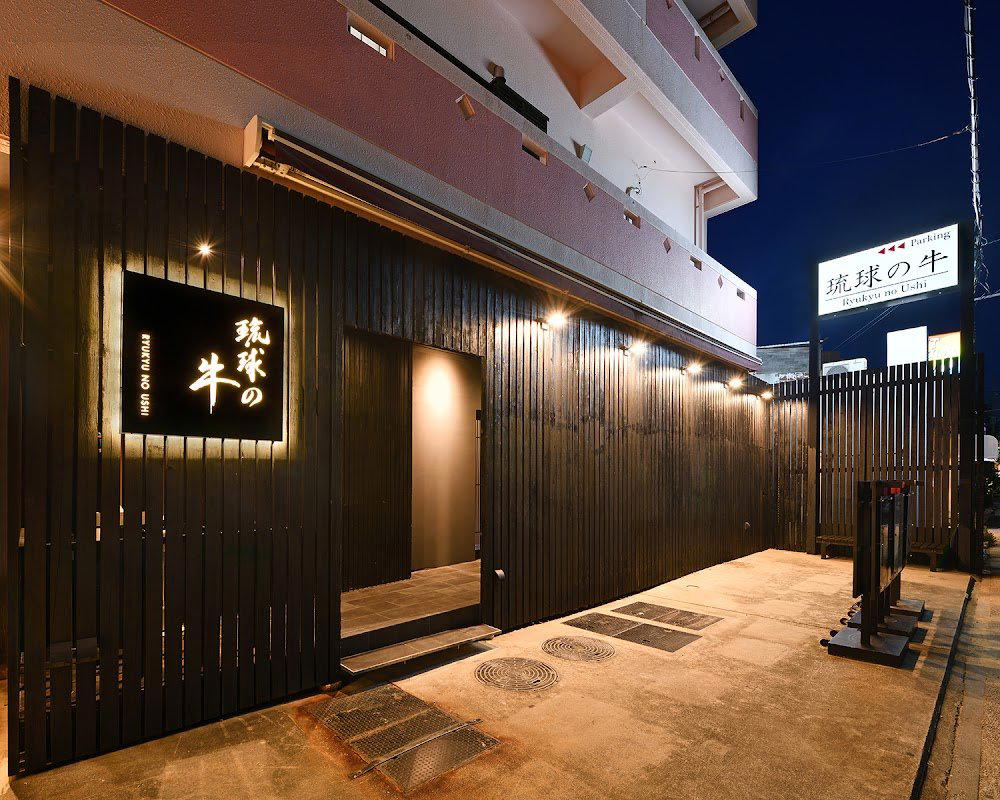
Set along Okinawa's Onna coastline in Kunigami District, Ryukyu No Ushi draws from the prefecture's distinct beef and agricultural traditions. The address places it within a region where local sourcing is less a marketing position than a structural reality, shaped by Okinawa's geographic separation from mainland Japanese supply chains. For visitors combining beach travel with serious eating, it occupies a clear place in the local dining hierarchy.

Pearl is the En Primeur Club membership app, where members save venues, book tables and use the concierge.
The menu
What to order
- Premium A5 Wagyu Platter
- Grilled Okinawa Beef Sushi
Where the Onna Coast Shapes What Arrives on the Plate
The drive north along Route 58 through Onna village signals a shift in register. The resort clusters thin out, the Pacific opens wider to the left, and the agricultural interior of Okinawa's central coast starts to assert itself. It is in this transitional stretch, at an address in Maeganeku, that Ryukyu No Ushi sits. The physical approach matters here because it mirrors something true about the food: this is a part of Okinawa where what gets served is largely determined by what the island itself produces, not by what a distributor can overnight from Tokyo or Osaka.
That geographic reality is the dominant fact of dining in Kunigami District. Okinawa's separation from the Japanese mainland, both in distance and in agricultural history, created a food culture built around distinct local breeds, crops, and preparation methods. The "Ryukyu" in the restaurant's name is not decorative. It points directly at the Ryukyu Islands' longstanding cattle-raising traditions, which predate the prefecture's reintegration into Japan and continue to produce beef with a flavour profile shaped by subtropical pasture conditions rather than the intensively managed feed systems common on Honshu.
Okinawan Beef in Regional Context
Japanese beef culture is often discussed as a single system with Wagyu at its apex, but the regional picture is considerably more fractured. Kagoshima, Miyazaki, and Matsusaka each maintain distinct breed and feeding protocols, and they market aggressively into Tokyo's premium restaurant circuit. Okinawan beef operates differently. Production volumes are smaller, export infrastructure is limited, and a significant share of the leading product is consumed within the prefecture itself. That insularity, frustrating for mainland diners, is an advantage for anyone eating in Onna village.
For comparison, the beef programs at destinations like Goh in Fukuoka or the protein sourcing discipline visible at HAJIME in Osaka reflect a mainland philosophy in which chefs reach outward to curate from multiple regional producers. In Okinawa, the logic inverts: the island's leading beef rarely leaves, and restaurants positioned close to the source have a structural supply advantage that their counterparts in major cities cannot replicate through purchasing power alone.
Ryukyu No Ushi sits squarely within that local-first framework. The name directly references Ryukyuan cattle heritage, positioning the restaurant within a tradition of beef preparation tied to specific island breeds rather than the imported Wagyu conventions that dominate premium yakiniku operations in Naha and the tourist-facing resort strip further south. Compared to neighbours such as Yakiniku Ryukyunoushi Onnabekkan and Shimabutaya Onna, this address in Maeganeku draws on the same regional sourcing logic while operating at a specific point on the Onna coastline that keeps it distinct from resort-adjacent dining.
The Sourcing Argument That Runs Through Okinawan Dining
Across Japan's more serious dining circuit, sourcing provenance has become a primary editorial and commercial claim. The omakase counters reviewed at venues like Harutaka in Tokyo or the seasonally disciplined formats at Gion Sasaki in Kyoto treat ingredient origin as the organising principle of the menu. In Okinawa, the conversation is structurally different. The island does not have access to the same seasonal variety that defines kaiseki on Honshu, but it does have ingredients, beef among them, that are geographically protected in a practical rather than regulatory sense.
Ryukyuan cattle have grazed on subtropical pasture grass rather than the grain-finished regimens of premium Honshu operations for generations. The resulting beef carries different fat distribution and a distinct mineral character that reflects the island's soil and climate. Restaurants in Onna that build their menus around this supply chain are, in effect, preserving a breed-specific eating tradition that has no direct mainland equivalent. That is a more substantive sourcing claim than most promotional material in Japan's restaurant sector can honestly make.
The wider Okinawan dining context reinforces this point. Whether in Naha's Makishi market, where the pork cuts and bitter melon on display have no direct counterpart in mainland Japanese cooking, or in the villages of Kunigami where the cattle graze within sight of the cooking fires, Okinawan food culture maintains genuine distinctiveness. Restaurants like Blue Ocean Steak in Nakagami District represent one mode of presenting Okinawan beef to an international audience; Ryukyu No Ushi, operating at the Maeganeku address in Onna, represents a more locally embedded alternative.
Placing Ryukyu No Ushi in the Broader Japan Circuit
Visitors who move through Japan's restaurant circuit, spending time at precision-driven formats in Nara such as akordu or tracking the yakiniku discipline evident at Birdland in Sakai, will find Ryukyu No Ushi occupying a very different register. This is not a destination built around technique as spectacle or multi-course architecture. Its claim on serious eaters is geographic and agricultural: it operates in the place where the raw material originates, and that proximity shapes what is possible in a way that no amount of sourcing logistics can replicate for a restaurant in Tokyo or Osaka.
For readers building an Okinawa itinerary around food rather than around beaches alone, the Kunigami District offers a credible alternative to the resort-corridor dining options. Our full Kunigami District restaurants guide maps this territory in more detail, including the range of formats operating between Onna village and the northern coast. The 6 listing provides additional context for where Ryukyu No Ushi sits within the district's dining hierarchy.
For international comparison, the sourcing-first argument that structures Ryukyu No Ushi's identity is not unlike the provenance discipline at marine-focused operations such as Le Bernardin in New York City, where ingredient origin is the editorial centre of the menu, or the Korean ingredient frameworks that organise Atomix in New York City. The scale and price tier differ substantially, but the underlying logic, that where something comes from determines what it can become on the plate, holds across all three.
Planning a Visit
Ryukyu No Ushi is located at 909-2 Maeganeku, Onna village, Kunigami District, Okinawa. Onna sits roughly midway along the western coast of the main island, accessible by car from Naha Airport in approximately 70 to 80 minutes depending on traffic. Public transport connections to Maeganeku are limited, and a rental car or taxi remains the practical option for most visitors arriving from Naha or the central resort zone. Given the relatively small scale of dining operations in this part of Onna, arriving without a reservation during peak travel periods carries meaningful risk of unavailability.
Frequently asked questions
Is Ryukyu No Ushi suitable for children?
Ryukyu No Ushi is located in a rural stretch of Onna village along the Okinawan coast, which tends to suit a quieter dining pace more than family-casual environments. The beef-focused format at 909-2 Maeganeku is geared toward those engaging seriously with regional sourcing. Families with older children who are comfortable at a deliberate, course-oriented table would find it more fitting than those with young children.
Is Ryukyu No Ushi formal or casual?
The setting in Onna village, Kunigami District points toward a considered but not ceremonial atmosphere, consistent with serious regional dining in rural Japan rather than the white-tablecloth formality of Tokyo's precision counters. Clothing that reflects the occasion without being a suit is a reasonable baseline. The coastal address along Route 58 suggests a register closer to focused and relaxed than either resort-casual or black-tie.
How does Ryukyu No Ushi compare to other regional beef destinations in Japan?
Ryukyu No Ushi sits within a fragmented regional beef circuit that includes well-documented producers in Kagoshima and the yakiniku discipline tracked through venues in Nara and beyond. Okinawa's cattle tradition is geographically and climatically distinct from mainland prefectures, making the Onna village address one of the few places to engage with Ryukyuan beef on its home terrain. That geographic specificity, rather than any awards tier, is the primary reason it draws comparison to Japan's more serious regional dining destinations.
What should I order at Ryukyu No Ushi?
The name itself, Ryukyu No Ushi translates roughly to 'cattle of the Ryukyus', signals that Okinawan beef is the central argument on the menu. As the editorial context makes clear, Okinawan beef occupies a distinct position within Japan's regional cattle culture, separate from Kagoshima or Kobe productions. Order with that regional specificity in mind rather than treating it as a generic Wagyu experience.
Where is Ryukyu No Ushi located?
Ryukyu No Ushi is located at 909-2 Maeganeku, Onna, Kunigami District, Okinawa 904-0414, Japan, Kunigami District.
Is Ryukyu No Ushi reservation-only?
No direct booking contact is publicly documented for Ryukyu No Ushi at 909-2 Maeganeku, Onna village. Given its location outside Okinawa's main resort corridor and its focus on regional beef, walk-in availability on busy periods is not something to assume. Confirming a reservation in advance through the venue directly or via a local concierge is the prudent approach.
Side-by-Side Snapshot
Comparable venues nearby, for context on price, style, and recognition.
| Venue | Cuisine | Price | Awards | Notes |
|---|---|---|---|---|
| Ryukyu No UshiThis venue (the venue you are viewing) | Okinawan Yakiniku | $50–100 | Not listed | Not listed |
| Yakiniku Ryukyunoushi Onnabekkan | Okinawa Wagyu Yakiniku | $50–100 | Not listed | Onna |
| Shimabutaya Onna | Okinawan Agu Pork Steamed Cuisine | $30–50 | Not listed | Onna Village, Kunigami District |
| 6 | Innovative French | $150–200 | Not listed | Kouri, Nakijin Village |
| Tominokoji Yamagishi (富小路やま岸) | Kyoto Kaiseki Omakase | $300–500 | Not listed | Nakagyo-ku |
| 木佐貫 | Kanazawa Kaiseki Omakase | $200–300 | Tabelog Silver #57 | Tokiwamachi |
Continue exploring
More in Kunigami District
Restaurants in Kunigami District
All restaurants in Kunigami District →


Details
- Cozy
- Modern
- Group Dining
- Special Occasion
- Private Dining
- Sake Program
- Local Sourcing
- A La Carte
Current opening hours
- Monday
- 4:30–11 PM
- Tuesday
- 4:30–11 PM
- Wednesday
- 4:30–11 PM
- Thursday
- 4:30–11 PM
- Friday
- 4:30–11 PM
- Saturday
- 4:30–11 PM
- Sunday
- 4:30–11 PM
Hours can change for holidays and private events. Hours as of .
Cozy booth-style seating with modern Japanese and industrial design elements creating a relaxed atmosphere for enjoying grilled meats.