
Michelin Selected
Michelin Selected for 2025, the Hyatt Regency Seragaki Island Okinawa occupies a rare private island position off the Onna coast, where the architecture frames the East China Sea rather than competes with it. The property sits in a tier of large-format Okinawan resorts that trade in serious coastal design and broad amenity sets, making it a reference point for the region's resort hotel market.

Pearl is the En Primeur Club membership app — saves, bookings, and concierge access live there. Same editors, same standards.
- Address
- Kunigami-gun, 1108 Serakaki, Onna, Kunigami District, Okinawa 904-0404, Japan
- Phone
- +81 98-960-4321
- Website
- hyatt.com
- Directions
- Get directions
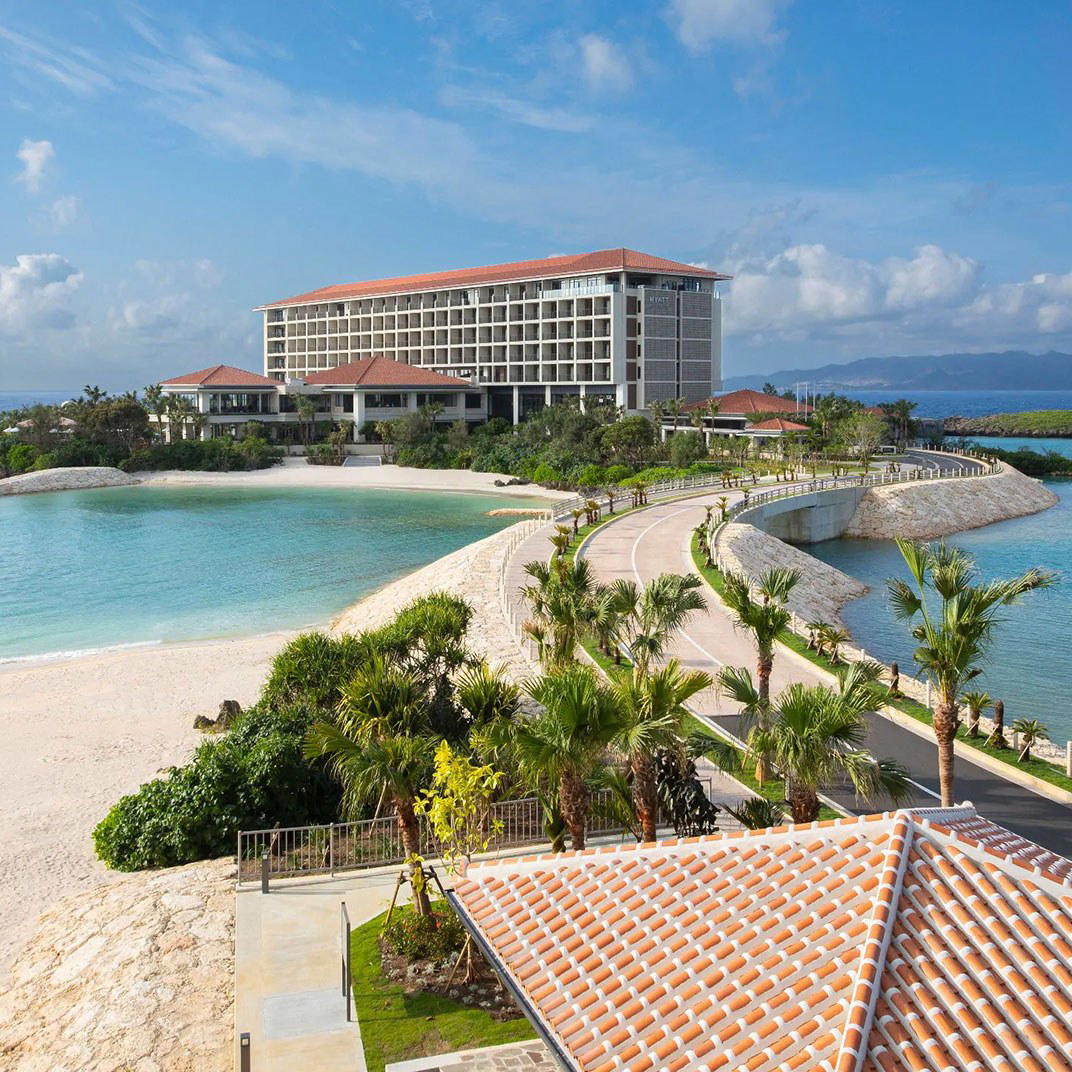
Where the Architecture Meets the East China Sea
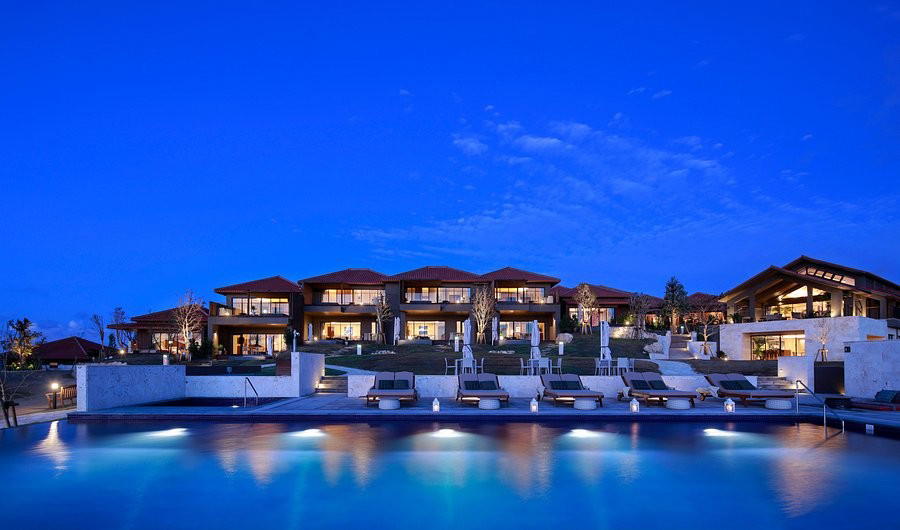
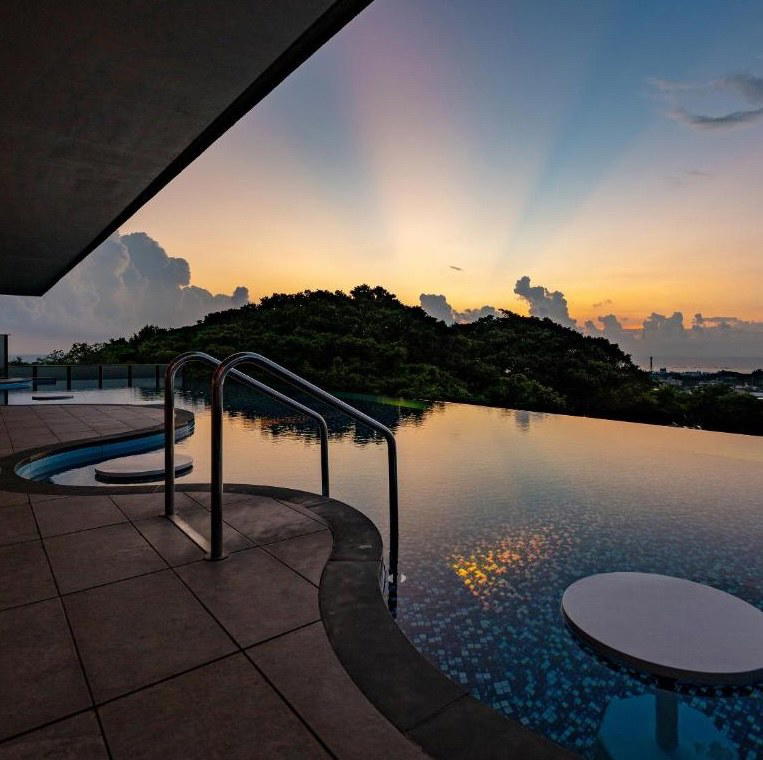
Okinawa's Onna Village coastline has become the clearest expression of what premium Japanese resort architecture can do when the natural setting is this demanding. The East China Sea is not a passive backdrop here: its blues shift register across the day, from pale jade at dawn to a deep, saturated indigo by late afternoon, and any structure that ignores that rhythm fails on its own terms. The Hyatt Regency Seragaki Island Okinawa does not ignore it. The property is built on a private island — Seragaki Island itself — and that geographic fact shapes every design decision, from the orientation of guest rooms to the movement of interior corridors that consistently return the eye to water.
The choice of a private island format is not merely about exclusivity. Across Japan's premium resort tier, the properties that have earned sustained recognition tend to be those that commit to a single spatial logic rather than hedging between competing design languages. At Seragaki Island, the logic is horizontal openness: low-rise volumes, generous terracing, and a persistent connection between interior and exterior space. This is a design approach with clear regional precedent in Okinawan vernacular building, where the ryukyu architectural tradition favored transitional spaces, neither fully inside nor fully outside, as a response to the subtropical climate. The Hyatt Regency's interpretation scales that tradition up to international resort dimensions without abandoning its underlying principle.
Among Michelin Selected hotels in Japan for 2025, the property joins a cohort that includes both intimate ryokan formats and larger coastal resorts. That selection places it alongside properties recognized for consistent quality across accommodation, service, and setting, a standard that Michelin applies to hotels rather than restaurants but draws on comparable evaluative rigour. For context on how Michelin's hotel recognition maps across Japan's premium tier, properties such as Amanemu in Mie and Gora Kadan in Hakone represent the ryokan end of that recognized cohort, while Seragaki Island sits at the resort end, with a footprint and amenity set calibrated for guests who want broad activity options alongside serious coastal architecture.
The Resort as Physical Argument
The private island position is the most consequential architectural fact about Seragaki. It means the property controls its own perimeter, which in turn means it controls the horizon. There are no neighboring structures competing for sightlines, no road noise interrupting the coastal soundscape. This is not common even along Onna's otherwise well-developed resort strip, where properties like The Atta Terrace Club Towers operate with different site configurations. The island separation creates a spatial compression that actually intensifies the sense of arrival: the transition from mainland Okinawa to the resort's grounds registers as a genuine threshold crossing rather than a simple hotel check-in.
Large-format Japanese resort hotels in the Okinawa market have historically faced a design tension between international brand expectations and the specificity of the local environment. The most successful resolutions of that tension tend to be the ones that commit to local material palettes and site-responsive massing rather than importing a generic tropical resort vocabulary. Coral stone, local timber species, and the warm ochre and white tones of traditional Okinawan architecture all provide a design grammar that grounds an otherwise international building program. How deeply any individual property draws on that grammar is a meaningful indicator of its relationship to its site, and it is the dimension along which Okinawa's resort hotels most clearly differentiate themselves.
For travelers comparing the Okinawa coastal resort tier against properties further north in Japan's premium hotel circuit, say, Bvlgari Hotel Tokyo or HOTEL THE MITSUI KYOTO in Kyoto, the comparison is not straightforwardly competitive. Those urban properties trade in a different register entirely: cultural density, proximity to historical neighborhoods, the compressed intensity of city luxury. Seragaki Island operates on an opposite premise: space, water, and the deliberate slowing of time that a private island setting enforces. Both are legitimate premium propositions; they address different travel needs.
Okinawa's Resort Market in Context
Onna Village sits roughly in the center of Okinawa's main island, along what has become the densest concentration of premium coastal accommodation in the Ryukyu archipelago. The area benefits from consistent subtropical weather, with peak season running from late spring through summer and a shoulder period in autumn that many experienced Okinawa travelers prefer for its lower humidity and reduced crowds. The Ryukyu Islands' distinctive marine environment, coral reefs, crystalline inshore water, and strong diving and snorkeling conditions, provides a natural activity infrastructure that resort properties in this zone can draw on without replicating it artificially.
Within Okinawa's own competitive set, the Hyatt Regency Seragaki Island occupies a different market position than properties like Halekulani Okinawa or The Hiramatsu Hotels and Resorts Ginoza. Those properties carry their own distinct architectural and experiential identities; the Seragaki Island property's private island configuration and its Hyatt Regency brand context place it in a tier that balances broad-audience amenity delivery with the geographic specificity that a dedicated island site allows. Travelers making comparisons within the Okinawa market will find meaningful differences in scale, intimacy, and design register across these properties, and the choice between them tends to come down to whether the traveler prioritizes the contained focus of a smaller operation or the range of a larger resort.
The Ryukyu archipelago also offers further options for those extending a trip beyond the main island. Jusandi in Ishigaki represents the boutique end of the southern island hotel market, while the overall Onna and Kunigami Gun area guide covers the broader accommodation context for the region.
Planning a Stay
Reaching Seragaki Island means flying into Naha Airport on Okinawa's main island, then traveling north along the Okinawa Expressway toward Onna Village, a journey of roughly an hour from the airport depending on traffic conditions. The property is accessible by road via a causeway or bridge connection from the mainland, so the island setting does not impose any logistical complexity on arrival. Peak booking windows for summer dates along the Onna coast compress quickly, particularly for travelers arriving during Okinawa's marine season from May through August, and advance reservation is advisable for that period. Autumn travel, broadly September through November, offers a measurably different experience: the tourist volume drops, prices in the regional market soften, and the sea conditions remain suitable for water activity through most of October.
For travelers building a longer Japan itinerary around both resort and cultural stays, properties like Fufu Nikko, Zaborin in Kutchan, and Benesse House in Naoshima offer entirely different expressions of premium Japanese hospitality that sit usefully alongside an Okinawa coastal stay rather than competing with it.
Comparison Snapshot
Comparable venues nearby, for context on price, style, and recognition.
| Venue | Cuisine | Price | Awards | Notes |
|---|---|---|---|---|
| Hyatt Regency Seragaki Island OkinawaThis venue — the venue you are viewing | Contemporary luxury resort with localized design elements reflecting Okinawan aesthetics and natural surroundings. | $300–500 | Michelin Selected | Not listed |
| The Atta Terrace Club Towers | luxury adults-only resort perched on coastal highlands | $200–300 | Michelin Selected | Afuso |
| Tsubaki (海石榴) | Traditional Japanese sukiya-style ryokan with contemporary comfort, positioned as a high-end kaiseki dining destination. | Not listed | 5-Star | Oku-Yugawara |
| Hyatt Regency Tokyo (ハイアットリージェンシー東京) | Contemporary urban luxury with Shinjuku-inspired reinvention | $300–500 | Not listed | Nishi-Shinjuku |
| ふふ奈良 | 隈研吾設計の数奇屋風スモールラグジュアリーリゾート | Not listed | 5-Star | 高畑町 |
| Sengokubara COCON | Renovated traditional Japanese company facility into modern luxury ryokan | $750–1,000 | Michelin Selected | Sengokuhara |
Recognition history
Dated appearances from independent guides and award organizations, with the underlying list record or original source where available.
Michelin Selected
Michelin



Details
- Romantic
- Scenic
- Elegant
- Quiet
- Modern
- Romantic Getaway
- Family Vacation
- Wellness Retreat
- Honeymoon
- Beachfront
- Infinity Pool
- Waterfront
- Panoramic View
- Destination Spa
- Private Dining
- Wi Fi
- Pool
- Spa
- Fitness Center
- Room Service
- Concierge
- Kids Club
- Beach Access
- Restaurant
- Bar
- Waterfront
- Elevator
- Accessible Restroom
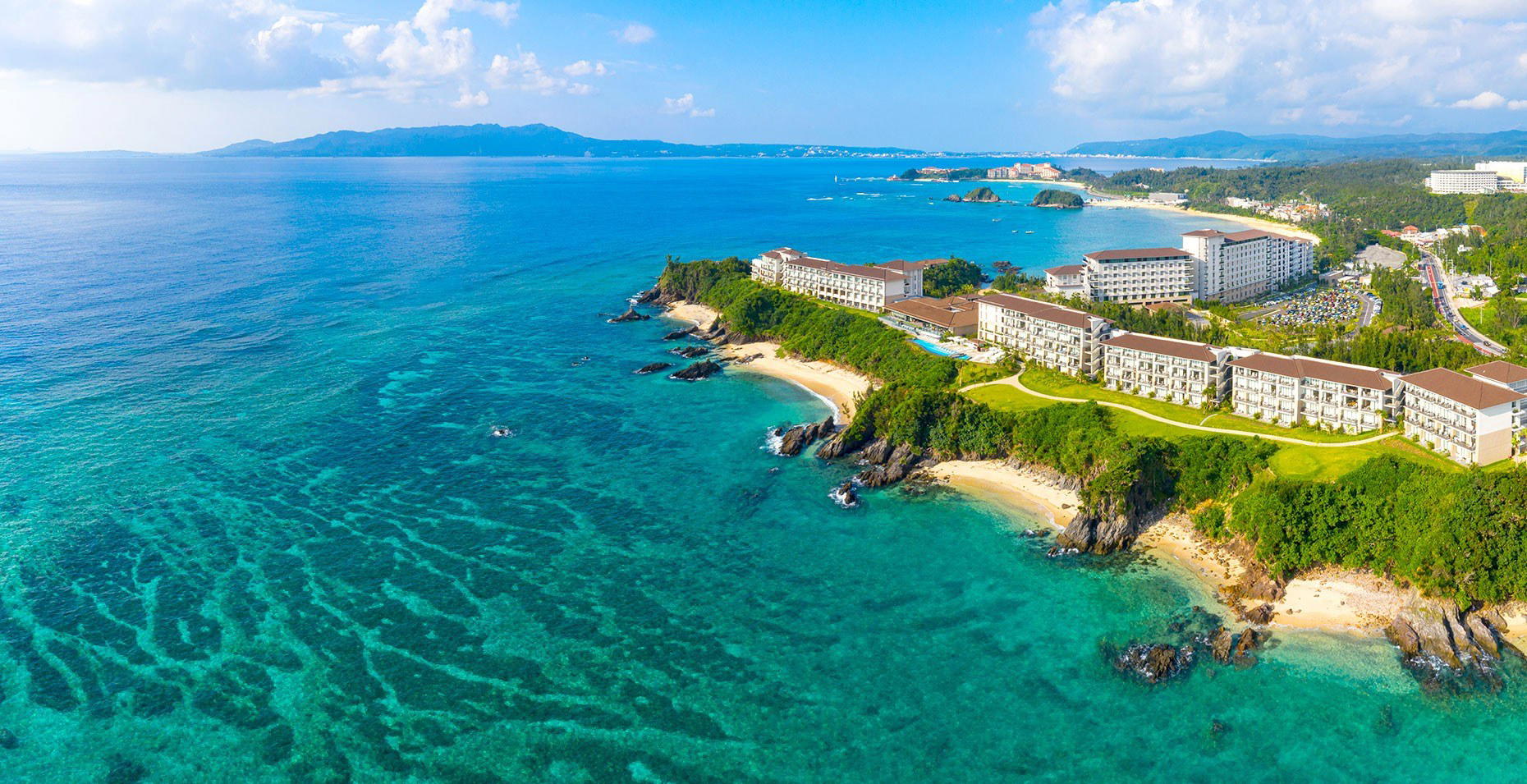
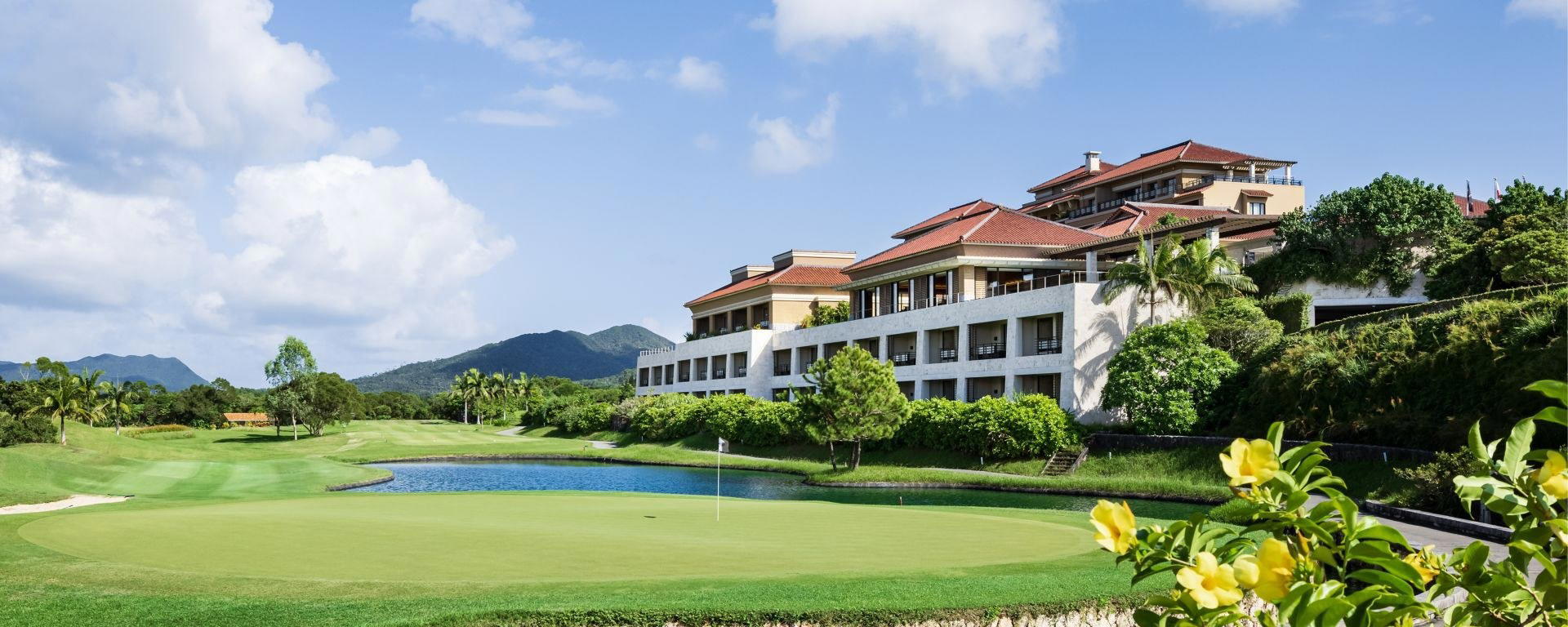
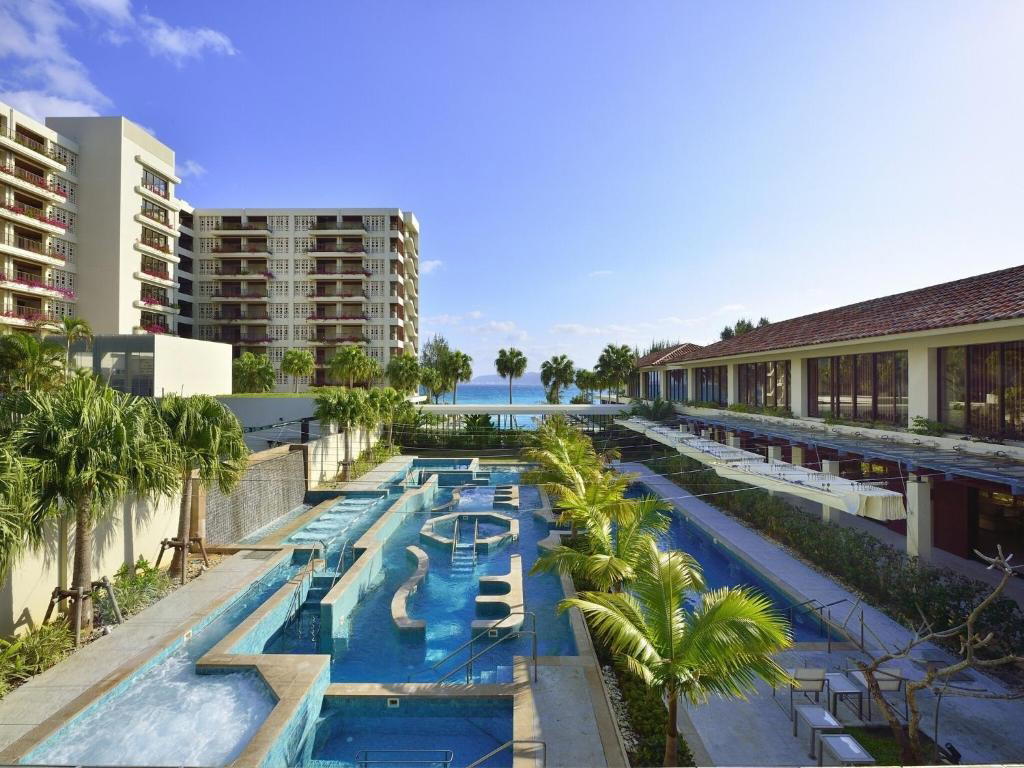
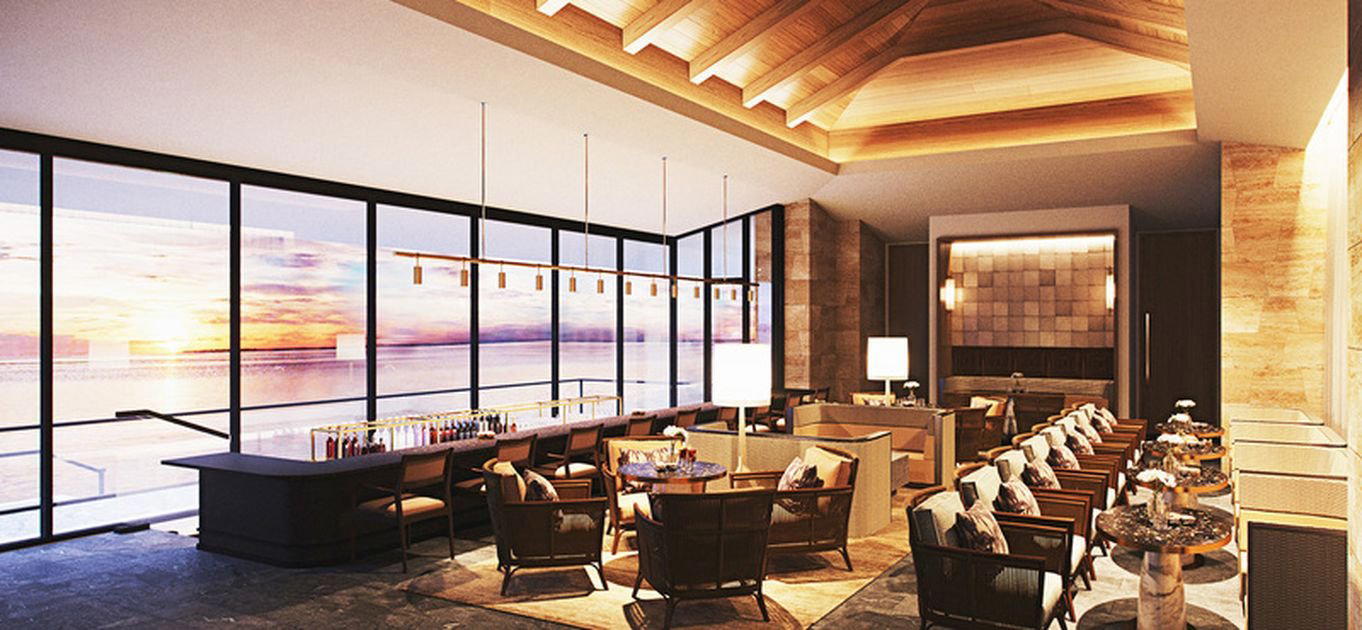
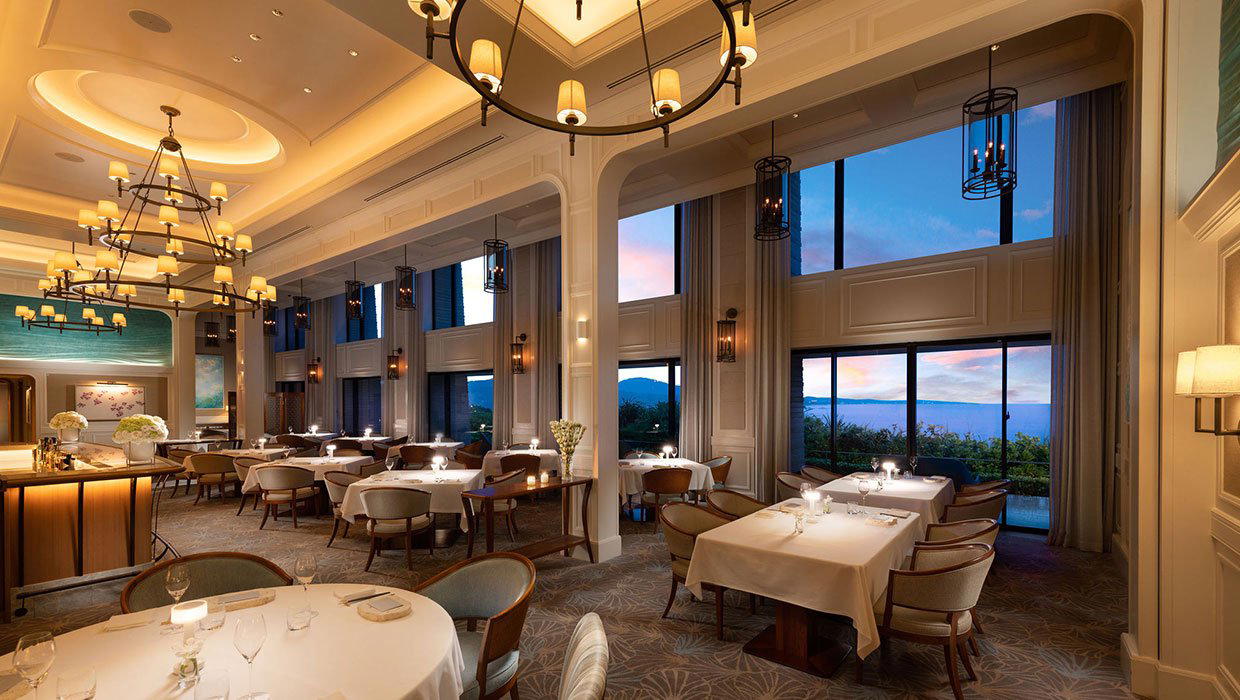
Breezy and understated interiors with warm wood tones, natural textures, and light-filled spaces that draw from the waterfront surroundings; serene and relaxing atmosphere with far-reaching ocean vistas.