
Our verdict
Xin Rong Ji's Financial District outpost brings Taizhou cuisine to one of Beijing's most polished dining corridors, earning a place on the Opinionated About Dining Top Restaurants in Asia list at #71 in 2025. The kitchen focuses on the seafood-forward traditions of coastal Zhejiang, a regional style that remains comparatively rare in a capital dominated by northern and Sichuan cooking. For serious diners, the wine program deserves as much attention as the menu.

Pearl is the En Primeur Club membership app, where members save venues, book tables and use the concierge.
The menu
What to order
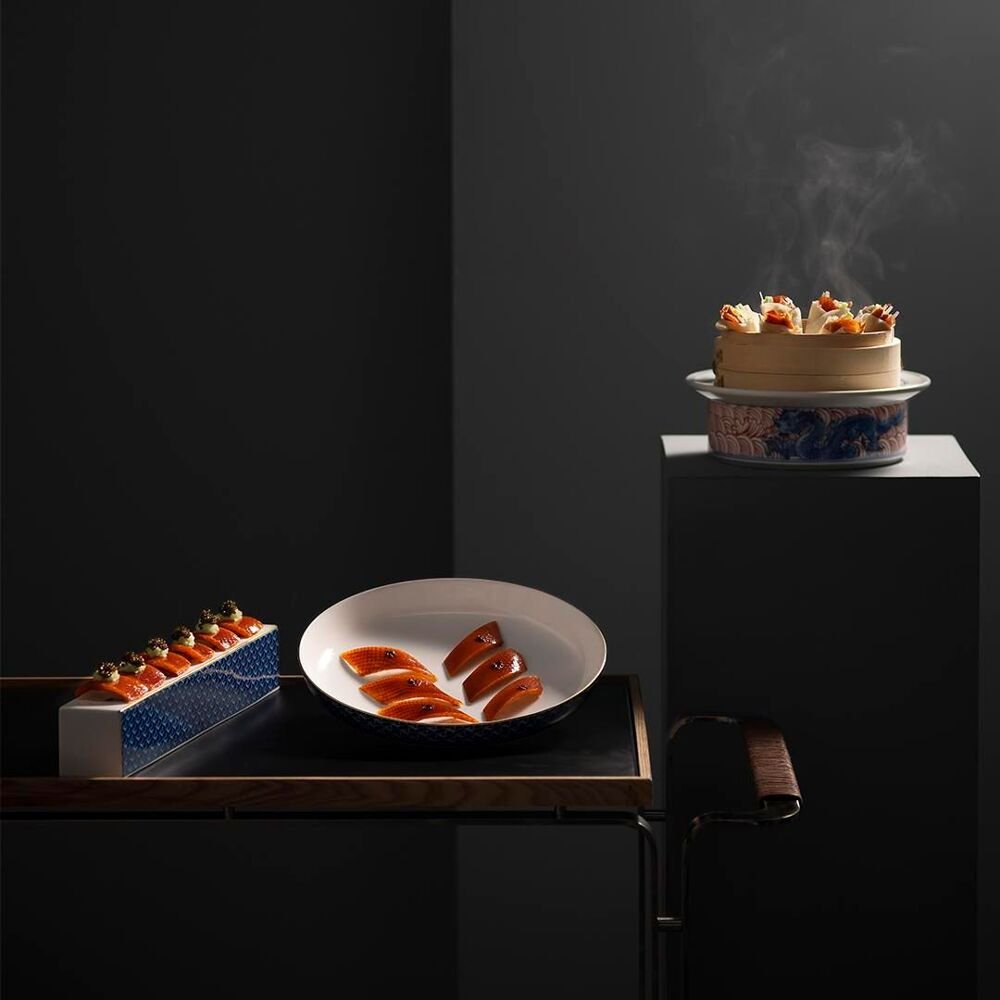
- Wild yellow croaker
- Fish maw
- Braised sea cucumber
- Peking duck
- Yellow croaker soup with matsutake mushrooms
Coastal Zhejiang in the Capital's Financial Core
Beijing's premium restaurant belt has long tilted toward Cantonese, Sichuan, and the imperial registers of northern Chinese cooking. Taizhou cuisine, the seafood-forward tradition from the coastal city of Taizhou in Zhejiang province, occupies a different position: quieter in profile, technically precise, and built around ingredients that don't always survive the journey inland without compromising quality. That the Xin Rong Ji group has made it work in Beijing, and at a level that placed this Financial District location at #71 on the Opinionated About Dining Leading Restaurants in Asia list in 2025, says something meaningful about both the ambition of the operation and the appetite of the city's dining public for regional Chinese cooking beyond the obvious categories.
The Qihao Beijing East Tower address in Chaoyang puts the restaurant inside a commercial development designed for corporate entertaining and private dining at the upper end of the market. The physical environment signals that before you've looked at a menu: the tower's glass-and-steel presence, the lobby approach, the controlled pace of service that characterises this tier of Chinese fine dining. In a city where the leading regional Chinese restaurants now compete directly with international fine dining for the same client, that spatial grammar matters as much as the kitchen's output.
What Taizhou Cuisine Actually Means at This Level
Taizhou cooking is not widely understood outside Zhejiang, which makes it worth locating precisely. It belongs to the broader Zhejiang culinary family alongside Hangzhou and Ningbo traditions, but its specific character comes from the coast: river fish, sea bream, yellow croaker, crab, and shellfish prepared with a lightness that preserves the natural salinity of the ingredient rather than masking it. Steaming, slow braising, and minimal sauce intervention are the dominant techniques. The contrast with Sichuan's heat-forward complexity or the slow-cooked richness of Shanghai cuisine is sharp. This is cooking that asks the diner to pay attention, which is also the condition under which a thoughtful wine list starts to matter.
The Xin Rong Ji group has built its Beijing presence around that precision. The Xin Rong Ji on Xinyuan South Road operates at the ¥¥¥¥ tier, and the group's other outposts, including Xin Rong Ji in Chengdu and the Hong Kong location, confirm that this is an operation with consistent recognition across multiple markets. The OAD ranking, which is compiled through votes from frequent fine dining diners rather than anonymous inspection, reflects sustained peer respect rather than a single-year achievement.
The Wine Program as a Signal of Dining Seriousness
Chinese fine dining's relationship with wine has matured considerably over the past decade, and nowhere is that more visible than in restaurants like this one, where the clientele expects a list that can hold its own against the better hotel dining rooms in the city. Taizhou cuisine, with its emphasis on delicate seafood and clean savoury flavours, is actually well-suited to European white wine in ways that heavier Chinese regional cooking is not. Aged white Burgundy, Alsatian Riesling, and mineral-driven Chablis-style bottles all function as genuine matches rather than diplomatic gestures toward international guests.
The wine programs at the Xin Rong Ji group's leading locations have tracked this shift. At the level this restaurant operates, OAD top 100 in Asia, corporate clientele in a premium tower development, the expectation is a cellar with depth in French whites and increasing representation from premium Chinese producers, whose Ningxia and Xinjiang labels now appear on serious lists across the country. Whether the sommeliers here also carry older vintages of Sauternes or German Spätlese for the sweeter, richer preparations in the Taizhou repertoire is the kind of detail that separates a functional wine program from a curated one. At this tier of Chinese fine dining, that distinction is increasingly the point.
Framing Xin Rong Ji against its Beijing peers helps calibrate expectations. Chao Shang Chao in Chaoyang operates at the same ¥¥¥¥ bracket with a Cantonese-leaning Chaozhou focus; Lamdre and King's Joy address the vegetarian fine dining niche at a comparable price point; Jingji works the northern Chinese tradition. Each represents a distinct regional or stylistic lane. Xin Rong Ji's lane, Zhejiang coastal, technically restrained, seafood-focused, has fewer direct competitors in Beijing, which is both its advantage and the reason first-time guests benefit from arriving with some understanding of what the kitchen is trying to do.
Situating the Restaurant in a Wider Regional Frame
The Xin Rong Ji group's cross-city expansion has created a useful network for tracing how Taizhou cooking performs in different markets. The Chengdu and Hong Kong outposts operate in cities with very different baseline dining cultures: Chengdu's palate is calibrated for intensity, Hong Kong's for Cantonese precision. That the group's OAD rankings persist across those contexts suggests the cooking is genuinely strong rather than reliant on a single-city clientele's preferences. For comparison, other serious Chinese regional restaurants operating across the country at this level, such as Ru Yuan in Hangzhou or 102 House in Shanghai, each hold their strongest recognition in the cities where their cuisine is most native. Xin Rong Ji performing well in Beijing, where Taizhou cooking has no particular hometown advantage, is the more demanding test.
Internationally recognised Chinese fine dining has also started to draw comparisons with precision-driven Western seafood restaurants. The structural discipline of a Taizhou tasting menu, built around a sequence of fish preparations that build in intensity, has more in common with the approach at Le Bernardin in New York City than with the banquet-style service of traditional Chinese restaurant formats. That framing isn't a stretch: it's a reflection of where serious Chinese regional cooking has positioned itself globally.
Planning Your Visit
The table below places this restaurant in context against its closest Beijing peers for practical planning purposes.
| Venue | Cuisine | Price Tier | Notable Recognition |
|---|---|---|---|
| Xin Rong Ji (Financial District) | Taizhou | ¥¥¥¥ | OAD Asia #71 (2025) |
| Xin Rong Ji (Xinyuan South Road) | Taizhou | ¥¥¥¥ | OAD recognition |
| Chao Shang Chao (Chaoyang) | Chao Zhou | ¥¥¥¥ | Peer tier |
| Lamdre | Vegetarian | ¥¥¥¥ | Peer tier |
| Jingji | Beijing Cuisine | ¥¥¥¥ | Peer tier |
The restaurant is located in the Qihao Beijing East Tower on Xinyuan South Road in Chaoyang. Advance reservations are advisable for this tier of dining in Beijing, particularly for evening slots. For further context on dining, drinking, and staying in the capital, see our full Beijing restaurants guide, our full Beijing hotels guide, our full Beijing bars guide, our full Beijing wineries guide, and our full Beijing experiences guide.
Frequently asked questions
Where is Xin Rong Ji (Financial District) located?
Xin Rong Ji (Financial District) is located at China, Bei Jing Shi, Chao Yang Qu, Xin Yuan Nan Lu, 8号1层启皓北京东塔 CN 北京市 邮政编码: 100027, Beijing.
What kind of recognition has Xin Rong Ji (Financial District) received?
Xin Rong Ji (Financial District) has received recognition including: Opinionated About Dining Top Restaurants in Asia Ranked #71 (2025).
What should I order at Xin Rong Ji (Financial District)?
Taizhou cuisine is built around the seafood of the Zhejiang coast, so the kitchen's strengths centre on fish and shellfish preparations rather than meat-forward dishes. Yellow croaker and similar cold-water species are hallmarks of the style at this level. The group's ranking at #71 on the 2025 OAD Top Restaurants in Asia list reflects consistent execution of these regional specialities, so ordering along coastal Zhejiang lines rather than defaulting to pan-Chinese dishes will put you closest to what earns the kitchen its reputation.
Cuisine-First Comparison
Comparable venues nearby, for context on price, style, and recognition.
| Venue | Cuisine | Price | Awards | Notes |
|---|---|---|---|---|
| Xin Rong Ji (Financial District)This venue (the venue you are viewing) | Taizhou Seafood Fine Dining | $200–300 | Not listed | Not listed |
| Chaoshangchao Zhengda Store | Chaoshan / Chaozhou Fine Dining | Not listed | Black Pearl 1 Diamond | Chaoyang District |
| Family Li Imperial Cuisine | Imperial Qing Dynasty Court Cuisine | $150–200 | Not listed | Chaoyangmen |
| Tiandi Yijia | Imperial Chinese Cuisine | Not listed | Not listed | Donghuamen |
| Courtyard | Imperial Chinese | $30–50 | Not listed | Donghuamen |
| QUANJUDE | Traditional Peking Roast Duck | $30–50 | Not listed | Qianmendajie |
Recognition history
Dated appearances from independent guides and award organizations, with the underlying list record or original source where available.
Opinionated About Dining Top Restaurants in Asia Ranked #48
Opinionated About Dining
Full recognition history (2 entries)
Opinionated About Dining Top Restaurants in Asia Ranked #71
Opinionated About Dining
Continue exploring
More in Beijing
Restaurants in Beijing
All restaurants in Beijing →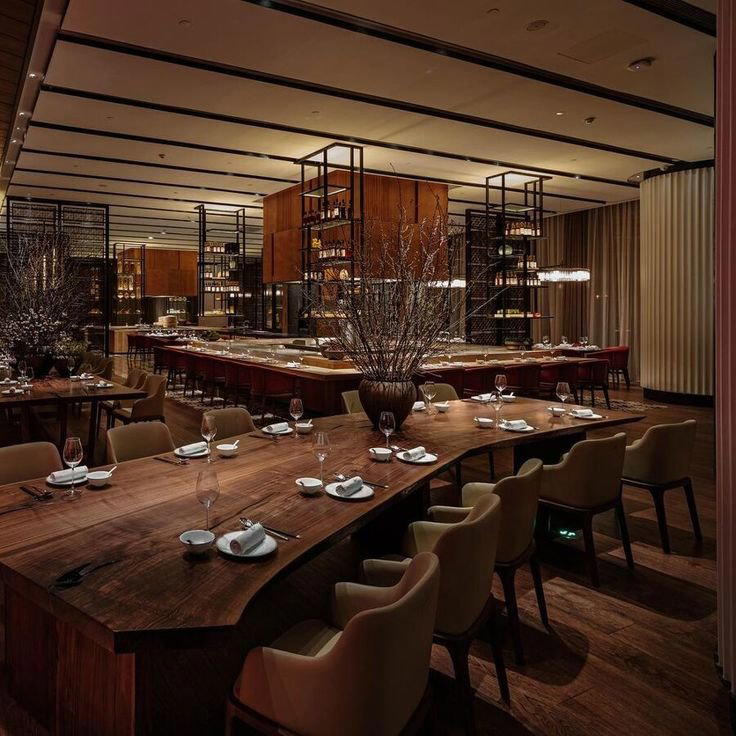

Bars in Beijing
All bars in Beijing →



Xin Rong Ji (Financial District)
The wine
- Extensive wine list
- Sommelier-led
- Corkage allowed
Details
- Elegant
- Sophisticated
- Quiet
- Minimalist
- Business Dinner
- Date Night
- Celebration
- Special Occasion
- Open Kitchen
- Private Dining
- Extensive Wine List
- Sommelier Led
- Corkage Allowed
- Sustainable Seafood
- Local Sourcing
- Tasting Menu
- A La Carte
- Family Style
- Wine Pairings
- Aged Oolongs
- Mineral Driven Whites
- Pescatarian Friendly
- Vegetarian Friendly
- Gluten Free Options
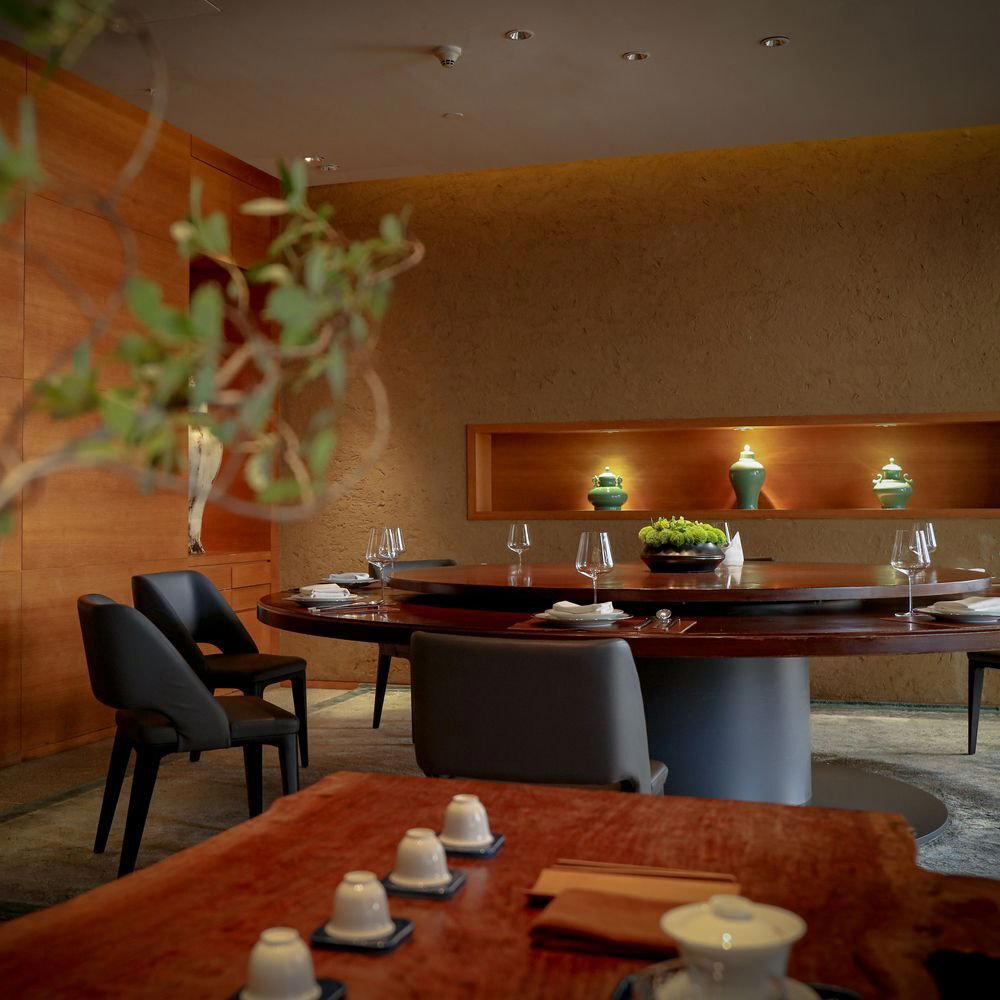
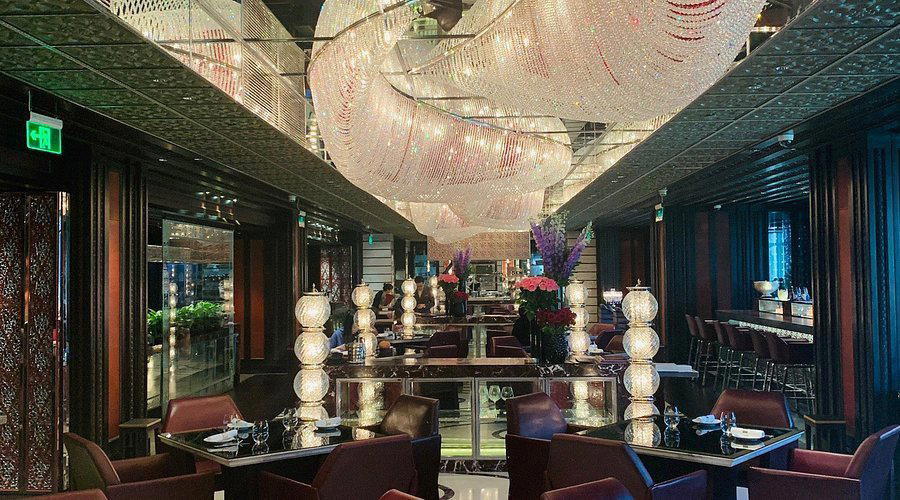
Soft, polished dining room with blond wood, gentle lines, and flattering pools of light that create an atmosphere of cultivated calm and discretion.