Our verdict
Vrelo sits on the edge of Perućac, where the Drina River bends through the Tara canyon and the surrounding hills supply most of what lands on the table. The kitchen draws on the ingredient traditions of western Serbia — river fish, highland meat, foraged produce — in a setting that reflects the physical character of the region rather than a designed idea of it.

Pearl is the En Primeur Club membership app — saves, bookings, and concierge access live there. Same editors, same standards.
- Address
- Nikole Tesle bb (Perućac), 31256 Perućac
- Website
- restoranvrelo.rs
- Directions
- Get directions
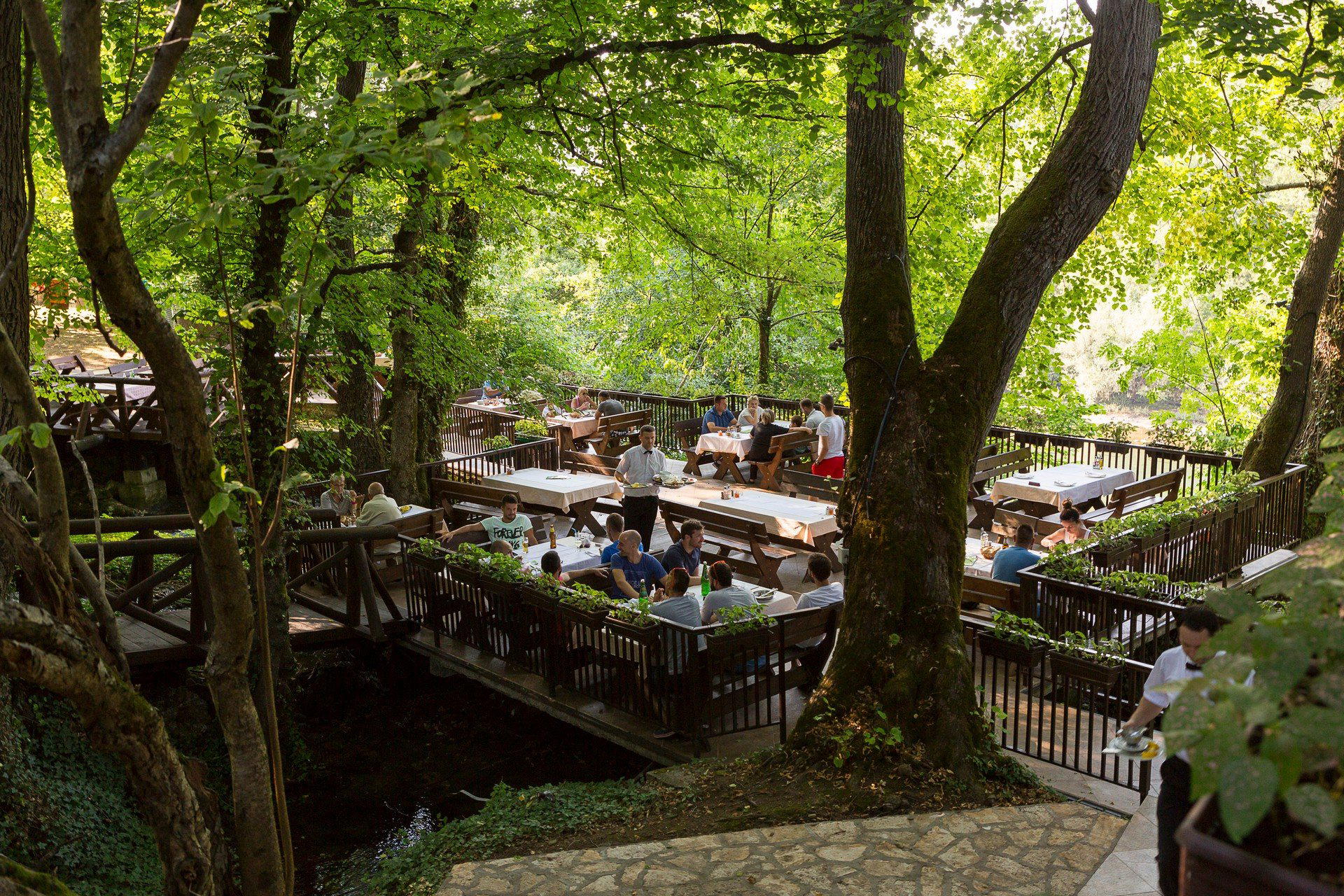
Where the Drina Sets the Menu
The approach to Perućac already tells you something about the food you are likely to find here. The road follows the Drina River through a corridor of steep forest, past the artificial lake created by the Bajina Bašta hydroelectric dam, through country that has supplied highland villages with fish, game, and forest produce for generations. By the time you reach the address on Nikole Tesle, the ingredient logic of a place like Vrelo has already announced itself in the landscape around it.
This is the defining characteristic of the western Serbian mountain dining tradition: the kitchen is not importing an idea of what food should taste like, it is working within a short geography that dictates the menu. River fish from the Drina, lamb and pork from the surrounding hills, mushrooms and wild herbs from Tara — these are not marketing categories, they are structural facts about what is available within a short radius. Restaurants in this corridor, from Kafana Studenac in Bajina Bašta downstream to Kafana Pećinar Ljubiš in Čajetina on the Zlatibor plateau, operate within the same sourcing logic, even when their formats differ.
The Ingredient Argument for Coming This Far
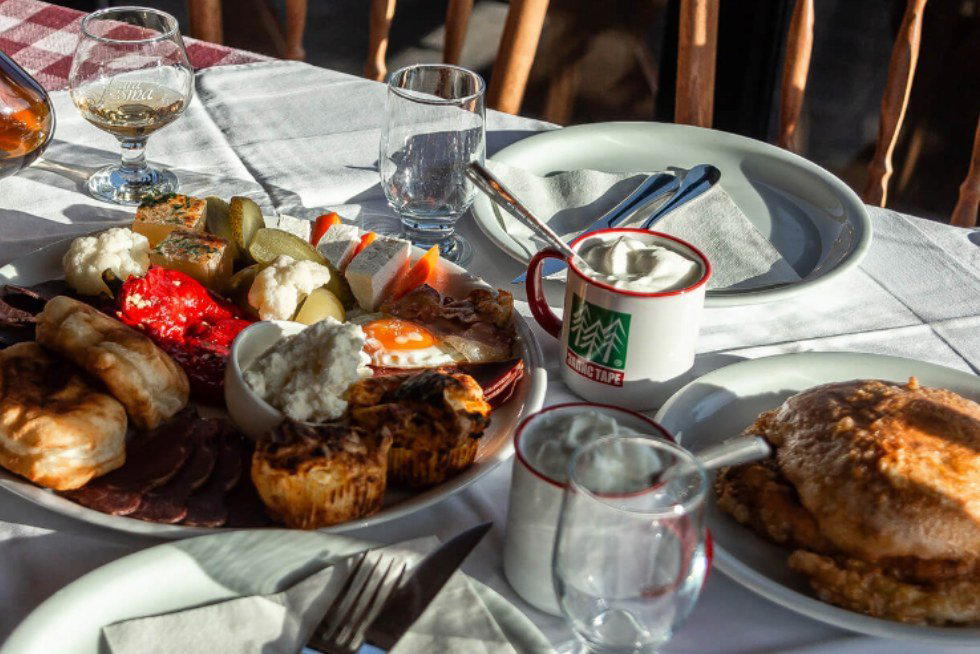
Western Serbia's river fish tradition is older than any restaurant format operating here today. The Drina runs cold and fast through limestone country, producing trout and huchen (mladica, the large predatory salmonid prized across the Western Balkans) with a texture and flavour that flatwater fish cannot replicate. In a country where freshwater fish features heavily in kafana menus from Belgrade to Niš, the Drina valley version carries a regional credential that matters. Compare the context of ČARDA ZLATNA KRUNA in Apatin on the Danube, where carp and catfish define the catch, and you begin to see how Serbian river dining is actually a set of distinct regional traditions shaped by water chemistry and elevation as much as by any culinary decision.
Meat sourcing in this part of Serbia follows a similar pattern. The hills around Tara National Park and the Drina canyon have sustained pastoral farming at altitude for centuries. Lamb raised at elevation develops a different fat structure and flavour profile than lowland animals — a fact that highland kitchens in Serbia, Bosnia, and Montenegro all trade on, and which gives places in this corridor a sourcing argument that urban restaurants at any price tier cannot simply replicate. The Etno Kuća Dinar in Vršac and Koliba Etno Restoran in Leskovac both position themselves within ethno-rural traditions, but neither operates with the same proximity to source that defines the Perućac corridor.
Format and Physical Setting
Perućac is a small settlement, not a dining destination with infrastructure. The village functions primarily as a gateway to the lake and to Tara National Park above it, which means the visitor mix skews heavily toward people who have driven or hiked from elsewhere, day-trippers from Bajina Bašta, hikers descending from the park, weekenders from Belgrade making the three-hour drive southwest. This matters for understanding what a restaurant here is doing and who it is doing it for.
The Serbian ethno-restoran category, which covers the type of establishment most likely to be operating at this address, tends to prioritise informality, generous portions, and a menu built around things that can be sourced from immediate surroundings or cooked over live fire. This is not the urban kafana format you find in Belgrade at places like Langouste, nor the structured tasting approach of modern Serbian cooking. It is closer in spirit to the tradition represented by Lovački dom in Valjevo, where the surrounding hunting and foraging culture is the actual subject of the menu.
Visitors arriving from Belgrade or Novi Sad should calibrate expectations accordingly. The price range at a Perućac village restaurant will sit well below what comparable ingredient quality would cost in an urban context, highland lamb and Drina trout in the city command prices that reflect their scarcity there, whereas proximity to source compresses the cost here. For Serbian regional dining context across different price tiers, the contrast with Aleksandar Gold in Užice (a larger town 40 kilometres south) is instructive: Užice supports a more varied restaurant scene precisely because its population base is larger, but Perućac retains an ingredient advantage that urban density cannot manufacture.
Positioning in the Western Serbia Dining Circuit
The Drina valley and Tara region have developed a loose dining circuit over the past decade, driven partly by domestic tourism to Tara National Park and partly by a wider Serbian interest in reconnecting with highland food traditions after a long period of urban culinary focus. This pattern mirrors what happened earlier in rural Šumadija and in the Homolje region to the east, a rediscovery of place-specific cooking driven by travellers seeking something that city restaurants cannot manufacture.
Within that circuit, Perućac occupies a specific position: it is the entry point to the lake and canyon, which means passing traffic is high relative to the village's permanent population. A restaurant at this location benefits from that footfall without needing to be a destination in its own right. The comparison set for Vrelo is not Belgrade's dining scene, it is the cluster of ethno-rural restaurants operating within the Tara-Drina corridor, including Kod Brana in Čačak and the range of kafana-format restaurants across the broader western Serbian region.
For readers building a longer itinerary across Serbia's restaurant scenes, our full Perućac restaurants guide covers the settlement's dining options in broader context. Those tracking Serbian regional traditions further afield will find relevant reference points at KAFANA DUKAT in Pirot, ETNO PODRUM BRKA in Niš, and Kafe Restoran Maša in Novi Sad. For calibration against a contrasting scale of ambition entirely, Le Bernardin in New York City and Atomix in New York City represent how ingredient provenance operates at the other end of the fine-dining spectrum, useful context for understanding what proximity to source means when the kitchen is not three hours from a city.
Planning a Visit
Perućac sits roughly 170 kilometres southwest of Belgrade, accessible by road through Bajina Bašta. There is no rail connection to the village, and the final stretch from Bajina Bašta follows the lake road. The practical window for this part of Serbia runs from late spring through early autumn, when Tara National Park is accessible and the Drina lake is in use, winter visits are possible but the area quietens substantially. Grand **** in Kopaonik and Kod poštara in Aranđelovac offer contrast points for Serbian hospitality infrastructure at different scales, which helps frame what to expect from a small-village restaurant in the Tara corridor and what to not.
Frequently asked questions
Would Vrelo be comfortable with kids?
Perućac is a small, low-key settlement rather than a polished resort town, and riverside restaurants in this part of western Serbia typically operate in an open, unfussy format suited to families. The outdoor-leaning, nature-adjacent setting near the Drina and Perućac lake makes it a practical stop with children. Confirm specific seating arrangements directly with the venue before visiting, as no formal family policy is documented.
Is Vrelo formal or casual?
Vrelo sits in Perućac, a small village that functions primarily as a gateway to Tara National Park and the lake, not a formal dining destination. Restaurants operating in this context across the Drina valley run casual, with the focus on local river fish rather than service ceremony. No dress code is documented for Vrelo specifically.
Is Vrelo worth the drive from Belgrade for a meal focused on Serbian river fish?
Perućac sits roughly 170 kilometres southwest of Belgrade via Bajina Bašta, a road trip that commits most of a day. The argument for making it is the Drina valley's river fish tradition, which Western Serbia has cultivated across generations and which differs substantially from what urban restaurants in Belgrade can replicate. Vrelo is located at Nikole Tesle bb in Perućac, placing it directly in this corridor. The trip makes most sense combined with time in Tara National Park rather than as a standalone dining excursion.
What's the must-try dish at Vrelo?
The Drina runs cold and fast through limestone country, producing river fish — primarily trout and other freshwater species — that define the cooking tradition in this part of western Serbia. That river fish tradition, older than any restaurant format operating in the area today, is the central reason to eat in Perućac.
What's Vrelo's location?
Vrelo is located at Nikole Tesle bb (Perućac), 31256 Perućac, Perucac.
Do I need a reservation for Vrelo?
No booking contact details, website, or phone number are publicly documented for Vrelo at its Nikole Tesle bb address in Perućac. Domestic tourism to Tara National Park drives seasonal traffic through the Drina valley, which means the settlement can be busy in summer months. Arriving early or traveling mid-week outside peak season is the practical approach until direct contact information can be confirmed.
Side-by-Side Snapshot
| Venue | Cuisine | Price | Awards | Notes |
|---|---|---|---|---|
| VreloThis venue — the venue you are viewing | Traditional Serbian | Not listed | Not listed | Not listed |
| Langouste | Modern Serbian Fine Dining with Seafood Focus | $50–100 | 1 Michelin Star · La Liste Top Restaurants | Modern Cuisine |
| The Square | Modern European Fine Dining | $50–100 | Michelin Plate · World's 50 Best #34 | Contemporary French, Modern Cuisine |
| Iva New Balkan Cuisine | New Balkan Cuisine | $20–30 | Michelin Bib Gourmand | Modern Cuisine |
| Istok | Vietnamese Fusion with Thai & Korean | $10–20 | Michelin Bib Gourmand | Vietnamese |
| Salon 1905 | Modern Serbian Fine Dining | Not listed | Michelin Plate · La Liste Top Restaurants | Modern Cuisine |
Continue exploring
More in Perucac
Restaurants in Perucac
Browse all →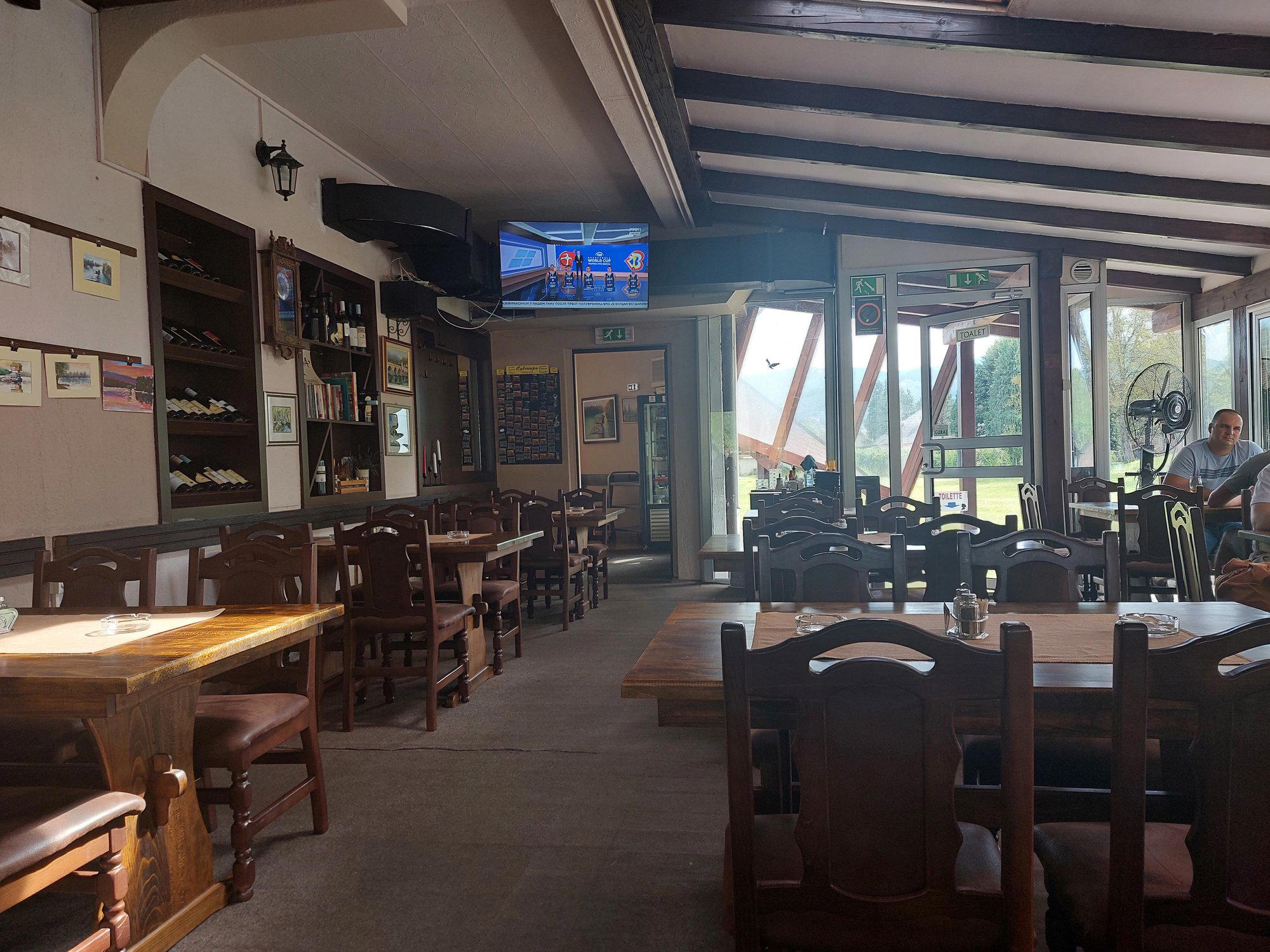
Hotels in Perucac
Browse all →
Wineries in Perucac
Browse all →
Details
- Rustic
- Scenic
- Cozy
- Family
- Date Night
- Casual Hangout
- Waterfront
- Terrace
- Waterfront
- Mountain
- A La Carte
- Vegetarian Friendly
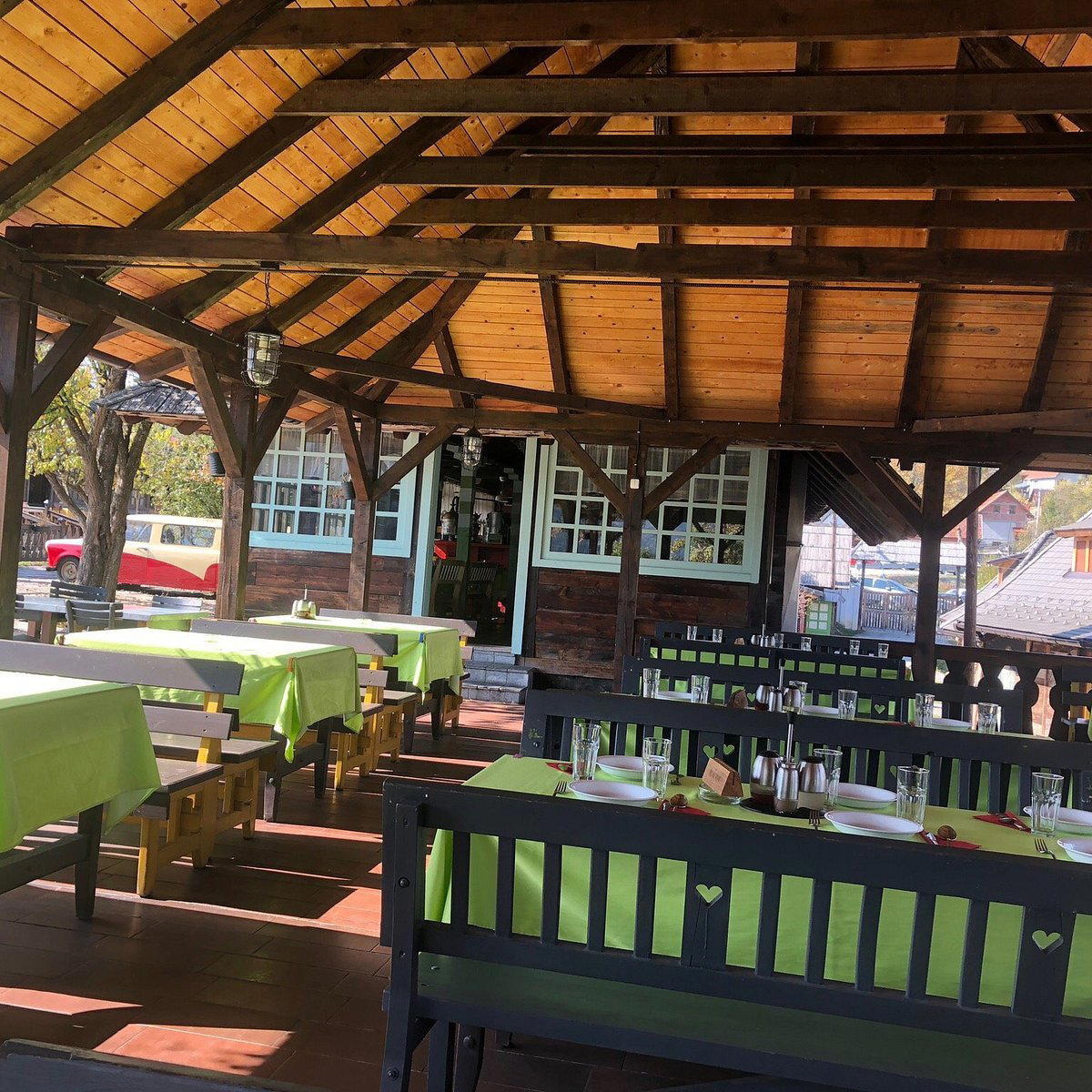
Rustic ambience in a beautiful natural setting surrounded by Tara National Park, with shaded terrace overlooking cascading waterfall and rivers.