Vinoteca Centro Storico


Star Wine List · Falstaff Restaurant - Listed
Our verdict
Below the medieval walls of Serralunga d'Alba's castle, Vinoteca Centro Storico draws wine producers and village regulars alike into a compact, unhurried space where Barolo is the operating logic, not the occasion. This is where the Langhe drinks — quietly, knowledgeably, and without ceremony. A useful first stop for anyone arriving in the region with serious intentions toward Nebbiolo.

Pearl is the En Primeur Club membership app — saves, bookings, and concierge access live there. Same editors, same standards.
- Address
- Via Roma 6, 12050, Serralunga d'Alba, Piemont, Italien
- Phone
- +39 (173) 613203
- Hours
- Mon–Tue ClosedWed–Sun 12–11 PM
- Website
- vinotecacentrostorico.it
- Directions
- Get directions
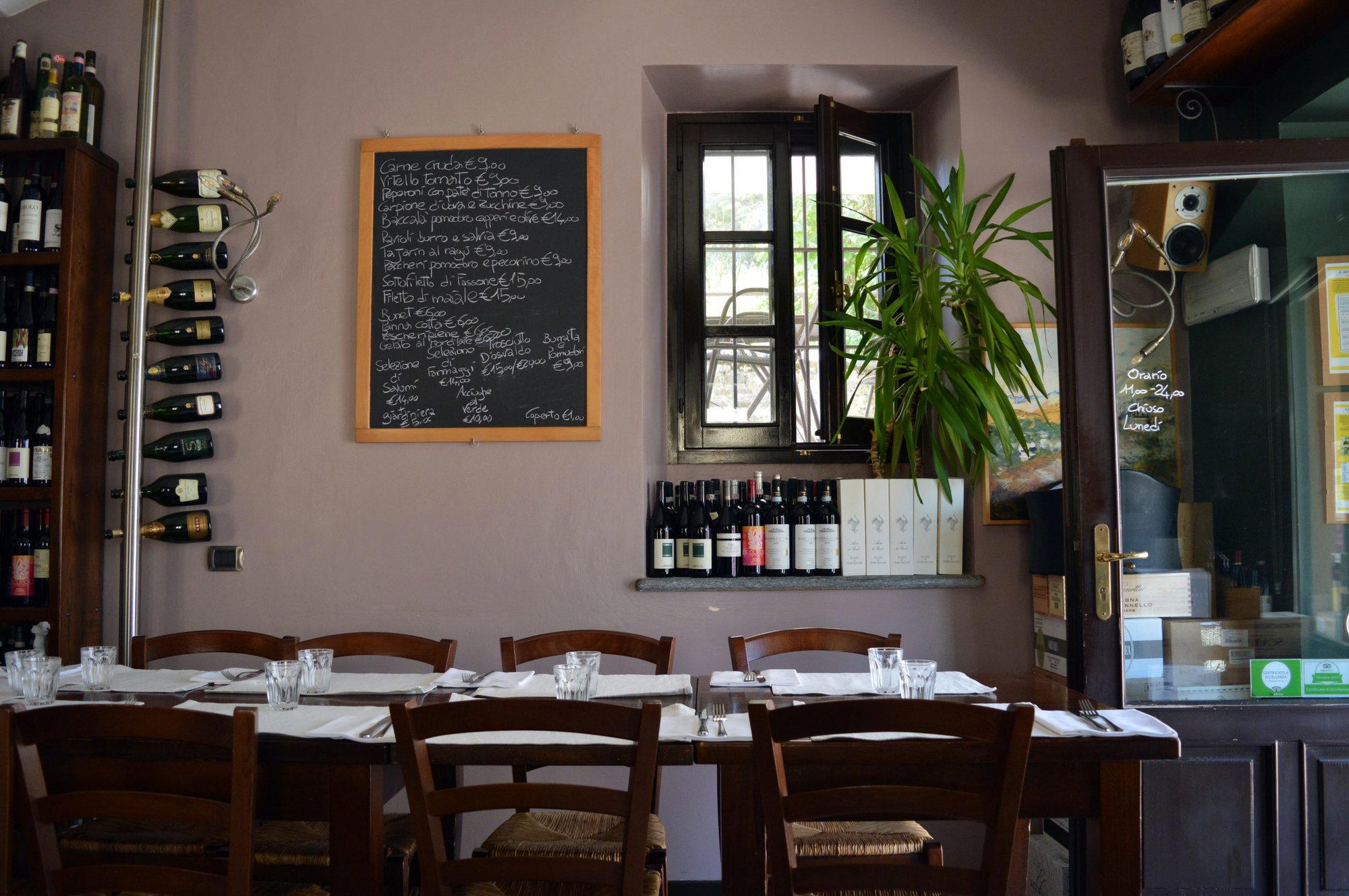
Drinking Barolo Where It's Made
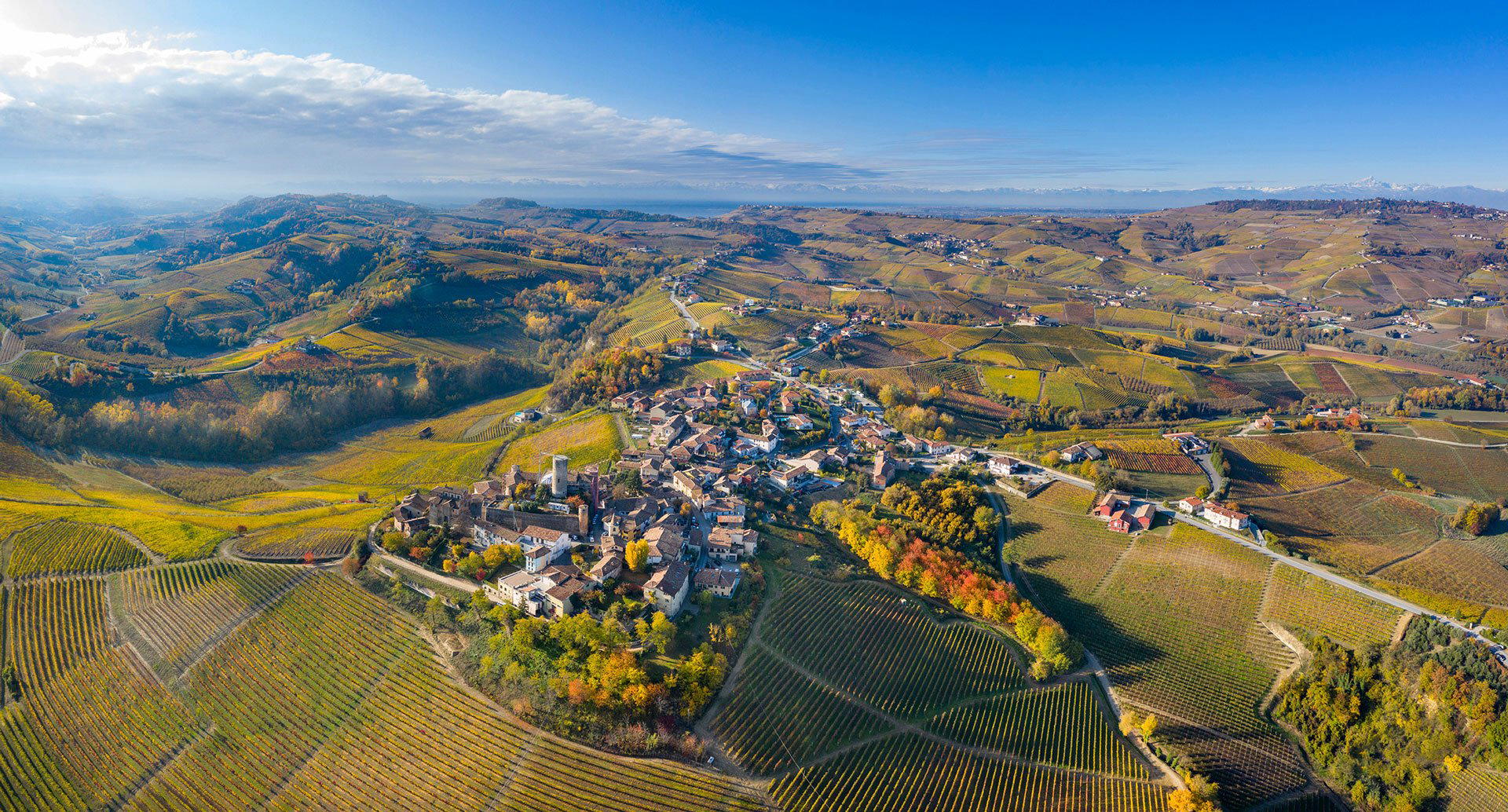
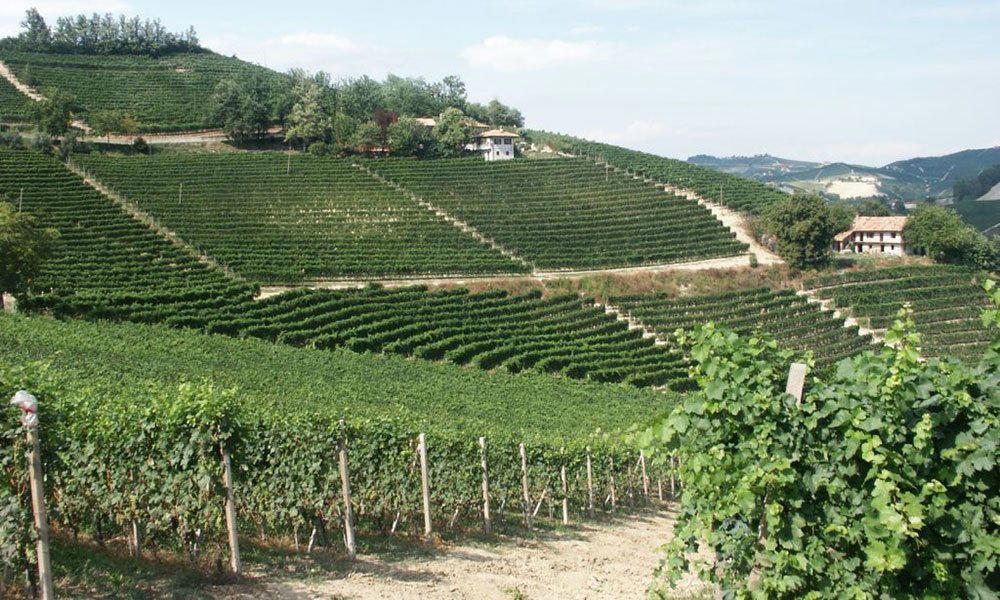
The village of Serralunga d'Alba sits at the southern edge of the Barolo production zone, its castle visible from most of the surrounding vineyards. Wine tourism in the Langhe has expanded considerably over the past decade, bringing with it a class of wine bars that perform rusticity while charging urban prices. Vinoteca Centro Storico operates differently. Positioned on Via Roma, immediately below the castle, it occupies the kind of small, unaffected space that exists because local wine producers need somewhere to drink after work — not because a concept has been assembled for visiting collectors.
That distinction matters. In the world's most prestigious wine regions, the bars and enoteca that producers actually frequent tend to look unremarkable from the outside and carry unremarkable signage. What they carry instead is depth: a wine selection chosen by people who know every producer by name, and an atmosphere shaped by decades of the same conversations about vintages, harvest yields, and which slopes performed leading in a given year. Vinoteca Centro Storico has earned that reputation among Barolo's inner circle, which is the most credible signal any small wine bar in this part of Piedmont can carry. See our full Serralunga d'Alba restaurants guide for additional context on where the village sits relative to the region's other eating and drinking options.
The Wine Programme as Editorial Statement
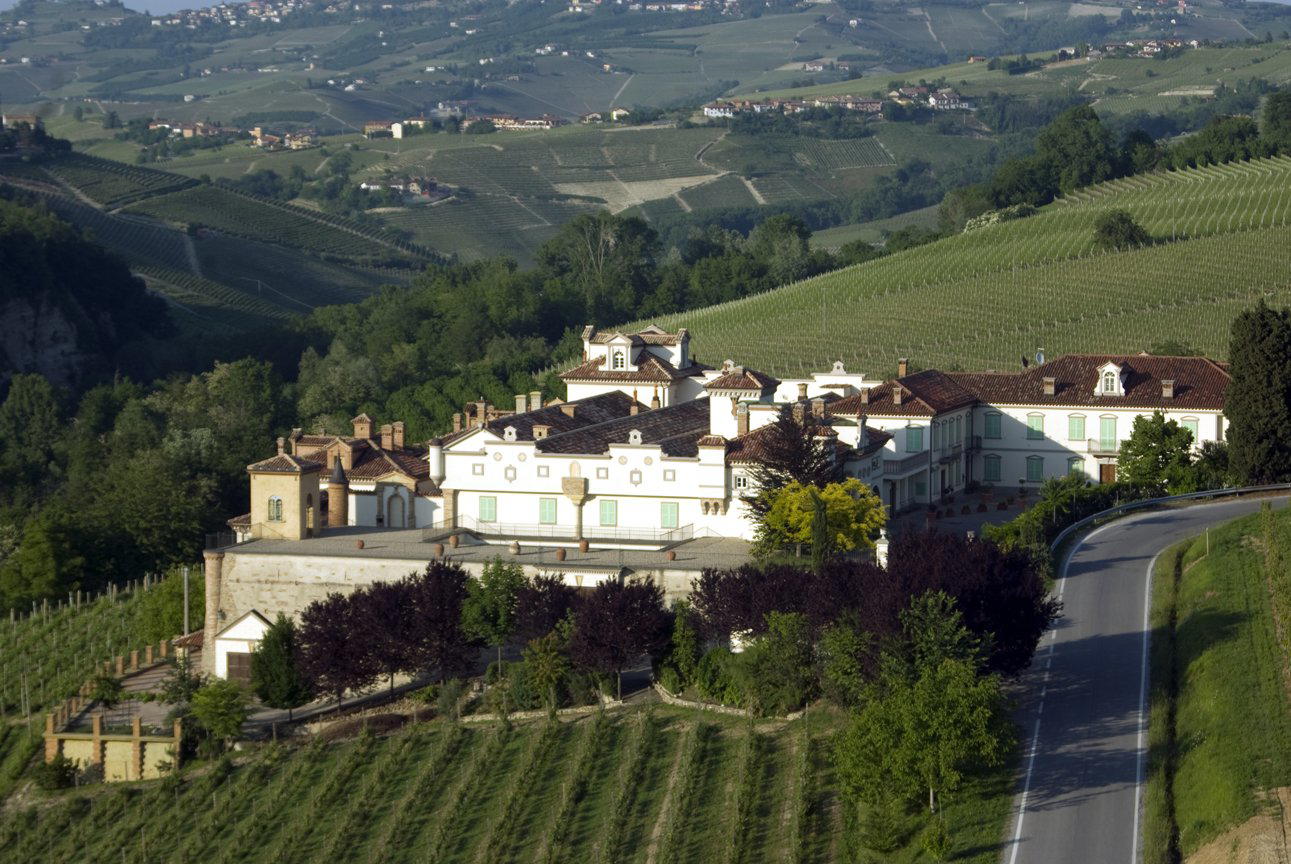
In a region where the wine is unambiguously the point, the selection at a vinoteca functions the way a cocktail programme does at a serious bar: it encodes a philosophy, signals a peer group, and makes implicit arguments about quality and value. The Barolo production zone divides broadly between the clay-heavy soils of the western communes, which tend toward rounder, earlier-drinking wines, and the Helvetian limestone-dominated soils of the eastern communes — Serralunga, Castiglione Falletto, Monforte, which produce wines of greater structural severity and longevity. A vinoteca in Serralunga, surrounded by some of the zone's most demanding terroir, is positioned to offer pours from producers whose work rarely reaches import markets in meaningful volume.
This kind of by-the-glass access to small-production Nebbiolo is the equivalent of what serious cocktail bars like Drink Kong in Rome or 1930 in Milan offer through technique and rare spirits: a chance to taste something you cannot easily replicate elsewhere, in a setting calibrated for attention rather than distraction. The format at Vinoteca Centro Storico is similarly stripped of excess. Small space, focused offer, no performance. Across Italy, the enoteca tradition operates on this logic, from Enoteca Historical Faccioli in Bologna to Al Covino in Venice, the rooms are small, the wine lists are specific, and the implicit expectation is that you know what you're asking for or you're willing to learn from someone who does.
The Atmosphere Below the Castle
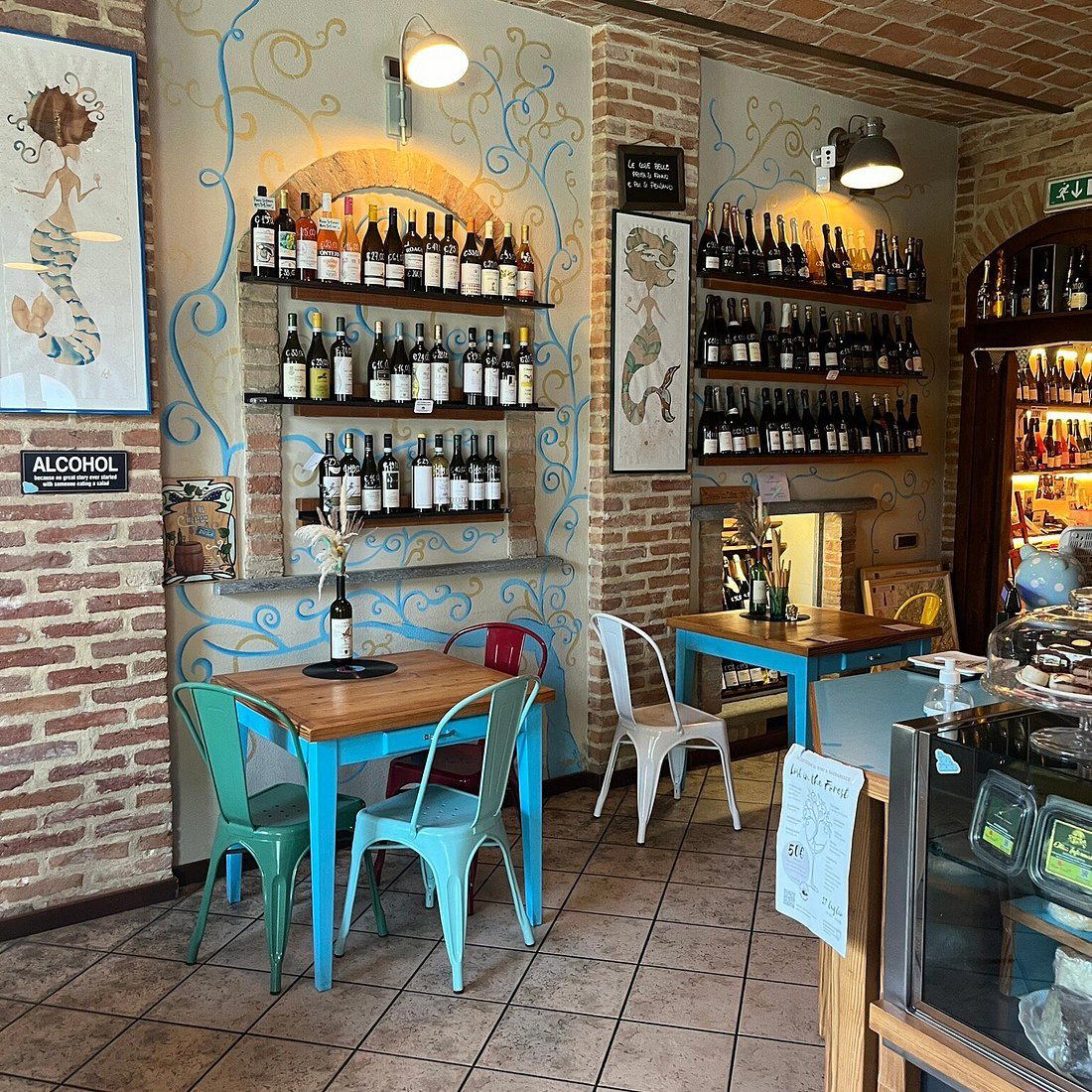
Serralunga d'Alba is a compact village. Its medieval centro storico can be walked end to end in a few minutes, and the castle at its apex is one of the most intact fourteenth-century fortifications in Piedmont. The physical setting of Vinoteca Centro Storico, below the castle, on the main village street, places it at the geographic and social centre of a community whose entire economic identity is built around the wines produced on the slopes surrounding it. The atmosphere inside reflects that rootedness. This is a cozy space in the Italian sense: genuinely small, without the engineered intimacy of a designed bar, with tables close enough that conversations between strangers are a natural consequence of the room's dimensions.
The character of such spaces is shaped as much by who drinks there as by what is poured. Wine producers drinking in their own village after a day in the cellar or vineyard set a different tone than the tourist-facing wine bars of, say, central Alba or the more theatrical environments found at destination wine experiences in Napa or Burgundy. The regulars at Vinoteca Centro Storico are people who have spent the day making the very wines on the list. That context changes what conversation at the bar sounds like, and for a visitor with a genuine interest in Barolo, the density of ambient knowledge in a room that size is not something any formal tasting experience can replicate.
For comparison, consider the atmosphere at places like L'Antiquario in Naples or Gucci Giardino in Florence, where the rooms are deliberately composed and the clientele curated by design. Vinoteca Centro Storico's version of curation happens organically, through geography and reputation rather than through interior architecture or booking policy.
Where This Sits in the Langhe's Drinking Map
The Barolo zone now supports a range of wine-focused stops at different points on the spectrum between accessibility and depth. The larger enoteca operations in La Morra and Barolo town handle high visitor volumes and maintain broad, commercially navigable selections. At the other end, small producers increasingly receive visitors by appointment for private tastings. Vinoteca Centro Storico occupies a middle position: public and walk-in, but oriented toward a local rather than tourist clientele, which means the experience rewards those who arrive with some prior knowledge of what Serralunga's producers are doing.
For anyone building a Langhe itinerary around serious wine engagement rather than scenery, the sequence matters. Arriving at a producer appointment with a morning's worth of conversation from a village vinoteca already in context produces a different kind of visit than arriving cold. In that sense, places like this function as the informal briefing rooms of a wine region. The equivalent in other European wine contexts might be a standing wine bar in a village in the northern Rhône or a small cave à vins in a Burgundy village, spaces that exist primarily because the wine is made there, and the people making it need somewhere to drink it.
Visitors coming from elsewhere in Italy will recognise the format from experiences at places like Bistrot Torrefazione Samambaia in Turin, though the focus here is entirely on wine rather than coffee culture. Those arriving from further afield, perhaps after stops at Fauno Bar in Sorrento, Lost & Found in Nicosia, or Cascate del Mulino in Manciano, or even farther afield at Bar Leather Apron in Honolulu, will find the Serralunga enoteca format a significant departure from cocktail-programme culture, and a useful corrective: wine served with the minimum of mediation between the glass and the land it came from.
Planning Your Visit
Serralunga d'Alba is most practically reached by car from Alba, roughly 12 kilometres to the northwest. The village has limited accommodation, making it more commonly visited as a half-day stop within a broader Langhe itinerary based in Alba, La Morra, or one of the larger agriturismo operations in the hills. Vinoteca Centro Storico is located at Via Roma 6, directly on the village's central street below the castle. Given its size and local orientation, visitors should treat the space accordingly: arrive without large groups, without urgency, and with at least a working knowledge of Barolo's communes. The wine list will reward that preparation. Specific hours and booking details are best confirmed locally, as this type of village enoteca typically does not maintain a public website or online reservation system.
Frequently asked questions
What's the vibe at Vinoteca Centro Storico?
Small, unhurried, and shaped by a regular clientele of local wine producers rather than passing tourists. It sits in Serralunga d'Alba's centro storico, steps below the village castle, and operates more as a neighbourhood social institution than a curated wine experience. The atmosphere reflects the character of the village itself: compact, unperformative, and grounded in the rhythms of the Barolo production calendar.
What awards has Vinoteca Centro Storico received?
Vinoteca Centro Storico has received recognition including: A favourite among wine producers and locals! You could describe it as a little hideaway below the castle in the village of Serralunga d'Alba in the Barolo region. Small and cozy atmosphere with wine b....
What's the signature drink at Vinoteca Centro Storico?
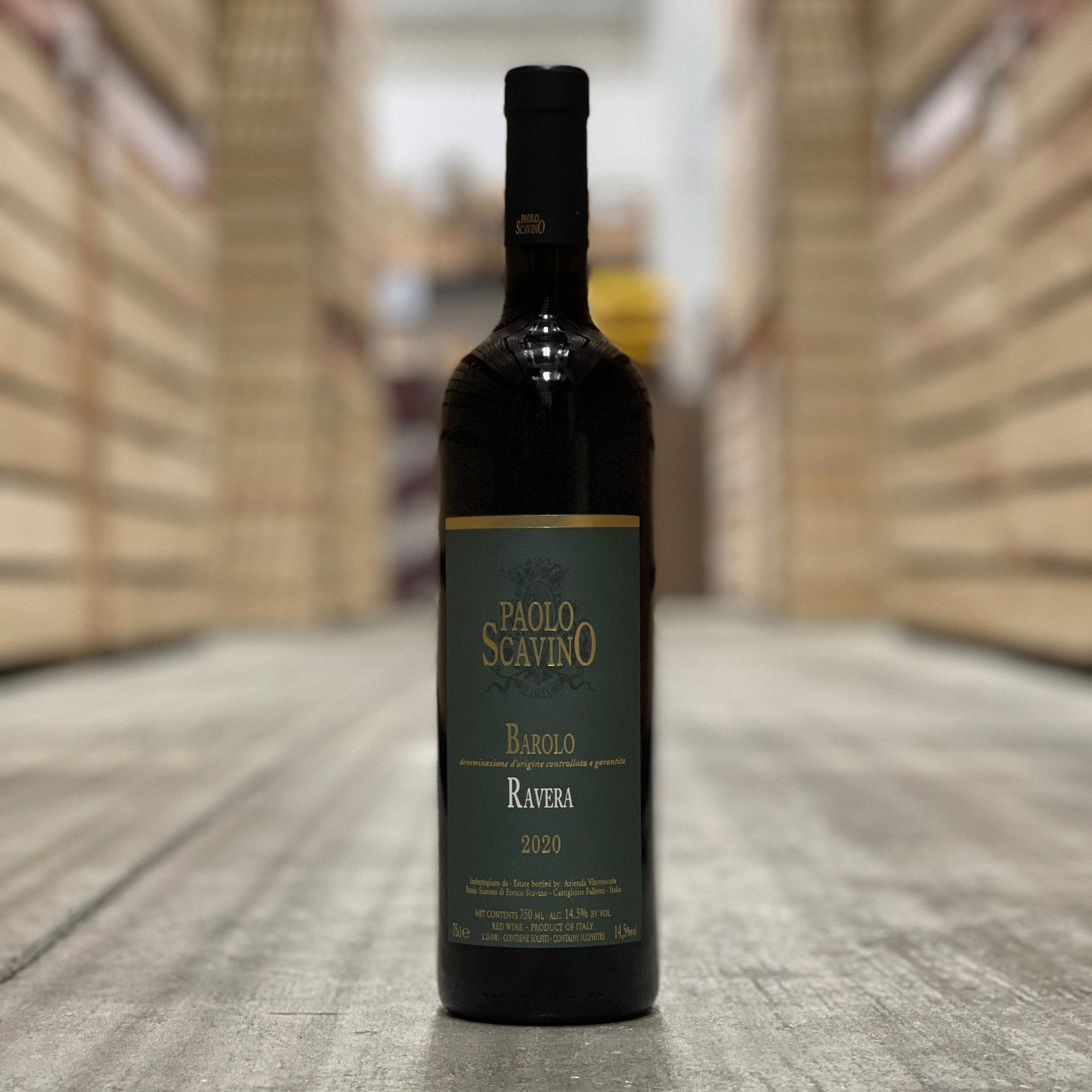
Barolo is the anchor, as you would expect from a vinoteca in Serralunga d'Alba, one of the Barolo zone's most prized communes. Given that local producers are among the regulars, the by-the-glass selection is likely shaped by people who actually make the wine rather than imported by a distant buyer. The broader Piedmontese canon, from Barbaresco to Dolcetto and Barbera, fills out the programme.
Where do I go for Vinoteca Centro Storico?
Vinoteca Centro Storico is located at Via Roma, 6, 12050 Serralunga d'Alba CN, Italy, Serralunga d'Alba.
What's the standout thing about Vinoteca Centro Storico?
Its standing among Serralunga's wine producers and year-round residents, rather than the wine-tourism circuit, is what sets it apart from most stops in the Barolo zone. That reputation is earned through consistent local patronage, not through a press-facing identity. In a region where many wine bars have oriented themselves toward visiting buyers and collectors, a space that remains a genuine village fixture is a rarer thing.
Is Vinoteca Centro Storico reservation-only?
Available information points to a walk-in format rather than a reservation-driven one, which aligns with its character as a local vinoteca in the village of Serralunga d'Alba. Given the small size and community-facing atmosphere, calling ahead before a special trip is sensible, particularly during harvest season when the Barolo zone sees higher traffic from producers and négociants.
Is Vinoteca Centro Storico a good stop during a Barolo wine tour from Alba?
Serralunga d'Alba is roughly 12 kilometres southeast of Alba, making it a practical addition to a day circuit through the Barolo production zone. Unlike the larger enoteche positioned for wine tourism, Vinoteca Centro Storico is cited as a favourite among local producers and villagers, which makes it a useful counterpoint to more formally curated tasting stops. It sits directly in the medieval centro storico, below the castle that marks the village's skyline from the surrounding vineyards.
Recognition history
Dated appearances from independent guides and award organizations, with the underlying list record or original source where available.
Star Wine List
Star Wine List
Falstaff Restaurant - Listed
Falstaff
Continue exploring
More in Serralunga d'Alba
Restaurants in Serralunga d'Alba
Browse all →
Bars in Serralunga d'Alba
Browse all →
Hotels in Serralunga d'Alba
Browse all →
Details
- Cozy
- Rustic
- Intimate
- Classic
- Date Night
- Casual Hangout
- Historic Building
- Terrace
- Vineyard
Current opening hours
- Monday
- Closed
- Tuesday
- Closed
- Wednesday
- 12–11 PM
- Thursday
- 12–11 PM
- Friday
- 12–11 PM
- Saturday
- 12–11 PM
- Sunday
- 12–11 PM
Hours can change for holidays and private events. Last verified .
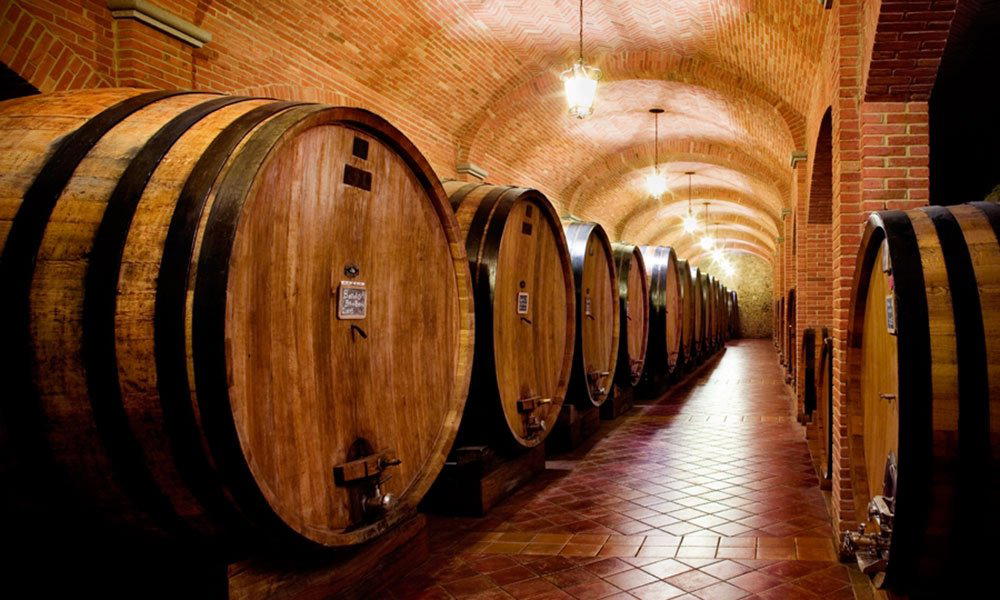
Cozy and intimate with classic rustic interiors over two small floors, offering a charming terrace balcony overlooking the castle and vineyards.