One of Turin's most historically significant cafés, Caffé Al Bicerin has occupied the same corner of Piazza della Consolata since 1763, serving the drink that shares its name: a layered composition of espresso, drinking chocolate, and cream. The interior is a study in nineteenth-century Piedmontese café culture, with marble-topped tables, mirrored walls, and a pace that resists the modern world entirely.

Pearl is the En Primeur Club membership app, where members save venues, book tables and use the concierge.
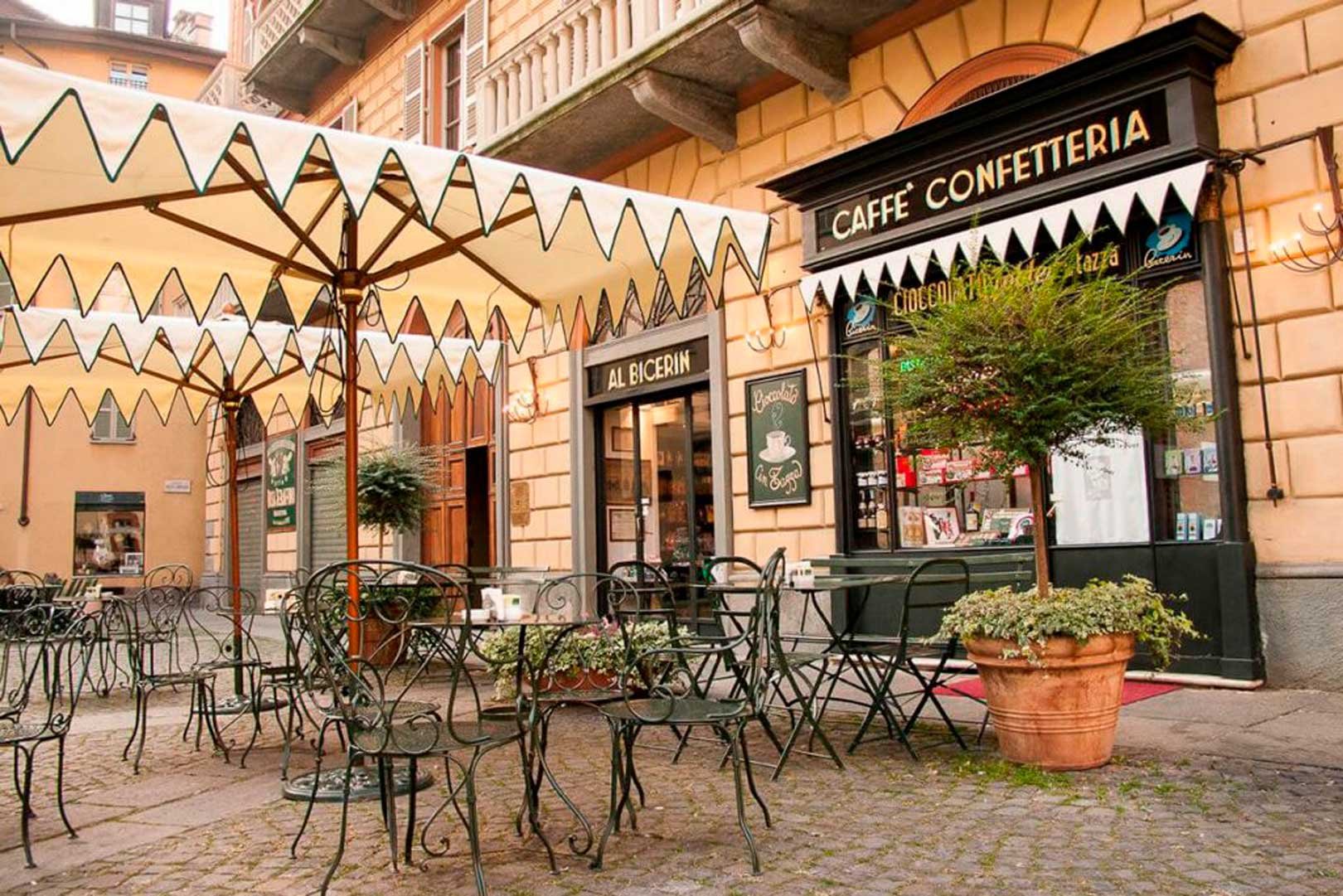
Where the Room Does Most of the Work
There is a particular quality of stillness inside older European cafés that no amount of design budget can manufacture. It accrues, instead, through two and a half centuries of the same trade conducted in the same room. Caffé Al Bicerin, on the edge of Piazza della Consolata in central Turin, has that quality in full measure. The piazza itself sets the tone before you even reach the door: a quiet baroque square anchored by the Santuario della Consolata, with the café occupying a corner position that has barely changed since the address was established in 1763.
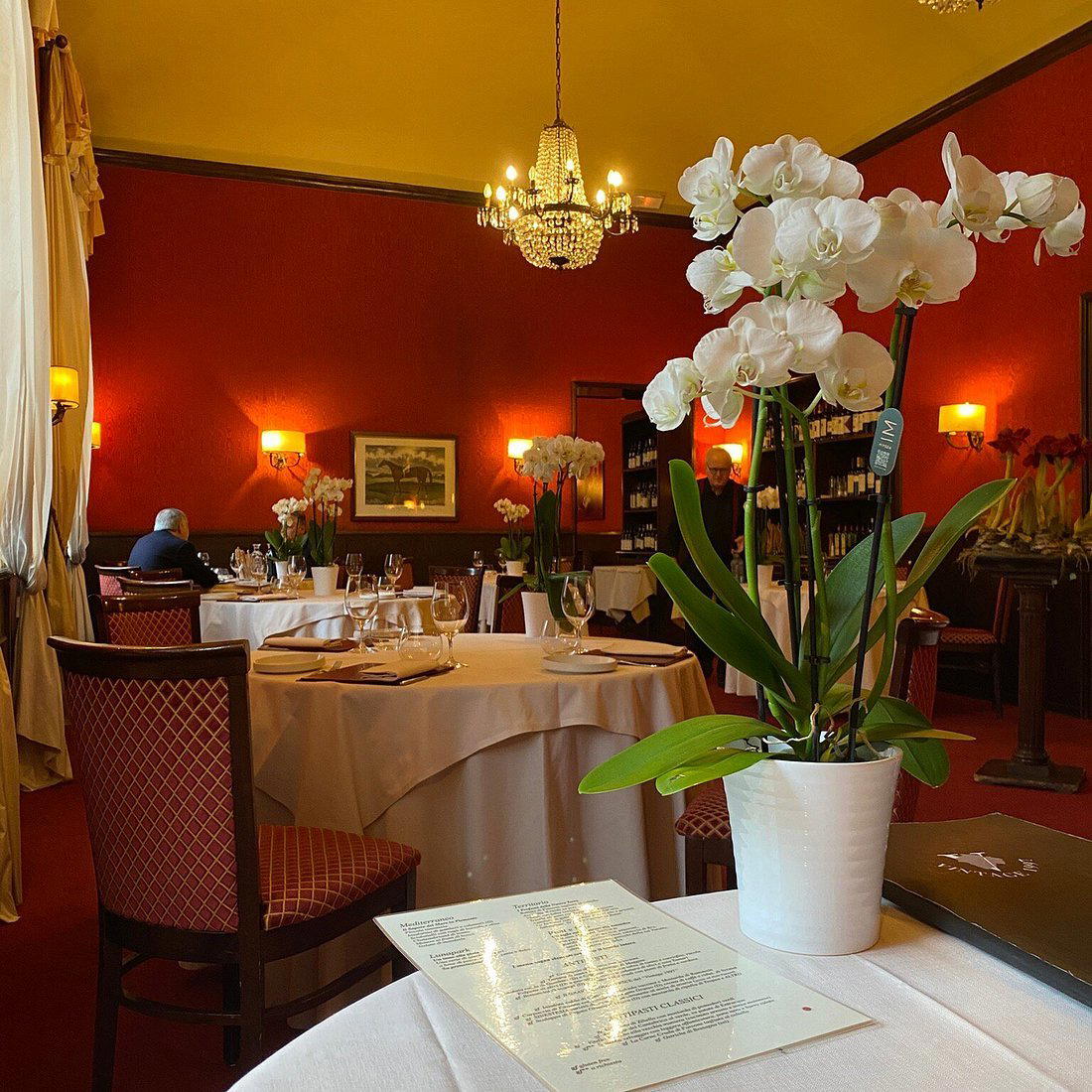
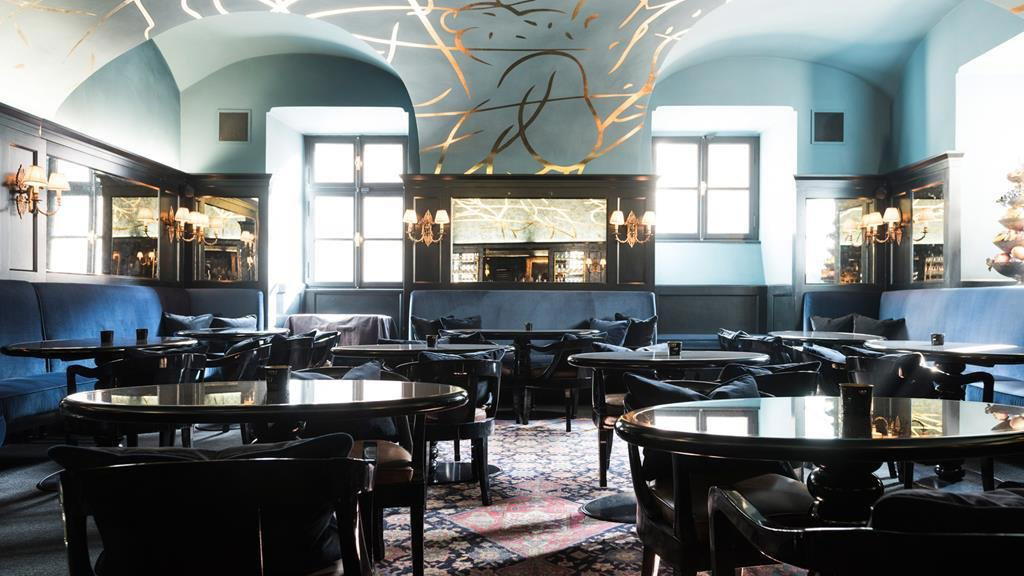
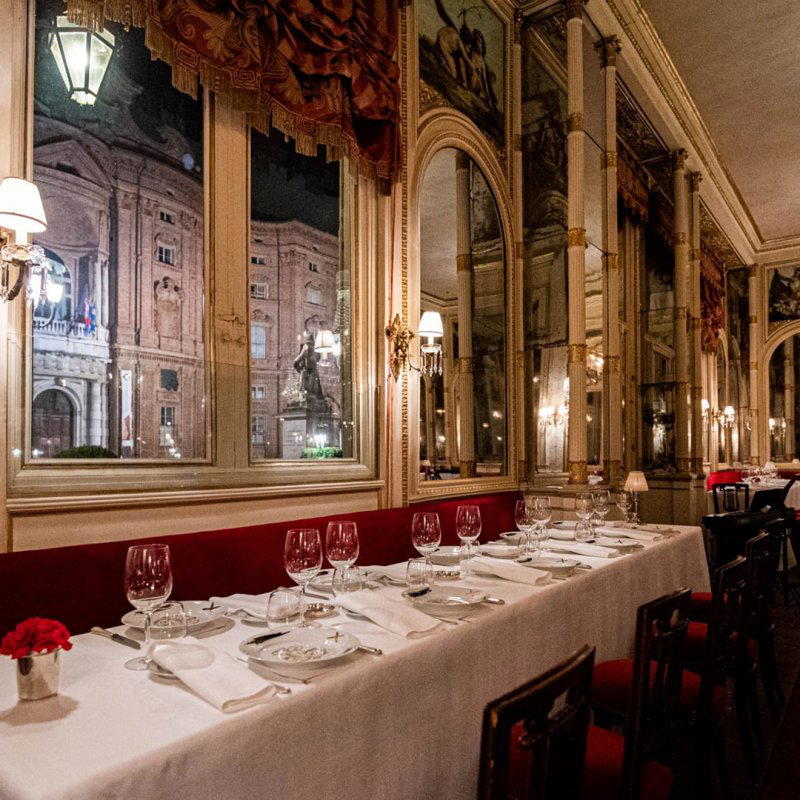
Step inside and the proportions are immediately telling. The room is small, deliberately so, with marble-topped tables arranged tightly enough that conversation carries. Mirrored walls return the space to itself, multiplying the light from the windows and giving the interior an intimate, slightly theatrical quality. Wooden panelling and the original counter preserve a visual continuity with the nineteenth-century heyday of Piedmontese café culture, when establishments like this one served as the social infrastructure of a city that was then the capital of a unified Italy.
The Logic of the Bicerin
Turin's café tradition runs deeper than espresso. The city's chocolate industry, developed through Savoy court patronage from the seventeenth century onward, shaped a local drink culture that has no direct parallel elsewhere in Italy. The bicerin itself, the layered drink of espresso, thick drinking chocolate, and cream served in a small glass, is a product of that specific local convergence. It predates the cappuccino as a codified café drink and operates on a completely different register: slower, richer, more deliberate.
The version served at the address that now bears its name has become the reference point against which all others are measured. That is partly a function of longevity and partly a function of the room. Drinking a bicerin at Caffé Al Bicerin is inseparable from the physical act of sitting in that particular interior, at one of those particular marble tables, with the square visible through the window. The product and the place have become a single entity in the way that very few food-and-venue combinations manage.
For visitors comparing café options across Turin, the broader context is useful. The city has a well-developed historic café circuit, with addresses like Caffè Platti representing the Liberty-style interior tradition, and newer specialty-led operations such as Bistrot Torrefazione Samambaia Torino occupying a different, third-wave position. Al Bicerin belongs to neither of those categories. Its reference point is historical preservation rather than stylistic evolution, which places it in a very small competitive tier alongside a handful of European cafés where the room and the drink are both primary reasons to visit.
Atmosphere as the Core Offer
The mood inside Al Bicerin resists easy categorisation. It is neither hushed nor particularly lively. The pace is determined by the order of operations: you arrive, you wait for a table if the room is full, you sit, and the service follows the rhythm of a place that has never needed to hurry. On weekday mornings, the clientele skews local, with residents from the Consolata neighbourhood treating the café as an unremarkable extension of the morning routine. On weekends and in high season, the balance shifts toward visitors, though the room is small enough that it never tips into tourist-destination scale.
Lighting deserves particular mention. The combination of natural light through the street-facing windows and the reflection from the mirrored walls produces an effect that changes character across the day. Morning visits, when the light comes directly through the eastern-facing glass, have a different quality from late afternoon, when the room settles into a warmer, more enclosed mood. Neither is better in any absolute sense, but they are genuinely different experiences of the same space.
For context on what a historic-atmosphere café format means relative to the broader Italian drinking scene, it is worth considering how this archetype compares to preservation-led bars elsewhere. Addresses such as L'Antiquario in Naples or Al Covino in Venice occupy different points on the tradition-versus-craft spectrum. Contemporary cocktail programs at venues like 1930 in Milan, Drink Kong in Rome, or Gucci Giardino in Florence represent a completely different mode of operation, one driven by technical ambition rather than historical continuity. Al Bicerin does not compete in that space, nor does it try to.
Getting There and Planning Your Visit
Piazza della Consolata sits in the northwest quadrant of Turin's historic centre, walkable from the main shopping axis of Via Roma and close to the Quadrilatero Romano neighbourhood, which contains a dense concentration of bars and restaurants including Banco Vini e Alimenti and Dora In Poi Srl. The café's location on a quiet piazza rather than a main thoroughfare means it is easy to walk past if you are not looking for it specifically. The Santuario della Consolata across the square is the reliable landmark.
Given the small footprint of the room, the practical reality is that peak hours, particularly weekend mornings and early afternoon, can mean a brief wait for a table. This is not a place to eat a full meal or to work through a laptop. It is a place to sit for thirty minutes, drink something made to a recipe that has not materially changed in generations, and watch the piazza. That is the full offer, and it is sufficient. For a broader map of where Al Bicerin sits within Turin's drinking and café culture, see our full Turin restaurants guide. Further afield, international comparisons such as Lost and Found in Nicosia or Bar Leather Apron in Honolulu illustrate how different markets define the premium café experience.
Cuisine and Recognition
| Venue | Cuisine | Price | Awards |
|---|---|---|---|
| Caffé Al BicerinThis venue (the venue you are viewing) | This venue | $10–20 | Not listed |
| La Drogheria | Not listed | $10–20 | Top 500 Bars Best Bars #401 |
| Luogo Divino | Not listed | Not listed | Star Wine List · Falstaff Wine Bar - Listed |
| Piano 35 Lounge Bar | Not listed | $30–50 | Top 500 Bars Best Bars #464 |
| Orso Laboratorio del Caffè | Not listed | $1–10 | Not listed |
Continue exploring
More in Turin
Bars in Turin
All bars in Turin →
Restaurants in Turin
All restaurants in Turin →
Caffé Al Bicerin
The drinks
- Classic cocktails
Signature drinks: Bicerin.
Details
- Classic
- Elegant
- Cozy
- Well Known
- Intimate
- Date Night
- Special Occasion
- Historic Building
- Lounge Seating
- Outdoor Terrace
- Classic Cocktails
- Street Scene
Current opening hours
- Monday
- 9 AM–7:15 PM
- Tuesday
- 9 AM–7:15 PM
- Wednesday
- Closed
- Thursday
- 9 AM–7:15 PM
- Friday
- 9 AM–7:15 PM
- Saturday
- 9 AM–7:15 PM
- Sunday
- 9 AM–7:15 PM
Hours can change for holidays and private events. Hours as of .
Piedmontese elegance with marbled tables, intimate historic interior, and tables outside in the square evoking old-world sophistication.