
Gambero Rosso 2 Forchette
Our verdict
Trattoria dai Paesani: Authentic Abruzzese trattoria in Nishiwaseda with lasagna, an open kitchen, and a sake program; Gambero Rosso 2 Forchette 2026 recognition adds context.

Pearl is the En Primeur Club membership app, where members save venues, book tables and use the concierge.
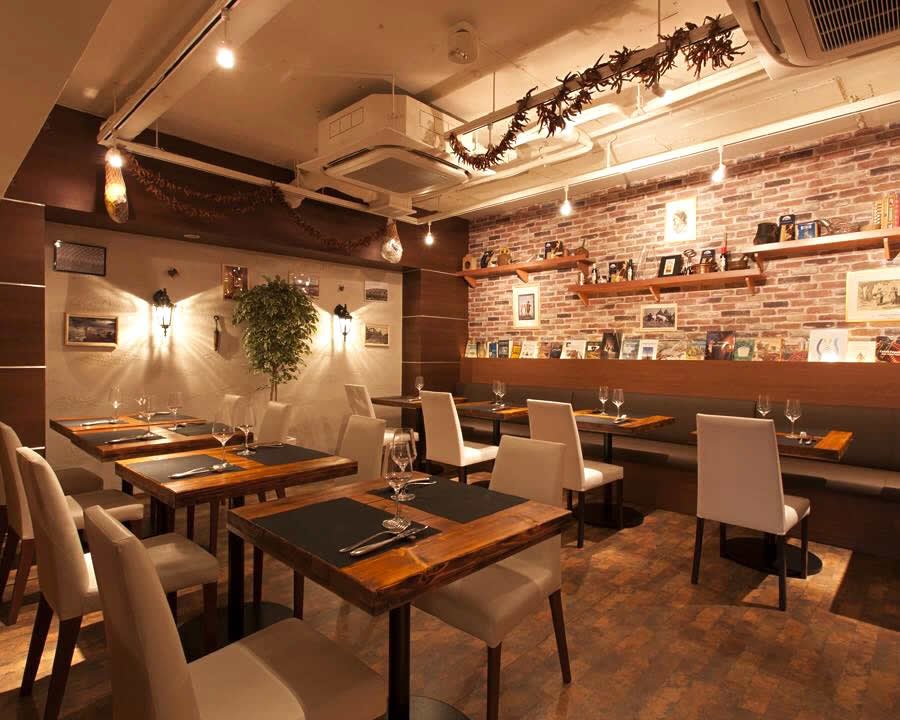
Italian Cooking in Nishiwaseda: Where the Neighbourhood Shapes the Kitchen
The intersection of Italian trattoria culture and Japanese ingredient sourcing has produced some of the more interesting dining in Tokyo over the past two decades. As French-trained kitchens at places like L'Effervescence and Sézanne have drawn international attention to the city's European dining tier, a quieter conversation has been happening in neighbourhood trattorias. The question these kitchens pose is specific: what does Italian cooking become when it is filtered through Japanese produce markets, Japanese supplier relationships, and Japanese expectations of seasonal precision?
Trattoria dai Paesani sits at 2 Chome-18-19 Nishiwaseda, Shinjuku City, not in the gilded dining corridors of Ginza or Marunouchi, but in a residential stretch of the city where the clientele is predominantly local and repeat. That address alone positions the restaurant differently from the high-visibility Italian tables that court expense-account lunches. This is a neighbourhood-anchored operation, and that grounding tends to shape the cooking in ways that matter: the supplier relationships are longer, the menu moves closer to what is available locally, and the room does not perform for tourists.
The Italian-Japanese Ingredient Conversation
Japan's Italian restaurant category is layered. At one end sit the Michelin-decorated Italian rooms, refined, technically rigorous, priced into the leading bracket. At the other end are the casual chains. Trattoria-format dining, sitting between those poles, tends to operate on a logic of familiarity and value: recognisable Italian frameworks applied to whatever Japanese ingredient sourcing makes available and interesting at a given point in the year.
This is where the editorial interest lies. Japanese ingredient culture brings a degree of seasonal discipline that Italian cooking, in its original regional form, already understands intuitively. Campanian tomato timing, Sicilian citrus windows, white truffle seasons in Piedmont, Italian kitchens have always thought in seasonal terms. When that instinct meets Japanese suppliers who grade produce to a precision more associated with fine dining than trattoria cooking, the result can be a kitchen that operates more tightly than its price tier and format might suggest.
Comparable dynamics are visible elsewhere across Japan. Akordu in Nara applies Basque technique to Yamato ingredients. HAJIME in Osaka frames European cuisine through an entirely Japanese sourcing philosophy. In Fukuoka, Goh demonstrates how French and Japanese culinary logic can reinforce rather than dilute each other. The trattoria format is a different register from any of those, more casual, less architectural, but the underlying ingredient conversation runs along the same axis.
Nishiwaseda as Dining Context
Nishiwaseda is not a neighbourhood that appears in the typical Tokyo dining shortlist. It sits northwest of Shinjuku's main commercial core, closer to Waseda University than to the restaurant districts of Yotsuya or Ebisu. This matters because the neighbourhood defines the audience. A dining room in Nishiwaseda draws students, academics, local families, and the kind of regular customer who walks rather than commutes. The pricing logic, the room size, and the menu structure all tend to calibrate around that community rather than around inbound visitors.
For the reader trying to understand where Trattoria dai Paesani sits in Tokyo's broader dining picture, the geography is a signal. Tokyo's top-tier European tables, RyuGin for kaiseki, Crony for innovative French, occupy a competitive tier defined by awards, price, and global recognition. Neighbourhood Italian trattorias occupy a different tier defined by regularity, community, and the kind of cooking that rewards return visits over single occasions. The comparison venues are not peers; they are context for understanding what this format is not, and why that distinction is meaningful to a certain kind of traveller.
What the Trattoria Format Delivers in Tokyo
The trattoria as a format has specific virtues that do not diminish when transplanted to Japan. In its Italian context, the trattoria is a place of direct cooking, shorter menus, and dishes that depend on the quality of a few central ingredients rather than on architectural complexity. Pasta made daily, proteins treated simply, sauces built from reduction and fat rather than from elaborate preparation. When those principles encounter Japanese ingredient standards, particularly in categories like vegetables, seafood, and cured goods sourced from Japanese producers doing Italian-style products, the result can be cooking that reads straightforwardly Italian while tasting distinctively of its location.
This is the same cross-pollination you see at Bistro Ange in Toyohashi, where French bistro formats absorb local Aichi produce, or at Birdland in Sakai, where the menu's specificity comes from the intersection of imported culinary logic and local supply. For European-format dining in Japan, the most interesting kitchens are often those that have stopped trying to replicate the source and started working with what their location actually provides. The trattoria format, with its inherent flexibility and shorter ingredient lists, adapts well to that approach.
Planning Your Visit
Trattoria dai Paesani is located in Nishiwaseda, accessible from Waseda Station on the Tokyo Metro Tozai Line. The surrounding area has limited Western dining density, which means the restaurant draws on a loyal local base rather than foot traffic from passing visitors. For those travelling from central Tokyo, the journey is direct from either Shinjuku or Ikebukuro. Given the neighbourhood trattoria format and residential catchment, contacting the restaurant directly in advance is advisable, both to confirm current hours and to secure a table, particularly on weekday evenings when regular customers tend to fill smaller dining rooms early. For broader context on where this venue fits within Tokyo's restaurant tier, the EP Club Tokyo restaurants guide maps the full range from neighbourhood dining to Michelin-level tables. Travellers building a Japan itinerary that extends beyond Tokyo can consult EP Club's coverage of Gion Sasaki in Kyoto, Nanao, Sapporo, Takashima, and Nishikawa Machi for a more complete picture of regional dining across the country.
Frequently asked questions
How do I find Trattoria dai Paesani?
Trattoria dai Paesani is located at 2 Chome-18-19 Nishiwaseda, Shinjuku City, Tokyo 169-0051, Japan, Tokyo.
How does Trattoria dai Paesani compare to other Italian restaurants near Waseda Station in Tokyo?
Nishiwaseda has limited Western restaurant density compared to Shinjuku's commercial core, which means Trattoria dai Paesani at 2 Chome-18-19 Nishiwaseda operates in a neighbourhood where Italian options are sparse rather than competitive. The Waseda Station on the Tokyo Metro Tozai Line puts the restaurant within reach of both local residents and visitors crossing from central Tokyo, but the area's character is residential and academic rather than a dedicated dining destination. That context shapes what the venue offers: a neighbourhood-rooted Italian kitchen rather than a showcase room built for food tourism.
What should I eat at Trattoria dai Paesani?
The kitchen operates within the Italian trattoria tradition, which centres on ingredient-led cooking rather than elaborate technique. At a venue of this format in Tokyo's Nishiwaseda neighbourhood, the most direct approach is to order what the kitchen is leading with on the day, trattoria menus in Japan frequently reflect whatever Japanese-sourced produce arrived that week. Ask the staff what is freshest rather than anchoring to a fixed expectation.
Do I need a reservation for Trattoria dai Paesani?
That said, neighbourhood trattorias in Tokyo, particularly smaller rooms away from the main dining districts, tend to fill quickly on evenings and weekends because walk-in competition is lower but seating capacity is also limited. Contacting the venue directly before visiting is the sensible move.
What's the defining dish or idea at Trattoria dai Paesani?
The defining idea is the trattoria format itself applied to a Tokyo context: familiar Italian structure, locally sourced Japanese ingredients. This intersection has driven some of the more interesting Italian cooking in the city over the past decade, producing results that sit apart from both the Michelin-tier Italian rooms in Ginza and the generic pasta chains. Trattoria dai Paesani sits in Nishiwaseda, which keeps it closer to Waseda's residential and academic community than to the tourist circuit.
Can Trattoria dai Paesani adjust for dietary needs?
No specific dietary policy is documented. Italian trattoria cooking in Japan typically involves a relatively short, rotating menu where substitutions depend on what the kitchen is running that day. Communicating dietary requirements clearly when booking or arriving, in Japanese where possible, is the most reliable approach at a neighbourhood-scale restaurant like this one in Shinjuku City.
Is Trattoria dai Paesani worth it?
For anyone interested in how Italian trattoria cooking adapts to Japanese ingredients and a residential Tokyo neighbourhood, the Nishiwaseda address makes a coherent case for itself.
Cuisine and Credentials
Comparable venues nearby, for context on price, style, and recognition.
| Venue | Cuisine | Price | Awards | Notes |
|---|---|---|---|---|
| Trattoria dai PaesaniThis venue (the venue you are viewing) | Authentic Abruzzese Trattoria | $20–30 | Gambero Rosso 2 Forchette | Not listed |
| CASA BELLA | Cozy Italian pasta and wine bar | Not listed | Tabelog 100 #77 | Shinjuku |
| L'Antica Pizzeria da Michele | Authentic Neapolitan Pizza | $20–30 | Tabelog 100 #63 | Shibuya |
| L'INSIEME | Neapolitan Pizzeria & Italian Grill | $20–30 | 50 Top Pizza Asia-Pacific #23 · Tabelog 100 #64 | Kōtō |
| Peppe Napoli Sta Ca' | Authentic Neapolitan Pizza | $20–30 | Tabelog 100 #43 | Minato |
| La TRIPLETTA | Neapolitan pizza & Italian in Musashi-Koyama | $20–30 | 50 Top Pizza Asia-Pacific #17 · Tabelog 100 #70 | Shinagawa |
Recognition history
Dated appearances from independent guides and award organizations, with the underlying list record or original source where available.
Gambero Rosso 2 Forchette
Gambero Rosso
Continue exploring
More in Tokyo
Restaurants in Tokyo
All restaurants in Tokyo →


Bars in Tokyo
All bars in Tokyo →




Details
- Rustic
- Cozy
- Classic
- Date Night
- Casual Hangout
- Open Kitchen
- Sake Program
- Local Sourcing
- A La Carte
- Vegetarian Friendly
- Vegan Options
- Gluten Free Options
Current opening hours
- Monday
- Closed
- Tuesday
- 11:30 AM–2 PM, 6–9 PM
- Wednesday
- 11:30 AM–2 PM, 6–9 PM
- Thursday
- 11:30 AM–2 PM, 6–9 PM
- Friday
- 11:30 AM–2 PM, 6–9 PM
- Saturday
- 11:30 AM–2 PM, 6–9 PM
- Sunday
- 11:30 AM–3 PM, 6–9 PM
Hours can change for holidays and private events. Hours as of .
Quaint and welcoming with Italian decor blending Abruzzo knick-knacks and books, creating a cozy homey atmosphere.