
Tenma’s yakitori culture is built on close quarters, charcoal discipline, and a drinking rhythm that rewards pacing over spectacle. CHIKICHIKI Tenma ten sits in the city’s serious casual tier, with Tabelog Yakitori WEST 100 selections across 2023, 2024, and 2025, a counter-led room, and a format that suits diners who want Osaka energy without reducing dinner to a pub crawl.
Pearl is the En Primeur Club membership app — saves, bookings, and concierge access live there. Same editors, same standards.
- Address
- Japan, 〒530-0041 Osaka, Kita Ward, Tenjinbashi, 5 Chome−7−7 191F
- Phone
- +81 6-6355-5166
- Website
- tabelog.com
 Saves & bookings on Pearl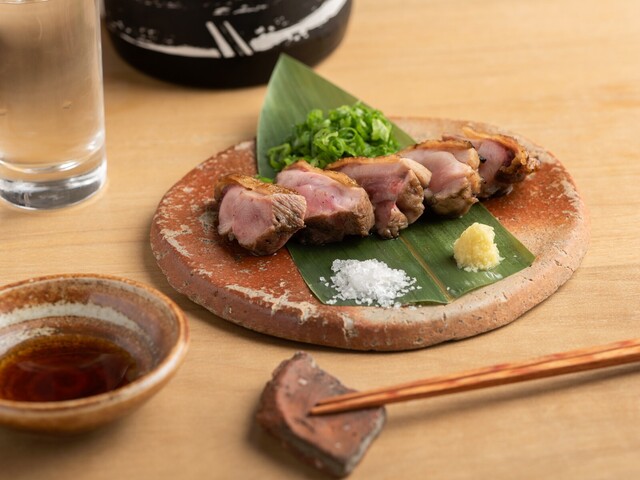
Tenma announces dinner before the first skewer reaches the grill: narrow shopfronts, after-work voices, the stop-start movement of diners deciding whether the evening calls for a quick standing drink or a seated charcoal meal. In that setting, yakitori is less a category than a ritual of timing. The appeal sits in sequence, heat, and restraint: a few bites at a time, a drink within reach, and a room close enough to make the cooking feel public.
That matters in Osaka, where casual dining can be misread by visitors as interchangeable. Tenma’s strength is the opposite. The area compresses multiple dining speeds into a few blocks, from inexpensive standing counters such as Tachinomi Dokoro Uo Sho Tenma and Raku Nijin to fuller seated meals at Shokudo Kuro Usagi and higher-spend dinners like Yama Hashiru. CHIKICHIKI Tenma ten occupies a middle-to-upper yakitori bracket rather than the cheap-and-fast lane, a positioning supported by its selection for Tabelog Yakitori WEST 100 in 2023, 2024, and 2025.
Tenma yakitori with a course-driven evening rhythm
Yakitori’s discipline is easy to underestimate because the format looks informal. The real structure is in pacing: ordering or receiving skewers in stages, letting smoke and salt do the work, and treating the meal as a conversation between chicken, charcoal, and drink rather than a parade of heavy dishes. CHIKICHIKI Tenma ten fits that Osaka register. The category is grilled chicken skewers, but the restaurant’s appeal lies in how yakitori turns a compact meal into a controlled sequence.
The award context is useful here because Tabelog’s Hyakumeiten lists tend to reward category depth rather than luxury theatre. A Yakitori WEST 100 selection places a restaurant inside a regional conversation about craft, consistency, and diner approval. For visitors comparing Osaka dinner options, that signal separates a purpose-built yakitori booking from a casual stop chosen only by proximity. It also explains why this is better read against other charcoal-focused and counter-led meals than against broad izakaya dining.
There is a practical etiquette to this kind of night. Counter seats carry a different tempo from table seats: closer to the grill, more focused, and less forgiving of indecision. Tables suit groups who want the meal to stretch around conversation. Private-room availability adds another layer for small parties, but the ritual remains the same. Yakitori rewards diners who arrive ready to follow the kitchen’s cadence rather than rush through a checklist.
Why the room matters as much as the grill
The restaurant’s scale, 38 seats across counter, table, and upstairs seating, keeps it within the intimate side of Osaka dining without pushing into severe tasting-counter formality. That balance is central to Tenma’s appeal. The neighborhood is not built around hushed dining rooms; it is built around movement, appetite, and repeatable pleasures. A serious yakitori meal here has to carry enough craft for destination diners while staying compatible with the district’s relaxed social current.
Drink range reinforces that middle ground. Sake, shochu, wine, and cocktails all appear in the program, and the availability of wine is a useful clue for how modern Osaka yakitori has broadened beyond the beer-and-highball default. That shift does not turn the meal into fine dining. It simply gives charcoal chicken more ways to register: saline, smoky, fatty, lean, and bitter-edged depending on the pairing. The point is not novelty; it is range within a familiar form.
Family-friendly details are also part of the Osaka story. Many serious Japanese counters read as adult-only by default, but this venue welcomes children and lists a kids menu. That changes the decision for travelers who want a credible yakitori dinner without splitting the evening between childcare logistics and dining ambition. It also says something about Tenma itself, a district where local use and destination interest overlap rather than replacing one another.
For a broader Osaka itinerary, CHIKICHIKI Tenma ten pairs naturally with daytime eating elsewhere in the city. The contrast is sharper if lunch is casual and carb-led, from 551 Horai (551蓬莱) to 52CHO-ME BAKERY, or if the day moves through café and pizza stops such as .cafe and 99 Pizza Napoletana Gourmet. Diners looking at Osaka’s Italian-leaning side can compare the mood with a canto (Italian), where the decision is less about charcoal rhythm and more about European structure.
How to place it within an Osaka food trip
Osaka rewards travelers who do not treat every meal as a trophy hunt. The stronger approach is to alternate formats: market grazing, bakery mornings, one serious counter, one relaxed neighborhood dinner, and a bar night if the schedule allows. For that wider planning frame, Our full Osaka restaurants guide, Our full Osaka hotels guide, Our full Osaka bars guide, Our full Osaka wineries guide, and Our full Osaka experiences guide give the city more useful shape than a single dinner reservation can.
The comparison set also matters beyond Osaka. Japan’s dining culture is unusually format-specific, and the right choice depends on whether the night calls for skewers, rice, noodles, beef, drinking food, or a specialist counter. A traveler building a multi-city route might weigh a charcoal dinner here against -Grilled beef Sukiyaki- KAMAKURA TANUKIAN 鎌倉 たぬき庵 in Kamakura. 鮪と炭火焼き うお炭 秋葉原店 in Tokyo.know in Kumamoto, (Shoku) Vietnam in Kawasaki, [Curry Senmon Ten] Maruyama Kyoju. in Sapporo, or [ki:] in Kyoto. Outside Japan, the same question of format carries through to places such as Jōdo Saké Bar in Los Angeles and Onigiri Time in Pasadena, where Japanese drinking and rice traditions take on different local roles.
The editorial case is clear: this is a Tenma yakitori address for diners who want the neighborhood’s sociability with more structure than a standing bar and less ceremony than a luxury counter. The repeat Tabelog Yakitori WEST 100 recognition supplies the trust signal; the setting supplies the Osaka logic. Go for the ritual of charcoal, pacing, and conversation, not for theatrical dining.
Reputation Context
Comparable venues at a glance for context.
| Venue | Cuisine | Price | Notes |
|---|---|---|---|
| CHIKICHIKI Tenma tenThis venue — the venue you are viewing | Yakitori | $$$ | Not listed |
| Yama Hashiru | Yakitori Omakase | $$$ | Kita |
| Yakitori Tokei | Premium Yakitori Omakase | $$$ | Higashiosaka (Yoshita) |
| Tonkatsu Koshirou | Omakase Tonkatsu Counter | $$$ | Chūō |
| Yakitori Saihi | Yakitori | $$$ | Chūō |
| Nankai Grill Higashi ten | Teppanyaki Steakhouse | $$$ | Sakai |
Recognition history
Dated appearances from independent guides and award organizations, with the underlying list record or original source where available.
Tabelog 100 #37 · No. 37
Tabelog · Tabelog 100 - Yakitori - WEST - 2025
Continue exploring
More in Osaka
Restaurants in Osaka
Browse all →




Bars in Osaka
Browse all →




Hotels in Osaka
Browse all →



Wineries in Osaka
Browse all →
At a Glance
- Cozy
- Casual
- Intimate
- Casual Hangout
- Group Dining
- Family
- After Work
- Private Dining
- Standalone
- Beer Program
- Local Sourcing
Current opening hours
- Monday
- 5–11 PM
- Tuesday
- 5–11 PM
- Wednesday
- 5–11 PM
- Thursday
- 5–11 PM
- Friday
- 5–11 PM
- Saturday
- 12–2 PM, 5–11 PM
- Sunday
- 12–2 PM, 5–11 PM
Hours can change for holidays and private events. Last verified .
Warm, relaxed, and homey with counter and table seating; the space is designed for easygoing yakitori dining rather than a formal omakase setting.