Google: 4.5 · 87 reviews

A six-seat tempura counter in central Chiba, Tenhaku holds a Tabelog Silver Award 2026 and a score of 4.29, placing it among Japan's most closely watched specialists in the category. Operating on a session-only format with reservations exclusively through Ikkyu, the counter runs four seats at lunch and six at dinner, with a particular emphasis on fish-sourced ingredients and a self-taught frying approach that has earned consecutive Tabelog 100 Tempura recognition since 2022.
 Discover on Pearl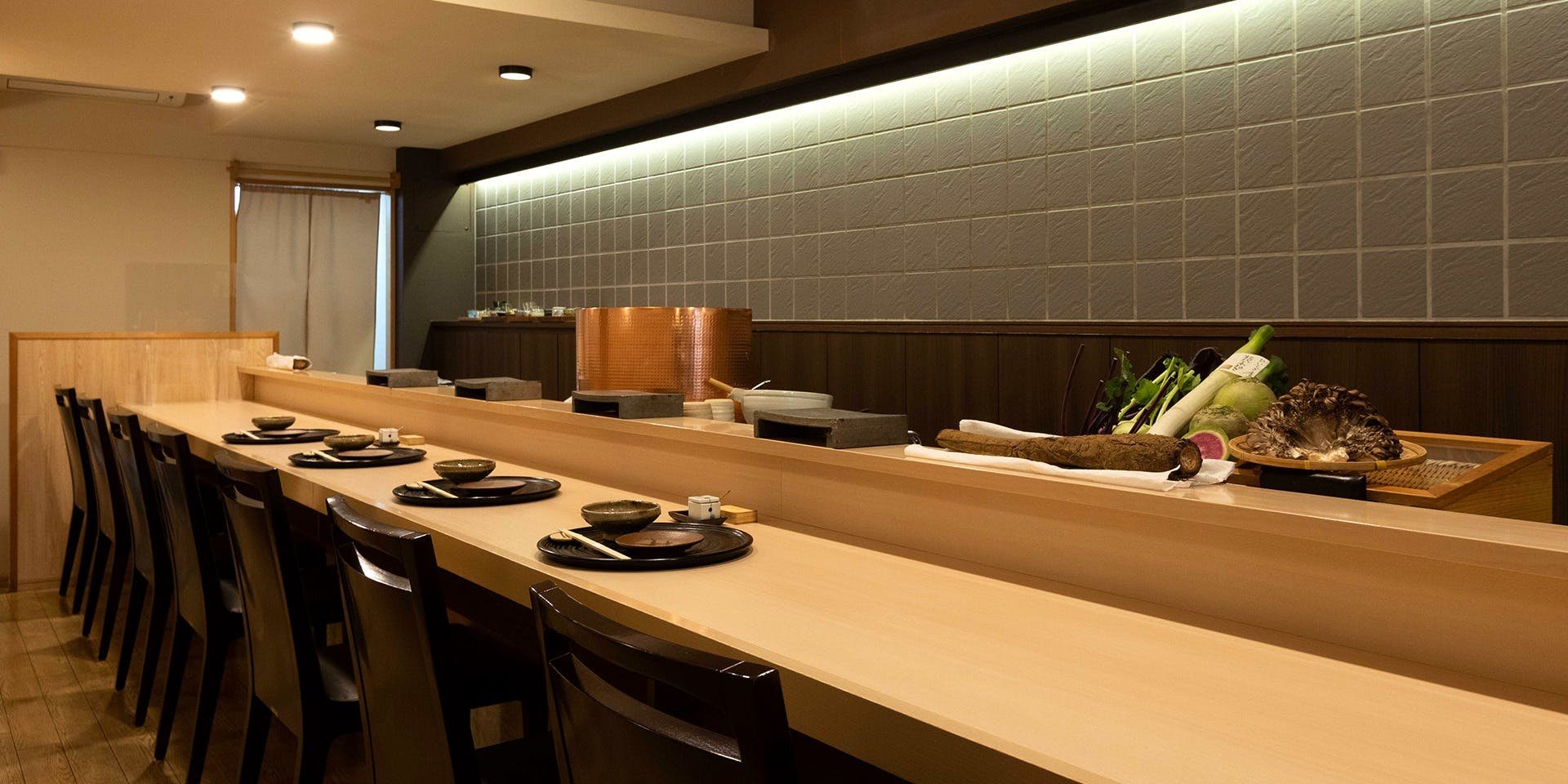
A Counter That Earns Its Reputation Away from the Capital
Premium tempura counters are most often associated with Tokyo neighbourhoods like Ginza, Minami-Aoyama, or Asakusa, where the category commands some of Japan's steepest per-seat prices and longest wait lists. Chiba, which sits roughly 40 minutes east of the capital by rail, has developed its own serious dining circuit largely on the strength of a handful of specialist counters that attract diners willing to leave the prefecture boundary behind. Tenhaku, operating out of a first-floor space in the Ishii Building at 2-1-21 Honcho, Chuo Ward, represents the point where that local circuit intersects with national recognition. A Tabelog Silver Award in 2026 with a score of 4.29 places it above the great majority of Japanese restaurants that participate in the platform's annual assessment, and its consecutive appearances in the Tabelog Tempura 100 (2022, 2023, and 2025) confirm that the recognition is sustained rather than circumstantial.
For context on how these rankings work: the Tabelog Award Silver tier is awarded to roughly the top 0.5% of reviewed restaurants in Japan, while the Tempura 100 designation specifically identifies the country's most consistently praised specialists in the category. Tenhaku has held Bronze from 2023 through 2025 before ascending to Silver for 2026, a trajectory that positions it alongside counters in more prominently mapped dining cities. Comparable award trajectories in terms of scale and category focus can be found at venues like Harutaka in Tokyo, where a similar counter-only format and sustained critical momentum define the proposition. Chiba's advantage, commercially, is that the demand pressure at this level is lower than in Tokyo, which can translate into slightly more accessible booking windows — though Tenhaku operates reservation-only and does not take phone enquiries as a general rule.
How the Format Shapes Everything You Experience
The seating count at Tenhaku makes the operating logic clear before you arrive. Four seats are available during the daytime session; six at night. Both sessions begin simultaneously — 12:00 for lunch, 18:00 for dinner , and the counter runs on strict start-time discipline. Arriving at least ten minutes early is not a courtesy request but a structural requirement: preparation is calibrated to the reservation time, and arriving more than fifteen minutes late is treated as a cancellation. The oil, which is the medium through which tempura lives or dies, is cited explicitly in the venue's own notes as the reason for this policy. This is a kitchen that takes its frying medium seriously enough to build cancellation terms around it.
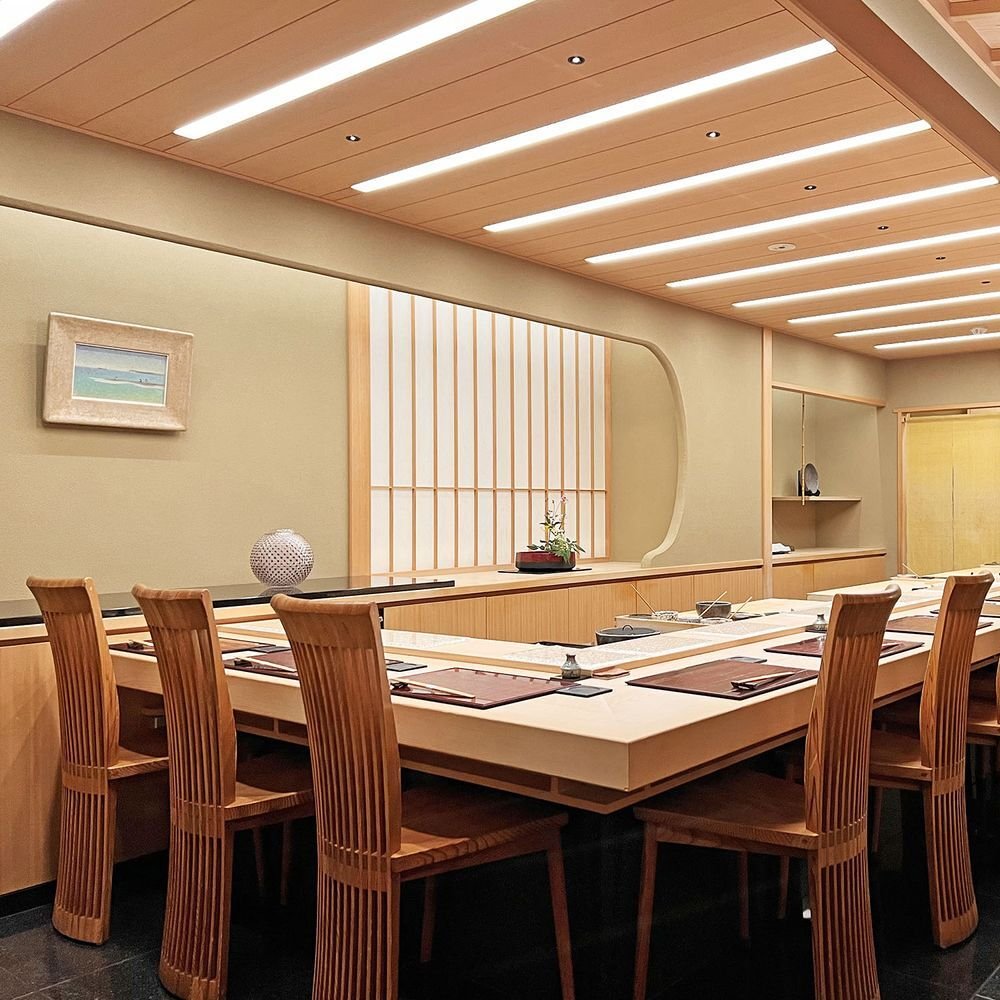
This kind of session architecture is common among Japan's most serious tempura counters, where the simultaneous start ensures that every piece of the course can be timed to a single arc across all seated guests. The format at Tenhaku removes the ambiguity of à la carte timing and replaces it with something closer to a conductor's tempo: each piece arrives when it should, not when the kitchen has bandwidth. The six-seat maximum also means that the room itself stays quiet and focused. There are no private rooms, and the counter seating , all of it , faces the preparation area directly. This is a watching format as much as an eating one.
The venue's description on Tabelog identifies the frying approach as self-taught from classical foundations, with an emphasis on drawing out the essence of the ingredient rather than imposing a fixed house style. The kitchen notes a particular attention to fish, which in tempura terms shifts the emphasis away from vegetable-led courses and toward proteins that demand more precise oil temperature control and shorter fry windows. At this price level , listed at JPY 10,000 to JPY 14,999 per person at the stated budget, with reviewer-reported spend ranging up to JPY 20,000 to JPY 29,999 , that specificity is what separates the counter from mid-range tempura restaurants in the same city.
The Menu Architecture: Precision Over Abundance
Tempura as a format does not offer the same structural complexity as kaiseki or omakase sushi, where course architecture can involve dozens of distinct preparations across soup, sashimi, grilled, simmered, and rice stages. Instead, tempura's structure is almost entirely expressed through sequencing and technique: which ingredient comes first and last, how oil temperature shifts across the course, and what the rhythm of light-to-rich or delicate-to-substantial looks like from start to finish. At counters operating at Tenhaku's award level, that sequencing is the primary authorial statement , the equivalent of a jazz set list in that the individual pieces are technically recognisable but the ordering and pacing carry the interpretive weight.
The fish-forward emphasis at Tenhaku signals a course structure that likely prioritises seafood temperament over the more common vegetable-punctuated progression found at higher-volume tempura restaurants. Fish and shellfish in tempura require oil that reads the ingredient's moisture content in real time; a counter with six seats can manage that calibration in a way that a thirty-seat restaurant cannot. This is the argument for small-format specialist tempura in general, and it is the argument that Tenhaku's award record appears to validate. The Tabelog Silver score of 4.29 does not arrive from a kitchen that is treating its medium as interchangeable.
Drink pairings at the counter span sake (nihonshu), shochu, and wine , a range that covers the traditional Japanese spirits pairing alongside options for guests who prefer a Western wine register. No electronic payment or QR code systems are accepted; credit cards (Visa, Mastercard, JCB, AMEX, Diners) are the primary non-cash route. The dress code has one specific element: guests are asked to avoid perfume and strongly scented hair products, which is a direct practical requirement in a counter format where oil temperature and ingredient aroma are the primary sensory channels.
Chiba's Specialist Dining Scene
Chiba's restaurant circuit is worth treating as a destination rather than a default. The city sits in a different competitive bracket than Tokyo, which means that serious kitchens here tend to operate with slightly less visibility internationally but comparable technical seriousness at the leading of their respective categories. Tenhaku is the tempura representative of that tier. Within the broader Chiba dining circuit, counter-format specialists in sushi, such as Sushiei and Takaoka, operate at price points above Tenhaku's listed range (Takaoka runs JPY 30,000 to JPY 39,999), which positions the tempura counter as the more accessible entry into Chiba's award-level dining tier. Other well-regarded addresses in the city include Ushimaru, Manzan, and BAMBOU, each occupying a distinct niche in the local circuit. For Japan's broader award-level dining reference points, HAJIME in Osaka, Gion Sasaki in Kyoto, akordu in Nara, and Goh in Fukuoka represent the regional spread of serious Japanese counter dining that Tenhaku participates in at the category level, even if its geography keeps it outside the standard Tokyo-Kyoto-Osaka circuit. For international reference on the principles that inform high-end fish-focused counter cooking, Le Bernardin in New York City applies comparable precision to fish cookery in a Western fine dining register, while Atomix in New York City demonstrates how Korean tasting counter formats handle course architecture and sequencing with similar philosophical discipline. 1000 in Yokohama provides a useful regional peer in a city of comparable scale to Chiba.
Planning Your Visit
Tenhaku opened on 1 October 2015 and has operated at the same address , 2-1-21 Honcho, Ishii Building 1F, Chiba 260-0012 , since then. Reservations are accepted exclusively through the Ikkyu booking platform; enquiries go to the venue's Instagram DM since phone calls are generally not answered. The counter runs Friday through Tuesday, with both a midday and evening session (12:00 and 18:00), but Monday afternoon and Friday afternoon are closed, so the effective full-day operating window is Saturday, Sunday, and Tuesday. The venue is approximately a five-minute walk from Chiba Urban Monorail Yoshikawakoen Station, a ten-minute walk from JR Chiba Chuo Station, or a fifteen-minute walk from JR Chiba Station. Coin parking is available nearby for those arriving by car. Allergy information must be submitted at the time of booking, not on arrival. Solo dining is specifically noted as a recommended occasion by reviewers, which makes sense given the counter format and the single-guest compatibility of a six-seat room. Private use of the full space is available for groups up to six. No smoking throughout.
Explore more of the city's dining, drinking, and accommodation options through our full Chiba restaurants guide, our full Chiba hotels guide, our full Chiba bars guide, our full Chiba wineries guide, and our full Chiba experiences guide.
At a Glance
- Elegant
- Sophisticated
- Intimate
- Date Night
- Special Occasion
- Chefs Counter
- Sake Program