Google: 4.5 · 334 reviews

A farm-to-table Italian house restaurant in rural Sammu, Chiba, Ushimaru has held Tabelog Silver status for three consecutive years (2024–2026) and carries a 4.4 score from over 300 reviews. Set in a converted house roughly 2.5 km from Matsuo Station, the 20-seat dining room operates Thursday to Sunday and offers both lunch and dinner seatings at JPY 15,000–19,999 per person.
 Discover on Pearl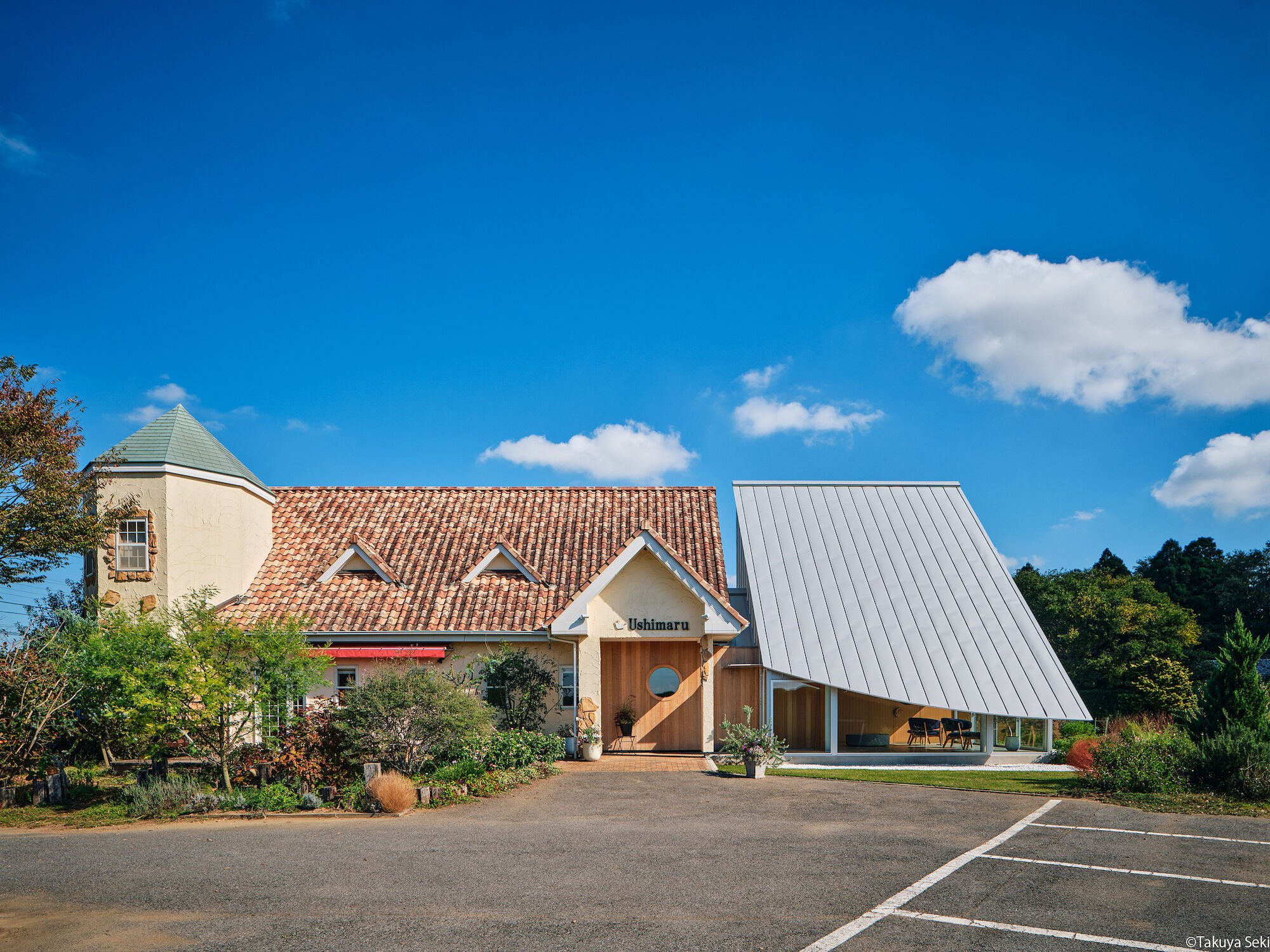
Where Italian Cooking Meets Rural Chiba
The drive from central Chiba toward Sammu passes rice paddies, small agricultural plots, and the kind of unhurried infrastructure that most city-dwellers associate with a different era of Japanese life. Arriving at Ushimaru, a house restaurant set back from a quiet road in Matsuomachi Kigatana, the surroundings do the first work of calibration: this is not a restaurant inside a city, and it does not pretend to be. The building reads as a converted private home. An open terrace extends from the main structure. The parking is on-site. Everything about the approach signals that the experience will be structured around the particularity of this place, not around proximity to anything else.
That context matters for understanding what Ushimaru represents within the broader geography of serious Italian dining in Japan. The country has developed one of the more rigorous Italian restaurant cultures outside Italy itself, concentrated in Tokyo but extending, through sustained peer recognition, to properties in Osaka, Nara, Fukuoka, and Yokohama. What sets Ushimaru apart from that urban cluster is the deliberate distance from it. With 20 seats, private rooms accommodating up to seven guests, and operating hours that run five days a week across lunch and dinner, the restaurant occupies a specific tier: the destination house restaurant, where the journey itself frames the meal.
The Farm-to-Table Signal in a Japanese Context
Farm-to-table positioning in Italian cooking has become a global shorthand, but in a prefectural setting like Sammu, Chiba, it carries more specificity. Chiba Prefecture is among Japan's most productive agricultural regions, supplying Tokyo markets with vegetables, seafood from the Pacific coast, and grain crops year-round. A kitchen operating in that supply environment, with a stated emphasis on fish sourcing and a wine program overseen by an on-site sommelier, is working with materially different inputs than its urban counterparts.
The Tabelog description positions the kitchen's approach explicitly around local produce and seafood, and the restaurant's own Tabelog profile notes an emphasis on fish. Across Japan's premium Italian tier, fish-forward Italian cooking has become a distinct sub-category, separating kitchens that treat Italy's coastal traditions seriously from those built around meat or pasta conventions. Ushimaru's placement within that sub-category, in a region with direct access to Chiba's coastal catch, gives the farm-to-table positioning more grounding than the term usually carries.
A Decade of Recognition, Consolidated
Ushimaru's award trajectory on Tabelog is worth reading carefully. The restaurant received Bronze status every year from 2017 through 2023, a run of seven consecutive years of national-tier recognition on Japan's most-used restaurant review platform. In 2024, it moved to Silver, a status it has held through 2026. The current score sits at 4.40, with review-based spending averaging JPY 20,000–29,999 per person despite a listed menu price of JPY 15,000–19,999, suggesting that beverage spend and service charges account for the gap.
The Silver tier on Tabelog places a restaurant inside the leading roughly 1% of reviewed listings. Ranking 152nd nationally among Silver recipients, Ushimaru sits in a competitive cohort that includes urban flagships with far greater visibility. That position, held from outside a major metropolitan area and without the infrastructure advantages of Tokyo or Osaka, is the more notable data point. The restaurant has also been selected three times for the Tabelog Italian EAST "Tabelog 100" list, covering 2021, 2023, and 2025, which identifies the 100 most recognised Italian restaurants in eastern Japan. Repeated selection across multiple cycles indicates sustained rather than circumstantial recognition.
For comparison with other Chiba venues, Takaoka (Sushi) operates at a higher per-person spend in the JPY 30,000–39,999 range, representing the sushi tier in the prefecture. Sushiei (Sushi), BAMBOU, Manzan, and Tenhaku round out the prefecture's recognised dining circuit. Ushimaru holds a distinct position within that set as the only Italian house restaurant in the group.
The Atmosphere at Twenty Seats
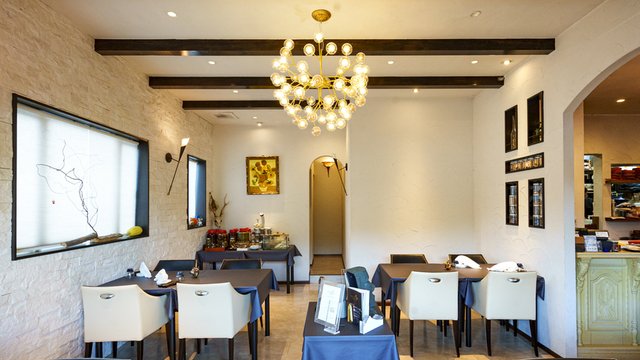
The 20-seat capacity is the most structurally important fact about Ushimaru's atmosphere. At that scale, the gap between a full room and a half-empty one is felt immediately. Noise levels, pacing, and the sense of shared occasion all depend on occupancy in a way that larger restaurants can absorb without notice. House restaurants in Japan at this size tend to operate with an attentiveness that mirrors private dining: service ratios are higher per cover, and the physical intimacy of a converted home encourages a different register of hospitality than a purpose-built dining room.
The terrace extends the usable space outdoors, where smoking is permitted, and the restaurant notes wheelchair accessibility, free Wi-Fi, and stroller admittance, signals that the experience is structured to accommodate a range of visitors rather than positioning itself as exclusively formal. Private rooms seating four to seven guests are available and can be booked for the full space, making Ushimaru a workable venue for small celebrations or business entertaining in a context that has no urban equivalent. Wedding ceremonies are also permitted, an unusual facility that reinforces the house-restaurant designation.
Wine program, overseen by a sommelier and noted as a particular focus, anchors the drink side of the experience. Sake, shochu, and cocktails are also available, and the restaurant accepts BYO with relevant caveats. The breadth of the beverage offer sits comfortably within the Italian restaurant tradition while accommodating the preferences of a Japanese dining public that may arrive with different expectations than a purely Italian customer base.
The Journey Is Part of the Proposition
Getting to Ushimaru requires planning that most city restaurants do not demand. The nearest station, Matsuo on the JR Sobu Main Line, is approximately 3 km away on foot — roughly 35 minutes — making a taxi the practical option from the station at around JPY 1,400 one way. Visitors travelling from Tokyo have another option via Narutou Station, one stop closer to the city and with more frequent service, though the taxi fare from there runs to approximately JPY 2,800. By car, the restaurant is accessible from Matsuo-Yokoshiba IC on the Chiba Togane Road, approximately 6 km from the interchange. On-site parking is available. The total journey from Tokyo Station by train is approximately two hours and twenty minutes.
That logistical profile separates Ushimaru from casual-consideration dining. The same structure appears at other destination house restaurants across Japan, from akordu in Nara, which brings European fine-dining sensibility to a rural prefecture, to properties outside Osaka and Fukuoka where provenance-driven cooking has found audiences willing to travel. Nationally, the conversation around Italian cooking of this calibre includes HAJIME in Osaka and Goh in Fukuoka, both operating at different price points and urban contexts, while Harutaka in Tokyo and Gion Sasaki in Kyoto represent how destination-grade restaurants use location as part of their identity. Internationally, fish-forward cooking at this price tier invites comparison with operations like Le Bernardin in New York City, though the contexts are entirely different. Atomix in New York City and 1000 in Yokohama represent the urban multi-course format that Ushimaru's rural counterpart deliberately sidesteps.
Planning a Visit
Ushimaru operates Monday, Tuesday, Friday, Saturday, and Sunday, with lunch from noon to 15:00 and dinner from 18:00 to 22:00. It closes on Wednesday and Thursday, as well as the second and fourth Tuesdays of each month. Reservations are strongly recommended and available through the restaurant's website. The stated per-person spend sits at JPY 15,000–19,999 for both lunch and dinner, with a 10% service charge applied, and review data suggests total spend including beverages frequently reaches JPY 20,000–29,999. All major credit cards are accepted, along with electronic money and QR code payment services including PayPay, Rakuten Pay, and Alipay. A children's course is available from JPY 6,000, and children's single-dish options (including lasagna) start from JPY 1,500. Children aged ten and older are treated as adults for menu purposes.
For more on dining and travel across the prefecture, see our full Chiba restaurants guide, our full Chiba hotels guide, our full Chiba bars guide, our full Chiba wineries guide, and our full Chiba experiences guide.
Continue exploring
More in Chiba
At a Glance
- Cozy
- Elegant
- Intimate
- Hidden Gem
- Scenic
- Date Night
- Special Occasion
- Open Kitchen
- Extensive Wine List
- Sake Program
- Farm To Table
- Local Sourcing
- Street Scene
Relaxing and intimate atmosphere in a solitary European-style house amid rural fields, with stylish spaces and terrace seating.