
Our verdict
Tempura Uchitsu on Aberdeen Street brings a Japanese counter discipline to Central Hong Kong, with Chef Hara Eisaku overseeing a format built around the sequenced logic of a full tempura progression. Ranked in the Opinionated About Dining Top Restaurants in Asia for three consecutive years through 2025, it occupies a specific tier in the city's Japanese dining circuit, distinct from the broader omakase wave.

Pearl is the En Primeur Club membership app, where members save venues, book tables and use the concierge.
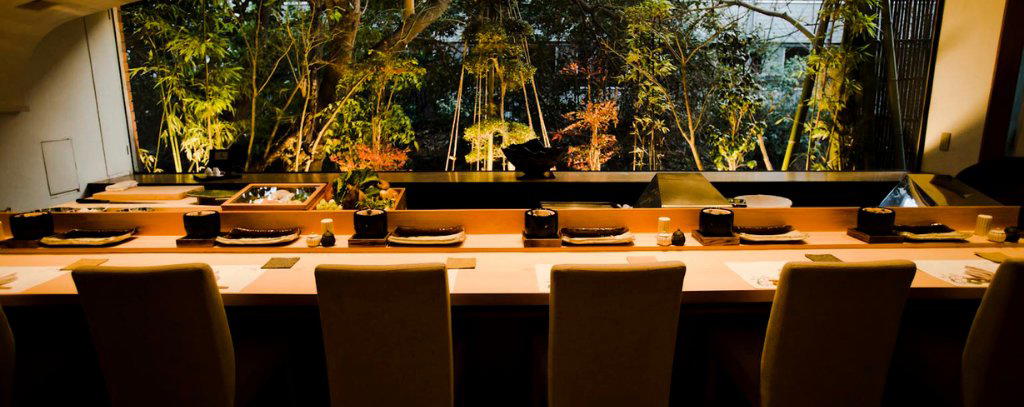
The menu
What to order
- Uni tempura with shiso wrap
- Crab tempura
- Abalone tempura
- Shrimp tempura
A Counter Tradition on Aberdeen Street
Aberdeen Street in Central has become one of Hong Kong's more concentrated corridors for considered, format-driven dining. The slope connecting SoHo to the mid-levels carries a disproportionate share of the city's smaller, counter-led rooms, the kind that seat fewer people, charge accordingly, and reward return visits over first-time exploration. Tempura Uchitsu occupies a ground-floor space at number 39, and the physical approach sets a tone that holds through the meal: understated frontage, Japanese material restraint, and the kind of entry that asks you to slow down before you've sat down.
Tempura as a serious counter format has a narrower footprint in Hong Kong than omakase sushi or kaiseki. The city's Japanese dining circuit runs deep in those categories, places like the multi-concept rooms favored by Michelin inspectors and the French-Japanese crossover formats that have defined Central for a decade. Tempura, by contrast, tends to arrive in Hong Kong either as a supporting act within a broader Japanese menu or as a specialist proposition imported directly from a Japanese lineage. Uchitsu belongs to the latter category, with Chef Hara Eisaku operating within a discipline that treats batter temperature, oil management, and ingredient sequencing as the primary technical language.
The Logic of a Tempura Progression
The architecture of a serious tempura meal is less widely understood than sushi omakase, and it rewards explanation. Where a sushi counter moves through cuts and preparations that vary in fat content, temperature, and cure, a tempura counter structures itself around the relationship between ingredient delicacy and batter weight, and between the oil's heat recovery and the diner's palate accumulation. The lightest, most delicate pieces tend to arrive early, a strategy for preserving sensitivity before richer or more assertive ingredients enter the sequence. Seasonal vegetables are distributed across the progression rather than grouped, in part to reset the palate and in part because their water content requires different frying conditions than seafood.
What this means in practice is that a well-executed tempura counter reads as a meal with an arc, not a parade of identical preparations. Each piece reflects a decision about timing, temperature, and the diner's current state in the progression. The chef's role is closer to that of a conductor than a line cook: managing the moment of service for each item, reading pace across the counter, and adjusting oil and batter behavior as ambient conditions in the room change. This is the discipline that counters like Tempura Ippoh and Tempura Tenkai also operate within, each with its own lineage and emphasis.
Where Uchitsu Sits in the Regional Picture
Opinionated About Dining, which surveys a network of serious eaters across Asia and provides one of the more granular peer-referenced rankings in the region, has listed Tempura Uchitsu among its Leading Restaurants in Asia for three consecutive years: Highly Recommended in 2023, ranked 237th in 2024, and 237th-238th in 2025. The consistency of inclusion matters as much as the specific number. OAD rankings aggregate repeat visits and informed opinions rather than a single inspection, which means sustained presence reflects a proposition that holds up across time and across the variation that any counter operation experiences season to season.
In Tokyo, counters such as Tempura Kondo, Tempura Motoyoshi, Tempura Ginya, and Edomae Shinsaku represent the range from classical Edo-style houses to newer precision-focused counters. In Osaka, Numata and Shunsaiten Tsuchiya carry distinct regional emphases. In Kyoto, Enyuan Kobayashi works within the city's broader kaiseki-influenced ingredient logic. In Taipei, Mudan Tempura represents the category's growth in that market. Uchitsu sits in this conversation as Hong Kong's contribution to that specialist tier, a counter that operates with the seriousness of a Japanese-rooted format in a city more naturally associated with Cantonese fine dining and French-influenced rooms.
That positioning sets it apart from the dominant register of Central's leading end, where places like Amber, Caprice, and 8 1/2 Otto e Mezzo Bombana operate in European fine dining formats with large rooms and deep wine programs. Uchitsu's format is smaller in scale, tighter in focus, and structured around a single technique carried to depth rather than across a broad kitchen repertoire.
Timing, Format, and the Counter Experience
The counter format carries specific implications for how a meal unfolds. Seating across from the fryer rather than facing a plate plated in a kitchen means each piece arrives at the exact moment the chef judges it ready, not when a pass is cleared and a runner is available. The gap between fry and service is measured in seconds. This directness is the primary argument for the counter over a conventional dining room when the subject is tempura: the batter's texture and the oil's aromatic freshness are most distinct in the first thirty seconds after emergence from the oil.
Uchitsu operates Tuesday through Friday with a continuous noon-to-ten service, and Monday and Sunday follow the same hours. Saturday runs split sessions: lunch from noon to 2 pm and dinner from 6 to 10 pm. The split-service Saturday format is common across Hong Kong's counter restaurants, where evening demand outpaces lunch and a full-day continuous service would compromise preparation between sittings. For first visits, a dinner booking positions the meal as the evening's primary event rather than a midday stop, which aligns better with how the progression format is designed to be experienced.
Planning Your Visit
Tempura Uchitsu is located at G/F, 39 Aberdeen Street, Central, Hong Kong. Hours: Monday through Friday and Sunday, noon to 10 pm; Saturday, noon to 2 pm and 6 to 10 pm. Reservations: Dress: No published dress code, though the register of the room and the format suggest smart casual at minimum. Budget: Price range not published; comparable specialist tempura counter formats in Hong Kong and Tokyo at this recognition tier typically operate in the upper-mid to premium range, confirm current pricing when booking.
For broader context on Hong Kong's dining circuit, see our full Hong Kong restaurants guide. Further Hong Kong planning resources: hotels, bars, wineries, and experiences.
Frequently asked questions
What do people recommend at Tempura Uchitsu?
The meal at Tempura Uchitsu is built around a sequenced counter progression designed by Chef Hara Eisaku, meaning there is no à la carte selection to navigate. The format delivers each piece in a considered order from the fryer to the counter, which is how the restaurant has earned consecutive Opinionated About Dining recognition, including a Top 238 Asia ranking in 2025. Letting the progression run its course, rather than arriving with specific requests, is how the counter is meant to be experienced.
What days is Tempura Uchitsu closed?
Hours at Tempura Uchitsu: Hours: Monday 12–10 pm Tuesday 12–10 pm Wednesday 12–10 pm Thursday 12–10 pm Friday 12–10 pm Saturday 12–2 pm, 6–10 pm Sunday 12–10 pm.
Where is Tempura Uchitsu in Hong Kong?
Tempura Uchitsu is located at G/F, 39 Aberdeen St, Central, Hong Kong, Hong Kong.
Price Lens
A quick peer check to anchor this venue’s price and recognition.
| Venue | Cuisine | Price | Awards | Notes |
|---|---|---|---|---|
| Tempura UchitsuThis venue (the venue you are viewing) | Edomae Tempura Omakase | $300–500 | Not listed | Not listed |
| 8 1/2 Otto e Mezzo Bombana (Hong Kong) | 3 Michelin-Star Italian Fine Dining | $200–300 | 3 Michelin Stars · World's 50 Best #94 | Italian |
| Ta Vie | Modern French-Japanese Fine Dining | $300–500 | 3 Michelin Stars · World's 50 Best #68 | Japanese - French, Innovative |
| Caprice | Contemporary French Fine Dining | $200–300 | 3 Michelin Stars · World's 50 Best #35 | French, French Contemporary |
| Feuille | Modern Vegetable-Forward French | $200–300 | 1 Michelin Star · World's 50 Best #93 | French Contemporary |
| Neighborhood | Modern French with Asian Influences | $50–100 | 1 Michelin Star · World's 50 Best #24 | International, European Contemporary |
Recognition history
Dated appearances from independent guides and award organizations, with the underlying list record or original source where available.
Opinionated About Dining Top Restaurants in Asia Ranked #238
Opinionated About Dining
Full recognition history (3 entries)
Opinionated About Dining Top Restaurants in Asia Ranked #237
Opinionated About Dining
Opinionated About Dining Top Restaurants in Asia Highly Recommended
Opinionated About Dining
Continue exploring
More in Hong Kong
More from Chef Hara Eisaku
Browse all →
Restaurants in Hong Kong
All restaurants in Hong Kong →
Bars in Hong Kong
All bars in Hong Kong →
Hotels in Hong Kong
All hotels in Hong Kong →
Wineries in Hong Kong
All wineries in Hong Kong →
Details
- Elegant
- Sophisticated
- Intimate
- Modern
- Special Occasion
- Date Night
- Business Dinner
- Chefs Counter
- Open Kitchen
- Hotel Restaurant
- Panoramic View
- Sake Program
- Skyline
- Waterfront
- Omakase
- Counter Dining
- Sake
- Vegetarian Friendly
Serene and elegant with wooden counter seating for 12, open Japanese-style fish tank wall, calming greenery, and quiet ventilation on the 45th floor.