
Our verdict
Sushi Zo Hong Kong occupies a Lower Ground floor position within Tai Kwun, Central's heritage arts and dining precinct, bringing a California-rooted omakase format to one of Asia's most competitive sushi markets.

Pearl is the En Primeur Club membership app, where members save venues, book tables and use the concierge.
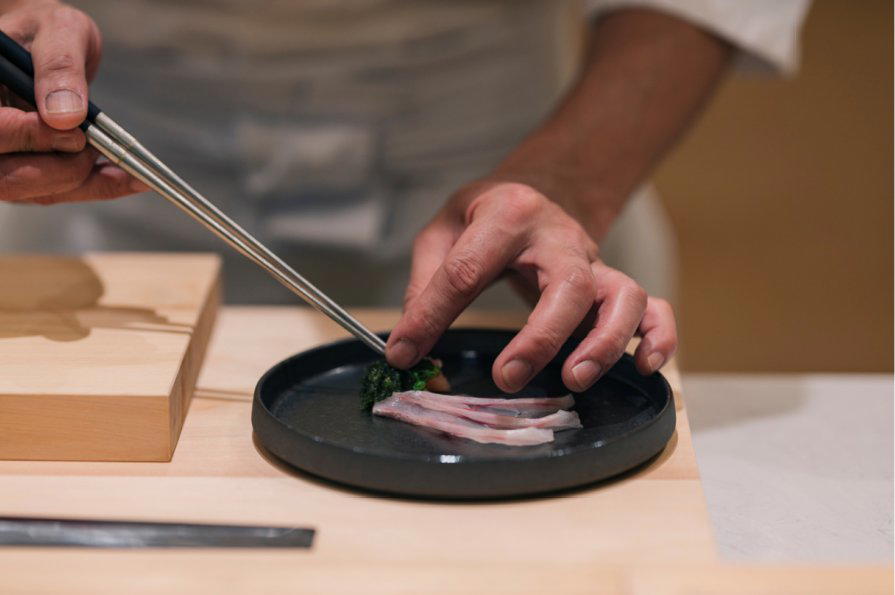
The menu
What to order
- Uni sushi
- Anago sushi
- Chu-toro sushi
Tai Kwun and the Grammar of the Omakase Counter in Central
Central Hong Kong's dining map has split, over the past decade, into two distinct registers: the tower-lobby fine-dining room aimed at corporate expense accounts, and the smaller, format-driven counter that rewards those willing to look past the lobby. The shift mirrors what happened in Tokyo's mid-tier neighbourhoods when omakase culture moved away from grand hotel dining rooms and into tighter, more purposeful spaces. Sushi Zo Hong Kong sits inside that second register, occupying a lower-ground floor within Tai Kwun, the restored Central Police Station compound on Hollywood Road that has become one of the city's more coherent cultural-dining destinations since its reopening.
The compound itself sets a particular tone. Tai Kwun's layered colonial stonework and open courtyards create an arrival sequence that is neither mall nor street-level, a quality that self-selects for guests who've done some research. Sushi Zo's placement at LG1/F of the Shama Soho block places it below the main courtyard traffic, which means the room operates at a remove from Tai Kwun's more casual foot traffic. That physical fact matters for an omakase format, where counter concentration and acoustics are as important to the experience as the fish.
A California Origin in an Asian City: What That Positioning Means
Omakase formats in Hong Kong now span a wide competitive range, from Edomae purists trained in Tokyo's most lineage-conscious kitchens to hybrid counters that move between Japanese technique and local sourcing instinct. Sushi Zo's origin lies in Los Angeles, where the parent operation built a following on a clean, produce-forward interpretation of Edomae form, prioritising fish quality and rice temperature over theatrical knife work or elaborate amuse sequences. That West Coast lineage places the Hong Kong outpost in a specific peer conversation, distinct from the Tokyo-trained counters like Sushi Shikon and Sushi Saito that anchor the city's Michelin-recognised tier, and equally distinct from newer arrivals such as Sushi Wadatsumi and Sushi Fujimoto that draw on different regional Japanese traditions.
The distinction is not about quality ranking but about editorial positioning. Los Angeles developed its own omakase vocabulary in the 2000s and 2010s, partly because Japanese-American chefs and their students were less bound by the strict house-style orthodoxies of Tokyo counters. The result was a form of omakase that felt confident about sourcing from non-Japanese waters and adjusting seasoning for a broader palate without reading as a compromise. That approach travels well to Hong Kong, a city whose dining culture has always been comfortable with lateral interpretations of tradition.
Where Sushi Zo Sits in Hong Kong's Sushi Conversation
Opinionated About Dining, the critic-weighted survey that functions as a useful counterpoint to institutional guides, has listed Sushi Zo Hong Kong on its Asia rankings for three consecutive years: Recommended in 2023, #391 in 2024, and #435 in 2025. The same organisation also places it at #108 on its 2025 North America list, a legacy signal from the parent operation's standing rather than a geographic claim, but one that provides useful context about the brand's wider critical footprint.
Within Hong Kong specifically, that OAD recognition places Sushi Zo in a credible mid-field position: not at the absolute apex occupied by three-Michelin-star counters, but well above the tourist-facing sushi operations that fill the city's hotel plinths. Shoukouwa in Singapore and Hamamoto in Singapore operate in broadly analogous positions for that city's market. Comparable Tokyo reference points include Harutaka and Edomae Sushi Hanabusa, both of which occupy the technically serious but non-trophy tier of the Tokyo counter scene.
For those tracking the full arc of the Zo brand's critical trajectory, the parent counter's influence can also be read against marquee names like Sushi Kanesaka in Tokyo, not as a direct comparison, but as a marker of the lineage-versus-innovation axis that defines how serious omakase diners categorise counters. Sukiyabashi Jiro Roppongiten represents the extreme of Tokyo's lineage-first orthodoxy; Sushi Zo sits at the other end of that axis, where the question is less about received tradition and more about what the format can do when it travels.
Among the Hong Kong sushi counters, Sushi Gin occupies a nearby but distinct position, and the city's market overall has enough depth that diners can meaningfully compare across four or five serious omakase formats without the comparisons becoming redundant. Sushi Harasho in Osaka serves as a reference point for how Kansai-influenced counter formats differ from both Tokyo and West Coast interpretations, which adds a useful triangulation for anyone building a comparative sushi itinerary across the region.
For a city-wide view of what else Central and Hong Kong offer, see our full Hong Kong restaurants guide, and for broader planning, our full Hong Kong hotels guide, our full Hong Kong bars guide, our full Hong Kong wineries guide, and our full Hong Kong experiences guide.
Planning Your Visit
Address: LG1/F Block 01, Tai Kwun, Shama Soho, 10 Hollywood Rd, Central, Hong Kong. Getting there: The Hollywood Road entrance to Tai Kwun is a short uphill walk from the Central MTR or a direct approach from the Mid-Levels escalator. Reservations: Leading timing: Omakase counters in this format typically run two seatings on dinner service; confirming seat availability well in advance is standard practice for this tier. Context: Sushi Zo sits alongside other food and beverage operators within Tai Kwun's compound, making pre- or post-dinner drinks in the courtyard a practical option.
Frequently asked questions
Who is the chef or culinary lead at Sushi Zo Hong Kong?
The chef associated with Sushi Zo Hong Kong is Sushi Zo.
What distinctions does Sushi Zo Hong Kong have?
Sushi Zo Hong Kong has received recognition including: Opinionated About Dining Top Restaurants in North America Ranked #108 (2025); Opinionated About Dining Top Restaurants in Asia Ranked #435 (2025); Opinionated About Dining Top Restaurants in Asia Ranked #391 (2024); Opinionated About Dining….
What should I eat at Sushi Zo Hong Kong?
Sushi Zo operates a fixed omakase format, meaning the kitchen sets the progression and adjusts it according to seasonal sourcing, there is no à la carte selection. The California-origin framework that defines the brand typically foregrounds ingredient quality over ceremonial Edomae technique, so expect the menu to reflect what the kitchen judges to be at peak condition on any given service. Specific dishes and tasting notes are not published in advance.
Where is Sushi Zo Hong Kong located?
Sushi Zo Hong Kong is located at LG1/F Block 01, Tai Kwun, Shama Soho, 10 Hollywood Rd, Central, Hong Kong, Hong Kong.
How hard is it to get a table at Sushi Zo Hong Kong?
Counter-format omakase restaurants in Central Hong Kong with sustained OAD recognition, Sushi Zo has appeared on the Asia list three consecutive years, typically carry forward booking windows of several weeks at minimum, and seats per service are structurally limited by the counter format itself. Phone and online booking details are not currently listed publicly, so contacting the venue directly via Tai Kwun's hospitality channels is the practical starting point. Booking early is advisable rather than optional.
What is Sushi Zo Hong Kong known for?
Sushi Zo Hong Kong is the city's outpost of the Los Angeles-origin Sushi Zo brand, operating an omakase counter inside Tai Kwun on Hollywood Road in Central. The format follows a clean, produce-led approach that diverges from Tokyo-lineage Edomae orthodoxy in favour of the California-developed style that made the original Sushi Zo a reference point on the US West Coast. Opinionated About Dining has listed the Hong Kong counter every year since 2023, placing it at #391 in Asia in 2024 and #435 in 2025.
Compact Comparison
| Venue | Cuisine | Price | Awards | Notes |
|---|---|---|---|---|
| Sushi Zo Hong KongThis venue (the venue you are viewing) | Traditional Japanese Omakase | $300–500 | Not listed | Not listed |
| 8 1/2 Otto e Mezzo Bombana (Hong Kong) | 3 Michelin-Star Italian Fine Dining | $200–300 | 3 Michelin Stars · World's 50 Best #94 | Italian |
| Ta Vie | Modern French-Japanese Fine Dining | $300–500 | 3 Michelin Stars · World's 50 Best #68 | Japanese - French, Innovative |
| Caprice | Contemporary French Fine Dining | $200–300 | 3 Michelin Stars · World's 50 Best #35 | French, French Contemporary |
| Feuille | Modern Vegetable-Forward French | $200–300 | 1 Michelin Star · World's 50 Best #93 | French Contemporary |
| Neighborhood | Modern French with Asian Influences | $50–100 | 1 Michelin Star · World's 50 Best #24 | International, European Contemporary |
Recognition history
Dated appearances from independent guides and award organizations, with the underlying list record or original source where available.
Opinionated About Dining Top Restaurants in Asia Recommended
Opinionated About Dining
Full recognition history (5 entries)
Opinionated About Dining Top Restaurants in Asia Ranked #435
Opinionated About Dining
Opinionated About Dining Top Restaurants in North America Ranked #108
Opinionated About Dining
Opinionated About Dining Top Restaurants in Asia Ranked #391
Opinionated About Dining
Opinionated About Dining Top Restaurants in Asia Recommended
Opinionated About Dining
Continue exploring
More in Hong Kong
Restaurants in Hong Kong
All restaurants in Hong Kong →
Bars in Hong Kong
All bars in Hong Kong →
Hotels in Hong Kong
All hotels in Hong Kong →
Wineries in Hong Kong
All wineries in Hong Kong →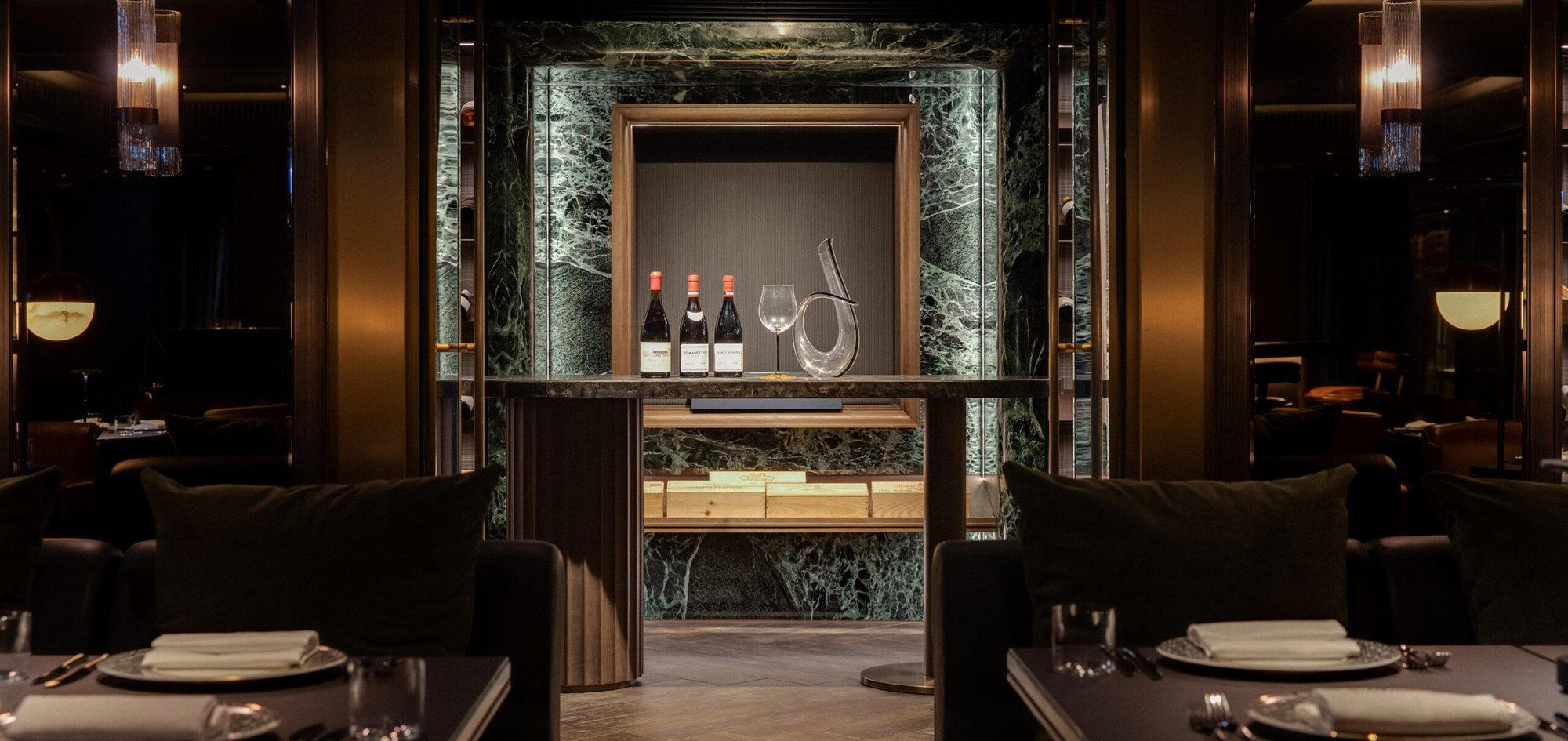
Details
- Elegant
- Intimate
- Sophisticated
- Date Night
- Special Occasion
- Chefs Counter
- Sake Program
- Sustainable Seafood
- Omakase
- Counter Dining
- Sake
Current opening hours
- Monday
- 12–3 PM, 5:30–10 PM
- Tuesday
- 12–3 PM, 5:30–10 PM
- Wednesday
- 12–3 PM, 5:30–10 PM
- Thursday
- 12–3 PM, 5:30–10 PM
- Friday
- 12–3 PM, 5:30–10 PM
- Saturday
- 12–3 PM, 5:30–10 PM
- Sunday
- 12–3 PM, 5:30–10 PM
Hours can change for holidays and private events. Hours as of .
Clean lines and fine wood decor create a relaxed yet un-stuffy atmosphere at the 12-seat counter, with attentive service and chef interactions.