SCMP 100 Top Tables Restaurants · Black Pearl 1 Diamond
Our verdict
On the sixth floor of a Cochrane Street address in Central, Sushi Fujimoto operates within Hong Kong's tightly competitive Japanese counter-dining tier. Recognised by the Black Pearl Guide with a 1 Diamond award in 2025 and ranked #167 in Opinionated About Dining's Top Restaurants in Asia, it sits in a peer group defined by technical precision and narrow capacity. Chef Kenichi Fujimoto leads the counter through lunch and dinner service four days a week.

Pearl is the En Primeur Club membership app, where members save venues, book tables and use the concierge.
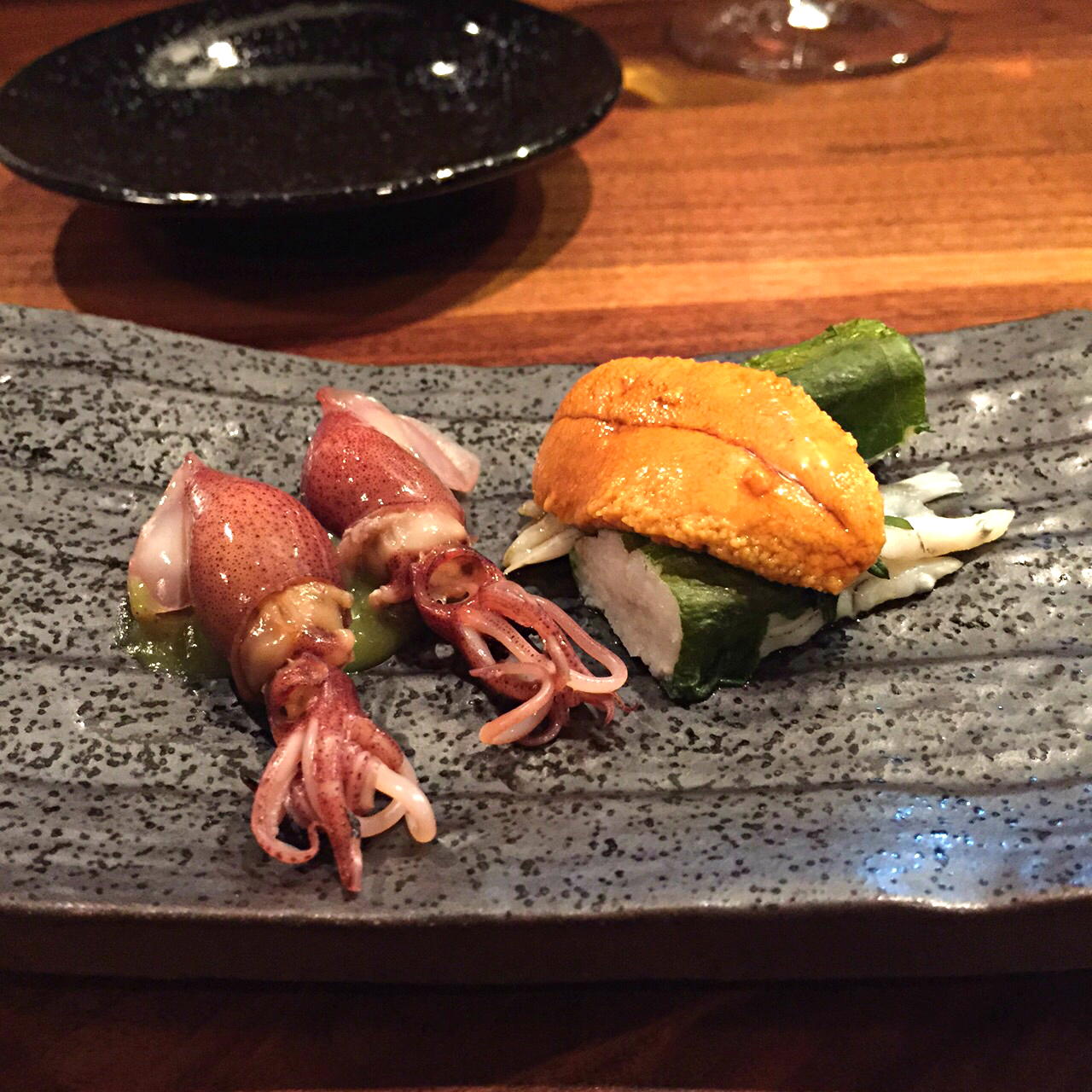
The menu
What to order
- Three cuts of tuna sushi
- Tuna hand roll
- Abalone
- Hokkaido Kegani
- Maguro
Sixth Floor, Central: What This Address Signals
Hong Kong's premium sushi scene has always operated on a logic of concealment. The counters worth seeking are rarely announced by ground-floor signage. They occupy upper floors of commercial buildings in Central and Tsim Sha Tsui, accessible by elevator, reached by those who already know the address. The sixth floor of 48 Cochrane Street, where Sushi Fujimoto operates, fits that pattern exactly. Arriving at the building on a lane that rises steeply from Wellington Street, you are already in the grain of old Central, a district where serious Japanese restaurants have taken root alongside traditional teahouses and law offices for decades. The physical approach, the narrow lift, the quiet that greets you as the doors open, these are not incidental details. They are the grammar of this category in Hong Kong.
That grammar has grown more demanding in recent years. Diners comparing premium omakase options across the city now weigh Hong Kong counters against peers in Tokyo, Singapore, and beyond. Counters like Sushi Shikon and Sushi Saito have anchored the highest tier of that conversation, while a broader mid-to-upper bracket, recognised by the Black Pearl Guide rather than Michelin, has developed its own serious following.
Recognition That Travels: Where Fujimoto Sits in the Regional Ranking
Opinionated About Dining, which ranks restaurants through aggregated critic input rather than anonymous inspection alone, placed Sushi Fujimoto at #167 in its 2024 Leading Restaurants in Asia list. That placing is instructive. It locates the counter within the upper reaches of the regional sushi conversation without crowning it at the absolute summit, a position that, in practice, often suits a certain kind of diner: someone who has already visited the marquee names and is looking for the next serious room. In regional terms, the conversation extends to counters like Shoukouwa and Hamamoto in Singapore, and to Tokyo references including Harutaka, Sushi Kanesaka, and Sukiyabashi Jiro Roppongiten. Against that backdrop, Fujimoto's OAD position represents a credible claim on regional attention.
Hong Kong's own sushi tier is populated with counters at varying points of recognition. Sushi Wadatsumi, Sushi Gin, and Sushi Ima each occupy defined positions in the city's Japanese dining circuit. What distinguishes Fujimoto within that group is the double recognition signal: a Black Pearl award alongside an OAD ranking tends to indicate a room that satisfies both the local guide's criteria for quality and the broader critic community's standards. That alignment is not automatic, and when it appears, it is worth noting as a marker of consistency across different evaluative frameworks.
The Wine List Angle: Japanese Counters and Beverage Curation in Hong Kong
The editorial angle that deserves attention at this tier of Hong Kong sushi is the beverage program, and specifically how counters approach the pairing question that traditional omakase formats in Japan rarely had to answer: what do you offer alongside nigiri in a city where the guest arriving from a long business day is as likely to want aged Burgundy as cold Hakutsuru?
Hong Kong's wine culture, shaped by zero import duty since 2008 and by decades of auction activity that made the city a global fine wine hub, has pushed premium Japanese restaurants toward beverage lists that would be unusual in Tokyo. Sake remains central at serious counters, and the curation of junmai daiginjo and aged koshu options signals genuine knowledge. But in Central, the expectation has expanded. Diners cross-referencing Japanese counter dining with the broader Central fine-dining circuit, which includes French and Italian rooms like those found at Caprice or 8 1/2 Otto e Mezzo Bombana, arrive with beverage expectations shaped by those experiences. The better sushi counters in the city have responded with cellar depth that goes beyond the standard sake list.
What the category context makes clear is that any counter operating at the Black Pearl 1 Diamond level in Central in 2025 is working within a dining ecosystem where the beverage expectation has shifted substantially, and where a sommelier or beverage lead who understands both sake tradition and fine wine signals a different level of ambition than one who does not. For diners to whom the beverage dimension matters as much as the fish, this is the question to bring to booking.
When to Go: Seasonal Timing and Weekly Rhythm
Sushi Fujimoto closes on Wednesdays and Sundays, and operates from 12:30 through to 11 pm on the four weekdays it opens, plus Saturday. That schedule is tighter than many comparable counters in the city, meaning availability concentrates into a narrower weekly window. November and December represent peak demand months for premium dining in Hong Kong, driven by the combination of cooler weather, end-of-year corporate dining, and an influx of visitors who time travel around Art Basel Hong Kong's December programming and the broader gallery and auction calendar. At this level of recognition, booking several weeks ahead for a November or December sitting is the practical minimum. Counters at comparable tiers across the city, from Sushi Harasho in Osaka to Edomae Sushi Hanabusa in Tokyo to Sushi Sho in New York, share the same dynamic: small capacity amplifies the booking pressure that peak-season demand creates.
Planning Your Visit
| Detail | Sushi Fujimoto | Comparable Tier (HK) |
|---|---|---|
| Location | 6/F, 48 Cochrane St, Central | Typically Central / Tsim Sha Tsui upper floors |
| Open Days | Mon, Tue, Thu, Fri, Sat | Varies; many close 1-2 days mid-week |
| Hours | 12:30–11 pm (open days) | Typically lunch and dinner seatings |
| Awards | Black Pearl 1 Diamond (2025); OAD Asia #167 (2024) | Michelin or Black Pearl recognition common at this tier |
| Peak Booking Window | Nov–Dec; book several weeks ahead | Similar pressure across recognised HK sushi counters |
For further context on where Sushi Fujimoto sits within Hong Kong's broader dining and hospitality scene, see our full Hong Kong restaurants guide, our full Hong Kong hotels guide, our full Hong Kong bars guide, our full Hong Kong wineries guide, and our full Hong Kong experiences guide.
Frequently asked questions
What is the signature dish at Sushi Fujimoto?
Chef Kenichi Fujimoto leads the counter, and at this recognition level, anchored by a Black Pearl 1 Diamond and an OAD Asia ranking, the expectation is a progression of nigiri and courses shaped by what is available on the day rather than a fixed headline piece.
Recognition, Side-by-Side
| Venue | Cuisine | Price | Awards | Notes |
|---|---|---|---|---|
| Sushi FujimotoThis venue (the venue you are viewing) | Edomae-Style Omakase | $300–500 | SCMP 100 Top Tables Restaurants · Black Pearl 1 Diamond | Not listed |
| 8 1/2 Otto e Mezzo Bombana (Hong Kong) | 3 Michelin-Star Italian Fine Dining | $200–300 | 3 Michelin Stars · World's 50 Best #94 | Italian |
| Ta Vie | Modern French-Japanese Fine Dining | $300–500 | 3 Michelin Stars · World's 50 Best #68 | Japanese - French, Innovative |
| Caprice | Contemporary French Fine Dining | $200–300 | 3 Michelin Stars · World's 50 Best #35 | French, French Contemporary |
| Feuille | Modern Vegetable-Forward French | $200–300 | 1 Michelin Star · World's 50 Best #93 | French Contemporary |
| Neighborhood | Modern French with Asian Influences | $50–100 | 1 Michelin Star · World's 50 Best #24 | International, European Contemporary |
Recognition history
Dated appearances from independent guides and award organizations, with the underlying list record or original source where available.
Opinionated About Dining Top Restaurants in Asia Ranked #112
Opinionated About Dining
SCMP 100 Top Tables Restaurants
SCMP 100 Top Tables
Black Pearl 1 Diamond
Black Pearl
Full recognition history (4 entries)
Opinionated About Dining Top Restaurants in Asia Ranked #167
Opinionated About Dining