







2 Michelin Stars · La Liste Top Restaurants · Black Pearl 2 Diamond
Our verdict
Lung King Heen at the Four Seasons Hong Kong holds two Michelin stars and scores of 99–99.5 points from La Liste, placing it among Central's most decorated Cantonese tables. Chef Chan Yan-tak's menu runs from honey-glazed barbecue pork to wok-fried prawns with black garlic, anchored by Victoria Harbour views and a 3,455-bottle wine list strong in Burgundy and Bordeaux.

Pearl is the En Primeur Club membership app, where members save venues, book tables and use the concierge.
The menu
What to order
- Chef's Signature Appetiser Trio
- Crispy Suckling Pig with Chinese Pancakes
- Barbecued Pork with Honey Sauce
- Roast Goose with Plum Sauce
- Braised Whole Yoshihama Abalone in Supreme Oyster Sauce
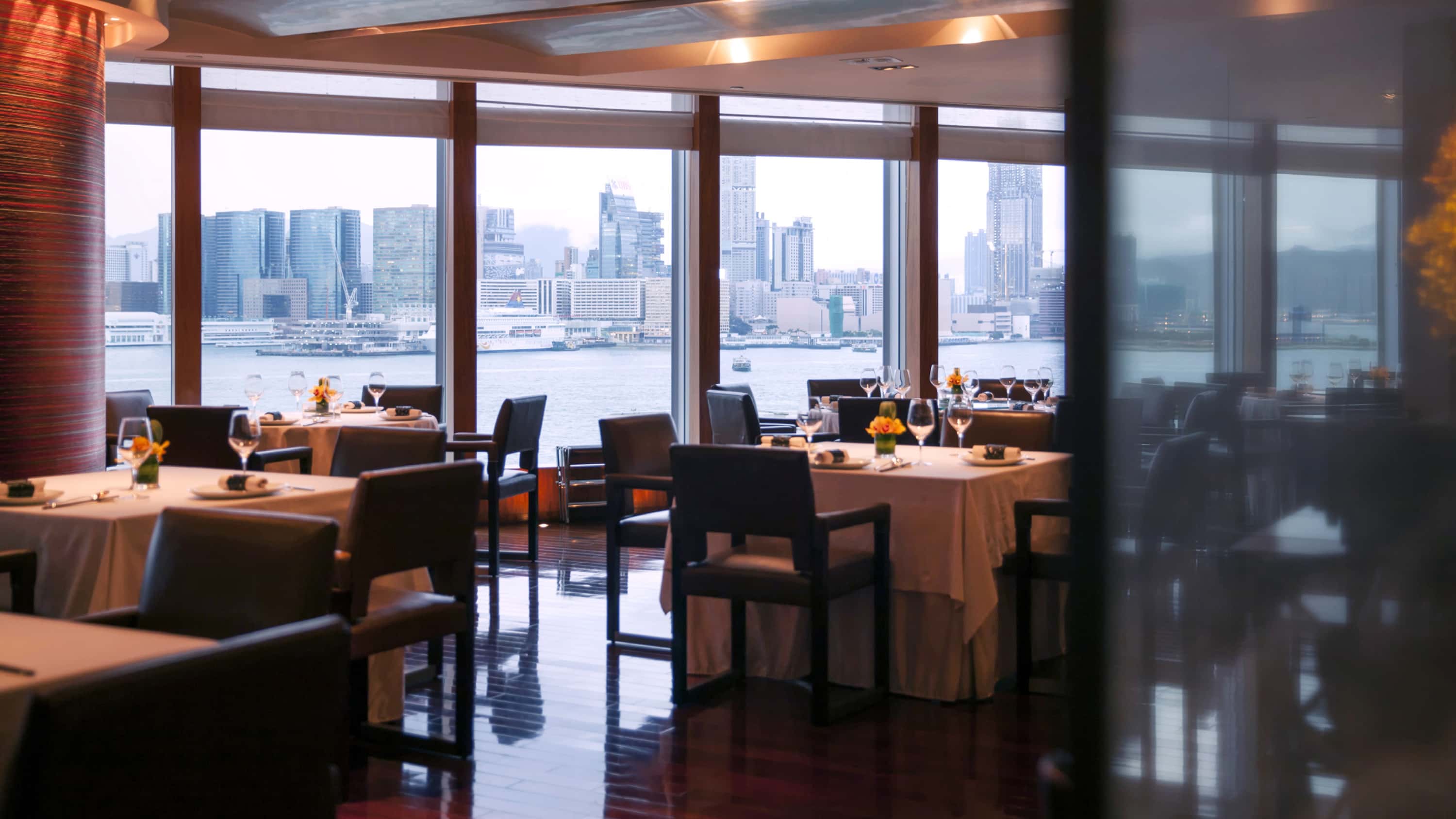
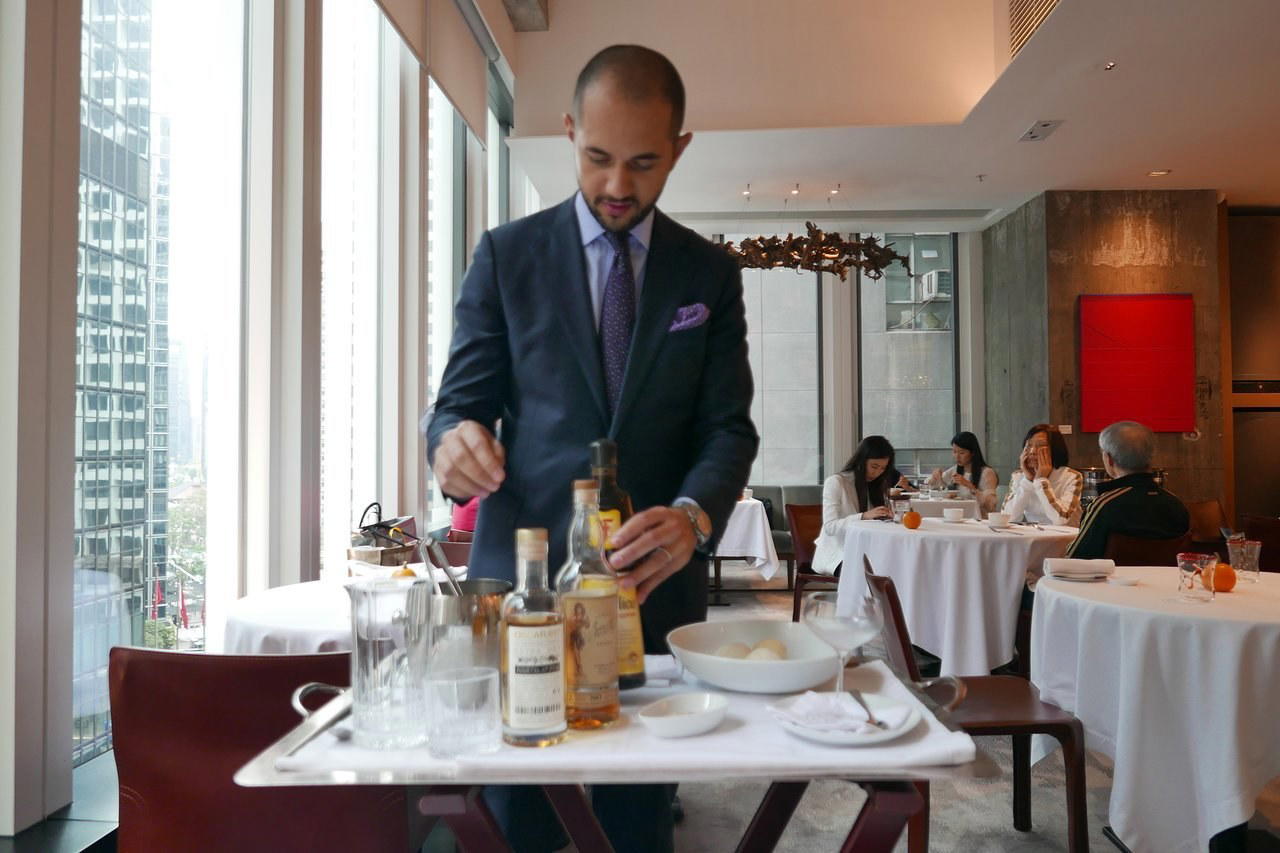
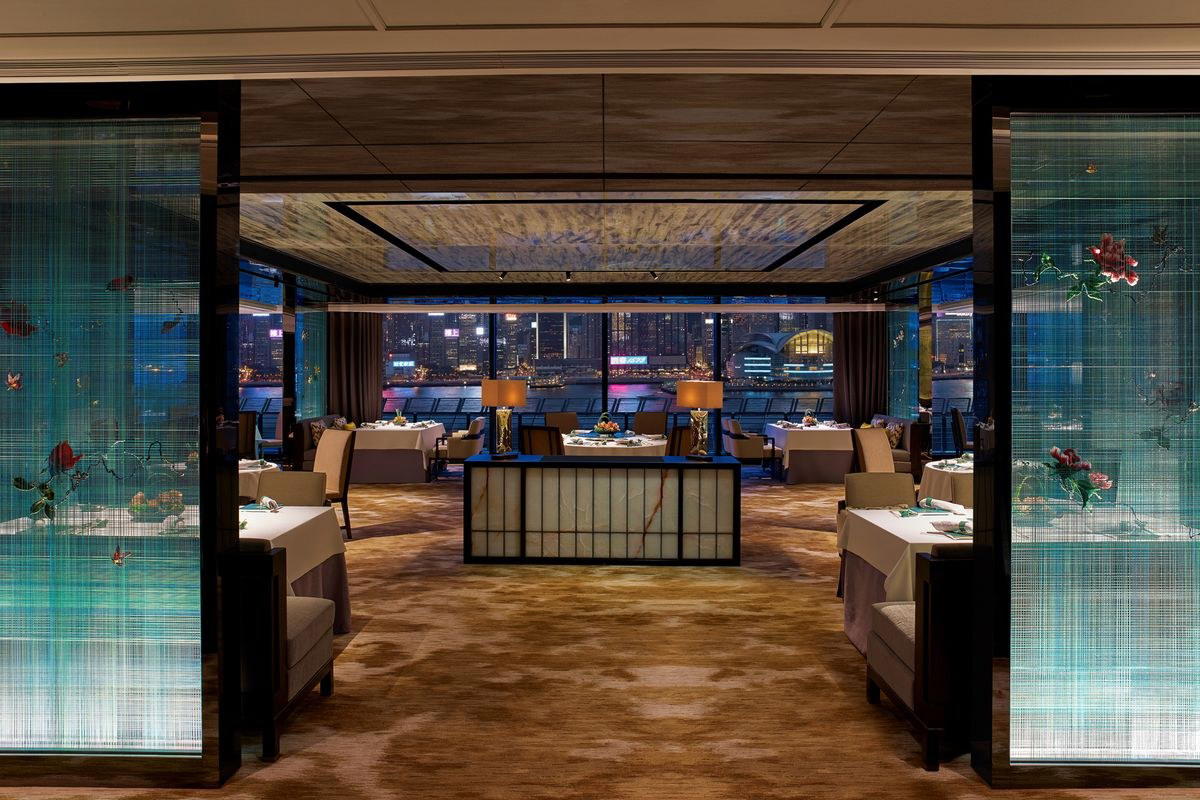
The fourth floor of the Four Seasons Hong Kong opens onto one of the more compositionally satisfying dining rooms in Central: low-slung, quiet, and framed by floor-to-ceiling glass that positions Victoria Harbour as the backdrop rather than a distraction. The harbour view is the kind that earns its place on the menu, so to speak, not a gimmick but a deliberate calibration of atmosphere, where the scale of the water keeps the formality of the room in check. This is a space designed to signal seriousness without rigidity, which is exactly the register that high-end Cantonese dining in Hong Kong has occupied for decades.
Where Lung King Heen Sits in Hong Kong's Cantonese Tier
Hong Kong's premium Cantonese bracket has never been more competitive. Within Central and the wider city, restaurants like Forum, Lai Ching Heen, Tin Lung Heen, Rùn, and T'ang Court all occupy the upper end of the city's Cantonese dining map, each with Michelin recognition and a distinct identity. Lung King Heen's position within that group is defined by credential density: two Michelin stars held consistently through 2024 and 2025, a La Liste score of 99.5 points in 2025 and 99 points in 2026, and an Opinionated About Dining ranking that moved from 40th in Asia in 2023 to 36th in 2024 and 44th in 2025, figures that reflect the ongoing tightening of competition rather than any retreat in quality. A Black Pearl 2 Diamond rating in 2025 adds further confirmation from a separate evaluation framework.
For context, the comparison set at the Four Seasons building leans heavily toward European fine dining, Caprice (French), 8½ Otto e Mezzo Bombana (Italian), Ta Vie (Japanese-French). Lung King Heen operates as the Cantonese anchor in a building that otherwise defaults to Western culinary traditions, which gives it a particular significance in the Central fine dining ecosystem.
The Menu: Classical Cantonese Technique, Contemporary Framing
Cantonese cuisine's appeal to serious diners lies in its technical precision and restraint: the cooking prizes freshness, subtlety of seasoning, and the kind of knife and wok skill that takes years to internalise. What the better Hong Kong restaurants have done over the past two decades is maintain that technical base while applying contemporary thinking to ingredient sourcing, dish composition, and menu architecture. Lung King Heen reflects this evolution in how its menu is structured.
The a la carte runs across categories, barbecue and appetisers, soups, prestige ingredients, chef's specialties, seafood, meat, poultry, vegetables, noodles and rice, and dessert, with each section offering at least a dozen choices. That scope is not an accident. It mirrors the Cantonese tradition of communal dining, where a table works through multiple dishes and the kitchen's range is as important as any single preparation. Dishes marked as chef's recommendations provide a practical entry point into a list that could otherwise require significant menu literacy to navigate.
The verified highlights from the kitchen include barbecue pork with honey, scallops with fresh pear and Yunnan ham (a combination that plays textural contrast against sweetness and salt), a roast chicken finished with crackling golden skin, crispy marinated pork loin in a fermented red bean crust served with steamed pancakes and julienned spring onions, and wok-fried prawns with black garlic and dried chili. Each of these represents the broader arc of contemporary Cantonese cooking: classical technique applied to ingredients that may be traditional or premium, with the kind of flavour contrast, fermented, sweet, bright, smoky, that defines the cuisine at its most considered.
Dim sum service during the day adds another dimension. Dim sum is among the most technically demanding formats in Chinese cooking, requiring separate expertise across steaming, frying, and pastry-making. At the level Lung King Heen operates, the dim sum offering carries its own weight as a reason to visit, independent of the evening menu. The weekday Executive Set Lunch, priced at HK$485 (approximately USD 63) for six courses plus petits fours, is the entry point into the full kitchen's output at the lowest available price, a meaningful advantage in a dining tier where dinner covers routinely run several times that figure. A chef's tasting menu is available at dinner with suggested wine pairings.
The Wine Programme
Wine list at Lung King Heen is built for the food, and for a clientele that expects serious depth. At 795 selections and 3,455 bottles in inventory, it sits well above what most restaurant wine programmes in Hong Kong, or anywhere, carry as standing stock. The strengths are Burgundy and Bordeaux, which aligns with the preferences of a significant portion of Hong Kong's international dining clientele, for whom French fine wine has been the dominant reference point for decades.
Wine Director Bernard Chan and Sommelier Kevin Ma oversee a list priced at the $$$ tier, bottles in the USD 100+ range feature prominently, with a corkage fee of USD 97 for those who choose to bring their own. Wine pairings are available with the tasting menu, which provides a structured route through the list for diners who prefer guidance over independent selection. The breadth of the list also supports the communal, multi-dish format of Cantonese dining, where matching a single bottle to a dozen different preparations requires either flexibility or a sommelier willing to suggest multiple pours.
Practical Considerations
Lunch at Lung King Heen is the more accessible point of entry, both in terms of price and in the relative flexibility of booking. Dinner commands higher demand and tighter availability, particularly at weekends. Chef Chan Yan-tak's kitchen serves both formats, so the quality threshold does not shift between services, only the menu format and price level.
Construction activity directly in front of the hotel has been noted by diners, the ongoing infrastructure work reflects Central's perpetual development pace and does affect the immediate street-level environment, though it has no bearing on the dining room itself. Children over three are welcome and accommodated with a dedicated children's menu.
Know Before You Go
- Location: 4F, Four Seasons Hotel Hong Kong, 8 Finance Street, Central
- Cuisine: Cantonese (lunch and dinner)
- Price (food): $$ cuisine tier (USD 40–65 for a typical two-course meal); Executive Set Lunch approx. USD 63 per person
- Wine: 795 selections, 3,455 bottles; strong in Burgundy and Bordeaux; corkage USD 97
- Awards: Michelin 2 Stars (2024, 2025); La Liste 99.5pts (2025), 99pts (2026); OAD Leading Restaurants in Asia #36 (2024), #44 (2025); Black Pearl 2 Diamond (2025)
- Chef: Chan Yan-tak; Wine Director: Bernard Chan; Sommelier: Kevin Ma; General Manager: Christian Poda
- Children: Welcome (age 3 and above); dedicated children's menu available
Cantonese at This Level Across the Region
Lung King Heen's position is leading understood in relation to the broader geography of fine Cantonese dining, which has expanded significantly beyond Hong Kong over the past decade. In Macau, Chef Tam's Seasons and Jade Dragon represent a parallel premium tier operating under different market conditions. In Taipei, Le Palais holds three Michelin stars and occupies a separate niche shaped by Taiwan's distinct ingredient access and dining culture. In Singapore, Summer Pavilion brings Cantonese cooking into the Ritz-Carlton framework. In Shanghai, the field includes 102 House, Bao Li Xuan, Canton 8 (Huangpu), and Imperial Treasure Fine Chinese Cuisine.
What keeps Hong Kong at the centre of this conversation is ingredient access, culinary lineage, and a local dining culture that holds traditional technique to a high standard while remaining open to contemporary interpretation. Lung King Heen operates at the intersection of those forces, a kitchen with verified technical authority, a menu that spans classical preparations and creative pairings, and an institutional context (Four Seasons, Central, Victoria Harbour) that supports rather than overshadows the food.
For further planning, see our full Hong Kong restaurants guide, our full Hong Kong hotels guide, our full Hong Kong bars guide, our full Hong Kong wineries guide, and our full Hong Kong experiences guide.
Frequently asked questions
What dish is Lung King Heen famous for?
How hard is it to get a table at Lung King Heen?
Just the Basics
A quick peer reference to anchor this venue in its category.
| Venue | Cuisine | Price | Awards | Notes |
|---|---|---|---|---|
| Lung King HeenThis venue (the venue you are viewing) | Fine Dining Cantonese | Not listed | 2 Michelin Stars · La Liste Top Restaurants | Not listed |
| 8 1/2 Otto e Mezzo Bombana (Hong Kong) | 3 Michelin-Star Italian Fine Dining | $200–300 | 3 Michelin Stars · World's 50 Best #94 | Italian |
| Ta Vie | Modern French-Japanese Fine Dining | $300–500 | 3 Michelin Stars · World's 50 Best #68 | Japanese - French, Innovative |
| Caprice | Contemporary French Fine Dining | $200–300 | 3 Michelin Stars · World's 50 Best #35 | French, French Contemporary |
| Feuille | Modern Vegetable-Forward French | $200–300 | 1 Michelin Star · World's 50 Best #93 | French Contemporary |
| Neighborhood | Modern French with Asian Influences | $50–100 | 1 Michelin Star · World's 50 Best #24 | International, European Contemporary |
Recognition history
Dated appearances from independent guides and award organizations, with the underlying list record or original source where available.
Michelin 2 Stars
Michelin
La Liste Top Restaurants
La Liste
Black Pearl 2 Diamond
Black Pearl
Forbes 5-Star
Forbes
Opinionated About Dining Top Restaurants in Asia Ranked #46
Opinionated About Dining
Full recognition history (17 entries)
SCMP 100 Top Tables Restaurants
SCMP 100 Top Tables
Wine Spectator Best of Award of Excellence
Wine Spectator
Black Pearl 2 Diamond
Black Pearl
Forbes 5-Star
Forbes
La Liste Top Restaurants
La Liste
Michelin 2 Stars
Michelin
Opinionated About Dining Top Restaurants in Asia Ranked #44
Opinionated About Dining
Wine Spectator Best of Award of Excellence
Wine Spectator
World Culinary Awards Hong Kong's Best Hotel Restaurant 2025 #1
World Culinary Awards
Michelin 2 Stars
Michelin
Opinionated About Dining Top Restaurants in Asia Ranked #36
Opinionated About Dining
Opinionated About Dining Top Restaurants in Asia Ranked #40
Opinionated About Dining
Continue exploring
More in Hong Kong
Restaurants in Hong Kong
All restaurants in Hong Kong →
Bars in Hong Kong
All bars in Hong Kong →
Hotels in Hong Kong
All hotels in Hong Kong →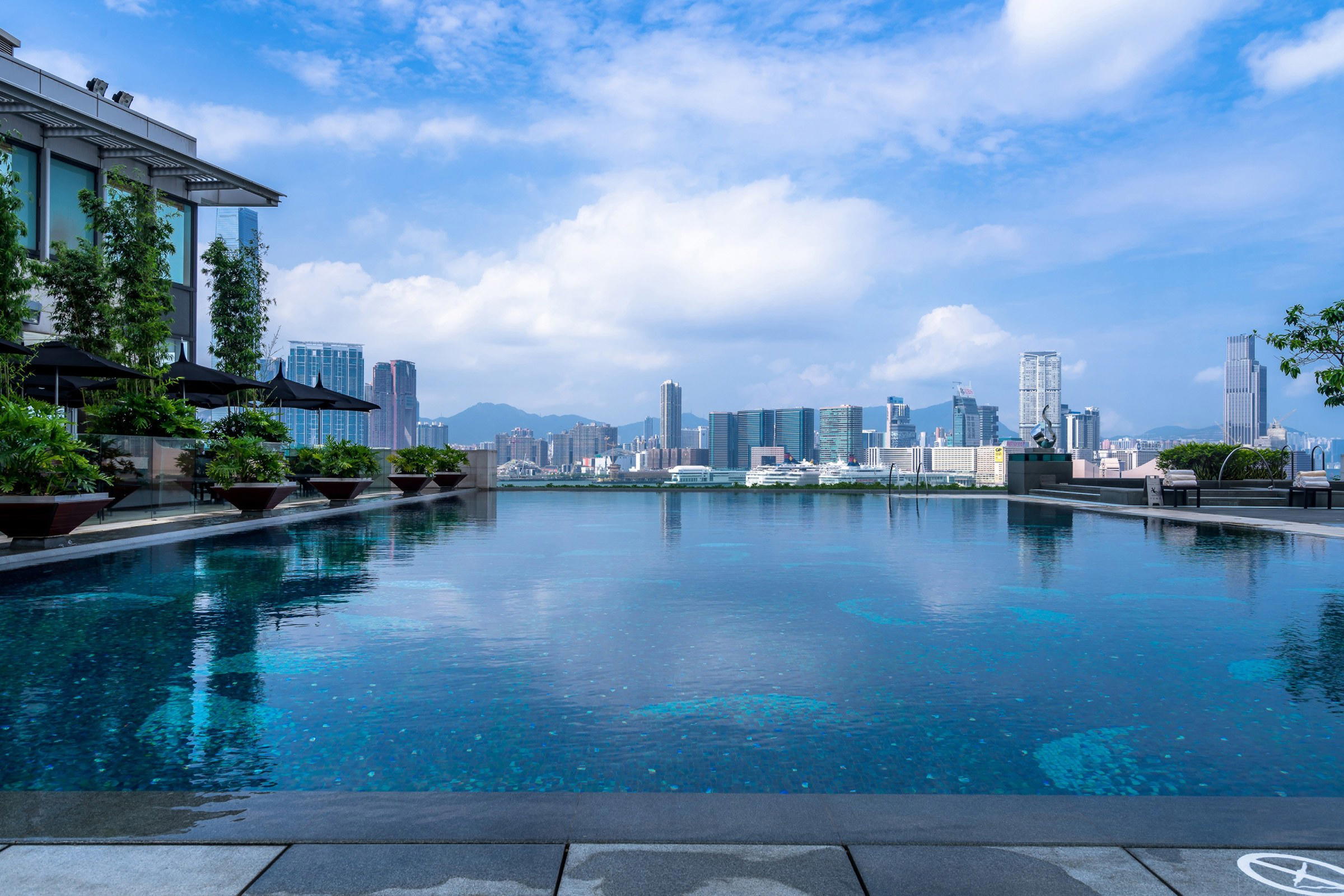
Wineries in Hong Kong
All wineries in Hong Kong →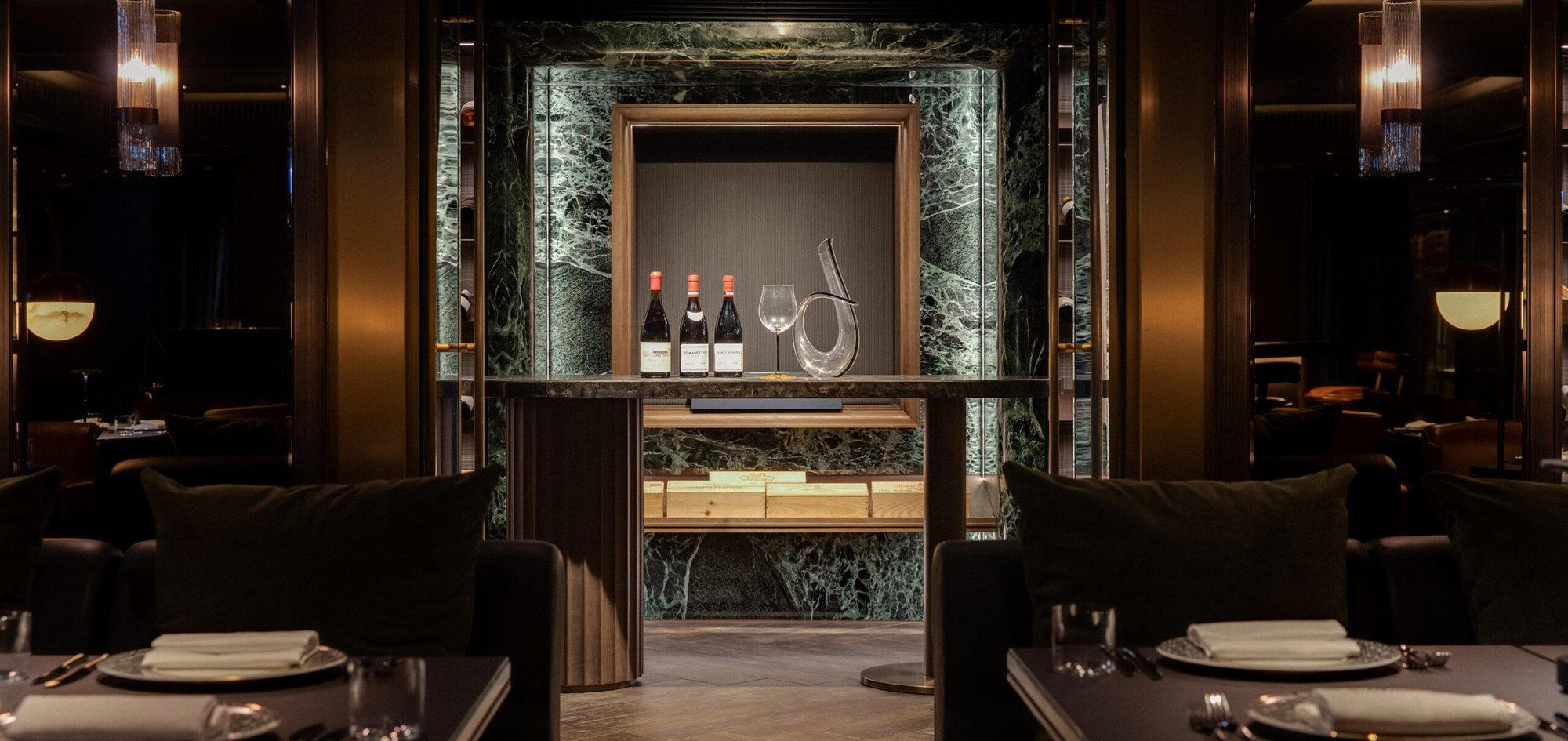
Lung King Heen
The wine
Lung King Heen holds the Wine Spectator Best of Award of Excellence, which Wine Spectator gives to lists of usually 350 or more selections.
- Wine Spectator
- Wine Spectator Best of Award of Excellence
- Selections
- 795
- Bottles in cellar
- 3,455
- List strengths
- Burgundy, Bordeaux, France
- Wine director
- Bernard Chan
Details
- Elegant
- Sophisticated
- Scenic
- Well Known
- Special Occasion
- Business Dinner
- Date Night
- Celebration
- Family
- Hotel Restaurant
- Waterfront
- Panoramic View
- Private Dining
- Sustainable Seafood
- Waterfront
- Skyline
Current opening hours
- Monday
- 12–2:30 PM, 6–9 PM
- Tuesday
- 12–2:30 PM, 6–9 PM
- Wednesday
- 12–2:30 PM, 6–9 PM
- Thursday
- 12–2:30 PM, 6–9 PM
- Friday
- 12–2:30 PM, 6–9 PM
- Saturday
- 11:30 AM–3 PM, 6–9 PM
- Sunday
- 11:30 AM–3 PM, 6–9 PM
Hours can change for holidays and private events. Hours as of .
Refined, formal hotel-restaurant atmosphere with polished service and Victoria Harbour views.