


La Liste Top Hotels · Forbes 5-Star · Virtuoso Luxury Hotel Partner
The Landmark Mandarin Oriental, Hong Kong occupies a slim 111-room footprint on Queen's Road Central, positioning itself among the city's most intimate luxury addresses. Closed through 2025 for a full renovation, it returns with three-Michelin-starred Sushi Shikon, two-Michelin-starred Amber under Chef Richard Ekkebus, and La Liste's 2026 Top Hotels recognition at 98 points.

Pearl is the En Primeur Club membership app, where members save venues, book tables and use the concierge.
Central's Most Considered Reinvention
Queen's Road Central does not reward hesitation. The street moves at the pace of Hong Kong's financial district, purposeful, dense, and indifferent to sentiment. Against that backdrop, the decision to close an entire luxury hotel through 2025 for a full renovation is a significant editorial statement about what the property intends to be on the other side. The Landmark Mandarin Oriental's closure is not a cosmetic refresh; it signals a deliberate repositioning within a Central luxury tier that has itself shifted considerably since the hotel first opened. Where the city once sorted its leading hotels by size and convention facilities, the upper bracket now competes on intimacy, dining credentials, and design coherence. The Landmark re-enters that conversation having chosen to double down on all three.
At 111 rooms and suites, a count that places it well below the room volumes of the Four Seasons Hotel Hong Kong or the Grand Hyatt Hong Kong, the hotel operates on a scale closer to the The Upper House than to Hong Kong's convention-adjacent towers. That scale is a deliberate editorial position. The lobby reads as a living room rather than an arrival hall, a quality that becomes more valuable as Central's hotel market continues to stratify between high-volume addresses and smaller, design-led properties. The Landmark belongs firmly to the latter cohort, and the renovation period represents the most significant opportunity the property has had to lock in that identity.
What the Dining Program Says About the Hotel
Hong Kong's Michelin geography has always been dense, but Central specifically carries a concentration of serious restaurant addresses that few other financial districts globally can match. A hotel that houses multiple Michelin-starred concepts is not unusual here, but the character of those concepts matters. The Landmark's dining stack tells a coherent story about where the property positions itself.
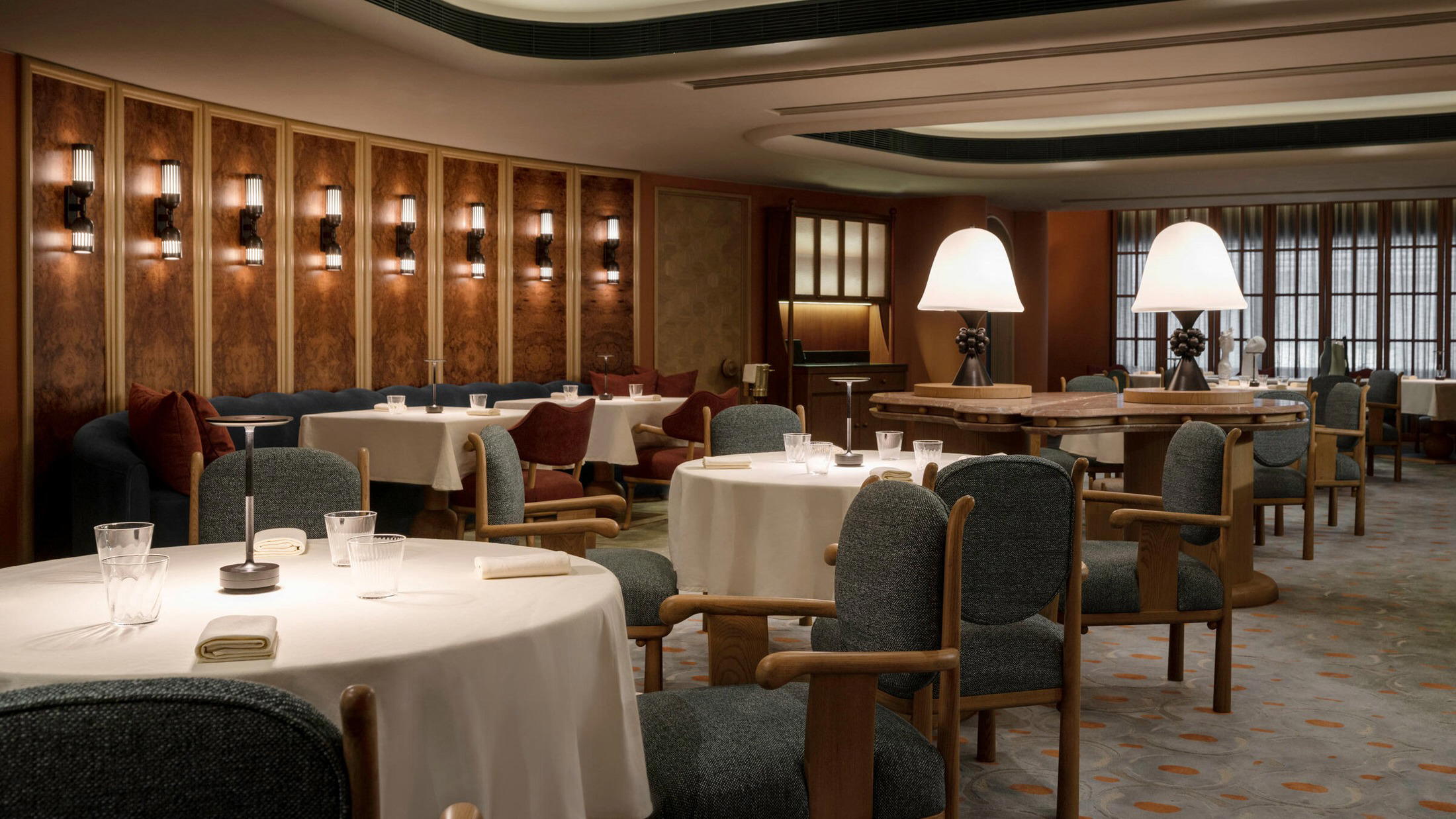
Its progressive French-Japanese register reflects the kind of formal-but-not-rigid tasting menu format that has become the dominant mode for serious hotel dining in East Asia: technically demanding, produce-focused, and designed for guests who treat dinner as the primary event rather than an amenity. For context on how Amber compares within the city's French-inflected fine dining tier, our full Hong Kong restaurants guide maps the broader scene.
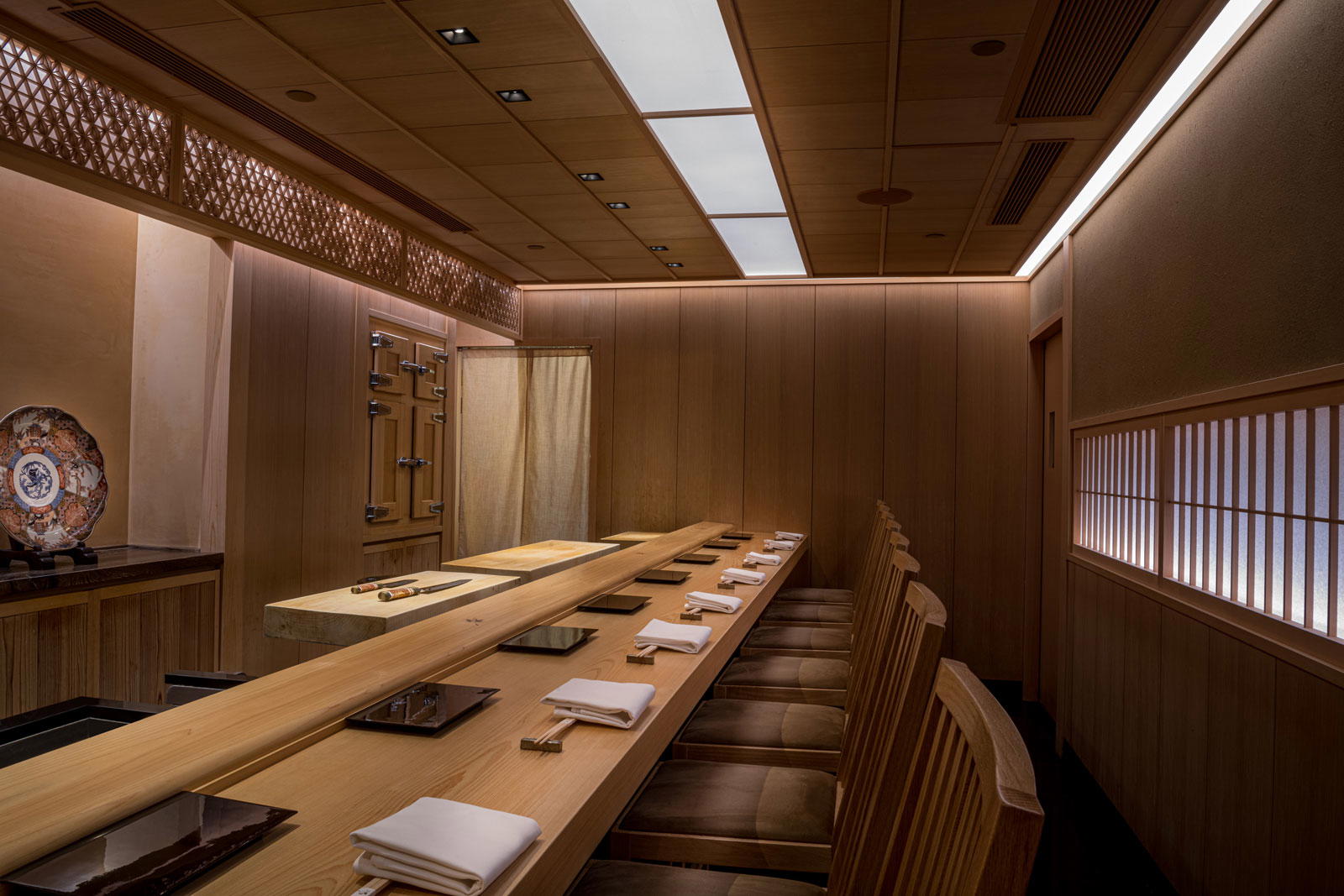
Sushi Shikon occupies a different register entirely. Three Michelin stars and a direct lineage to Ginza's Sushi Yoshitake, through the collaboration with Master Chef Yoshitake, make it the only Edomae-style counter in Hong Kong operating at that credential level. The significance of that positioning is worth pausing on: Ginza's leading omakase counters represent a specific culinary tradition with strict sourcing, aging, and temperature protocols that cannot be replicated casually. Kappo Rin, the third in-house Japanese concept, handles the more relaxed end of that spectrum with a modern kappo format, a useful structural counterpoint that allows the hotel to serve different dining occasions without diluting either end.
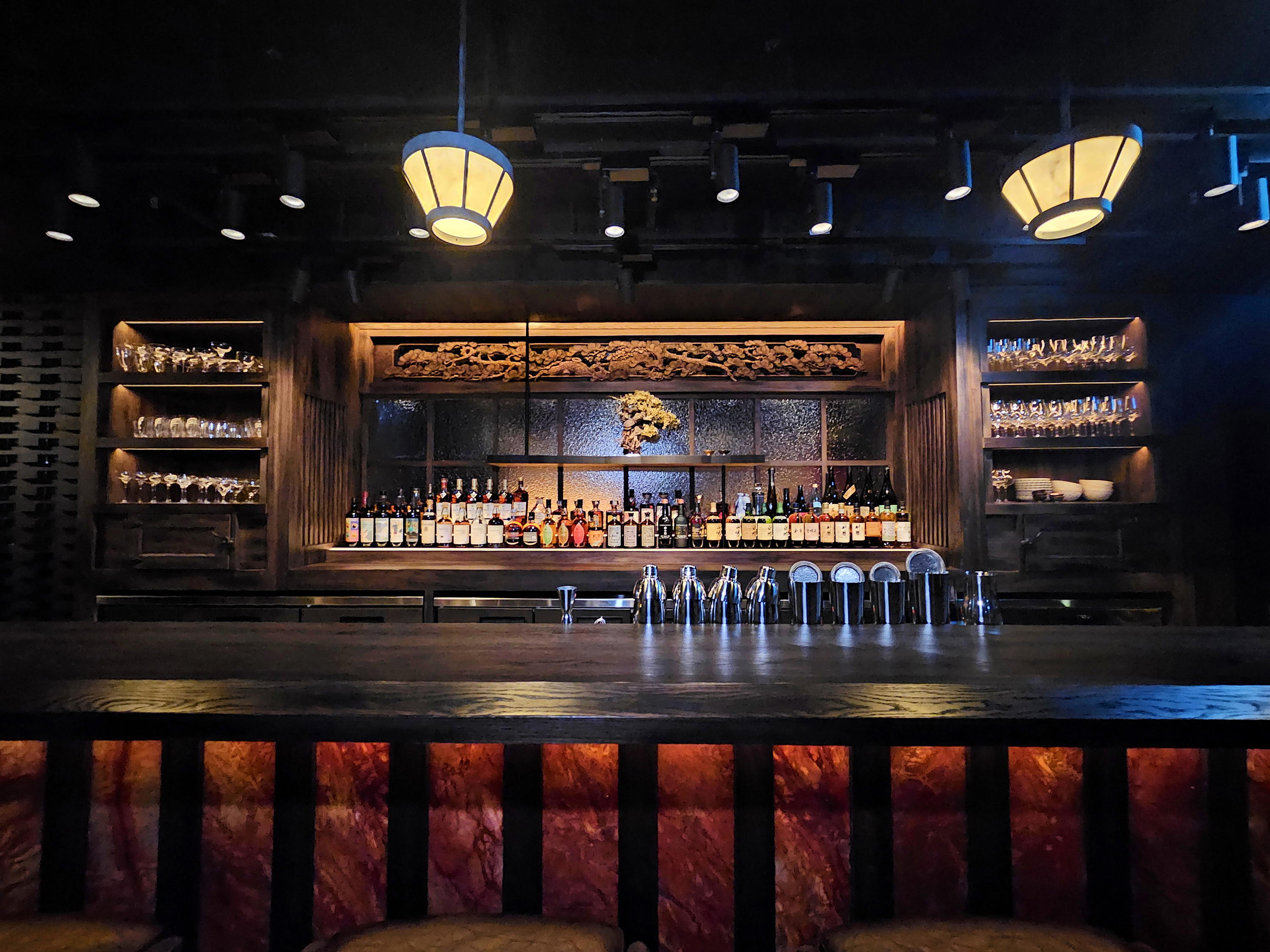
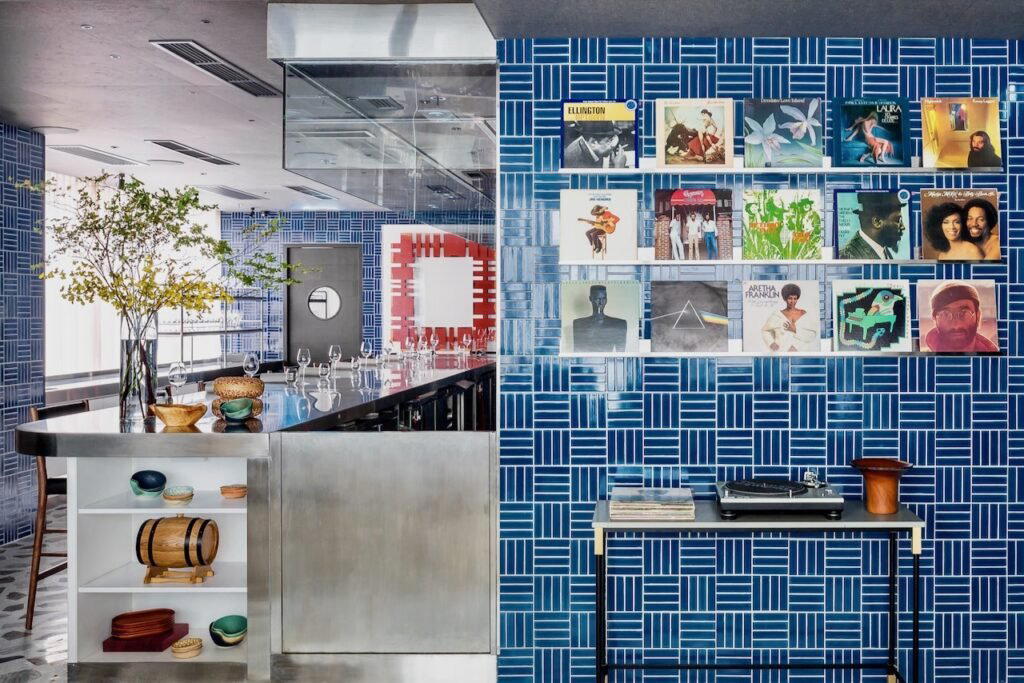
MO Bar and PDT (Please Don't Tell) complete the picture. PDT, the first international outpost of the New York original, operates in the format that made the Lexington Avenue location notable: small, technically precise cocktails in a contained environment. That it exists within a hotel rather than a standalone bar on a side street is less significant than the fact that the program's standards travel with the brand. Hong Kong's cocktail scene has matured considerably, the city now supports a tier of dedicated cocktail bars that would have been rare twenty years ago, and PDT's presence at the Landmark connects the property to that broader shift.
The Rooms After Renovation
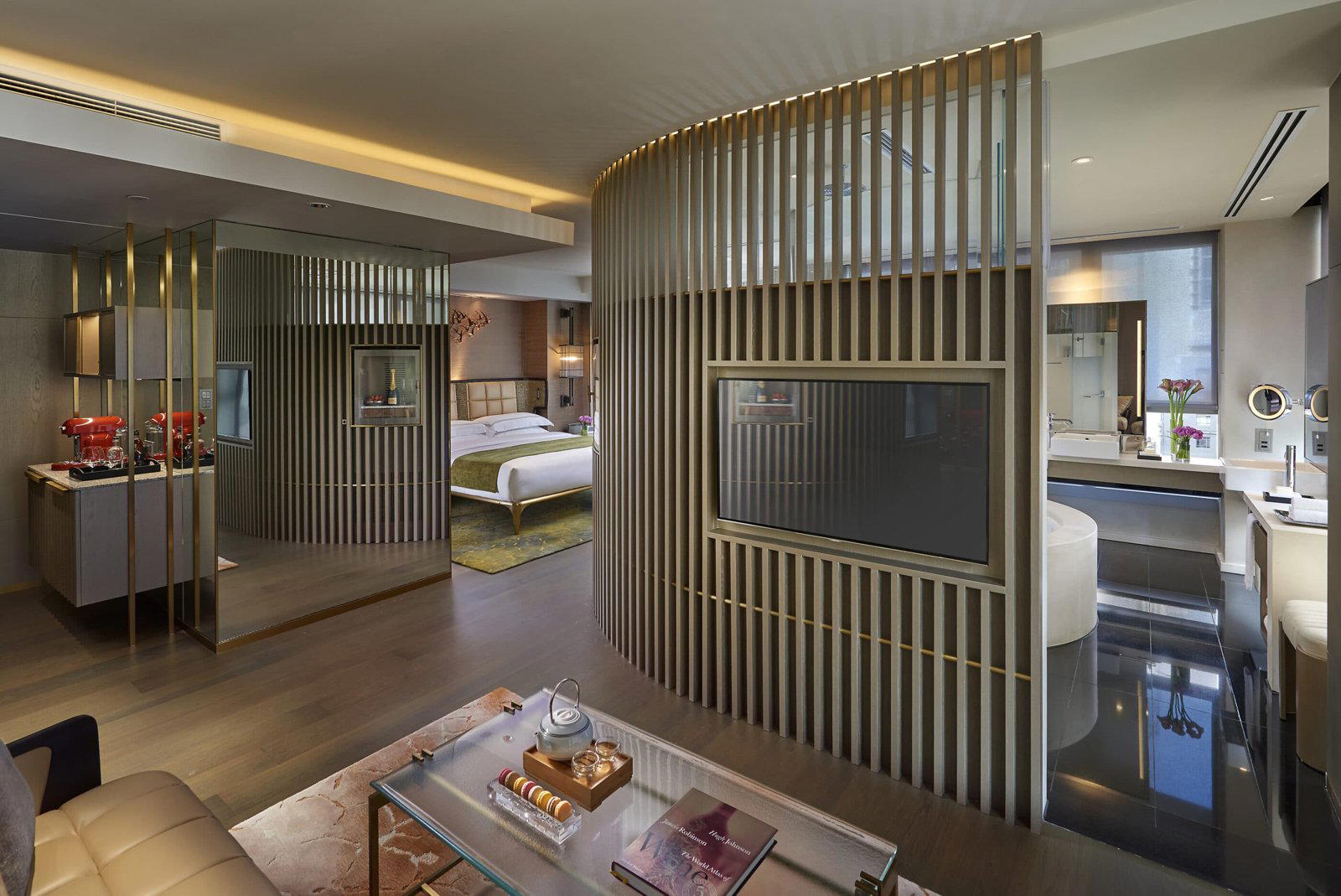
The pre-renovation room inventory gave some indication of where the hotel's priorities lay. Spa-inspired bathrooms with circular soaking tubs and rain showers were among the most discussed physical features in guest accounts, and the technology provision, flat-screen televisions in both bedroom and bathroom, comprehensive in-room entertainment systems, reflected the hotel's urban-business orientation. The three-way division of room space into seating, sleeping, and bathing zones is an architectural choice that resists the compression common in Central's older hotel stock, where square footage is perpetually at a premium.
Room categories ran from the L450 series through the L600 tier, with the L900 Suite, Landmark Suite, and Entertainment Suite at the leading. EP Club members with booking arrangements at the time held a guaranteed upgrade from L450 to L600 category at confirmation, a logistical detail worth tracking as post-renovation room categories are confirmed. The upgrade policy did not extend to the three upper suite categories. Internet pricing was charged separately at HKD 100 per day for standard browsing and HKD 190 for streaming, a legacy-tier policy that may or may not survive the renovation.
The Spa as a Standalone Argument
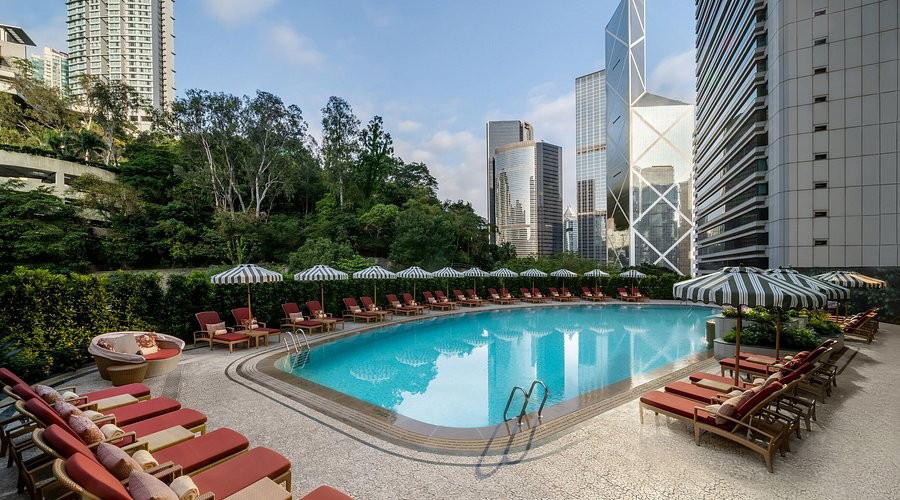
The Oriental Spa occupied two full floors and fifteen treatment rooms before the closure. In a city where spa facilities in luxury hotels frequently amount to a few treatment rooms and a single pool, the Landmark's provision was meaningfully different. Amethyst crystal steam rooms, ice fountains, vitality pools, experience showers, and dedicated Zen relaxation rooms constitute a programme that positions the spa as a destination in its own right rather than a support amenity. A 60-foot heated indoor pool and fully equipped Pilates and yoga studios extend that argument further. La Liste's 2026 Leading Hotels ranking at 98 points, one of the most data-intensive hotel assessment systems operating today, treats holistic property quality as a scoring input, and the spa's depth is a plausible contributor to that positioning.
Central's Competitive Set
The Landmark sits within a dense cluster of serious luxury addresses in Central and its immediate surrounds. The Mandarin Oriental, Hong Kong shares both the brand family and Harbour Road proximity, though the two properties serve meaningfully different guests: the original Mandarin Oriental carries the harbour view and ballroom-scale heritage, while the Landmark has consistently leaned into urban intimacy and dining credentials. The The Peninsula Hong Kong, across the harbour in Tsim Sha Tsui, represents a different competitive argument entirely, colonial grandeur and scale that the Landmark does not attempt to match. The Rosewood Hong Kong and Conrad Hong Kong fill out a broader tier, with the Rosewood in particular having raised the design bar for new entrants when it opened in Victoria Dockside.
For guests choosing between the Landmark and comparably positioned boutique-scale luxury hotels internationally, say, Cheval Blanc Paris, La Réserve Paris, or Aman New York, the deciding factor tends to be dining program depth. The Landmark's combination of Amber and Sushi Shikon, both at Michelin recognition levels that carry weight outside the city, is the clearest differentiator from peers in its size bracket. Properties like Bvlgari Hotel Tokyo, HOTEL THE MITSUI KYOTO, and Badrutt's Palace Hotel in St. Moritz operate in adjacent premium tiers with different regional identities, but the Landmark's multi-starred dining stack within a sub-120-room property is a harder combination to replicate. The Hotel Bel-Air, Hotel Esencia, Castello di Reschio, Aman Venice, Amangiri, Hôtel de Paris Monte-Carlo, Hotel Plaza Athénée, Hotel Du Cap-Eden-Roc, Hotel Sacher Wien, and The Fifth Avenue Hotel each represent comparable exercises in intimate-scale luxury with strong identity, but in contexts where Michelin density and proximity to a financial district of Hong Kong's intensity are not factors. The Crowne Plaza Hong Kong Kowloon East operates in a different tier and serves a largely separate guest profile.
Planning Your Stay
The hotel remains closed through the end of 2025 for its renovation programme, which means bookings for the post-renovation property are a forward planning exercise. Given that Sushi Shikon operates at three Michelin stars, a designation that generates significant independent demand, guests intending to dine there should treat reservation timing as a separate, parallel booking process from the room. Amber's Asia's 50 Best recognition carries similar demand implications. The hotel's address at 15 Queen's Road Central places it directly above the Landmark shopping complex and within the Central MTR network, making it one of the more accessible luxury hotels in the city for guests who prioritise walkability to both business and retail districts.
Booking and Cost Snapshot
Comparable venues nearby, for context on price, style, and recognition.
| Venue | Cuisine | Price | Awards | Notes |
|---|---|---|---|---|
| The Landmark Mandarin Oriental, Hong KongThis venue (the venue you are viewing) | Not listed | Not listed | La Liste Top Hotels · Forbes 5-Star | Not listed |
| Kowloon Shangri-La | Not listed | $300–500 | Forbes 4-Star | Yau Tsim Mong South, Luxury waterfront hotel blending contemporary comfort with classic elegance, positioned as a premier business and leisure destination in Hong Kong's prime Tsim Sha Tsui location. |
| The Langham, Hong Kong | Not listed | Not listed | Michelin Selected · Forbes Recommended | Yau Tsim Mong South, Victorian architecture with European fashion house styling |
| Grand Hyatt Hong Kong | Not listed | Not listed | Michelin Selected · La Liste Top Hotels | Wan Chai, Luxury urban resort-style hotel with extensive facilities including a 50m heated outdoor pool and full-service spa. |
| Cordis, Hong Kong | Yau Tsim Mong North, City Hotel | $100–200 | Michelin Selected | Not listed |
| Dorsett Kai Tak Hotel Hong Kong | Not listed | $1–100 | Not listed | Kowloon City North, Urban luxury flagship hotel inspired by marina and cruise-liner lifestyles next to Kai Tak Sports Park with strong staycation and event focus. |
Recognition history
Dated appearances from independent guides and award organizations, with the underlying list record or original source where available.
La Liste Top Hotels
La Liste
Forbes 5-Star
Forbes
Virtuoso Luxury Hotel Partner
Virtuoso
Full recognition history (4 entries)
Forbes 5-Star
Forbes
Continue exploring
More in Hong Kong
Hotels in Hong Kong
All hotels in Hong Kong →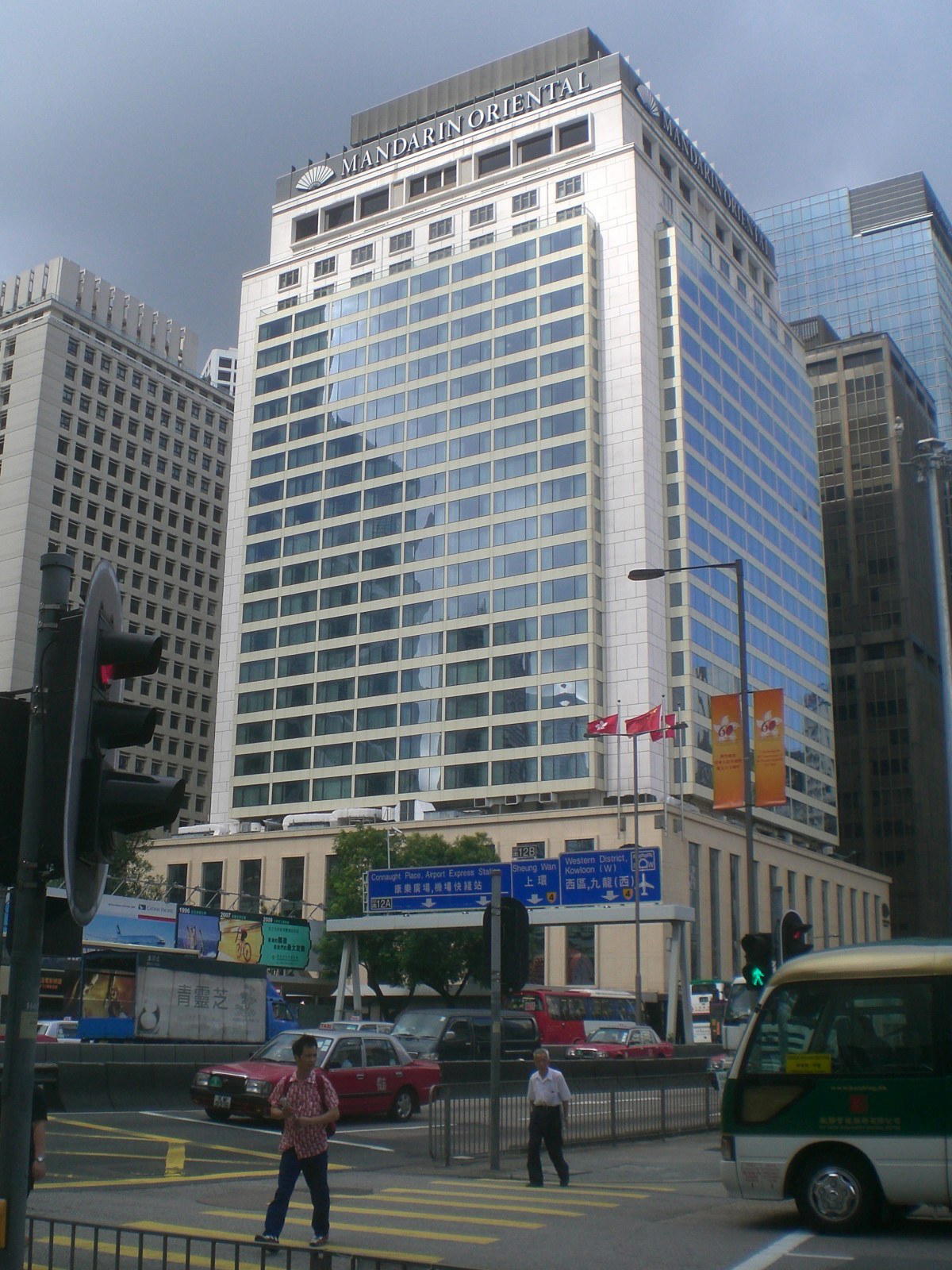
Bars in Hong Kong
All bars in Hong Kong →
Restaurants in Hong Kong
All restaurants in Hong Kong →
Wineries in Hong Kong
All wineries in Hong Kong →
Details
- Elegant
- Sophisticated
- Modern
- Ornate
- Business Trip
- Romantic Getaway
- Wellness Retreat
- Rooftop Pool
- Destination Spa
- Panoramic View
- Pool
- Spa
- Fitness Center
- Room Service
- Concierge
- Sauna
- Hot Tub
- Wi Fi
- Restaurant
- Skyline
- Wheelchair Accessible
- Elevator
Serene urban oasis with luxurious fabrics, soft lighting in spa-like bathrooms featuring sunken hourglass baths, and a discreet, intuitive service atmosphere.