

Michelin Plate
Our verdict
A Michelin Plate-recognised tempura counter on Aberdeen Street in Central, Tempura Ippoh has climbed steadily through Opinionated About Dining's Asia rankings, from Highly Recommended in 2023 to #220 in 2024 and #255 in 2025, building a loyal following among Hong Kong diners who return for precise, Japanese-style tempura in a neighbourhood better known for European fine dining. Rated 4.5 on Google across 94 reviews.

Pearl is the En Primeur Club membership app, where members save venues, book tables and use the concierge.
The menu
What to order
- Shrimp tempura
- Shiso shrimp
- Maitake mushroom
- Squid
- Sweet potato
Aberdeen Street, Batter, and the Geometry of a Counter Seat
Central's Aberdeen Street sits at a curious intersection: wine bars and European bistros to the north, gallery spaces and boutique hotels climbing the hill toward Soho. It is not, in the conventional sense, where you would expect to find a dedicated tempura counter operating at a level that draws repeat visits from the kind of diners who also frequent Amber or Caprice. Yet that friction is partly what defines Tempura Ippoh's place in the city. It occupies a ground-floor address at 39 Aberdeen Street, and the neighbourhood's relative informality gives the restaurant a different register than the hotel-dining rooms that dominate the upper tier of Hong Kong Japanese cuisine.
Tempura as a category sits in an interesting position in Hong Kong. The city has enthusiastically adopted Japanese fine dining across sushi, kaiseki, and yakitori, but dedicated tempura counters remain a smaller, more specialist subset. In Tokyo, the form has its own stratified hierarchy, counters like Tempura Kondo, Tempura Motoyoshi, and Tempura Ginya operate at the top of a format where the cook's relationship with oil temperature, ingredient sequencing, and batter weight is the entire point. In Osaka, venues like Numata and Shunsaiten Tsuchiya maintain that discipline with regional inflection. Tempura Ippoh represents one of Hong Kong's credible attempts to hold that standard away from its source.
What the Regulars Know
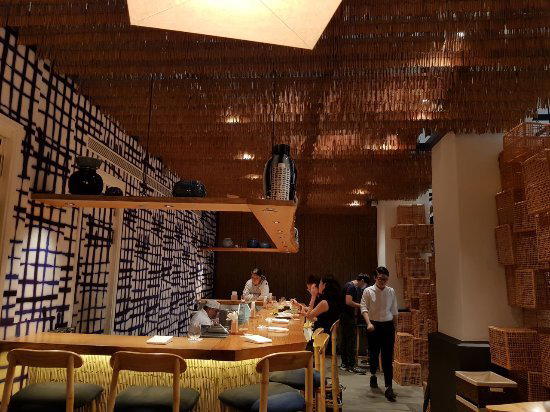
Counter tempura at this level is not a format built on surprise. The appeal is precision, sequence, and the accumulated trust that comes from watching the same technique executed reliably across many visits. Ingredients arrive fried to order, in a rhythm the cook controls, and that rhythm is the experience. Regulars understand that the counter seat is not incidental to this: it is the product.
In a city where dining rooms frequently compete on scale, spectacle, or name-recognition, a ground-floor tempura counter priced at $$$ occupies a specific niche. It sits below the city's $$$$ fine-dining tier, restaurants like 8½ Otto e Mezzo Bombana or the French Contemporary rooms at the upper end, and above the casual tempura available in ramen-and-donburi contexts. That middle band rewards repeat visitors more than one-time explorers, because the value in the format accumulates with familiarity. You understand the pacing better on a third visit than a first.
Within Hong Kong's own tempura subset, Tempura Ippoh sits alongside Tempura Tenkai and Tempura Uchitsu as the city's most recognised dedicated counters. Each draws from similar Japanese source traditions, and comparison between the three is a worthwhile exercise for anyone building a considered view of where the format sits locally. Regionally, Mudan Tempura in Taipei and Enyuan Kobayashi in Kyoto offer useful calibration points for how the discipline travels and adapts across different food cultures.
The Award Trajectory and What It Signals
Tempura Ippoh's trajectory through Opinionated About Dining's Asia rankings tells a legible story. Highly Recommended in 2023, ranked #220 in 2024, then #255 in 2025, the slight numerical slip from one year to the next is less significant than the consistent presence in a list that emphasises repeat, knowledgeable dining over tourist impressions. OAD rankings weight votes from frequent restaurant-goers who eat across the region, which means a sustained presence signals something specific: this is a place that holds up under repeated scrutiny from people who have eaten broadly.
The concurrent Michelin Plate recognition in both 2024 and 2025 establishes a different credibility. The Plate designation signals that inspectors found cooking worth noting without meeting the criteria for a star. For a specialist format like tempura, this positioning is common: Michelin's star criteria lean toward range and complexity in ways that can undercount single-discipline precision. The OAD ranking arguably captures Tempura Ippoh's standing more accurately among the people who eat there most.
The Format and What It Demands of a Diner
A tempura counter at this level asks something of the person sitting at it. Counter dining in the Japanese tradition is collaborative in a low-key way: you are present for the cooking, not just the eating. The sequence of ingredients, the transition from lighter vegetables to richer seafood pieces, the pacing between courses, these are decisions the cook is making in real time, and attending to them is how the meal is leading received. Diners who approach it like a set-menu in a European fine-dining room, expecting courses to arrive and be assessed in isolation, will find less in it than those who watch what is happening on the other side of the counter.
This is why the format builds loyalty specifically among those who already understand it. The learning curve is modest, but it exists.
Aberdeen Street in Context
Central's Aberdeen Street and the surrounding Soho corridor carry a concentration of independent dining that contrasts with the hotel-anchored fine dining of Admiralty and Tsim Sha Tsui. The neighbourhood has shifted over the past decade toward a more international, casual-to-mid-range register, which makes a specialist counter like Tempura Ippoh both slightly incongruous and precisely positioned. It benefits from foot traffic and proximity to the city's wine-bar and cocktail circuit, diners can build a full evening on Aberdeen Street and the blocks around it without the formality that hotel dining demands.
For visitors building a broader picture of Hong Kong dining and hospitality, the EP Club guides to restaurants, hotels, bars, wineries, and experiences in Hong Kong cover the full range of options across categories and price points.
Planning Your Visit
Address: G/F, 39 Aberdeen Street, Central, Hong Kong. Budget: $$$, mid-to-upper range, below the city's $$$$ fine-dining tier. Reservations: Dress: No confirmed dress code; smart casual is appropriate for counter dining at this level. Timing: OAD and Michelin recognition suggests demand is consistent year-round; evenings at a counter of this size are worth booking ahead rather than walking in.
Frequently asked questions
What should I budget for a meal at Tempura Ippoh?
Pricing at Tempura Ippoh is listed as $$$.
Where do I go for Tempura Ippoh?
Tempura Ippoh is located at G/F, 39 Aberdeen St, Central, Hong Kong, Hong Kong.
City Peers
| Venue | Cuisine | Price | Awards | Notes |
|---|---|---|---|---|
| Tempura IppohThis venue (the venue you are viewing) | Osaka-Style Tempura | $150–200 | Michelin Plate | Not listed |
| 8 1/2 Otto e Mezzo Bombana (Hong Kong) | 3 Michelin-Star Italian Fine Dining | $200–300 | 3 Michelin Stars · World's 50 Best #94 | Italian |
| Ta Vie | Modern French-Japanese Fine Dining | $300–500 | 3 Michelin Stars · World's 50 Best #68 | Japanese - French, Innovative |
| Caprice | Contemporary French Fine Dining | $200–300 | 3 Michelin Stars · World's 50 Best #35 | French, French Contemporary |
| Feuille | Modern Vegetable-Forward French | $200–300 | 1 Michelin Star · World's 50 Best #93 | French Contemporary |
| Neighborhood | Modern French with Asian Influences | $50–100 | 1 Michelin Star · World's 50 Best #24 | International, European Contemporary |
Recognition history
Dated appearances from independent guides and award organizations, with the underlying list record or original source where available.
Michelin Plate
Michelin
Opinionated About Dining Top Restaurants in Asia Recommended
Opinionated About Dining
Full recognition history (7 entries)
Michelin Plate
Michelin
Opinionated About Dining Top Restaurants in Asia Ranked #255
Opinionated About Dining
Michelin Plate
Michelin
Opinionated About Dining Top Restaurants in Asia Ranked #220
Opinionated About Dining
Opinionated About Dining Top Restaurants in Asia Highly Recommended
Opinionated About Dining
Continue exploring
More in Hong Kong
Restaurants in Hong Kong
All restaurants in Hong Kong →
Bars in Hong Kong
All bars in Hong Kong →
Hotels in Hong Kong
All hotels in Hong Kong →
Wineries in Hong Kong
All wineries in Hong Kong →
Details
- Intimate
- Elegant
- Classic
- Date Night
- Special Occasion
- Business Dinner
- Chefs Counter
- Open Kitchen
- Sake Program
- Counter Dining
- Omakase
- A La Carte
- Sake
Current opening hours
- Monday
- 12–3 PM, 6–11 PM
- Tuesday
- 12–3 PM, 6–11 PM
- Wednesday
- Closed
- Thursday
- 12–3 PM, 6–11 PM
- Friday
- 12–3 PM, 6–11 PM
- Saturday
- 12–3 PM, 6–11 PM
- Sunday
- 12–3 PM, 6–11 PM
Hours can change for holidays and private events. Hours as of .
Intimate counter seating with a focused, professional atmosphere centered around the chef's precise frying technique.