
Michelin Plate
Our verdict
A satellite of Osaka's respected Shunsaiten Tsuchiya group, Tempura Sakugetsu holds consecutive Michelin Plate recognition (2024–2025) for a counter-focused approach that takes tempura seriously as a technical discipline. The kitchen fries in a cottonseed-sesame oil blend and drains excess oil through skilled technique rather than absorbent paper, a process that places quality of the fried piece itself at the centre of the experience. Price range: ¥¥¥.

Pearl is the En Primeur Club membership app, where members save venues, book tables and use the concierge.
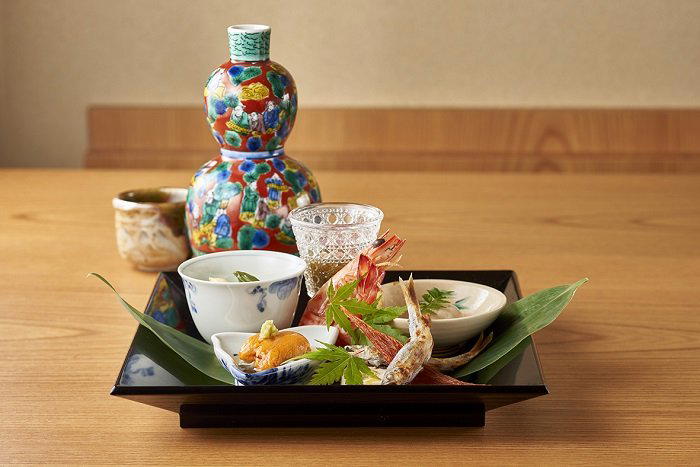
Where Tempura Becomes a Technical Argument
Shimanouchi, a compact district in Osaka's Chuo Ward, sits in the southward drift from Shinsaibashi toward Namba, and it carries a particular density of serious eating establishments along streets that look more workday than destination. There is no theatre in the approach to most addresses here. What you find instead, repeatedly, is the kind of focused cooking that has no reason to perform: small rooms, short menus, and technique doing the talking.
Tempura Sakugetsu occupies a ground-floor space on a Shimanouchi side street at 2 Chome-9-26. The name translates as 'new moon', a phrase that signals recommencement rather than nostalgia, a useful frame for a kitchen that respects the centuries-old tradition of tempura while treating certain assumptions within it as open to revision.
The Shunsaiten Tsuchiya Connection
Tempura Sakugetsu operates under the umbrella of Shunsaiten Tsuchiya, one of Osaka's notable multi-venue groups with a clear focus on seasonal Japanese cooking. That lineage matters not as prestige transfer but as a signal about production standards: sourcing discipline, ingredient provenance, and the internal benchmarks a kitchen is measured against. Satellite restaurants within credentialed groups rarely drift far from the house approach to raw material quality, and Sakugetsu carries that inheritance into its own programme.
Within Osaka's broader dining map, the ¥¥¥ price point places Tempura Sakugetsu in a tier that includes serious Japanese specialists like Hiraishi, Gochiso nene, and the kaiseki-inflected rooms clustered around the city's central wards. It sits below the ¥¥¥¥ ceiling of Osaka's high-concept houses, HAJIME, La Cime, Fujiya 1935, while occupying the same attention bracket in terms of technique and Michelin recognition. Consecutive Michelin Plate listings in 2024 and 2025 confirm that the guide is watching the counter carefully.
Oil, Technique, and the Logic of the Fried Piece
Tempura's history in Japan runs from sixteenth-century Portuguese influence through Edo-period street food into the refined counter format that now commands serious critical attention in cities from Tokyo to Fukuoka. The central tension in modern tempura cooking is the same one that animates serious frying culture everywhere: how to manage oil penetration, crust texture, and ingredient integrity simultaneously. Most high-end counters have their answers; Tempura Sakugetsu's answer is articulate and specific.
The kitchen fries in a blend of cottonseed oil and sesame oil. Cottonseed oil brings a relatively neutral profile and a clean high-heat performance; sesame contributes a low aromatic signature that, when blended rather than used at full concentration, reads as depth rather than flavour imposition. The proportion matters, and that proportion is a house decision. The result is a frying medium designed around the ingredient rather than around a signature scent.
The departure from tempura paper is the more visible technical claim. In conventional practice, finished pieces rest briefly on absorbent paper to strip residual surface oil. The assumption embedded in that step is that excess oil exists and must be managed post-fry. Sakugetsu's kitchen removes the assumption: oil drainage happens through technique during and after frying, which means the crust's structure is preserved as the chef intends it, and no secondary contact changes its texture or temperature. For a cuisine where the window between a piece arriving correctly and arriving compromised is narrow, that choice carries real consequence.
This places Sakugetsu in a broader movement within Japanese tempura that emphasises frying mastery as an end in itself, rather than as a vehicle for ingredient display alone. Compare that emphasis with the approach at OIMATSU Tempura Suzuki, another Osaka counter in the conversation, and you get a sense of how differently kitchens at this level can weight the same variables.
Tempura at This Level Across Japan
Osaka is not the historical centre of counter tempura in the way that Tokyo's Ginza and Asakusa corridors are, where multi-generation specialists have shaped national benchmarks. Yet Osaka's tempura scene has developed with the same ingredient-obsessive logic that governs its other cooking traditions: proximity to Osaka Bay seafood, a standing preference for lighter preparations, and a merchant-city culture that has always rewarded substance over ceremony.
At the national level, the format that Sakugetsu operates within has produced some of Japan's most scrutinised counters. Tempura Ginya in Tokyo represents one point in that conversation; Osaka's own counters, including Sakugetsu, represent another. The same discipline has spread regionally: Mudan Tempura in Taipei shows how the Japanese counter format travels when the underlying technique is rigorous enough to survive transplantation.
For context on where Osaka sits within Japan's wider fine dining picture, Harutaka in Tokyo, Gion Sasaki in Kyoto, akordu in Nara, Goh in Fukuoka, and 1000 in Yokohama each represent distinct approaches to the same underlying question of what serious Japanese cooking looks like today. 6 in Okinawa adds a further regional dimension. Sakugetsu is one answer among many, but within the tempura subset, its answer is technically distinct.
Shimanouchi and the Restaurants Around It
Shimanouchi's dining density rewards a multi-meal approach. The neighbourhood sits within walking distance of the Namba-Shinsaibashi corridor, which means a meal at Sakugetsu sits naturally alongside Osaka's broader Chuo Ward eating circuit. Other counters in the area, including Numata, contribute to a compact geography where several serious rooms operate within a short radius. The street-level quietness of Shimanouchi versus the commercial noise of Dotonbori a few blocks south creates a useful separation: this is where you go to eat, not to be entertained by the street.
For anyone building a multi-day Osaka itinerary, the city's full food and travel infrastructure is mapped across our full Osaka restaurants guide, our full Osaka hotels guide, our full Osaka bars guide, our full Osaka wineries guide, and our full Osaka experiences guide.
Planning Your Visit
Address: 2 Chome-9-26 Shimanouchi, Chuo Ward, Osaka 〒542-0082, ground floor. Price range: ¥¥¥. Reservations: Booking is advisable given the counter format and the kitchen's Michelin recognition; no direct booking details are publicly listed, so contact through the Shunsaiten Tsuchiya group is the recommended approach. Hours: Group size: Counter seating typically suits couples or solo diners; larger parties should enquire in advance.
Frequently asked questions
What's Tempura Sakugetsu known for in terms of accolades?
Tempura Sakugetsu has received recognition including: A restaurant under the aegis of Shunsaiten Tsuchiya. The name means ‘new moon’, signifying a new beginning, and indeed Sakugetsu takes tempura in new directions while respecting tradition. The chef entrusted with this restaurant has his own….
What should I eat at Tempura Sakugetsu?
The kitchen operates as a single-discipline counter, meaning tempura is the full programme rather than one section of a broader menu. The defining technical choices, frying in a blend of cottonseed and sesame oil, and draining pieces through technique rather than tempura paper, are expressed across the counter course rather than in any single dish. At the ¥¥¥ price tier, the expectation is a sequenced set menu where the chef's approach to each piece carries the meal.
How much does it cost to eat at Tempura Sakugetsu?
Pricing at Tempura Sakugetsu is listed as ¥¥¥.
What It’s Closest To
| Venue | Cuisine | Price | Awards | Notes |
|---|---|---|---|---|
| Tempura SakugetsuThis venue (the venue you are viewing) | Modern Tempura Omakase | $150–200 | Michelin Plate | Not listed |
| HAJIME | Avant-Garde Japanese Fine Dining | $300–500 | 3 Michelin Stars · World's 50 Best #83 | French, Innovative |
| La Cime | Modern French with Japanese Ingredients | $150–200 | 2 Michelin Stars · World's 50 Best #13 | French |
| Kashiwaya Osaka Senriyama | Seasonal Kaiseki Omakase | $200–300 | 3 Michelin Stars · La Liste Top Restaurants | Japanese |
| Taian | Traditional Japanese Kaiseki Omakase | $150–200 | 3 Michelin Stars · La Liste Top Restaurants | Kaiseki, Japanese |
| Fujiya 1935 | Modern Japanese with European influences | $100–150 | 2 Michelin Stars · La Liste Top Restaurants | Innovative |
Recognition history
Dated appearances from independent guides and award organizations, with the underlying list record or original source where available.
Michelin Plate
Michelin
Full recognition history (3 entries)
Michelin Plate
Michelin
Michelin Plate
Michelin
Continue exploring
More in Osaka
Restaurants in Osaka
All restaurants in Osaka →


Bars in Osaka
All bars in Osaka →
Hotels in Osaka
All hotels in Osaka →


Wineries in Osaka
Browse all →
Details
- Intimate
- Elegant
- Sophisticated
- Solo
- Special Occasion
- Chefs Counter
- Open Kitchen
- Sake Program
- Omakase
- Counter Dining
- Sake
- Vegetarian Friendly
Current opening hours
- Monday
- 6–8 PM, 9–11 PM
- Tuesday
- 6–8 PM, 9–11 PM
- Wednesday
- 6–8 PM, 9–11 PM
- Thursday
- 6–8 PM, 9–11 PM
- Friday
- 6–8 PM, 9–11 PM
- Saturday
- 6–8 PM, 9–11 PM
- Sunday
- Closed
Hours can change for holidays and private events. Hours as of .
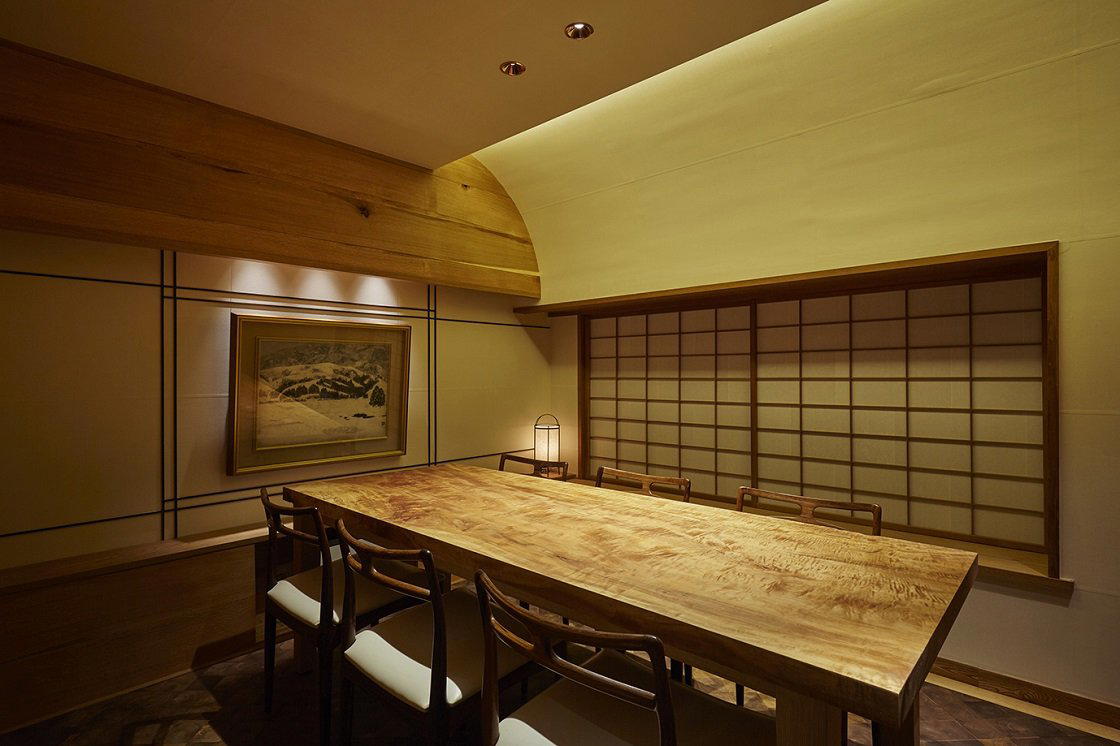
Serene and relaxing counter-only space with 10 seats, offering a warm atmosphere focused on the vivid cooking scene.