

In Nishitenma, Osaka's counter-dining quarter, OIMATSU Tempura Suzuki holds a Michelin Plate (2024 and 2025) and a Tabelog Bronze Award with a score of 4.31. The kitchen works with safflower oil and thin batter to keep each ingredient's flavour intact, adjusting its menu to the precise start and end of each ingredient's season. It sits in the ¥¥¥ tier alongside Osaka's broader kaiseki and Japanese counter dining scene.
Pearl is the En Primeur Club membership app — saves, bookings, and concierge access live there. Same editors, same standards.
- Address
- Japan, 〒530-0047 Osaka, Kita Ward, Nishitenma, 4 Chome−4−2 La Douceur 梅田 East 1階
- Phone
- +81 6-6335-9633
- Website
- oimatsu-tempura-suzuki.com
- Directions
- Get directions
 Saves & bookings on Pearl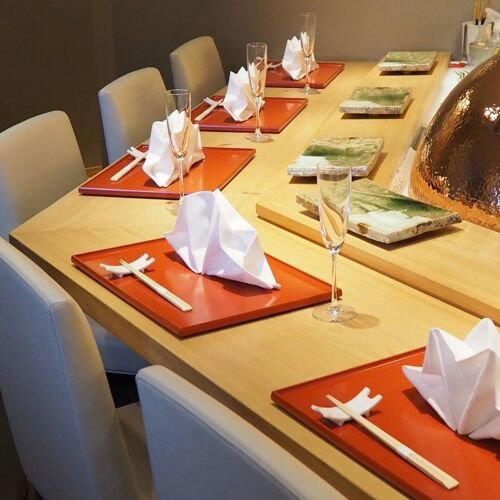
Tempura in Osaka: A Counter Tradition Built on Restraint
The approach to a Japanese tempura counter is rarely dramatic. What matters is what happens between the fryer and the plate: the thickness of the batter, the temperature of the oil, the moment each piece is lifted and placed in front of you. In Osaka's Nishitenma district, a neighbourhood that holds a dense concentration of counter restaurants ranging from kaiseki rooms to kappo specialists, OIMATSU Tempura Suzuki occupies a ground-floor space in the La Douceur Umeda East building on Nishitenma 4-chome. The setting signals what follows inside: precise, focused, without theatrical excess.
Tempura as a category sits in an interesting position within Japan's fine dining hierarchy. It is older than its reputation suggests, introduced to Japan in the sixteenth century and refined across centuries of counter service into among the more technique-dependent forms of Japanese cooking. At the summit tier, the discipline is measured in fractions of a second and degrees of oil temperature. Its Michelin Plate recognition in 2024 and 2025.
The Craft of the Batter and the Logic of Safflower Oil
Tempura kitchens distinguish themselves not through bold flavour additions but through what they choose not to do. The use of safflower oil at OIMATSU is a deliberate technical choice: it carries a lighter flavour profile than sesame oil and a higher smoke point than many refined vegetable oils, which allows the natural character of each ingredient to remain legible after frying. The batter is described as thin, mixed cold and minimally worked to prevent gluten development, which keeps the coating from absorbing excess oil and turning heavy.
The result is a style that treats tempura as translation rather than transformation. A piece of tiger prawn fried in this manner should taste of prawn, with the batter providing texture and heat containment rather than flavour. Wrapping tiger prawn and cod milt in perilla leaves before battering adds fragrance without masking the ingredient underneath, perilla's brightness lifts rather than competes. This approach belongs to a broader current in Japanese cuisine that prizes transparency, where the cook's skill is measured by how clearly each ingredient's identity comes through.
The inclusion of wagyu fillet, grilled rather than fried, to a rosy pink is a deliberate compositional move. Not all items in a tempura course need to go through oil; a well-constructed progression will vary cooking method, texture, and weight across the meal. The kakiage, a mixed seafood and vegetable tempura where multiple ingredients are bound loosely and fried together, appears here with red pickled ginger folded in. This is a Osaka-specific touch: the city's culinary vocabulary has always had space for the bold acidity of pickled ginger, and using it inside a kakiage rather than alongside it changes the flavour architecture of the piece entirely.
Seasonality as Structure
Michelin documentation for OIMATSU explicitly credits the kitchen with an awareness of the start and end of each ingredient's season. In tempura, this matters more than in most formats. The discipline is so minimally interventionist that an ingredient arriving even a week outside its peak window will be exposed by the cooking method rather than hidden by it. Cod milt, for instance, is a winter ingredient in Japan, available from roughly December through February; serving it outside that window would change the dish's entire logic.
This attentiveness to seasonal boundaries places OIMATSU within the same culinary framework as Osaka's kaiseki counters, where seasonal sequencing is not marketing language but structural discipline. Venues like Shunsaiten Tsuchiya and Taian operate with the same seasonal logic in the kaiseki format, and the tempura counter at this level works within the same tradition even if its cooking method differs. For the diner, this means the experience in January will differ substantively from the experience in July, not as a variation on the same menu but as a different meal shaped by what the season provides.
Osaka's counter dining scene, operates with this seasonal awareness built into its core identity. The comparison with the kaiseki tier is instructive: at Numata, Hiraishi, and Gochiso nene, the seasonal framework is similarly non-negotiable. At the ¥¥¥ tier, OIMATSU sits alongside these venues in both price bracket and philosophical orientation, even if the format and cooking method differ.
Osaka's Counter Culture and Where Tempura Fits
Osaka has a different counter dining culture from Tokyo. Where Tokyo's fine dining hierarchy is more stratified and its tempura scene more concentrated in specific neighbourhoods like Ginza and Nihonbashi, Osaka's counter restaurants are embedded in the fabric of areas like Nishitenma, Kitahama, and Fukushima. The proximity of multiple cuisines and formats within walking distance creates a different competitive dynamic: a tempura counter here sits near kappo rooms, French-leaning tasting menus, and izakaya-format specialists, all competing for the same evening booking.
Within the national tempura scene, the comparison points extend beyond Osaka. Tempura Ginya in Tokyo operates in a different market context, within Tokyo's more stratified fine dining hierarchy, and at a different price tier. Across the region, Mudan Tempura in Taipei represents how the format has been adopted and adapted outside Japan, with Taiwanese ingredients substituted into the same structural logic. Comparing these three counters illustrates how much tempura as a format depends on local ingredient supply chains: the same discipline applied to different seasonal produce produces a distinctly different meal.
For broader context across Japan's fine dining scene, Harutaka in Tokyo, Gion Sasaki in Kyoto, akordu in Nara, Goh in Fukuoka, 1000 in Yokohama, and 6 in Okinawa.
Planning Your Visit
OIMATSU Tempura Suzuki is located at 4 Chome-4-2 Nishitenma, Kita Ward, Osaka. The price range sits at ¥¥¥, which in the Osaka counter dining context is the same tier as venues like Shintaro and Kashiwaya Osaka Senriyama. Reservations are essential.
| Venue | Format | Price Tier | Awards |
|---|---|---|---|
| OIMATSU Tempura Suzuki | Tempura counter | ¥¥¥ | Michelin Plate 2024 & 2025, Tabelog Bronze 4.31 |
| Kashiwaya Osaka Senriyama | Japanese counter | ¥¥¥ | Michelin-recognised |
| Taian | Kaiseki | ¥¥¥ | Michelin-recognised |
| HAJIME | French / Innovative | ¥¥¥¥ | Three Michelin Stars |
| La Cime | French | ¥¥¥¥ | Two Michelin Stars |
For the wider Osaka picture, restaurants and experiences across the city.
City Peers
Comparable venues nearby, for context on price, style, and recognition.
| Venue | Cuisine | Price | Notes |
|---|---|---|---|
| OIMATSU Tempura SuzukiThis venue — the venue you are viewing | Premium Seasonal Tempura Omakase | $$$$ | Not listed |
| Gochiso nene | Tempura and Dashi Omakase | $$$$ | Kita |
| Shunten Shin | Modern Tempura Omakase | $$$$ | Tennōji |
| Sumibiyakitori Ikoka | Charcoal-Grilled Yakitori Omakase | $$$ | Chūō |
| Kawahara | Modern Kaiseki | $$$$ | Kita |
| Kurubushi | Modern Kappo Omakase | $$$ | Kita |
Recognition history
Dated appearances from independent guides and award organizations, with the underlying list record or original source where available.
Michelin Plate
Michelin
Michelin Plate
Michelin
Tabelog Bronze
Tabelog
Michelin Plate
Michelin
Continue exploring
More in Osaka
Restaurants in Osaka
Browse all →

Bars in Osaka
Browse all →
Hotels in Osaka
Browse all →



Wineries in Osaka
Browse all →
At a Glance
- Elegant
- Intimate
- Sophisticated
- Quiet
- Special Occasion
- Date Night
- Business Dinner
- Celebration
- Chefs Counter
- Open Kitchen
- Private Dining
- Sake Program
- Local Sourcing
Current opening hours
- Monday
- 5–10 PM
- Tuesday
- 5–10 PM
- Wednesday
- 5–10 PM
- Thursday
- 5–10 PM
- Friday
- 5–10 PM
- Saturday
- 5–10 PM
- Sunday
- Closed
Hours can change for holidays and private events. Last verified .
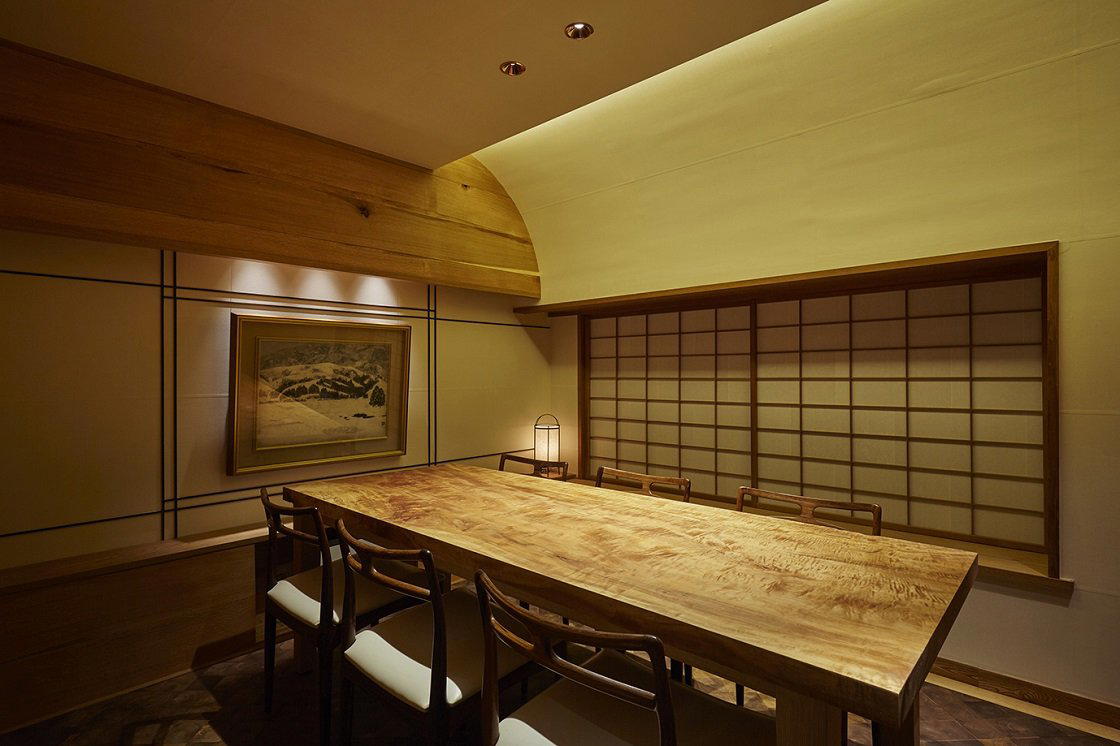
Serene, high-quality space inspired by a shrine with divine imagery; calm, relaxing interior with counter seating offering close-up views of the chef's meticulous work.