
Michelin Plate
Our verdict
In Osaka's Tenjinbashi neighbourhood, Jizakeya Iwatsuki operates at the meeting point of serious sake curation and reworked Japanese home cooking. Owner-chef Hiroki Iwatsuki designs each dish around the logic of making you reach for another glass, progressing from palate-tickling starters through sake-simmered fish to a final bowl of daikon-steamed congee. At a ¥¥ price point, it represents the more considered end of Osaka's neighbourhood izakaya circuit.

Pearl is the En Primeur Club membership app — saves, bookings, and concierge access live there. Same editors, same standards.
- Address
- Japan, 〒530-0041 Osaka, Kita Ward, Tenjinbashi, 4 Chome−6−19-1F 天満グリーンハイツ
- Phone
- +81 6-7892-7172
- Hours
- Mon–Wed 5:30–10:30 PMThu ClosedFri–Sun 5:30–10:30 PM
- Website
- facebook.com
- Directions
- Get directions
The menu
What to order
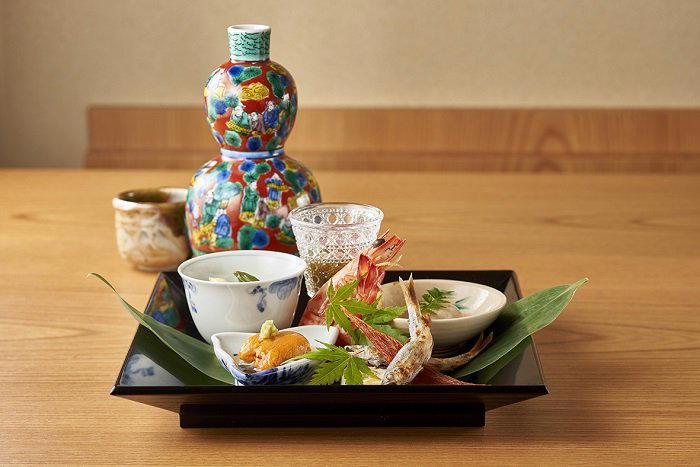
- Fish simmered in sake
- Potato salad with octopus
- Braised burdock root with squid
- Dashimaki
- Sakékudasai
- Unagi Chahan
Where Tenjinbashi's Izakaya Culture Gets Specific
Tenjinbashi-suji, the long covered shopping arcade running through Kita Ward, generates a density of eating and drinking options that can feel relentless. Most of the izakayas along its side streets operate on volume: broad menus, rotating clientele, a beer-and-fried-chicken logic that serves the neighbourhood's foot traffic well enough. Jizakeya Iwatsuki, on the first floor of a residential building at 4 Chome-6-19 in the arcade's mid-section, operates on a different premise. The walls are lined with local sakes sourced from across Japan's producing regions, and the kitchen is oriented around a single guiding idea: food that makes you want to drink.
That distinction matters in Osaka, where the izakaya format spans everything from standing yakitori counters to destination-grade rooms with curated natural wine lists. Jizakeya Iwatsuki sits in a middle register that is specific rather than luxurious, with a ¥¥ price point that aligns it with serious neighbourhood dining rather than the ¥¥¥ and ¥¥¥¥ tier occupied by Michelin-starred rooms such as Kasane or Kannomiho. The logic here is not ceremony but calibration: dishes tuned to amplify the pleasure of whatever sake is in the glass.
The Arc of a Meal
The meal at Jizakeya Iwatsuki follows a recognisable arc, though the rhythm is determined more by the diner's drinking pace than by any imposed tasting-menu structure. It begins in the territory of reworked home cooking, the kind of food that reads as familiar until you notice how precisely it has been adjusted. Potato salad arrives with octopus folded through it, the cephalopod's slight brininess cutting the starchiness of the potato in a way that sharpens appetite rather than satisfying it. Braised burdock root with squid carries a deep, earthy sweetness from the gobo against the oceanic note of the squid, a pairing that rewards contemplative sipping. Finely minced fish with takuan, the yellow pickled daikon, introduces a textural contrast and a clean acidity that resets the palate between pours.
These opening dishes establish the kitchen's intent: this is not food designed to fill or impress in isolation, but food calibrated to make the drink beside it more interesting, and vice versa. The construction is deliberately understated, closer to the Japanese concept of sakana, the small plates eaten alongside sake, than to the contemporary small-plates format borrowed from European tasting menus.
The central dish in the progression is the simmered fish, prepared in whichever sake the diner selects from the wall of bottles. The technique is practical and precise: sake adds residual sweetness and amino acids during cooking, deepening the fish's umami without masking its natural flavour. Choosing the sake for this dish becomes a minor editorial act, and the presence of bottles from across Japan's producing regions means the choice carries regional logic. A drier junmai from Niigata will produce a different result than a richer nigori from Kyoto's northern valleys. For visitors less confident in that selection, the room's sake-forward identity means guidance is available in the context of the space itself.
The close of the meal is a bowl of congee steamed in grated daikon. In the context of what precedes it, this is not an afterthought but a structural anchor. Daikon's natural enzymes support digestion, and congee's soft, starchy warmth functions as a considered endpoint, one that acknowledges the cumulative effect of the sake and the saltiness of the preceding plates. It is a format common enough in Japanese home cooking that it reads as unshowy, but its placement at the end of this particular sequence gives it a kind of quiet authority.
Sake as the Organising Principle
Range of local sakes lining the walls positions Jizakeya Iwatsuki within a distinct subcategory of Osaka drinking culture: the jizake specialist, where the selection of regional, small-production sake is the primary editorial statement of the room. Japan's sake geography is considerable, with producing regions from Akita and Niigata in the north through Nada and Fushimi in the Kansai heartland, and the spectrum of styles from crisp ginjo to full, earthy kimoto reflects genuinely different approaches to brewing. A room that represents this geography meaningfully provides more intellectual traction than a standard izakaya's sake list, which typically offers two or three house options at fixed price points.
This places Jizakeya Iwatsuki in a similar conceptual bracket to Izakaya Tokitame and Daidokoro Kamiya, Osaka izakayas where the drink selection carries genuine curation weight rather than functioning as a supporting cast. For comparison across the region, Berangkat in Kyoto takes the izakaya format in a different direction, folding international influences into the template, while Cube by Mika in Schwerin demonstrates how the izakaya model has travelled beyond Japan entirely.
Within Osaka's broader dining field, the contrast with the city's haute end is worth noting. Rooms like Benikurage operate in a mode of formal precision. Jizakeya Iwatsuki makes no argument against that mode, but it addresses a different register of Osaka food culture: the one that values the social act of drinking alongside the pleasure of eating, and treats the two as inseparable.
Placing It in the Osaka Restaurant Picture
Osaka's restaurant reputation rests substantially on kuidaore, the city's tradition of spending freely on food, but that reputation encompasses a wide range of formats and price points. The ¥¥¥¥ tier of Michelin-starred innovation, represented by rooms such as HAJIME and Fujiya 1935, coexists with a deep culture of neighbourhood dining that operates on intimacy and repetition rather than occasion and spectacle. Jizakeya Iwatsuki belongs to the second tradition, though the specificity of its sake curation and the considered architecture of its menu lift it above the generic category of neighbourhood izakaya.
For visitors building an Osaka itinerary, the room functions well as a counter-programme to a more formal dinner: lighter in spend, more casual in format, but editorially coherent in a way that casual does not always imply. Our full Osaka restaurants guide maps the broader field, and for those extending across the Kansai region, Gion Sasaki in Kyoto and akordu in Nara provide instructive points of comparison in their respective cities. Across Japan's broader dining map, Harutaka in Tokyo, Goh in Fukuoka, 1000 in Yokohama, and 6 in Okinawa represent the variety of formats the country sustains at the serious end of the spectrum.
For planning the full Osaka visit, our Osaka hotels guide, bars guide, wineries guide, and experiences guide cover the adjacent categories.
The address is 4 Chome-6-19-1F, Tenjinbashi, Kita Ward, Osaka, accessible on foot from Tenjinbashisuji Rokuchome station on the Tanimachi and Sakaisuji lines. The ¥¥ price positioning means an evening here sits comfortably within a broader Osaka itinerary without requiring the kind of advance planning or spend that the city's top-tier rooms demand.
Frequently asked questions
Is Jizakeya Iwatsuki okay with children?
At a ¥¥ izakaya in Osaka where the entire concept is built around sake pairing, this is a room oriented toward adult drinkers.
What's the vibe at Jizakeya Iwatsuki?
If you are comfortable in a small, sake-focused room in Osaka's Tenjinbashi neighbourhood and the appeal of reworked home cooking designed around drinking resonates, this is a considered neighbourhood izakaya operating at a ¥¥ price point with genuine editorial focus. If you arrive expecting the format of a formal Japanese restaurant or a menu with broad appeal, the room's specific logic may feel narrow.
What dish is Jizakeya Iwatsuki famous for?
The dish that most directly expresses the kitchen's concept is the simmered fish cooked in the diner's chosen sake, a preparation that activates the umami of the fish while functioning as a direct expression of the izakaya's sake-first philosophy. Owner-chef Hiroki Iwatsuki has articulated the kitchen's approach as cooking designed to make you want to drink, and this dish is where that principle is most concretely demonstrated.
Cuisine and Recognition
Comparable venues nearby, for context on price, style, and recognition.
| Venue | Cuisine | Price | Awards | Notes |
|---|---|---|---|---|
| Jizakeya IwatsukiThis venue — the venue you are viewing | Sake-Paired Japanese Izakaya | $50–100 | Michelin Plate | Not listed |
| Temmabashi Fujikawa | Kappo Kaiseki with Tempura | $100–150 | Michelin Plate | Kita |
| Sushi Kyomachibori Sato | Edomae Omakase Sushi | $100–150 | Michelin Plate | Nishi |
| Shokudo Tanoshi | Modern Japanese Izakaya with Fusion Elements | $150–200 | Michelin Plate | Chūō |
| Sushi Shigenaga | Edomae Sushi Omakase | $150–200 | 1 Michelin Star | Kita |
| Torisho Ishii Hina | Modern Yakitori Omakase | $100–150 | Not listed | Minami-Azabu |
Recognition history
Dated appearances from independent guides and award organizations, with the underlying list record or original source where available.
Michelin Plate
Michelin
Continue exploring
More in Osaka
Restaurants in Osaka
Browse all →




Bars in Osaka
Browse all →



Hotels in Osaka
Browse all →




Wineries in Osaka
Browse all →
Details
- Intimate
- Cozy
- Date Night
- After Work
- Casual Hangout
- Open Kitchen
- Sake Program
- Small Plates
- A La Carte
- Counter Dining
- Sake
Current opening hours
- Monday
- 5:30–10:30 PM
- Tuesday
- 5:30–10:30 PM
- Wednesday
- 5:30–10:30 PM
- Thursday
- Closed
- Friday
- 5:30–10:30 PM
- Saturday
- 5:30–10:30 PM
- Sunday
- 5:30–10:30 PM
Hours can change for holidays and private events. Last verified .
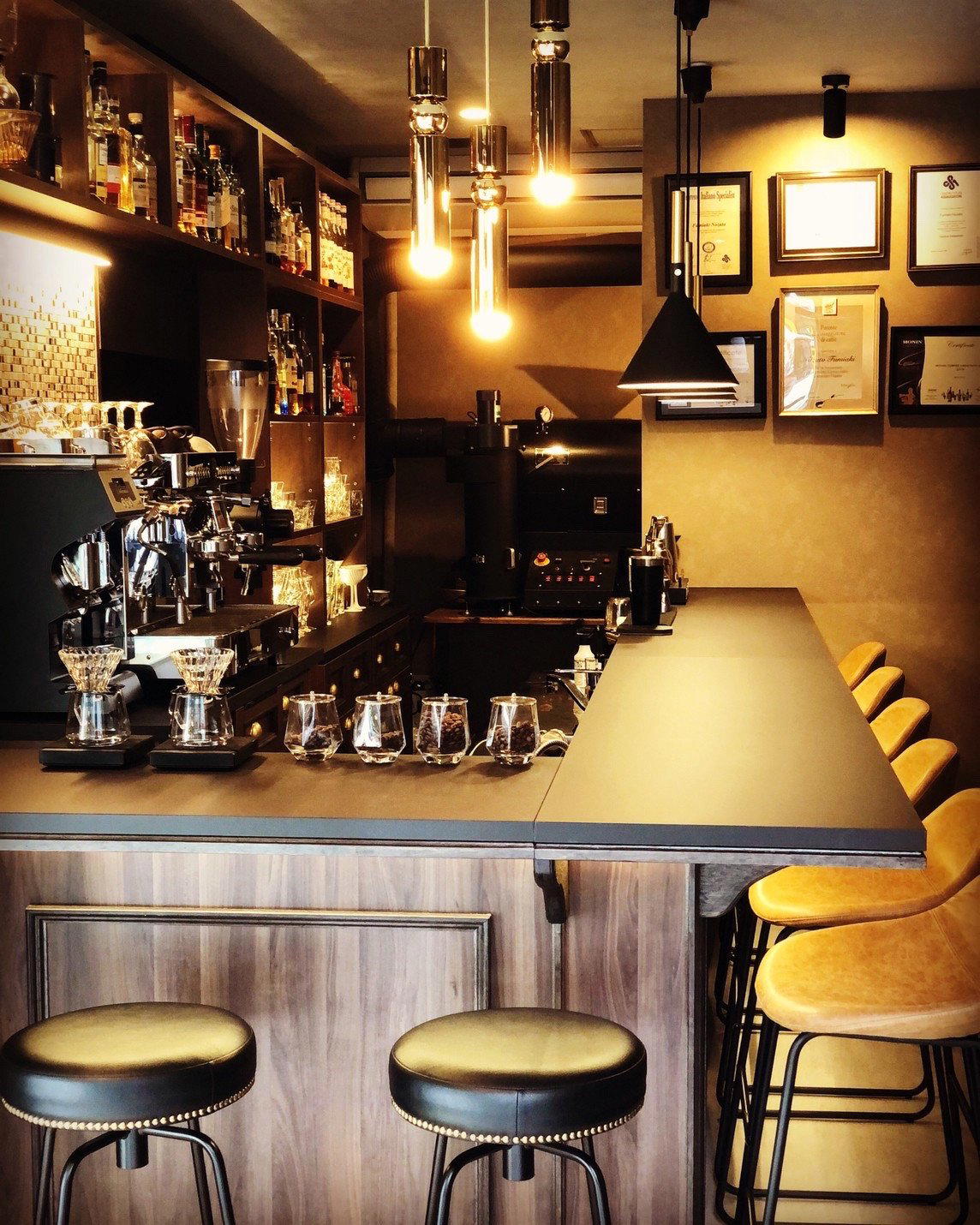
Intimate sanctuary with quietly gleaming sake bottles lining the room, offering a relaxing counter seating atmosphere of thoughtful luxury and polished restraint.