
Yakitori Taniguchi is an eight-seat counter in Amagasaki's Minamimukonoso district, earning Tabelog Bronze Awards in 2022, 2024, 2025, and 2026 alongside consecutive selection to the Tabelog Yakitori West 100 list. Dinner runs JPY 15,000–19,999 per person, with two seatings from 16:30. Reservations are online only; cash is not accepted.
Pearl is the En Primeur Club membership app — saves, bookings, and concierge access live there. Same editors, same standards.
- Address
- 3-chome-36 Minamimukonoso, Amagasaki, Hyogo 661-0033, Japan
- Phone
- +81 6-6436-1194
- Website
- tabelog.com
- Directions
- Get directions
 Saves & bookings on Pearl
A Counter in the Kansai Suburbs Where Yakitori Commands Serious Attention
Eight seats. Two seatings per evening. No phone reservations, no walk-ins, no cash. The operating rules at Yakitori Taniguchi, on a quiet residential stretch near Hankyu Mukonoso Station in Amagasaki's Minamimukonoso district, read less like a neighbourhood grill and more like the counter-format discipline you encounter at the Kansai region's most considered dining rooms. That posture is backed by evidence: Tabelog Bronze Awards in 2022, 2024, 2025, and 2026, a current score of 4.35, and consecutive inclusion in the Tabelog Yakitori West 100 from 2021 through 2025. For a category often treated as casual, those credentials place Taniguchi in a different tier.
Yakitori as a Serious Discipline
To understand what Taniguchi represents, it helps to understand what yakitori has become at its upper register. The format — chicken skewers grilled over binchotan charcoal, served at a counter — is one of Japan's most democratic culinary traditions. Every train-station alley in Osaka or Tokyo has a yakitori stall, and the food is genuinely good. But over the past two decades a small cohort of practitioners in the Kansai and Kanto regions has moved the category into price and ambition territory that would once have been unthinkable. These counters source specific chicken breeds, exercise control over charcoal temperature with the same seriousness that a sushi master gives to rice, and price accordingly. For context, this pricing sits well above the entry-level yakitori experience but below the JPY 30,000-plus territory occupied by multi-star kaiseki or sushi counters like Harutaka in Tokyo.
The ingredient cited in the Tabelog record is Kousaka Chicken, described there as rare and valuable. Breed-specific sourcing is now a reliable signal in premium yakitori: it indicates a supply chain built around animal welfare, a specific flavour profile, and limited availability, all of which justify both the price point and the counter's small capacity. At eight seats, Taniguchi is not scaling output; it is controlling it.
Amagasaki's Place in the Regional Dining Picture
Amagasaki sits between Osaka and Kobe on the Hankyu Kobe Line, which makes it geographically convenient but rarely the first city name that appears in discussions of Kansai fine dining. That pattern is not unusual in Japan's dining geography. Several of the country's most awarded counters operate in residential neighbourhoods and secondary cities precisely because real estate costs and a local regular clientele allow for the kind of sustained, unhurried practice that drives scores upward over time. Taniguchi opened in April 2018 and has accumulated awards at a steady pace since, which suggests a kitchen that has consolidated rather than coasted. Guests travelling from Osaka or Kobe face a short train ride; the walk from Hankyu Mukonoso Station is approximately four minutes south.
For those building a broader Kansai itinerary, the region offers reference points across multiple registers: HAJIME in Osaka and Gion Sasaki in Kyoto occupy the formal end of the spectrum, while Taniguchi represents something different, a single-focus counter that applies the same degree of sourcing and preparation rigour to a tradition rooted in everyday Japanese eating. That contrast is part of what makes the Kansai region worth examining seriously. You can also explore akordu in Nara for a different perspective on the region's range. Across Japan more broadly, comparable single-focus counter seriousness can be found at Goh in Fukuoka, 1000 in Yokohama, and 6 in Okinawa. Further afield, the level of disciplined counter craft at Taniguchi draws a different kind of comparison to tightly run specialist operations like Le Bernardin in New York City or Atomix in New York City, counters where format discipline and ingredient sourcing do the same structural work.
The Cultural Weight of Binchotan and the Counter
Japan's grilling tradition is inseparable from binchotan, the dense white charcoal from Wakayama Prefecture that burns long and clean at high temperatures. Its use in serious yakitori counters is not an affectation; binchotan produces radiant heat rather than convective heat, which means the exterior of a skewer can caramelise at a different rate than the interior cooks. Managing that gap across different cuts, breast, thigh, liver, skin, wing, requires both technical skill and real-time attention. At a counter of eight seats, this is a performance that guests observe directly, which is part of what the format sells. The physical immediacy of watching preparation is structural to the experience, not incidental to it, in the same way it is at a sushi or tempura counter. Taniguchi operates exclusively as counter seating, and no private rooms are available, which means the grilling and the guest occupy the same space throughout the meal.
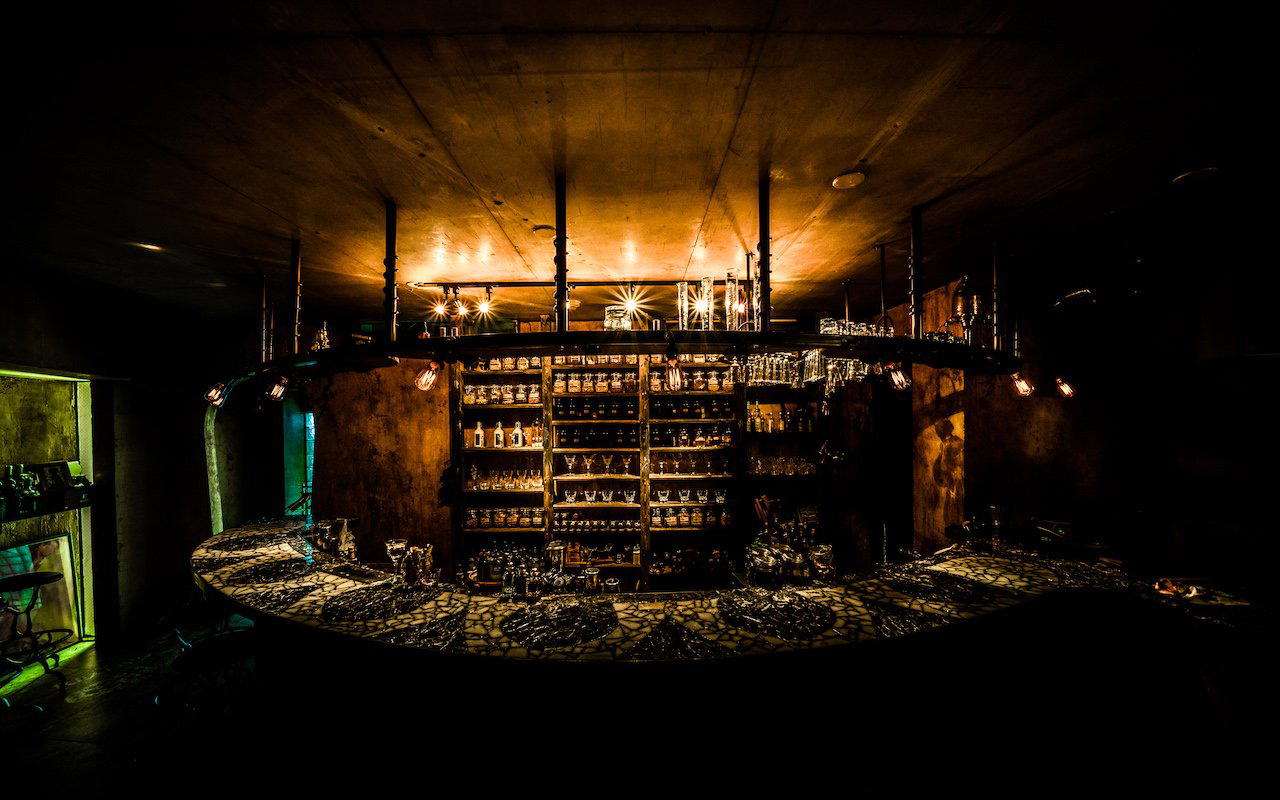
The drink programme lists sake, shochu, and wine, a range that places it in line with contemporaries who treat the pairing side of a yakitori dinner as more than an afterthought, even if the food remains the primary focus. The no-smoking policy and the request that guests arrive without perfume or strong scents underlines the degree to which aroma control matters when charcoal smoke is the dominant sensory register of the room.
Planning Your Visit
Taniguchi operates two seatings, one from 16:30, one from 19:00, every day of the week, with irregular closure days that are not published in advance. Reservations are made exclusively online through Tabelog; the kitchen does not take phone bookings and does not accept in-person reservation requests at any time. If you are running late due to transport delays, the venue asks that you send a text message rather than calling. Guests arriving more than 15 minutes after their reservation time may be refused entry, with a cancellation fee applied. All payment is by card, credit cards (Visa, Mastercard, JCB, Amex, Diners), electronic money, and QR code payments are all accepted; cash is not. Dinner pricing sits at JPY 15,000–19,999 per person on the stated range, with reviewer-reported averages reaching the JPY 20,000–29,999 band. Paid parking is available nearby but the restaurant has no dedicated spaces; arriving by train is the practical default. The venue is non-smoking throughout.
For additional context on the wider dining scene in the city, see our full Amagasaki restaurants guide, as well as our guides to Amagasaki hotels, bars, wineries, and experiences. If Japanese cuisine in a more classical seafood-forward register interests you, Ogitani is also based in Amagasaki. For other high-focus counters in neighbouring cities, Abon in Ashiya is worth considering. Further afield, affetto akita in Akita and Aji Arai in Oita show how this kind of disciplined specialist format operates across Japan's regional cities.
Cost and Credentials
Comparable venues nearby, for context on price, style, and recognition.
| Venue | Cuisine | Price | Notes |
|---|---|---|---|
| TaniguchiThis venue — the venue you are viewing | Mukonoso, Yakitori | $$$ | Not listed |
| Gyoraku Karakara | Not listed | $$$ | Mukonoso, Seafood-focused Japanese Izakaya |
| Nagomi (和海) | Mukogawa, Specialty Ramen | $$ | Not listed |
| Angle | Not listed | $ | /Tsukaguchi, Japanese Stew & Curry House |
| Ramen Senmon Nagomi Mukonosou ten | Not listed | $ | Mukonoso, Ramen counter near Mukonoso Station |
| Tenteko Mukonosou ten | Mukonoso, Okonomiyaki | $$ | Not listed |
Recognition history
Dated appearances from independent guides and award organizations, with the underlying list record or original source where available.
Tabelog Bronze #453
Tabelog
Tabelog 100 #53 · No. 53
Tabelog · Tabelog 100 - Yakitori - WEST - 2025
Tabelog Bronze
Tabelog
Continue exploring
More in Amagasaki
Restaurants in Amagasaki
Browse all →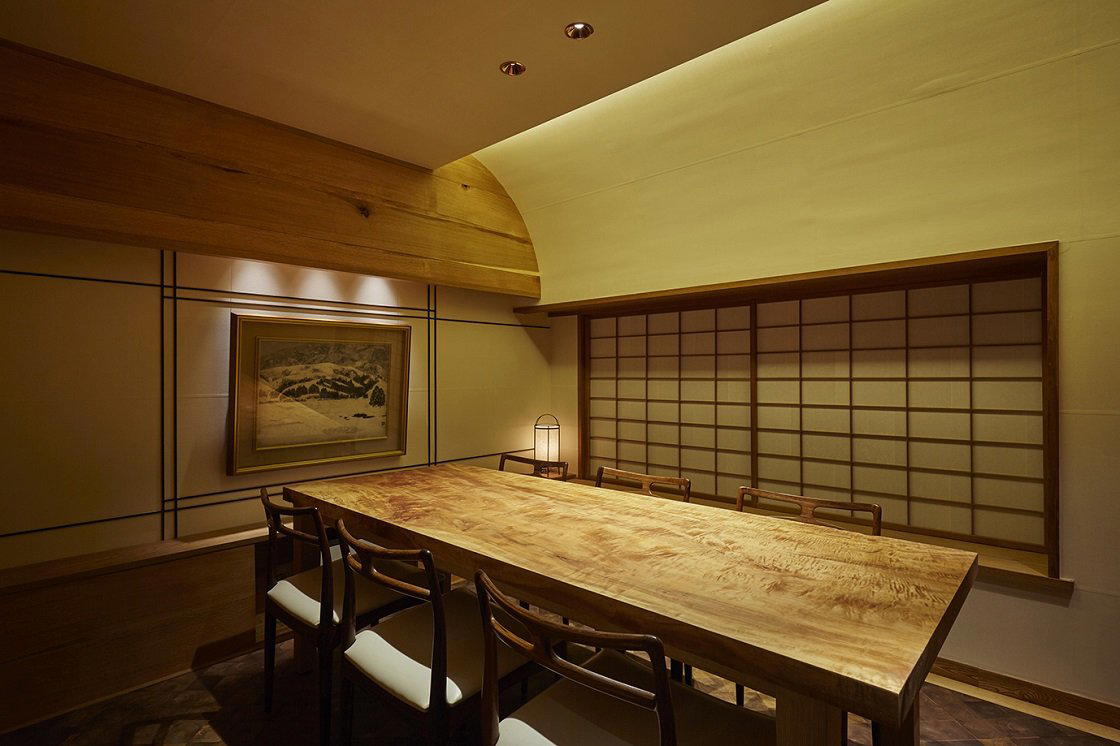




Bars in Amagasaki
Browse all →



Hotels in Amagasaki
Browse all →




Wineries in Amagasaki
Browse all →
At a Glance
- Cozy
- Intimate
- Special Occasion
- Chefs Counter
- Open Kitchen
- Sake Program
Current opening hours
- Monday
- Closed
- Tuesday
- Closed
- Wednesday
- 6–11 PM
- Thursday
- 6–11 PM
- Friday
- 6–11 PM
- Saturday
- 5–11 PM
- Sunday
- 5–11 PM
Hours can change for holidays and private events. Last verified .
Cozy counter-only space with artistic earthen walls and a relaxing atmosphere focused on the grill.
Know Before You Go
- Getting there
- 3-chome-36 Minamimukonoso, Amagasaki, Hyogo 661-0033, Japan