
Ramen Senmon Nagomi Mukonosou ten belongs to Amagasaki’s serious counter-ramen tier: small-format, ingredient-led, and validated by repeated Tabelog Ramen WEST “Tabelog 100” selections from 2017 through 2025. Its appeal is not luxury ritual but discipline, the kind of ramen shop where sourcing, broth structure, and compact service matter more than décor or ceremony.
Pearl is the En Primeur Club membership app — saves, bookings, and concierge access live there. Same editors, same standards.
- Address
- 兵庫県尼崎市南武庫之荘1-22-23 プラザ8番館1F
- Website
- tabelog.com
 Saves & bookings on Pearl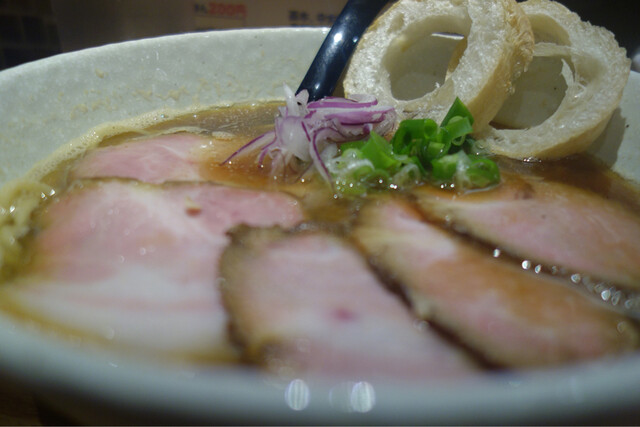
Approaching a compact ramen counter in Mukonosou, the first cue is scale. This is not the neon-heavy, late-night ramen image many travellers bring to Japan; the room is built around concentration, with counter seating and a rhythm that rewards solo diners as much as small groups. In Hyogo, that matters. The Kansai ramen conversation is spread across Osaka, Kobe, Kyoto, and smaller commuter cities, so a serious bowl outside the obvious urban centre has to earn attention through repeatable craft rather than spectacle.
Ramen Senmon Nagomi Mukonosou ten sits inside that quieter argument. Its repeated selection for Tabelog Ramen WEST “Tabelog 100” from 2017 through 2025 places it among western Japan’s more closely watched ramen addresses, but the more useful reading is not trophy-counting. The signal is consistency. Ramen shops rise and fade quickly in Japan, where small recipe shifts, staffing changes, and queue fatigue can alter reputations within a season. A run across multiple years suggests a kitchen with a stable point of view and a customer base that returns for execution, not novelty.
Ingredient-led ramen in a city better known for everyday eating
Amagasaki’s dining identity is practical, local, and less polished than the restaurant corridors of central Osaka or Kobe. That can work in ramen’s favour. The genre depends on controlled repetition: stock, tare, aroma oil, noodle texture, and toppings need to align bowl after bowl. In that context, ingredient sourcing is not a decorative talking point. It is the difference between a bowl that feels assembled and one that feels integrated.
The public classification is simply ramen, which is appropriate. Many stronger ramen shops in Japan resist the broad international shorthand that reduces the category to tonkotsu, miso, or shoyu labels. Western Japan’s ramen scene has become especially competitive around clarity, fish-driven depth, chicken-based stocks, and house-specific tare work, with the better counters using sourcing choices to define balance rather than weight. Nagomi’s recognition within the Ramen WEST list puts it in that ingredient-conscious camp: not a luxury dining room, but a specialist counter where the bowl is the entire critical field.
That distinction is useful for travellers building an Amagasaki itinerary. Nearby local comparisons show how broad the city’s casual dining range is: Gyoraku Karakara occupies a higher spend bracket, while places such as Butanohoshi, Dairen, Angle, and Honkaku Sanuki Udon Honoka speak to different parts of the same local appetite for focused, repeat-visit cooking. Ramen Senmon Nagomi Mukonosou ten is compelling because it keeps the spend low while competing on precision, a combination that often explains why ramen remains Japan’s great democratic tasting format.
The counter format keeps the meal narrow, fast, and serious
Counter ramen is a discipline as much as a service style. The diner sees the kitchen’s timing, the kitchen sees the diner’s pace, and the bowl has little margin for delay. That format suits shops where the main decision is not how long to linger, but how much attention to give the broth and noodles before the temperature changes. The absence of private rooms and the counter-only setup sharpen the experience into something closer to a specialist bar than a conventional restaurant.
For families, the format cuts both ways. Children are welcomed and children’s tableware is available, but counter seating changes group dynamics. A larger party cannot assume it will be seated together, which is typical of small Japanese counters where turnover and seat order matter. Solo diners, however, are naturally at home in this style. So are pairs who understand that a ramen counter is not designed for a long conversation over multiple courses.
The shop’s price band also matters editorially. In Japan, serious ramen often remains accessible by international dining standards, and this address sits in the everyday ramen range rather than the premium tasting-menu economy. That makes the Tabelog recognition more meaningful: the achievement is not luxury scarcity but a consistently persuasive bowl within a modest category, where hundreds of competitors operate on similar spend.
How to read its place in Amagasaki
For visitors, Amagasaki is often treated as connective tissue between Osaka and Kobe. That misses part of the pleasure. Cities like this preserve a different dining register: neighbourhood counters, station-area specialists, and small rooms that rely on local repeat traffic before destination diners notice them. Ramen Senmon Nagomi Mukonosou ten belongs to that pattern. It gives a reason to treat Mukonosou as a dining stop rather than a transit label.
The critical case is narrow but strong. There is no need to inflate the experience into grand dining theatre. The evidence points to a compact ramen specialist with a long recognition streak, a modest price band, and a format that keeps attention on the bowl. For travellers who care about ingredient-driven Japanese casual food, that is enough. It is the kind of address that explains why ramen criticism in Japan is so granular: a shop does not need a long menu, a famous chef, or a polished room to become part of the regional conversation.
Plan the rest of the city around that level of specificity. For broader local context, use our full Amagasaki restaurants guide, then branch into Amagasaki hotels, Amagasaki bars, Amagasaki wineries, and Amagasaki experiences if the trip extends beyond one meal. Readers comparing Japanese casual formats elsewhere may also find useful contrasts in -Grilled beef Sukiyaki- KAMAKURA TANUKIAN 鎌倉 たぬき庵 in Kamakura. 鮪と炭火焼き うお炭 秋葉原店 in Tokyo.cafe in Osaka.know in Kumamoto, (Shoku) Vietnam in Kawasaki, [Curry Senmon Ten] Maruyama Kyoju. in Sapporo, Jōdo Saké Bar in Los Angeles, and Onigiri Time in Pasadena.
Comparison Snapshot
Comparable venues by cuisine and price in the same metro.
| Venue | Cuisine | Price | Notes |
|---|---|---|---|
| Ramen Senmon Nagomi Mukonosou tenThis venue — the venue you are viewing | Ramen counter near Mukonoso Station | $ | Not listed |
| Ramen Senmon Nagomi | Ramen | $ | Mukogawa |
| Nagomi (和海) | Specialty Ramen | $$ | Mukogawa |
| Sanuki Udon Harushin | Sanuki-style Udon & Tempura | $ | /潮江 (Shioe) |
| Angle | Japanese Stew & Curry House | $ | /Tsukaguchi |
| Rock 'n' Billy Super 1 (ロックンビリーS1) | Award-Winning Ramen | $$ | Minamitsukaguchicho |
Recognition history
Dated appearances from independent guides and award organizations, with the underlying list record or original source where available.
Tabelog 100 #56 · No. 56
Tabelog · Tabelog 100 - Ramen - WEST - 2025
Continue exploring
More in Amagasaki
Restaurants in Amagasaki
Browse all →




Bars in Amagasaki
Browse all →



Hotels in Amagasaki
Browse all →



Wineries in Amagasaki
Browse all →
At a Glance
- Cozy
- Lively
- Solo
- Family
- Casual Hangout
- After Work
- Chefs Counter
- Standalone
A compact, counter-only ramen bar with a simple, functional interior that feels cozy and energetic, often with a line outside and a casual, neighborhood atmosphere.