1 Michelin Star
Our verdict
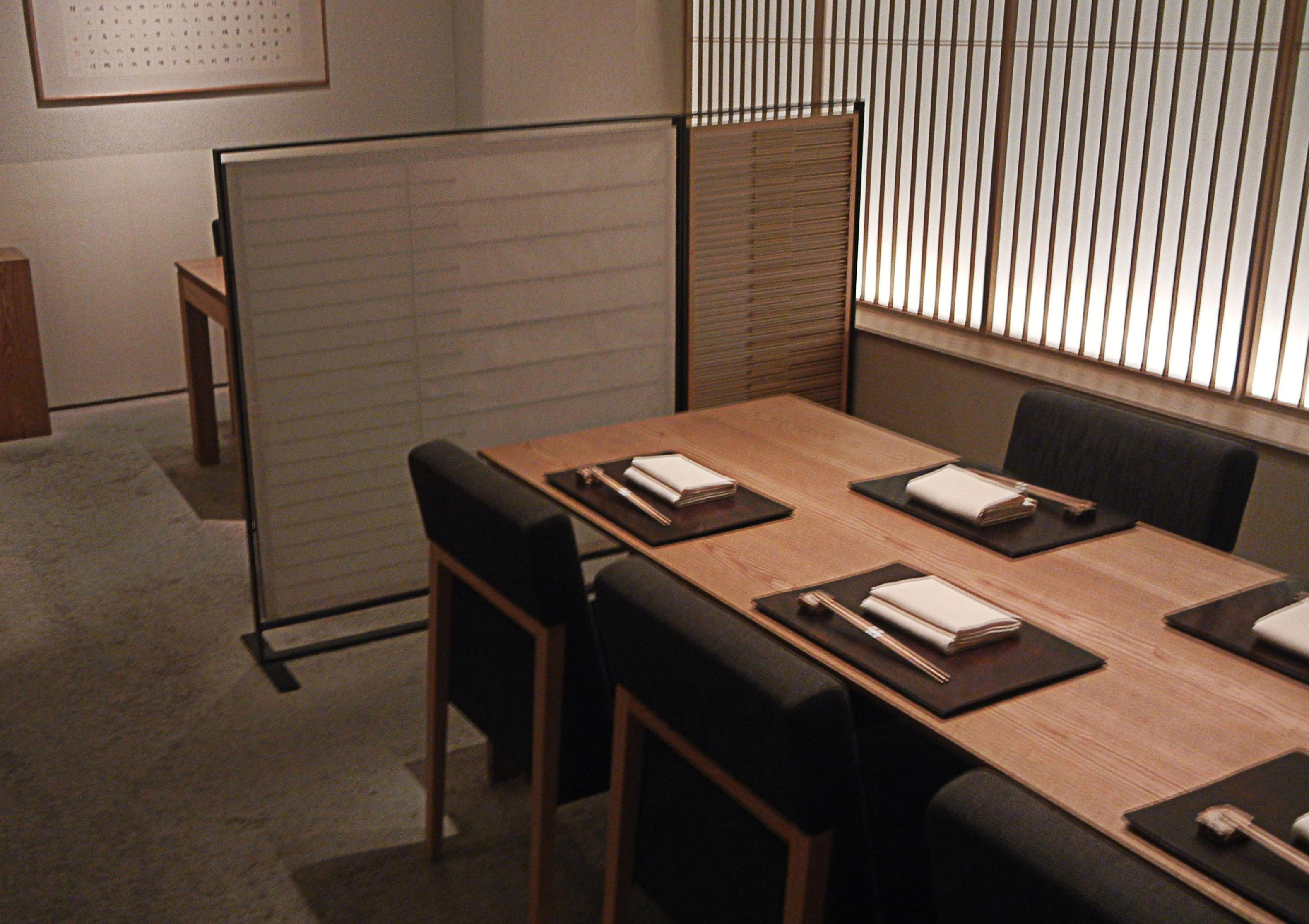
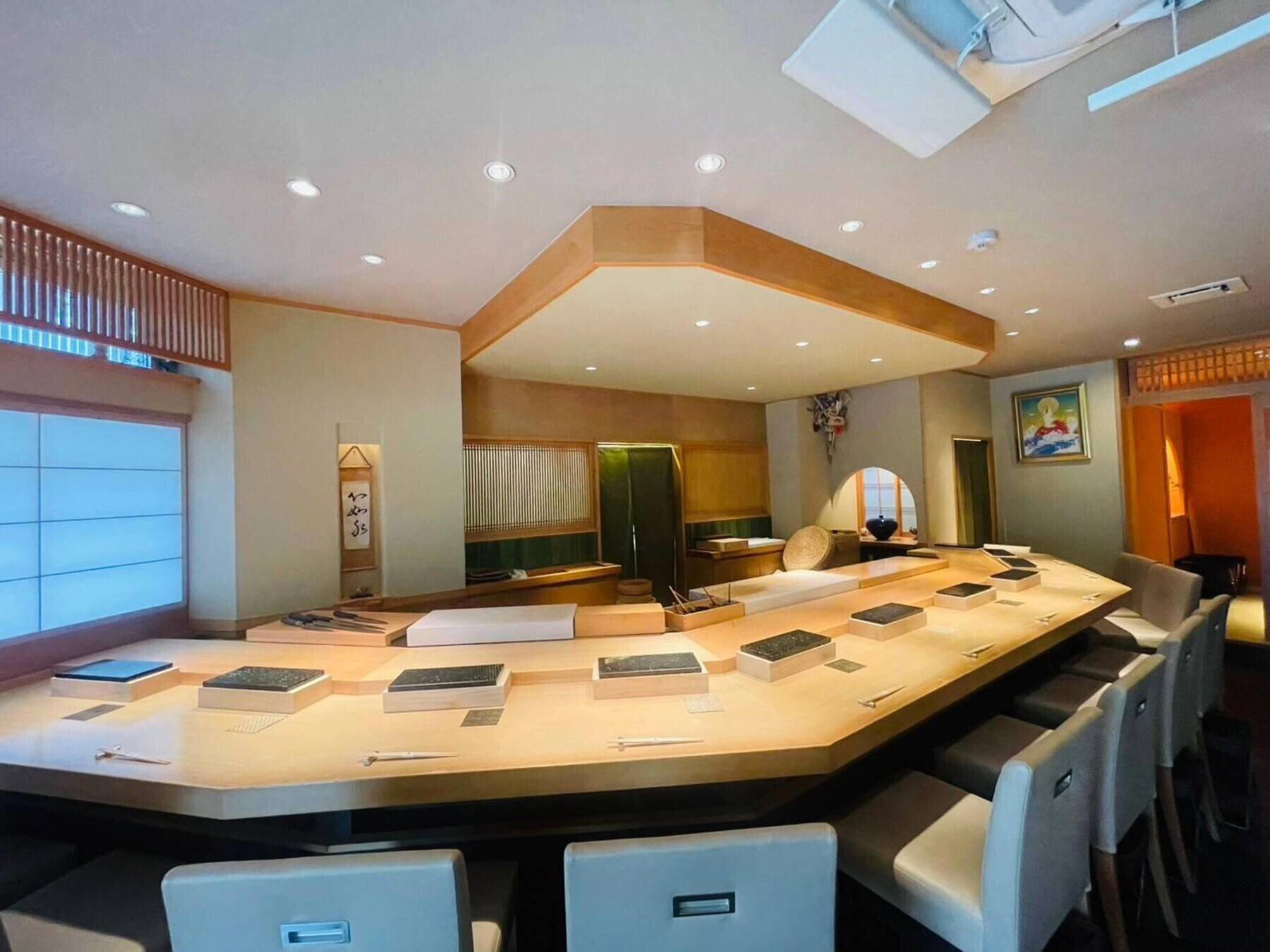
At Takumi Tatsuhiro in Shinjuku, a fan-shaped counter places guests around the kitchen in a format that makes the craft visible rather than ceremonial. The house snack of iwashi-isobemaki sets an old-school tone that carries through to spring sea bream with sweetened egg yolk and lean tuna with mustard. Sushi rice sourced from the chef's native Noto Peninsula adds a provenance thread rare even in Tokyo's ¥¥¥¥ tier.

Pearl is the En Primeur Club membership app, where members save venues, book tables and use the concierge.
The menu
What to order
- Sardine wrapped in nori
- Young sea bream with oboro
- Lean tuna with mustard
A Counter Built for Craft, Not Theatre
Tokyo's top-tier sushi counters have split into two distinct formats over the past decade. One group performs: low lighting, long pauses between courses, and a chef who addresses the room as much as the fish. The other group works. At Takumi Tatsuhiro, in Shinjuku's 1-chome, the counter spreads in a fan shape so that every guest faces the kitchen, and chef and apprentice move through service in what observers consistently describe as near-choreographic tandem. The name gives the game away: takumi translates directly as artisan, and the room is organised to make that artisanship visible at every step.
This is a useful orientation point for anyone mapping the ¥¥¥¥ sushi tier. At venues like Harutaka, the counter format places similar weight on proximity to the chef, but the emphasis there runs toward refined minimalism. Takumi Tatsuhiro's lineage points somewhere slightly different: toward a craftsman's sushi in the old Edomae sense, where technique is worn openly rather than submerged beneath ceremony.
Old-School Technique as a Living Practice
The sushi served here borrows from a pre-war vocabulary that most of Tokyo's contemporary counters have largely retired. Spring sea bream topped with sweetened egg yolk flakes, lean tuna paired with mustard: these are preparations with deep Edomae roots, condiments and toppings used historically to complement fish before refrigeration made absolute freshness the default standard. In the current Tokyo market, where most high-end omakase menus compete on premium sourcing and minimal intervention, Takumi Tatsuhiro's willingness to apply these older techniques reads less as nostalgia and more as a considered position within the tradition.
The house snack, iwashi-isobemaki, anchors this sensibility from the first course. Pilchard wrapped in nori is not a glamorous opener by contemporary standards; sardine is not the fish that sells seats at Ginza counters. But as a statement of intent, bite-sized iwashi-isobemaki is difficult to misread. This is a kitchen that thinks about what sushi was before it became a luxury performance, and uses that thinking to shape what it still can be.
Legacy conversation around Tokyo sushi often defaults to lineage: which counter trained which chef, which house philosophy was passed down in which form. Takumi Tatsuhiro operates in a related but distinct register. The craft here is about form as much as bloodline. The intervals between pieces, described by regulars as precisely calibrated, and the coordinated movement between chef and apprentice suggest a service philosophy that treats pacing as technique in the same way that knife work is technique.
Provenance at the Rice Level
Sushi rice at Takumi Tatsuhiro comes from the chef's native Noto Peninsula, on the Sea of Japan coast of Ishikawa Prefecture. The Noto Peninsula has its own agricultural identity, shaped by a cooler, wetter climate than the Kanto plain, and rice from that region carries a different starch profile than the short-grain varieties typically associated with Tokyo sushi. More than a sourcing note, this represents a direct producer relationship: the description of the arrangement as mutual support between restaurateur and farmers suggests a supply chain built on continuity rather than market availability.
In a city where ¥¥¥¥ omakase venues compete partly on the quality and origin of their rice, this level of specificity and geographic commitment is a differentiator worth noting. The Noto Peninsula connection also anchors the counter in a regional food culture that operates at some distance from the Tokyo mainstream, giving the meal a provenance thread that persists across the entire service.
Placing Takumi Tatsuhiro in Tokyo's Dining Context
Shinjuku sits outside the traditional sushi heartland of Ginza and Minami-Aoyama, and that geography matters. The neighbourhood has long supported serious restaurants across formats, but the concentration of destination sushi counters is lower here than in Tokyo's central wards. For a counter with the craft density and price positioning of Takumi Tatsuhiro, the Shinjuku address is itself a mild counterpoint to the idea that prestige dining must cluster in Ginza or Roppongi.
Tokyo's ¥¥¥¥ dining tier includes a wide range of formats beyond sushi. Kaiseki houses like RyuGin operate in the same price bracket with a fundamentally different relationship to seasonality and multi-course architecture. French restaurants at this level, including L'Effervescence and Sézanne, compete on different terms entirely. Even within the innovative end of the spectrum, Crony occupies a different register. Within the sushi-specific tier, Takumi Tatsuhiro's emphasis on old-school technique and regional rice sourcing positions it as a counter for guests who have already worked through the standard omakase progression and are looking for something with a more particular point of view.
Japan's broader dining geography offers parallel reference points. The craft-forward, regionally anchored approach visible at Takumi Tatsuhiro echoes dynamics found at serious restaurants in other Japanese cities: the kind of producer-connected, technique-led work seen at Gion Sasaki in Kyoto, the ingredient-led ambition at HAJIME in Osaka, or the focused regionalism of Goh in Fukuoka. The comparison is about orientation, not equivalence: each operates in a different format, but the underlying commitment to a specific food culture rather than a generalized fine-dining aesthetic is consistent.
Planning Your Visit
Takumi Tatsuhiro is located at 1-chome-11-7 Shinjuku, Shinjuku City, in a building address that places it within walking distance of Shinjuku's main transport hub. The counter format and craft-focused service model suggest a venue where advance booking is expected; at this price tier in Tokyo, walk-in availability is rare, and omakase counters of this type typically operate on reservation-only terms. Guests travelling to Tokyo for serious dining across formats should consider pairing this counter with other neighbourhood-specific experiences, and our full Tokyo restaurants guide maps the broader scene across cuisines and price tiers. For hotels, bars, and experiences in the city, our Tokyo hotels guide, bars guide, and experiences guide cover the full picture. Travellers comparing Japan-wide options can also explore akordu in Nara, 1000 in Yokohama, and 6 in Okinawa as reference points for Japan's wider dining range. For international comparative context, the counter-format precision at Takumi Tatsuhiro shares structural DNA with tightly controlled tasting experiences at Le Bernardin in New York and the provenance-led omakase approach found at Atomix. Also browse our Tokyo wineries guide for pairings worth seeking out before or after your meal.
Frequently asked questions
What awards or recognition does Takumi Tatsuhiro have?
Takumi Tatsuhiro has received recognition including: The counter spreads like a fan, so guests surround the kitchen. Chef and apprentice serve snacks and nigiri in turn, moving in perfect harmony. The house snack is iwashi-isobemaki, bite-sized pieces of pilchard wrapped in nori. Old-school s….
Where exactly is Takumi Tatsuhiro?
Takumi Tatsuhiro is located at Japan, 〒160-0022 Tokyo, Shinjuku City, Shinjuku, 1 Chome−11−7 サンサーラ第五御苑ビル 1F, Tokyo.
What's the best thing to order at Takumi Tatsuhiro?
The counter runs a set progression rather than an à la carte menu, so the question is really which moments in the sequence stand out. Two dishes with documented signatures: the iwashi-isobemaki, pilchard wrapped in nori served as the house snack, and the spring sea bream topped with sweetened egg yolk flakes, a pre-war preparation that most contemporary Tokyo counters no longer serve. The lean tuna with mustard pairing follows the same old-school logic.
What cuisine category does Takumi Tatsuhiro fall under?
How hard is it to get a table at Takumi Tatsuhiro?
The fan-shaped counter format limits covers by design, and the venue sits at the ¥¥¥¥ tier in Shinjuku, a neighbourhood with fewer competing sushi counters at this level than Ginza or Minami-Aoyama. That combination of small capacity and a loyal local following means reservations require advance planning; walk-in availability is unlikely on any given evening. Booking through a hotel concierge or a specialist reservation service is the practical approach.
Cost and Credentials
A quick peer reference to anchor this venue in its category.
| Venue | Cuisine | Price | Awards | Notes |
|---|---|---|---|---|
| Takumi TatsuhiroThis venue (the venue you are viewing) | Authentic Edomae Omakase | $500+ | 1 Michelin Star | Not listed |
| Harutaka | Edo-Style Omakase Sushi | $200–300 | 3 Michelin Stars · World's 50 Best #76 | Sushi |
| RyuGin | Modern Kaiseki | $500+ | 3 Michelin Stars · World's 50 Best #41 | Kaiseki, Japanese |
| L'Effervescence | Modern French with Japanese Influences | $200–300 | 3 Michelin Stars · World's 50 Best #69 | French |
| HOMMAGE | Modern French with Japanese Influences | $150–200 | 2 Michelin Stars · World's 50 Best #78 | Innovtive French, French |
| MAZ | Innovative Peruvian-Japanese Fusion | $150–200 | 2 Michelin Stars · World's 50 Best #28 | Innovative |
Recognition history
Dated appearances from independent guides and award organizations, with the underlying list record or original source where available.
Michelin 1 Star
Michelin