
Michelin Bib Gourmand
Our verdict
A Michelin Bib Gourmand recipient in both 2024 and 2025, Takeya brings Japanese counter cooking to Hung Hom at a price point that sits well below the city's formal kaiseki tier. For Japanese cuisine at the $$ level in Hong Kong, it earns its place on a short list.

Pearl is the En Primeur Club membership app, where members save venues, book tables and use the concierge.
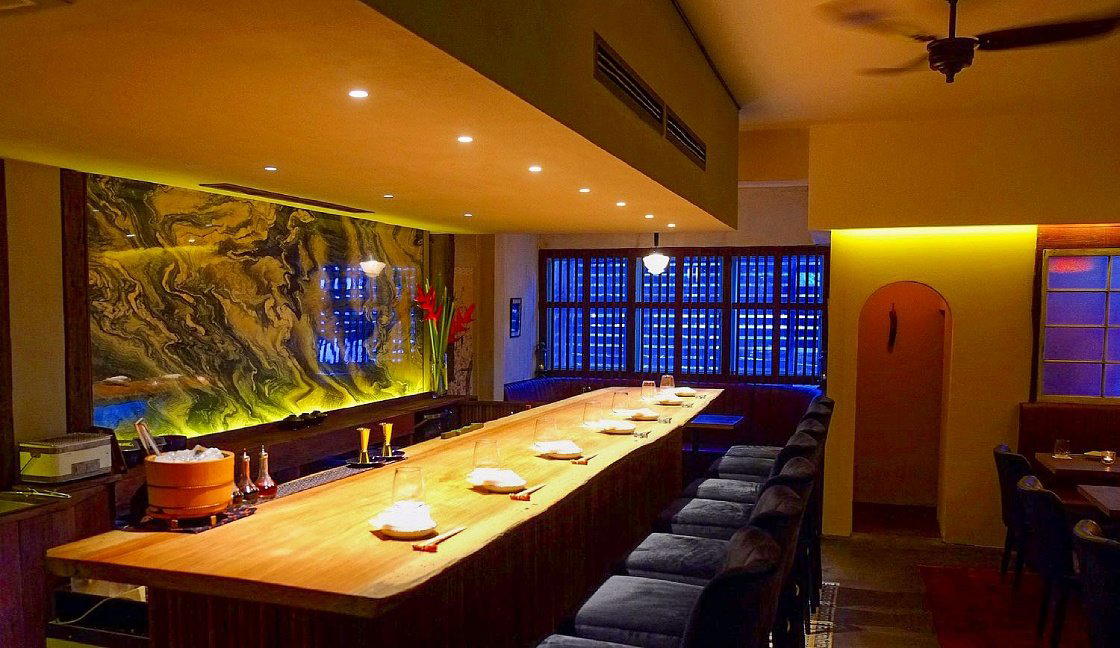
Counter Cooking in Hung Hom
Hung Hom is not where most visitors expect to find Michelin-recognised Japanese cooking. The neighbourhood sits across the harbour from Central, its streets given over more to wet markets, cha chaan tengs, and hardware suppliers than to the kind of dining rooms that populate international best-of lists. That geography is precisely why the counter format works here. Restaurants on Tak Man Street earn their following through the food rather than the address, and the feedback loop between cook and diner is tighter for it. Live preparation at close range, the kind where you can watch timing decisions made in real time, carries a different weight when the room isn't performing for tourists.
Takeya occupies that position. At the $$ price tier, it sits below Hong Kong's formal Japanese rooms, places like Zuicho or the more structured kappo formats represented by Kappo Rin, but it carries Michelin Bib Gourmand recognition in both 2024 and 2025, which in Hong Kong's competitive Japanese dining scene is a meaningful signal about cooking quality relative to price. The Bib Gourmand, awarded for good food at moderate cost, is a different credential from a star but it is not a lesser one. It answers a different question: whether the kitchen delivers at a price point accessible to regulars rather than special occasions.
The Performance at the Counter
The logic of live preparation is not new to Japanese cooking. Teppanyaki, yakitori, and robatayaki all centre the theatre of heat and technique as part of the dining experience. What distinguishes a counter operation at this level from a casual grill is the degree to which the cook's decisions become visible. Searing temperature, resting time, the angle of a knife through fish, these details are not hidden behind a pass. Diners read the meal as it happens rather than receiving it as a finished product.
That dynamic shapes the kind of attention the food receives. A diner at a counter is, in effect, watching the kitchen's process without the mediation of service staff interpreting it. In Hong Kong's Japanese dining rooms, this format ranges from the high-formality omakase counters of Central and Wan Chai to the more relaxed neighbourhood setups further from the tourist circuit. Takeya sits in the latter category, where the counter's purpose is function as much as spectacle, the food is the focus, not the room's ability to project prestige.
Chef David Schwartz leads the kitchen, a detail that itself reflects a broader pattern in Hong Kong's Japanese restaurant scene: non-Japanese chefs operating within Japanese culinary frameworks, trained in technique rather than geography. That practice has precedent across the city's mid-tier Japanese rooms, where the credential is skill and consistency rather than nationality. The Bib Gourmand recognition two years running suggests the kitchen is delivering on both counts.
Where Takeya Sits in Hong Kong's Japanese Scene
Hong Kong's Japanese restaurant market is layered in a way that few other cities outside Japan can match. At the leading, multi-star omakase rooms and kaiseki counters compete with equivalents in Tokyo and Kyoto, venues like Godenya and Nagamoto operate in that upper tier. Below them sits a substantial mid-tier, where kappo-style and counter formats serve a clientele that wants precision cooking without the formality or price premium of the starred rooms. Takeya operates in this tier, alongside venues like Ryota Kappou Modern, where the value proposition is craft at an accessible price rather than ceremony.
The comparison matters because it sets expectations correctly. This is not the place for a multi-hour kaiseki progression or the kind of omakase that functions as a city-break centrepiece. The Bib Gourmand framing positions it as a neighbourhood-calibre operation that punches above its price tier, the sort of room that earns a local following before it earns a guidebook listing.
For context on what Japanese cooking at this price point looks like in other cities, the contrast with Tokyo's starred Japanese rooms is instructive. Venues like Kagurazaka Ishikawa or Azabu Kadowaki occupy a formal register that demands a different kind of planning. Takeya's Bib Gourmand positioning, by contrast, is built for frequency, the kind of restaurant you factor into a regular week rather than a special calendar. That distinction has value in a city where dining budgets are stretched across a dense field of options.
Kyoto's kappo rooms, including Isshisoden Nakamura and Gion Matayoshi, show how counter-based Japanese formats can carry significant prestige at the upper end. Osaka's equivalent, Kashiwaya Osaka Senriyama, and Tokyo's Ginza Fukuju demonstrate the range. In Los Angeles, Hayato and Tokyo's Myojaku reinforce how widely the counter tradition has dispersed. Takeya belongs to this broader ecosystem but operates at its accessible end, which is where most diners spend most of their meals.
Planning Your Visit
Takeya is located at Shop C1, 31 Tak Man Street, Hung Hom. Getting there: Hung Hom MTR station is the closest transit point; the walk from the station to Tak Man Street is short. Budget: The $$ price tier places this comfortably below Hong Kong's mid-to-upper Japanese rooms. Reservations: Dress: No dress code confirmed; neighbourhood counter standards apply. The Bib Gourmand status for 2024 and 2025 is the primary trust signal for first-time visitors assessing quality relative to price.
For broader Hong Kong planning, see our full Hong Kong restaurants guide, our full Hong Kong hotels guide, our full Hong Kong bars guide, our full Hong Kong wineries guide, and our full Hong Kong experiences guide.
Frequently asked questions
Who is the chef connected to Takeya?
The chef associated with Takeya is David Schwartz.
What part of town is Takeya in?
Takeya is located at Shop C1, 31 Tak Man St, Hung Hom, Hong Kong, Hong Kong.
What do people recommend at Takeya?
Takeya earned back-to-back Michelin Bib Gourmand recognition in 2024 and 2025, which signals consistent execution across the menu rather than a single standout dish. The counter format at 31 Tak Man Street puts live preparation at the centre of the meal, so items cooked to order in front of guests tend to draw the most attention from returning visitors. At the $$ price point, the value-to-recognition ratio is what drives repeat visits and word-of-mouth in Hung Hom.
| Venue | Cuisine | Price | Awards | Notes |
|---|---|---|---|---|
| TakeyaThis venue (the venue you are viewing) | Japanese Yakitori Izakaya | $30–50 | Michelin Bib Gourmand | Not listed |
| 8 1/2 Otto e Mezzo Bombana (Hong Kong) | 3 Michelin-Star Italian Fine Dining | $200–300 | 3 Michelin Stars · World's 50 Best #94 | Italian |
| Ta Vie | Modern French-Japanese Fine Dining | $300–500 | 3 Michelin Stars · World's 50 Best #68 | Japanese - French, Innovative |
| Caprice | Contemporary French Fine Dining | $200–300 | 3 Michelin Stars · World's 50 Best #35 | French, French Contemporary |
| Feuille | Modern Vegetable-Forward French | $200–300 | 1 Michelin Star · World's 50 Best #93 | French Contemporary |
| Neighborhood | Modern French with Asian Influences | $50–100 | 1 Michelin Star · World's 50 Best #24 | International, European Contemporary |
Recognition history
Dated appearances from independent guides and award organizations, with the underlying list record or original source where available.
Michelin Bib Gourmand
Michelin
Full recognition history (3 entries)
Michelin Bib Gourmand
Michelin
Michelin Bib Gourmand
Michelin
Continue exploring
More in Hong Kong
Restaurants in Hong Kong
All restaurants in Hong Kong →
Bars in Hong Kong
All bars in Hong Kong →
Hotels in Hong Kong
All hotels in Hong Kong →
Wineries in Hong Kong
All wineries in Hong Kong →
Details
- Intimate
- Cozy
- Trendy
- Date Night
- Casual Hangout
- After Work
- Sake Program
- Local Sourcing
- A La Carte
- Small Plates
- Sake
- Umeshu
Current opening hours
- Monday
- Closed
- Tuesday
- 5–10 PM
- Wednesday
- 5–10 PM
- Thursday
- 5:30–10 PM
- Friday
- 5–10 PM
- Saturday
- 5–10 PM
- Sunday
- 5–10 PM
Hours can change for holidays and private events. Hours as of .
Warm and intimate spot decorated with lots of bamboo, creating a cozy family-style izakaya atmosphere.