


2 Michelin Stars · La Liste Top Restaurants · Star Wine List
Our verdict
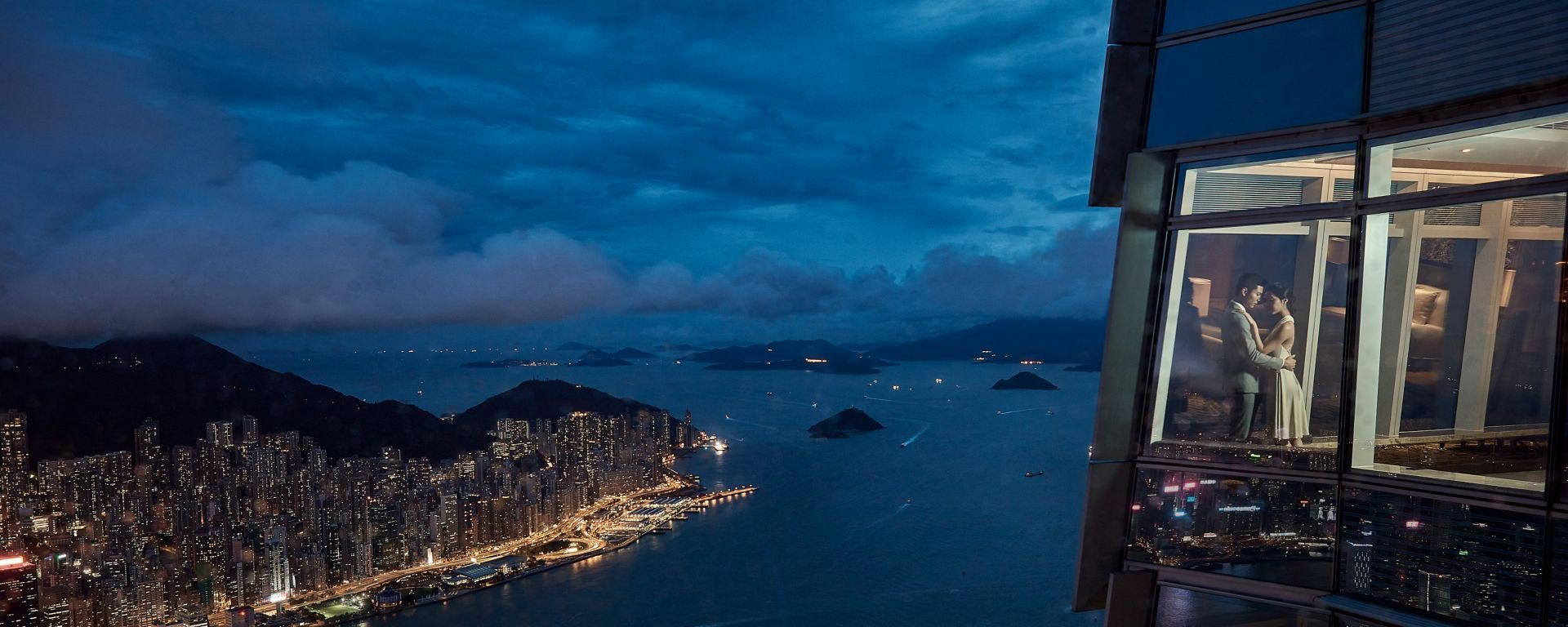
On the 102nd floor of the ICC tower, Tin Lung Heen places Cantonese cooking at the highest point in Hong Kong's skyline. Chef Paul Lau's seafood-forward menu, from steamed crab claw with egg white to dim sum built around Wagyu and black truffle, holds two Michelin stars and consistent placement in the Opinionated About Dining Asia rankings. The view west over Stonecutters Bridge and Lantau is as deliberate as the cooking.

Pearl is the En Primeur Club membership app, where members save venues, book tables and use the concierge.
The menu
What to order
- Honey-glazed char siu
- Chicken soup with fish maw in coconut
- Barbecued Iberian pork
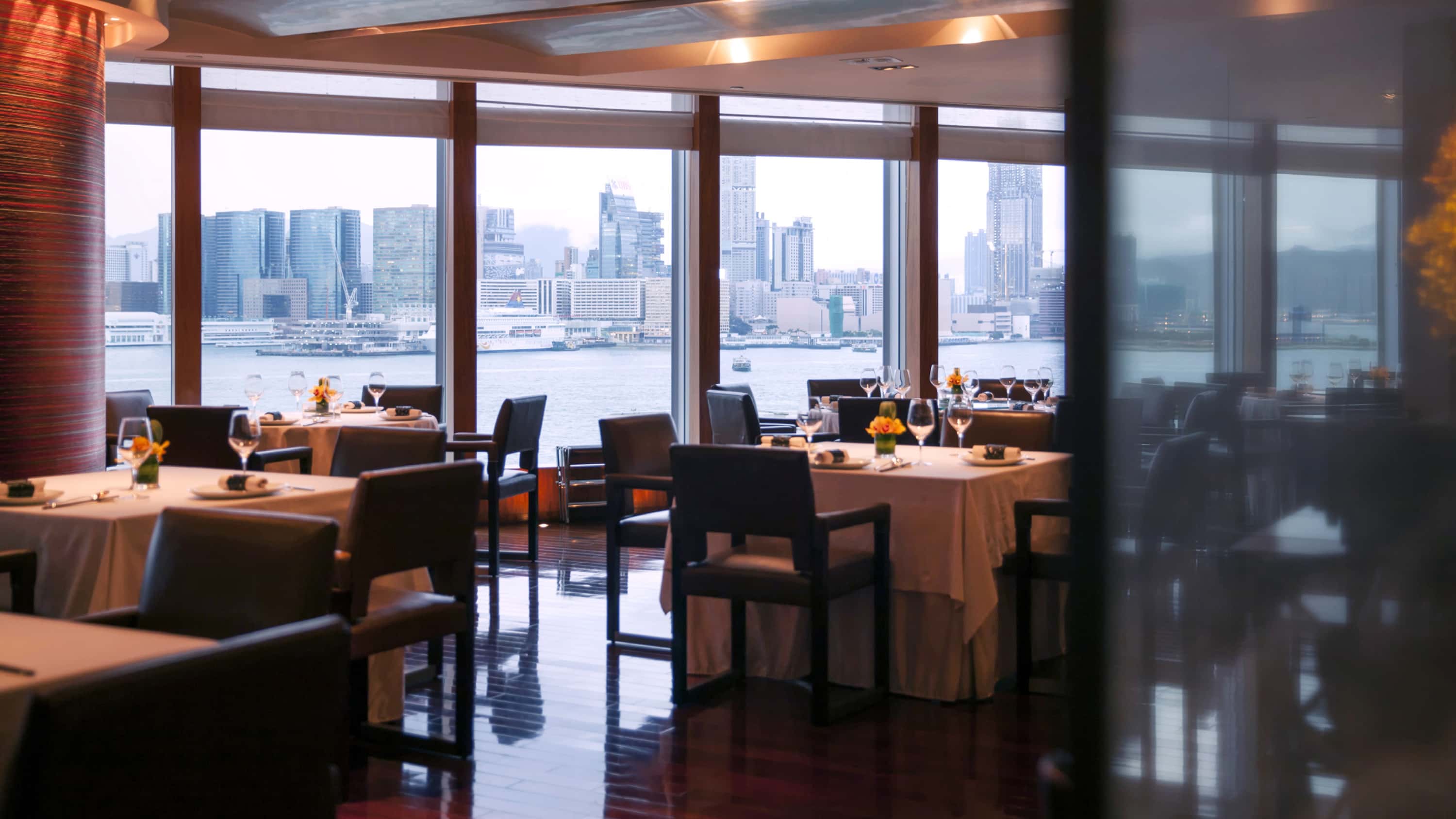
A Room at the Edge of the Sky
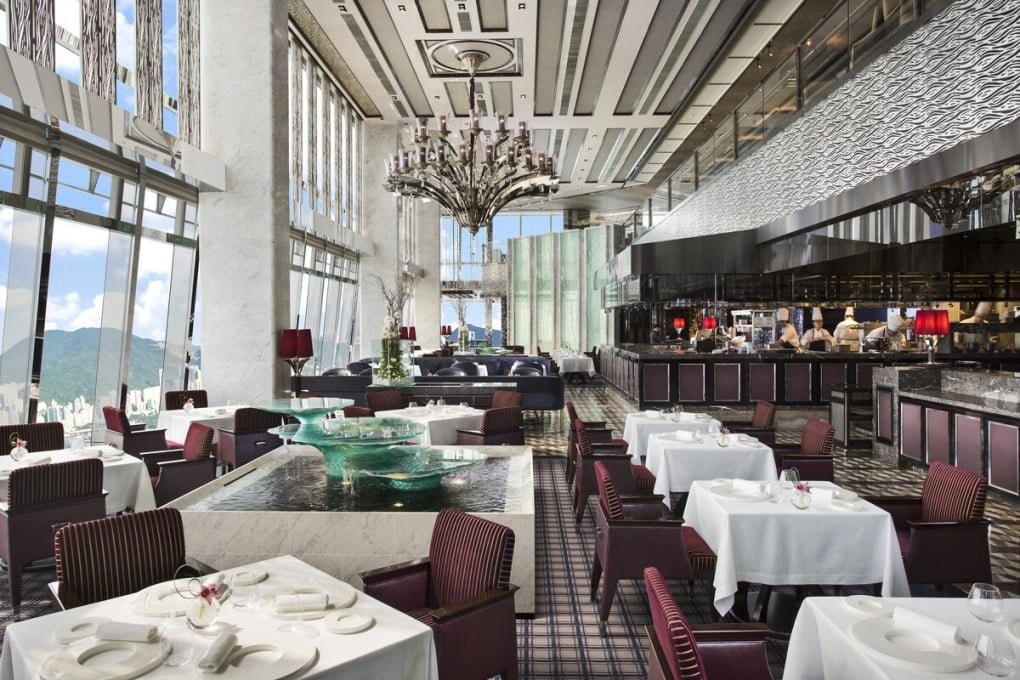
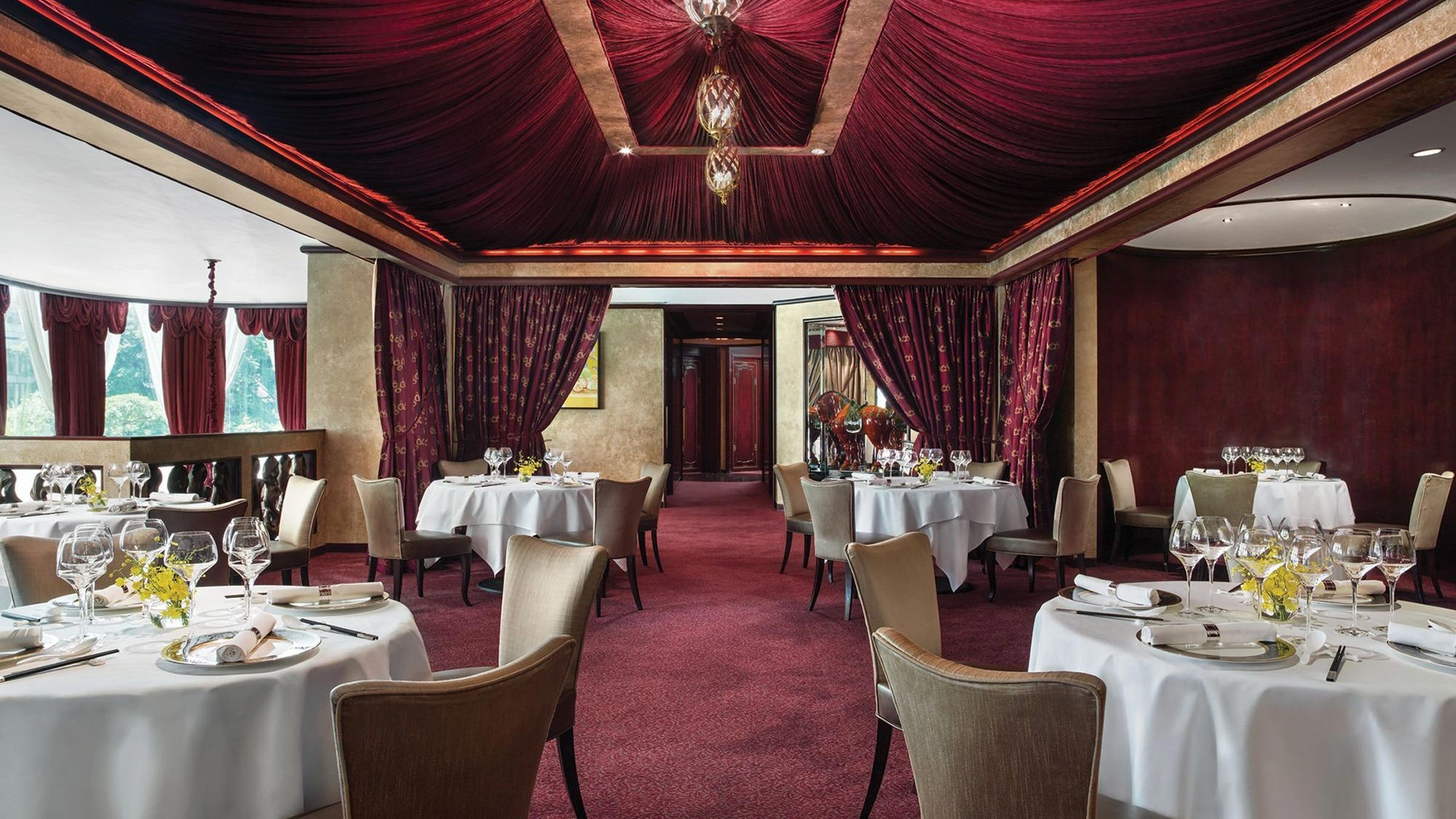
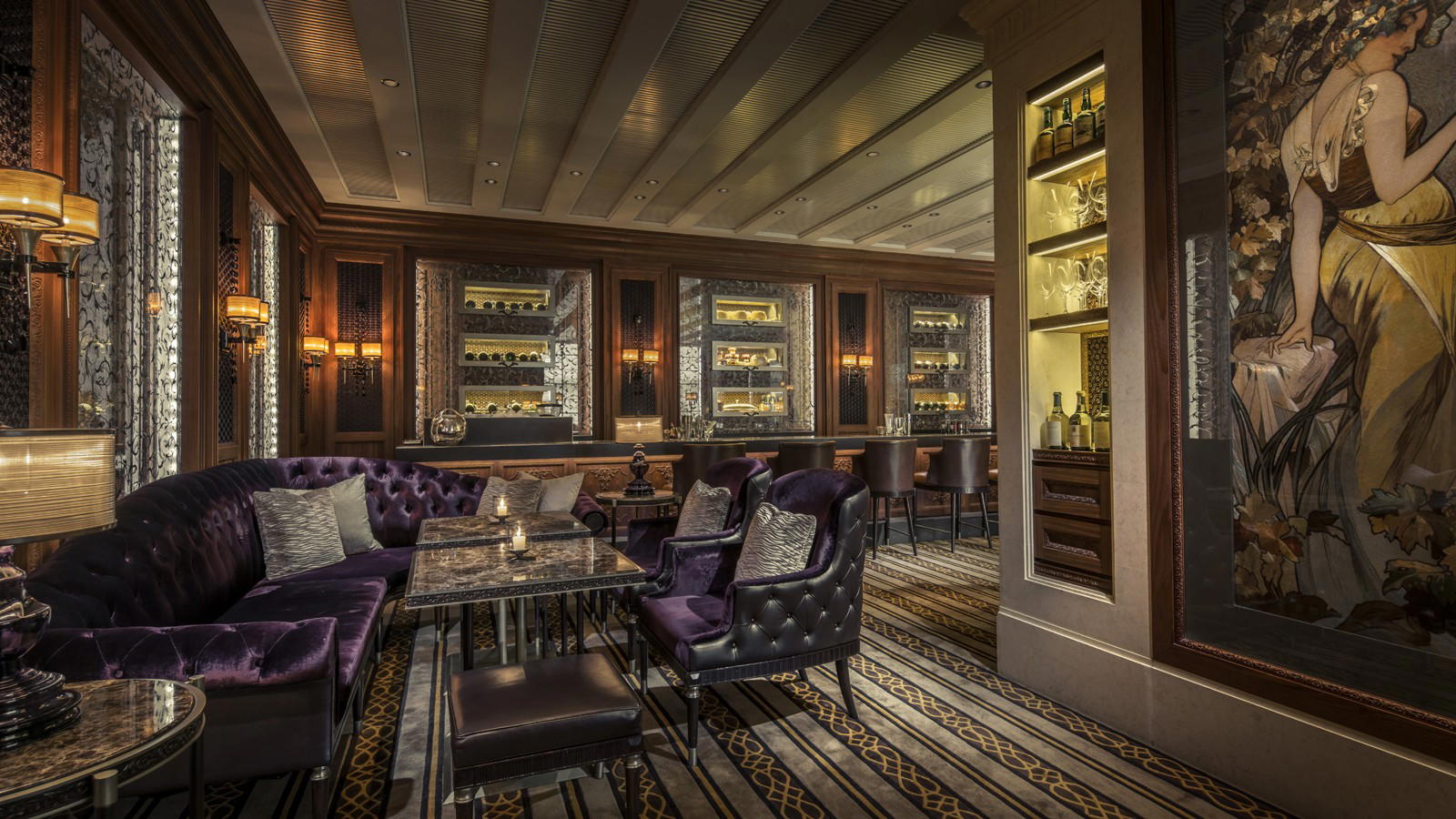
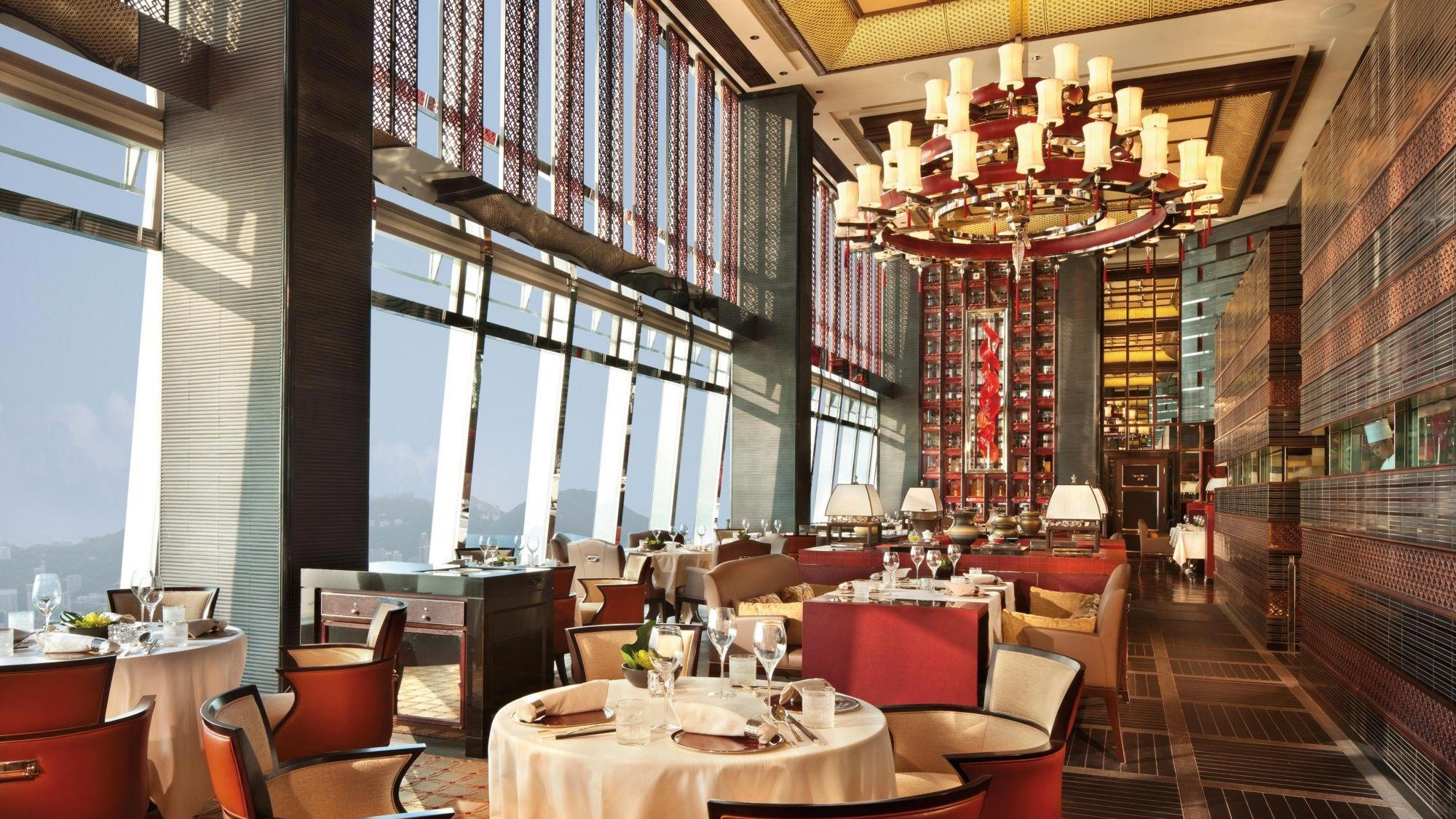
Floor-to-ceiling glass at 102 storeys does something particular to a dining room: it removes the ground entirely. At Tin Lung Heen, the windows face west rather than toward the postcard panorama of Hong Kong Island, which means what you see is the working harbour, the arches of Stonecutters Bridge, and the hills of Lantau receding into haze. During the day, natural light floods the red wood veneer interior at an angle that shifts through the service. By dinner, the port traffic glitters below while the room holds its composed, lacquered calm. The name translates as 'sky dragon pavilion,' and the appointment matches that register: grand but precise, with nothing accidental about the proportions.
The setting is not incidental to the food. Sky-high Cantonese restaurants exist across the region, but the format tends toward spectacle over substance. Tin Lung Heen, operating within The Ritz-Carlton Hong Kong inside the ICC, the city's tallest building, has held two Michelin stars and appeared consistently in the Opinionated About Dining Leading Restaurants in Asia rankings, placing 88th in 2024 and 103rd in both 2023 and 2025. A Black Pearl 1 Diamond followed in 2025. La Liste tracked it at 90 points in 2025 and 89 points in 2026. Those credentials locate it inside a specific tier of Hong Kong Cantonese: formally appointed, technique-rigorous, and priced for the city's power-dining circuit.
The Logic of the Flame
Cantonese cooking at this level operates on a set of technical premises that distinguish it from other Chinese regional traditions. Wok hei, the breath of the wok, that slightly scorched, smoky volatility produced by extreme heat and fast movement, is the visible signature of the cuisine's high-fire philosophy. But the Cantonese tradition that commands two Michelin stars is not solely about spectacle heat. It is equally about restraint: the double-boiled broth that takes hours to develop clarity, the steamed preparation that demands absolute ingredient quality because nothing is masked, the barbecue technique where lacquer and timing determine the difference between a char siu that is merely acceptable and one that is architecturally tender.
Chef Paul Lau's kitchen works across that full range. The steamed crab claw with egg white and Hua Diao wine is a direct expression of the restraint school: a preparation that relies on quality sourcing, temperature control, and the wine's fermented depth rather than on added complexity. The barbecued Iberian pork with honey represents the other register, where the quality of the cut and the precision of the roasting process produce results that separate this version from the char siu available at a fraction of the price at street level. Using Iberian pork here is a deliberate signal: it imports a European provenance associated with fat-marbling and feed quality into a preparation where those properties matter enormously.
Seafood figures prominently throughout the menu, including live selections. In Cantonese fine dining, the live tank is not an affectation; it is a quality-control mechanism. The seafood arrives at the table at the peak of its condition because it has not been treated, frozen, or transported across long cold chains. That freshness is what makes the steamed preparations work at this level, there is nowhere to hide.
The Dim Sum Argument
Hong Kong's premium dim sum circuit is one of the most competitive sub-categories in Asian dining. The form has deep roots in the teahouse tradition of yum cha, but at the upper end of the market it has become a vehicle for technical ambition. Tin Lung Heen's lunch service on weekdays runs from noon to 2:30pm, while weekends open earlier with split seatings at 11:30am and 1:30pm, a structure that reflects genuine demand rather than optional flexibility.
The dim sum menu at this level deploys luxury ingredients not for their own sake but because certain preparations reward them directly. Rice rolls with Wagyu beef use the fat content of the beef to lubricate the rice noodle in a way that leaner cuts cannot replicate. Shrimp dumplings with black truffle introduce an aromatic that sits compatibly with the seafood sweetness of the har gow filling. Deep-fried crab cake demands precise oil temperature and a casing that shatters cleanly; at this price tier, the technique should be exact. These are dishes where the gap between a well-executed version and an adequate one is large and immediately legible.
T'ang Court and Lai Ching Heen occupy their own positions in the two-star bracket. Forum carries a different kind of authority, built on decades of institutional reputation. Tin Lung Heen competes inside that peer group while adding a setting variable, altitude and the ICC location, that none of the others can match. Rùn offers another point of comparison for those mapping the range of premium Cantonese options across the city.
The Wine Program
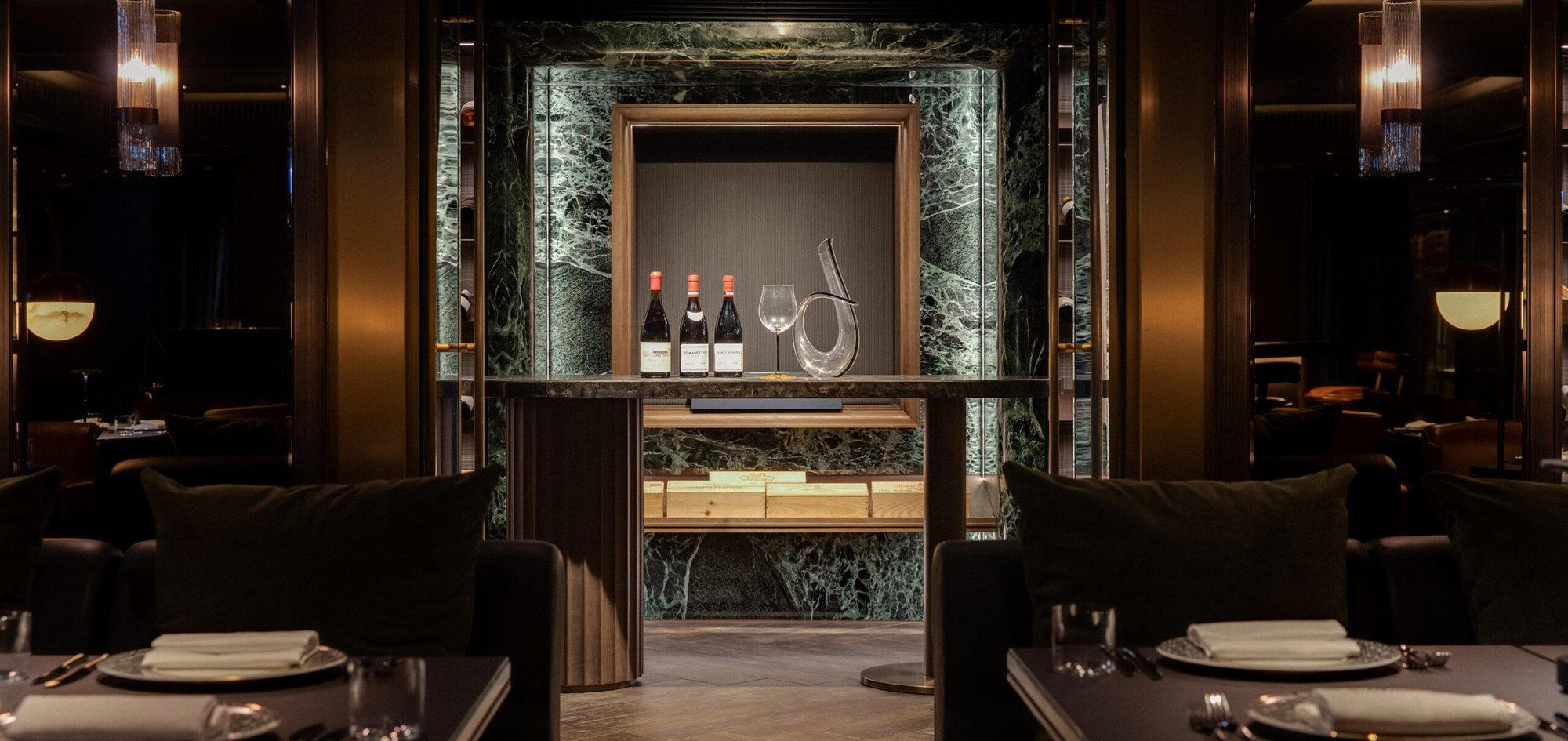
A serious wine list at a Cantonese restaurant is no longer unusual at the top tier, but the depth here warrants attention. The list runs to hundreds of references with Bordeaux and Burgundy well represented, which is the standard configuration for a hotel fine-dining program pitched at international business and leisure travellers. What differentiates the Tin Lung Heen list is the depth of Italian inventory: marquee reds from Gaja, Bruno Giacosa, and Conterno are not token inclusions. Stocking those producers at depth requires both procurement relationships and cellar investment, and their presence alongside the French canon signals that the list was built for a guest who is as likely to order Barolo as Pomerol.
For those exploring the broader regional picture, the same cuisine travels across different formats at venues including Jade Dragon and Chef Tam's Seasons in Macau, Le Palais in Taipei, and Summer Pavilion in Singapore. In mainland China, 102 House, Bao Li Xuan, Canton 8 (Huangpu), and Imperial Treasure Fine Chinese Cuisine represent the range of premium Cantonese in Shanghai.
Who Comes and When
Tin Lung Heen functions as a power dining address, the kind of venue where a business lunch or celebratory dinner arrives with the weight of the location built in. But the weekend dim sum service draws a different crowd, families, larger groups, multi-generational tables, which reflects the deep social function of yum cha in Hong Kong regardless of price tier. That dual audience means the room reads differently on a Saturday afternoon than on a Tuesday evening. Both are legitimate uses of the space, but those seeking the quieter, more formal dinner atmosphere should plan accordingly.
The two rows of window seats are the most coveted positions, but the room is designed so that every table has a view. Reservations are necessary across services; weekend dim sum fills well in advance.
For broader context on Hong Kong's dining, drinking, and lodging options, see our full Hong Kong restaurants guide, our full Hong Kong hotels guide, our full Hong Kong bars guide, our full Hong Kong wineries guide, and our full Hong Kong experiences guide.
Planning Your Visit
Address: 102/F, The Ritz-Carlton Hong Kong, International Commerce Centre, 1 Austin Road West, Tsim Sha Tsui. Hours: Monday to Friday, 12–2:30pm and 6–10pm; Saturday and Sunday, 11:30am–1pm, 1:30–3pm, and 6–10pm. Reservations: Required for all services; weekend dim sum books out earliest and advance planning of several weeks is prudent. Budget: $$$, positioned at the premium end of the two-star Cantonese tier. Getting there: The ICC tower connects directly to Kowloon Station (Airport Express and MTR Tung Chung Line), making access direct from both the airport and central Kowloon.
What to Eat at Tin Lung Heen
What should I eat at Tin Lung Heen?
The menu centres on Cantonese cooking at a formal, ingredient-led register. Among the documented signature preparations: the steamed crab claw with egg white and Hua Diao wine is the kitchen's clearest expression of the precision-steaming tradition, where temperature control and ingredient quality carry the dish. The barbecued Iberian pork with honey is the standout from the roast meat section, notable for the tenderness that Iberian pork fat-marbling allows. At lunch, the dim sum menu includes rice rolls with Wagyu beef, shrimp dumplings with black truffle, and deep-fried crab cake, a concise set of preparations that represents the kitchen's approach to the form. The chicken soup with fish maw double-boiled in coconut is the canonical example of the slow-cooking tradition that runs alongside the high-heat work. Chef Paul Lau, who holds two Michelin stars here and appears consistently in the Opinionated About Dining Asia rankings, shapes a menu where the seafood section, including live selections, is the area of greatest depth and variation. Those with flexibility on timing should note that the full seafood range is available at both lunch and dinner, while the dim sum format is lunch-only.
Frequently asked questions
What's the price range at Tin Lung Heen?
Pricing at Tin Lung Heen is listed as $$$.
Where is Tin Lung Heen in Hong Kong?
Tin Lung Heen is located at International Commerce Centre (ICC), 102/F, The Ritz-Carlton, Hong Kong, 1 Austin Rd W, Tsim Sha Tsui, Hong Kong, Hong Kong.
Is Tin Lung Heen award-winning?
Tin Lung Heen has received recognition including: The view from the 102nd floor alone is almost enough of a reason to dine at Tin Lung Heen, but this excellent Cantonese restaurant would be worth a visit in any location. Housed in The Ritz-Carlton, Hong Kong, in the ICC building (HK’s talle….
What should I eat at Tin Lung Heen?
The kitchen's seafood focus is worth anchoring your order around. Chef Paul Lau's steamed crab claw with egg white and Hua Diao wine is a documented signature, as is the honey-glazed char siu using Iberian pork. At lunch, the dim sum menu runs to rice rolls with Wagyu beef, shrimp dumplings with black truffle, and deep-fried crab cake, portions can be adjusted to party size. The chicken soup with fish maw double-boiled in coconut is a further set piece worth noting if you're building a longer meal.
How It Stacks Up
| Venue | Cuisine | Price | Awards | Notes |
|---|---|---|---|---|
| Tin Lung HeenThis venue (the venue you are viewing) | Refined Authentic Cantonese | $50–100 | 2 Michelin Stars · La Liste Top Restaurants | Not listed |
| 8 1/2 Otto e Mezzo Bombana (Hong Kong) | 3 Michelin-Star Italian Fine Dining | $200–300 | 3 Michelin Stars · World's 50 Best #94 | Italian |
| Ta Vie | Modern French-Japanese Fine Dining | $300–500 | 3 Michelin Stars · World's 50 Best #68 | Japanese - French, Innovative |
| Caprice | Contemporary French Fine Dining | $200–300 | 3 Michelin Stars · World's 50 Best #35 | French, French Contemporary |
| Feuille | Modern Vegetable-Forward French | $200–300 | 1 Michelin Star · World's 50 Best #93 | French Contemporary |
| Neighborhood | Modern French with Asian Influences | $50–100 | 1 Michelin Star · World's 50 Best #24 | International, European Contemporary |
Recognition history
Dated appearances from independent guides and award organizations, with the underlying list record or original source where available.
Michelin 2 Stars
Michelin
La Liste Top Restaurants
La Liste
Star Wine List
Star Wine List
Black Pearl 1 Diamond
Black Pearl
Forbes 5-Star
Forbes
Full recognition history (15 entries)
Opinionated About Dining Top Restaurants in Asia Ranked #116
Opinionated About Dining
SCMP 100 Top Tables Restaurants
SCMP 100 Top Tables
Black Pearl 1 Diamond
Black Pearl
Forbes 5-Star
Forbes
La Liste Top Restaurants
La Liste
Michelin 2 Stars
Michelin
Opinionated About Dining Top Restaurants in Asia Ranked #103
Opinionated About Dining
Michelin 2 Stars
Michelin
Opinionated About Dining Top Restaurants in Asia Ranked #88
Opinionated About Dining
Opinionated About Dining Top Restaurants in Asia Ranked #103
Opinionated About Dining