
Taiyaki Hiiragi sits in Ebisu’s snack-and-sweets circuit rather than Tokyo’s tasting-menu economy: takeaway taiyaki, obanyaki, and soft serve at a sub-¥1,000 spend. Its Tabelog 100 selections for Tokyo sweets and Japanese sweets place it in a serious wagashi conversation, where ingredient handling and everyday accessibility matter more than ceremony.
Pearl is the En Primeur Club membership app — saves, bookings, and concierge access live there. Same editors, same standards.
- Address
- Japan, 〒150-0013 Tokyo, Shibuya, Ebisu, 1 Chome−4−1 恵比寿アーバンハウス 107
- Phone
- +81 3-3473-7050
- Website
- taiyaki-hiiragi.com
 Saves & bookings on Pearl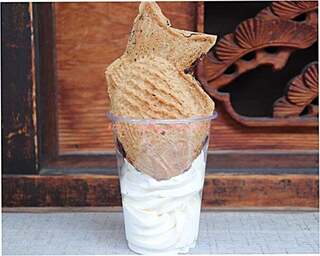
Ebisu changes register quickly around its station exits: office commuters, late-lunch stragglers, and shoppers moving between cafés, yakitori rooms, curry counters, and sweets windows. In that flow, taiyaki belongs to Tokyo’s quick-eating grammar: a fish-shaped cake of batter and sweet bean paste. The gap between a forgettable station snack and a destination stop comes down to sourcing, heat control, and turnover. Taiyaki Hiiragi is where an everyday sweet is judged with the seriousness usually reserved for sushi rice or soba dough.
That seriousness is measurable. The shop has been selected for Tabelog 100 lists covering Tokyo sweets and Japanese traditional sweets, including the Japanese traditional sweets / Japanese sweets cafe Tokyo list in 2023, and it carries a Tabelog score of 3.79. For a takeaway-led sweets shop, those signals matter in a wagashi field crowded with long-running specialists, department-store counters, seasonal tea rooms, and casual snack makers. Recognition here does not mean luxury; it means repeatable craft in a format with little room to hide.
Ebisu's sweet-shop culture rewards precision over ceremony
Taiyaki is often treated as nostalgia food, but Tokyo’s better examples are closer to small-format pastry than casual confection. The batter must carry structure without heaviness; the filling must read as bean, sugar, and texture rather than generic sweetness. Azuki bean paste anchors the tradition, and its handling defines the category. In Japanese sweets, the point is rarely excess. Balance is the currency: enough sweetness to complete the snack, enough grain and body to keep it tied to the ingredient.
This corner of Ebisu is an instructive place to read the city’s food habits. Within a short radius, the area supports low-cost sweets, polished yakiniku, counter-led drinking, and specialist casual cooking. A traveler could move from taiyaki to a more formal dinner without changing neighborhood logic. Nearby comparisons such as JAPANESE ICE OUCA, also in the sub-¥1,000 sweets bracket, show how Ebisu sustains focused dessert specialists alongside higher-spend rooms such as Ebisu Yoroniku and Fonda Sant Jordi. The neighborhood is not built around one dining identity; it is built around quick decisions made well.
The useful comparison is not with Tokyo’s grand dining rooms, but with other narrow specialists where one product carries the reputation. Udon Yamacho works a different lane, but the same citywide principle applies: repetition sharpens craft, and customers learn to judge small differences. Across Tokyo, that logic also explains why focused addresses such as 3 Chome no Curry Ya San, 124. KAGURAZAKA (Yakitori), 12/10 Shinjuku ten, and . 鮪と炭火焼き うお炭 秋葉原店 can sit in the same dining map while answering different needs.
Takeaway wagashi, judged by ingredients rather than theatre
The format is part of the argument. Takeaway removes tableware, room design, and service pacing. What remains is product, timing, and small-menu discipline. Taiyaki Hiiragi lists taiyaki, obanyaki, and soft serve, keeping focus inside Japan’s everyday sweets vocabulary rather than becoming a hybrid café. That restraint matters in Tokyo, where a dessert counter can dilute itself by chasing novelty.
Ingredient sourcing is not only a farm-to-table concern. In wagashi, origin and treatment have long shaped status, from beans and rice flour to sugar, tea, and seasonal fruit. Even when a shop does not make those details a manifesto, the category trains customers to notice them. The better question is not whether taiyaki can be luxurious, but whether it respects the raw materials enough to make a simple format feel complete. Here, the public signals point to consistency over spectacle: repeated Tabelog 100 selections, a low spend bracket, takeaway service, and a product list that stays close to its lane.
There is also a democratic quality to the pricing tier. Tokyo’s luxury dining conversation often begins with reservation scarcity and high fixed menus, but sweets shops like this keep another version of excellence visible: low-cost, high-frequency, and judged by locals who can return often. That makes the shop useful for travelers seeking a credible read on everyday Tokyo rather than another long meal. It also pairs naturally with a broader city itinerary. For visual cafés, 2D Cafe sits in a different aesthetic register; for a wider edit, start with Our full Tokyo restaurants guide, then layer in Our full Tokyo bars guide, Our full Tokyo hotels guide, Our full Tokyo experiences guide, and Our full Tokyo wineries guide for the rest of the trip.
How to place it in a Japan-wide sweets and casual dining itinerary
The value of a place like this is cumulative. It structures the spaces between major meals: after a station transfer, before a bar, or during a neighborhood walk. That rhythm is central to eating in Japan. The country’s food culture is not only omakase counters and kaiseki rooms; it is also repeatable formats that compress craft into a few minutes.
Seen that way, Taiyaki Hiiragi belongs in the same editorial universe as casual specialists across Japan and beyond, not because they serve the same food, but because they make a compact format worth seeking out. Travelers building a broader route can compare the role of small-format comfort cooking at -Grilled beef Sukiyaki- KAMAKURA TANUKIAN 鎌倉 たぬき庵 in Kamakura.cafe in Osaka.know in Kumamoto, (Shoku) Vietnam in Kawasaki, [Curry Senmon Ten] Maruyama Kyoju. in Sapporo, and [ki:] in Kyoto. Outside Japan, Jōdo Saké Bar in Los Angeles and Onigiri Time in Pasadena show how Japanese casual forms travel when the format stays disciplined.
The editorial case is simple: this sweets stop needs no grand claims. Its relevance comes from category clarity, neighborhood usefulness, low spend, and recognition inside Tokyo’s competitive wagashi field. For travelers, that combination is more valuable than novelty. It shows how Tokyo turns a small snack into a serious measure of craft.
Cuisine-First Comparison
Comparable venues to anchor price and recognition.
| Venue | Cuisine | Price | Notes |
|---|---|---|---|
| Taiyaki HiiragiThis venue — the venue you are viewing | Traditional Japanese Taiyaki Shop | $ | Not listed |
| Kitchen Nankai (キッチン南海) | Classic Yoshoku Katsu Curry | $ | Jimbocho |
| Ayu Ramen Plus (鮎ラーメンプラス) | Traditional Ayu Ramen | $ | Toranomon |
| Kasho Kikuya | Traditional Japanese Wagashi Confectionery | $ | Minato |
| 福田家 | Japanese Conveyor Belt Sushi | $ | Chiyoda |
| Oiwake Dango Honpo Shinjuku honten | Traditional Japanese dango & wagashi cafe | $ | Shinjuku |
Recognition history
Dated appearances from independent guides and award organizations, with the underlying list record or original source where available.
Tabelog 100 #16 · No. 16
Tabelog · Tabelog 100 - Japanese traditional sweets / Japanese sweets cafe - TOKYO - 2023











At a Glance
- Cozy
- Classic
- Solo
- Casual Hangout
- Family
- Late Night
- Standalone
- Street Scene
Current opening hours
- Monday
- 10 AM–6 PM
- Tuesday
- 10 AM–6 PM
- Wednesday
- 10 AM–6 PM
- Thursday
- 10 AM–6 PM
- Friday
- 10 AM–6 PM
- Saturday
- 10 AM–6 PM
- Sunday
- 10 AM–6 PM
Hours can change for holidays and private events. Last verified .
A tiny takeaway-focused neighborhood sweet shop near Ebisu Station, with the warmth of a traditional Japanese wagashi stand: the aroma of taiyaki cooking on iron molds, a simple counter, and a relaxed, friendly atmosphere with a bench outside for casual snacking.