
Kasho Kikuya belongs to Tokyo’s quieter wagashi circuit, where seasonality, gifting culture, and take-out discipline matter more than dining-room theatre. Its selection for Tabelog 100 Japanese traditional sweets / Japanese sweets cafe Tokyo 2023 places it in a serious local category, while the Minamiaoyama setting puts traditional sweets inside one of the city’s design-led shopping districts.
Pearl is the En Primeur Club membership app — saves, bookings, and concierge access live there. Same editors, same standards.
- Address
- Japan, 〒107-0062 Tokyo, Minato City, Minamiaoyama, 5 Chome−13−2 菊家ビル 9F
- Phone
- +81 3-3400-3856
- Website
- ycraft.co.jp
 Saves & bookings on Pearl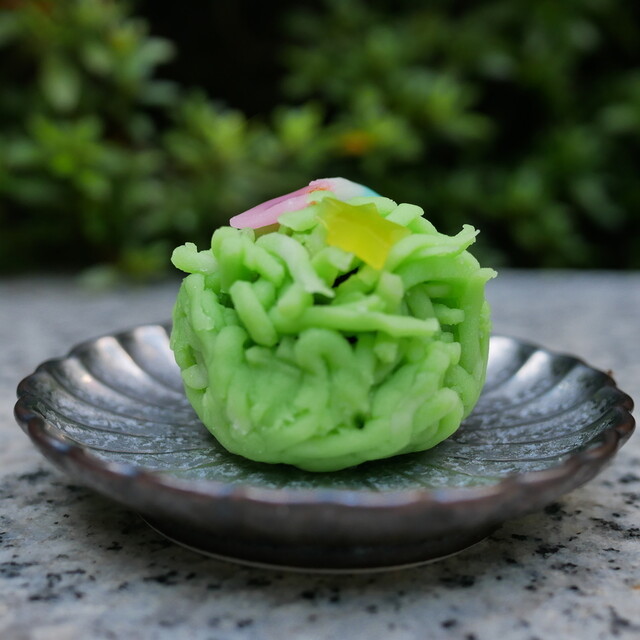
Minamiaoyama changes register quickly: glass-fronted fashion houses, small galleries, hair salons, and upstairs addresses that ask visitors to look beyond street level. Here, wagashi reads differently from a sit-down restaurant meal: not duration or performance, but precision compressed into a small purchase, often tied to season, etiquette, and the Japanese habit of taking something thoughtful to someone else’s table.
Kasho Kikuya sits inside that tradition, not the international restaurant circuit shaping much of Aoyama dining. The useful comparison is not a tasting-menu room such as TEST KITCHEN H, nor a neighbourhood lunch address such as CLINTON ST. BAKING COMPANY & RESTAURANT Minami aoyama ten, but the exacting world of Japanese traditional sweets, where reputation rests on consistency, occasion use, and repeat local custom. Selection for Tabelog 100 Japanese traditional sweets / Japanese sweets cafe Tokyo 2023 is the clearest external signal: this is a Tokyo-recognised wagashi address in a category where small differences in craft, timing, and presentation matter.
Wagashi in Aoyama has moved from ceremony to everyday precision
Tokyo’s wagashi culture has not disappeared into nostalgia; it has shifted. Formal tea rooms and seasonal confections now share space with compact retail counters, department-store gift culture, and specialist shops serving office workers, hosts, and design shoppers seeking something more considered than packaged chocolate. Aoyama is a natural stage because the district turns taste into a daily language: clothing, ceramics, architecture, flowers, coffee, and sweets compete on restraint rather than volume.
That context matters because visitors often misunderstand Japanese traditional sweets as dessert in the Western restaurant sense. Wagashi is usually lighter, more symbolic, and tied to calendar cues. It can mark a tea gathering, business visit, seasonal greeting, or simple afternoon purchase. The category rewards proportion and finish over spectacle. Kasho Kikuya’s place in the Tabelog 100 list positions it within that specialist Tokyo field, not as a novelty stop but as part of a living retail tradition.
The evolution is also visible in format. A take-out-led sweet shop asks for different travel behaviour than a reserved counter or dinner reservation. The visit is shorter, but not less deliberate. In Tokyo, serious food culture often hides in compressed formats: an onigiri shop, curry counter, bakery case, wagashi counter. For a broader map of everyday specialisation, compare the rhythm of 3 Chome no Curry Ya San, the casual visual pull of 2D Cafe, or the tighter restaurant formats collected in Our full Tokyo restaurants guide.
The serious purchase here is small, seasonal, and local in logic
Wagashi shops operate on a logic that can feel opaque to first-time visitors. The question is less “what is the signature?” than “what fits the moment?” Traditional Japanese sweets often follow micro-seasons, gifting customs, and the texture of the day: a sweet for tea, a box for a host, a single piece to carry back to a hotel room. That makes the category resistant to the checklist eating that dominates much restaurant travel.
Kasho Kikuya’s appeal is strongest for travellers who understand that Tokyo dining is not only sushi counters and kaiseki rooms. A city’s food intelligence also lives in small retail formats with low spend, narrow focus, and no need for ceremony. The listed average spend sits in the under-JPY 999 band, far from Aoyama’s higher-ticket dining rooms such as NéMo, SITAARA Aoyama ten, Peruvian DESTINO51, or TEST KITCHEN H. That gap is not a downgrade; it is the point. Wagashi belongs to a different economy of pleasure, where a modest purchase can carry more cultural information than a long lunch.
There is a practical planning implication, even if the visit is brief. Treat it as part of an Aoyama walk rather than a full-meal anchor. Pairing a specialist sweets stop with design shopping, gallery time, or coffee makes more sense than building a day around it alone. Tokyo rewards sequencing: a serious counter meal in Kagurazaka, a casual stop in Shinjuku, then a small confectionary purchase elsewhere. Useful contrasts sit across the city, from 124. KAGURAZAKA (Yakitori) to 12/10 Shinjuku ten and. 鮪と炭火焼き うお炭 秋葉原店.
Where it fits in a Tokyo food itinerary
The strongest reason to include this address is range. Tokyo itineraries often over-concentrate on dinner reservations, leaving little room for quieter food habits: morning retail, train-station sweets, specialist counters, and gifts chosen with care. Wagashi supplies that missing layer, connecting travel eating to Japanese social customs rather than only chef-led dining.
For visitors building a broader city file, the surrounding decision is category balance. Restaurants explain one part of Tokyo, bars another, hotels another, and cultural experiences another. The city’s premium end is not a single hierarchy; it is a network of formats with different rules. Use Our full Tokyo hotels guide for where to base yourself, Our full Tokyo bars guide for drinking, Our full Tokyo experiences guide for cultural structure, and Our full Tokyo wineries guide where wine planning matters.
Japan-wide comparisons sharpen the point. A Kyoto address such as [ki:] in Kyoto, a Kamakura meal at -Grilled beef Sukiyaki- KAMAKURA TANUKIAN 鎌倉 たぬき庵 in Kamakura, or regional city stops like.cafe in Osaka.know in Kumamoto, (Shoku) Vietnam in Kawasaki, and [Curry Senmon Ten] Maruyama Kyoju. in Sapporo all show how narrow formats carry local meaning. Even abroad, the same lesson applies at Japanese-leaning addresses such as Jōdo Saké Bar in Los Angeles and Onigiri Time in Pasadena: small formats can say a great deal when the craft is specific.
The editorial verdict is simple: make room for wagashi if the Tokyo trip is meant to understand the city beyond reservations and omakase. The restaurant belongs in that quieter layer, recognised by Tabelog in 2023 and shaped by Aoyama’s preference for controlled detail over display.
Category Peers
Comparable venues in the metro at similar price points.
| Venue | Cuisine | Price | Notes |
|---|---|---|---|
| Kasho KikuyaThis venue — the venue you are viewing | Traditional Japanese Wagashi Confectionery | $ | Not listed |
| SAN TORA | Sapporo-style miso ramen | $ | Shinjuku |
| Stand Hero | Standing Japanese Izakaya & Kushikatsu Bar | $ | Chiyoda |
| Curry Ya Banbi | Japanese curry & Indian curry izakaya | $ | Chiyoda |
| Kappou Sanyu | Japanese cafeteria specializing in fried oysters, croquettes, and tonkatsu | $ | Chūō |
| Mensouan Sunada | Hand-kneaded chuka soba ramen | $ | Toshima |
Recognition history
Dated appearances from independent guides and award organizations, with the underlying list record or original source where available.
Tabelog 100 #80 · No. 80
Tabelog · Tabelog 100 - Japanese traditional sweets / Japanese sweets cafe - TOKYO - 2023












At a Glance
- Classic
- Cozy
- Quiet
- Solo
- Casual Hangout
- After Work
- Family
- Rooftop
- Historic Building
- Design Destination
- Standalone
- Local Sourcing
- Street Scene
Current opening hours
- Monday
- Closed
- Tuesday
- 9:30 AM–5 PM
- Wednesday
- 9:30 AM–5 PM
- Thursday
- 9:30 AM–5 PM
- Friday
- 9:30 AM–5 PM
- Saturday
- 9:30 AM–5 PM
- Sunday
- Closed
Hours can change for holidays and private events. Last verified .
Bright yet intimate top‑floor shop space that preserves the feel of a pre‑war machiya, showcasing refined, visually artistic traditional wagashi with a calm, classic atmosphere suited to tea sweets rather than full restaurant dining.