Our verdict
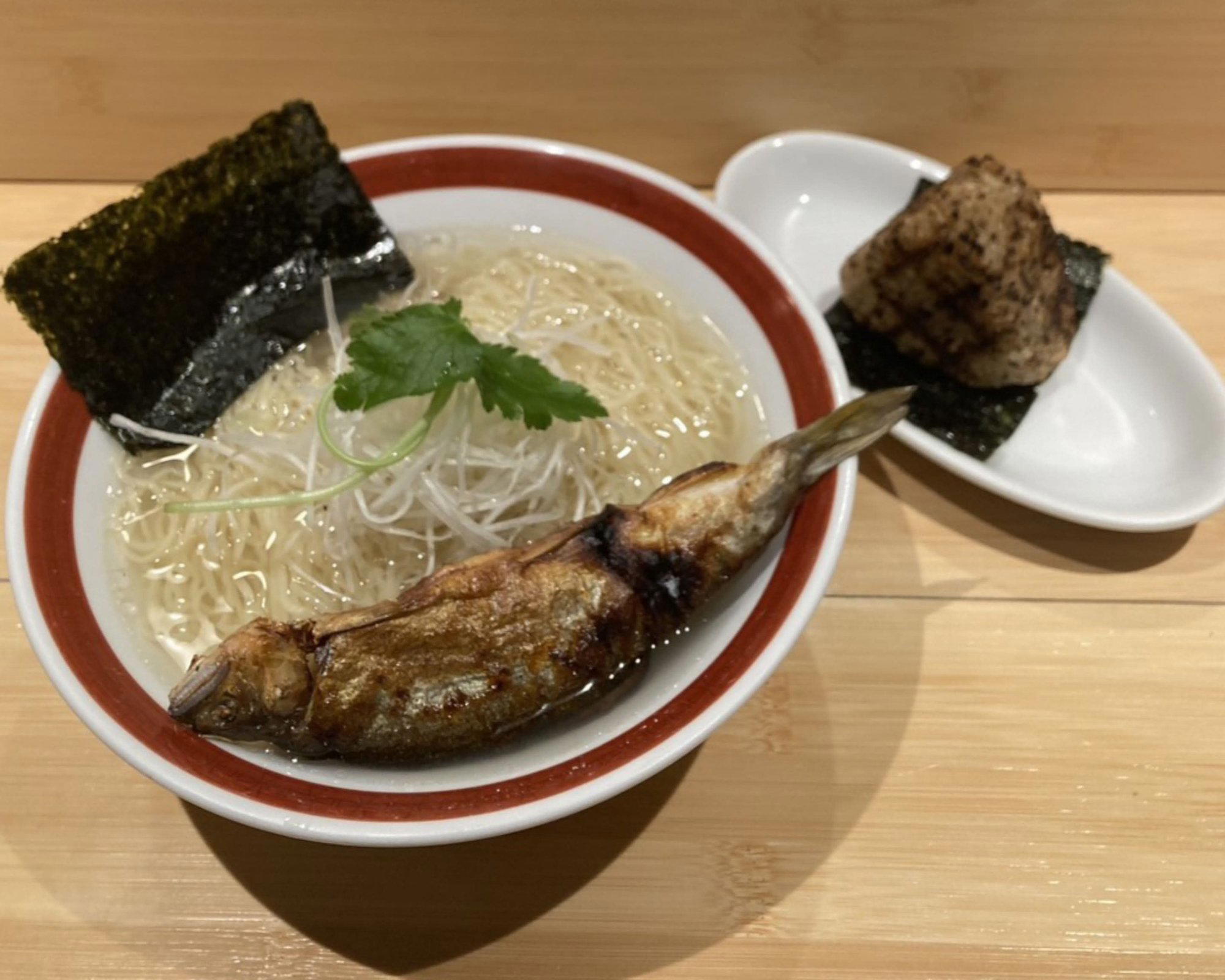
Ayu Ramen Plus sits on the third floor of Toranomon Hills Business Tower, inside the Toranomon Yokocho food hall, a format that positions ramen within one of Tokyo's most architecturally ambitious commercial developments. The venue's name references ayu, the sweetfish prized in Japanese river cuisine, pointing toward a broth philosophy rooted in local freshwater ingredients interpreted through contemporary ramen technique.

Pearl is the En Primeur Club membership app, where members save venues, book tables and use the concierge.
The menu
What to order
- Ayu Ramen with whole grilled sweetfish
- Aburi-chāshū (grilled chāshū pork)
- Aka-kabu (red turnip) pickles
Ramen Inside the Machine: Toranomon Yokocho and the New Food Hall Format
Tokyo's food hall evolution has followed a clear arc over the past decade. The depachika model, basement concourses in department stores selling prepared foods and sweets, gave way to a more curated, restaurant-led format, where individual operators with distinct identities are brought together under a single architectural umbrella. Toranomon Yokocho, on the third floor of the Toranomon Hills Business Tower, represents that shift in its most deliberate form. The space was conceived as an indoor alley of small operators, referencing the postwar yokocho drinking lanes of Yurakucho and Shinjuku while placing that vernacular inside a tower designed by Pelli Clarke & Partners and opened in 2020 as the commercial anchor of the Toranomon Hills district.
Ayu Ramen Plus (鮎ラーメンプラス) occupies a counter within this format. What matters editorially is less the individual stall and more the conditions that food hall placement creates: a captive audience of office workers and transit passengers, limited seating that enforces brevity, and a competitive micro-environment where differentiation has to happen through the bowl itself rather than through room design or service depth. That constraint tends to sharpen kitchens.
The Ingredient Argument: Ayu as a Broth Foundation
The name is the editorial hook. Ayu, Plecoglossus altivelis, the sweetfish, is one of the most culturally freighted fish in Japanese cuisine. It runs cold, clear rivers from spring through early autumn, features prominently in kaiseki presentations at places like Gion Sasaki in Kyoto, and carries a flavour profile that professional cooks describe as clean, faintly mineral, with a watermelon-rind sweetness that distinguishes it from marine fish entirely. Using ayu as a ramen broth base is not conventional. Ramen's dominant broth traditions run through pork bone (tonkotsu), chicken, dried sardine (niboshi), and various kombu-and-katsuobushi dashi combinations. A freshwater sweetfish broth sits outside all of those lineages.
This is where the editorial angle sharpens. The intersection of deeply local Japanese ingredients with technique that is itself a synthesis, ramen as a form absorbed Chinese noodle-making methods, then adapted them over a century into something entirely Japanese, produces a kind of layered localism. The ayu is indigenous in the most specific sense: a river fish tied to particular Japanese waterways and seasonal windows. Deploying it inside ramen, a form that already carries its own history of cross-cultural absorption, creates a product that is simultaneously traditional and revisionist. Similar logic operates at akordu in Nara, where local Yamato ingredients are framed through European fine dining structure, and at L'Effervescence in Tokyo, where French technique consistently foregrounds Japanese produce. The methodology travels across price points and formats.
Toranomon as a Dining District
The district context matters for understanding who eats here and when. Toranomon is a transitional zone between the embassies and government ministries of Kasumigaseki to the east and the older media and business infrastructure of Shimbashi to the southeast. The Hills development has systematically repositioned it as a destination rather than a throughway, adding hotel capacity with Hyatt House Toranomon and drawing a tenant mix that skews toward international business and creative industries. Lunch traffic here is dense and time-constrained. Evening trade is more varied, extending toward the hotel bar and restaurant population that has grown with the district's development.
For a ramen counter inside a food hall, that demographic translates directly into format pressure. Toranomon's office population expects speed and quality simultaneously, which is a narrower operating margin than the tolerance a neighbourhood ramen shop might enjoy. The food hall format enforces those conditions structurally: no reservations, visible throughput, and a menu that has to communicate its value proposition within the few seconds a visitor spends reading the board before deciding whether to sit.
Tokyo's broader ramen scene has, over the same period, become increasingly stratified. The Michelin Guide has recognised several ramen specialists at the Bib Gourmand level, and a small number have reached star status, most notably Fuunji (tsukemen) and Konjiki Hototogisu (shellfish-and-truffle broth), the latter demonstrating exactly the kind of luxury-ingredient insertion that a sweetfish broth strategy echoes. Ayu Ramen Plus operates in that context, where differentiation through premium or unusual ingredient sourcing has become a recognised competitive signal even at ramen price points.
It is the growing category of ingredient-led, single-concept casual restaurants where the cooking ambition exceeds the price point. That category has expanded significantly across Japanese cities: Goh in Fukuoka operates a kaiseki-informed tasting format at a price tier below its technique level; HAJIME in Osaka anchors fine dining in botanical sourcing that reframes what local ingredients can carry. The common thread is a refusal to treat ingredient provenance as a fine dining exclusive.
Within Tokyo specifically, the pattern is visible at the creative French end too: Crony runs an innovative Franco-Japanese format that treats technique and ingredient sourcing as inseparable. The question Ayu Ramen Plus implicitly poses is whether the same logic holds at ramen price points, and whether a food hall counter can sustain it operationally. That is genuinely interesting, and the answer is not guaranteed.
For readers building a broader Japan itinerary, the ingredient-technique intersection shows up at very different price points and formats across the country, from Nanao on the Noto Peninsula to Takashima on Lake Biwa, where freshwater and mountain ingredients define the cooking in ways that urban menus can only approximate. Our full Tokyo restaurants guide maps where Ayu Ramen Plus sits within the city's wider eating options.
Planning Your Visit
Location: Toranomon Hills Business Tower 3F, Toranomon Yokocho, 1-17-1 Toranomon, Minato-ku, Tokyo 105-0001. Accessible via Toranomon Hills Station (Tokyo Metro Hibiya Line) with direct building access. Reservations: Food hall counter format typically operates on a walk-in basis; no booking information is confirmed in available data. Timing: Lunch hours at Toranomon Yokocho draw heavy weekday traffic from surrounding offices; arriving before noon or after 1:30pm reduces wait times in most food hall contexts. Budget: Dress: No dress code. The food hall format draws everything from business attire to casual wear.
Frequently asked questions
Is Ayu Ramen Plus child-friendly?
Ayu Ramen Plus sits on the third floor of Toranomon Hills Business Tower within the Toranomon Yokocho food hall, a format that skews toward working professionals and intentional diners rather than families. The food hall layout is accessible and walkable, which means children are not excluded, but the surrounding crowd and counter-style service are calibrated for adult dining rather than a family meal out.
What part of town is Ayu Ramen Plus (鮎ラーメンプラス) in?
Ayu Ramen Plus (鮎ラーメンプラス) is located at 虎ノ門1-17-1 (虎ノ門ヒルズビジネスタワー 3F 虎ノ門横丁), 東京, 東京都, 105-0001, Tokyo.
What should I expect atmosphere-wise at Ayu Ramen Plus?
Toranomon Yokocho operates as a curated food hall within a commercial tower, so the atmosphere is busier and more transactional than a standalone ramen shop but more deliberate than a standard depachika. Expect a lunch-heavy weekday crowd drawn from the surrounding offices and embassies. Evening service attracts a different pace, with after-work diners using the Toranomon Hills Station (directly below) as their entry point.
What's the best thing to order at Ayu Ramen Plus?
The venue's name signals the answer: the ayu-based broth is the editorial centre of the menu. Ayu, the sweetfish Plecoglossus altivelis, is among the most culturally specific fish in Japanese cuisine, associated with clear-river summer fishing traditions, and its use as a ramen broth foundation is what separates this counter from the broader Toranomon Yokocho offering.
Cuisine-First Comparison
| Venue | Cuisine | Price | Awards | Notes |
|---|---|---|---|---|
| Ayu Ramen Plus (鮎ラーメンプラス)This venue (the venue you are viewing) | Traditional Ayu Ramen | $1–10 | Not listed | Not listed |
| Harutaka | Edo-Style Omakase Sushi | $200–300 | 3 Michelin Stars · World's 50 Best #76 | Sushi |
| L'Effervescence | Modern French with Japanese Influences | $200–300 | 3 Michelin Stars · World's 50 Best #69 | French |
| RyuGin | Modern Kaiseki | $500+ | 3 Michelin Stars · World's 50 Best #41 | Kaiseki, Japanese |
| Crony | Modern French with Japanese Influences | $150–200 | 2 Michelin Stars · World's 50 Best #34 | Innovative, French |
| Florilège | Modern French-Japanese Plant-Based Fine Dining | $50–100 | 2 Michelin Stars · World's 50 Best #31 | French |
Continue exploring
More in Tokyo
Restaurants in Tokyo
All restaurants in Tokyo →


Bars in Tokyo
All bars in Tokyo →



Details
- Rustic
- Classic
- Solo
- Casual Hangout
- Late Night
- Open Kitchen
- Local Sourcing
- Counter Dining
- A La Carte
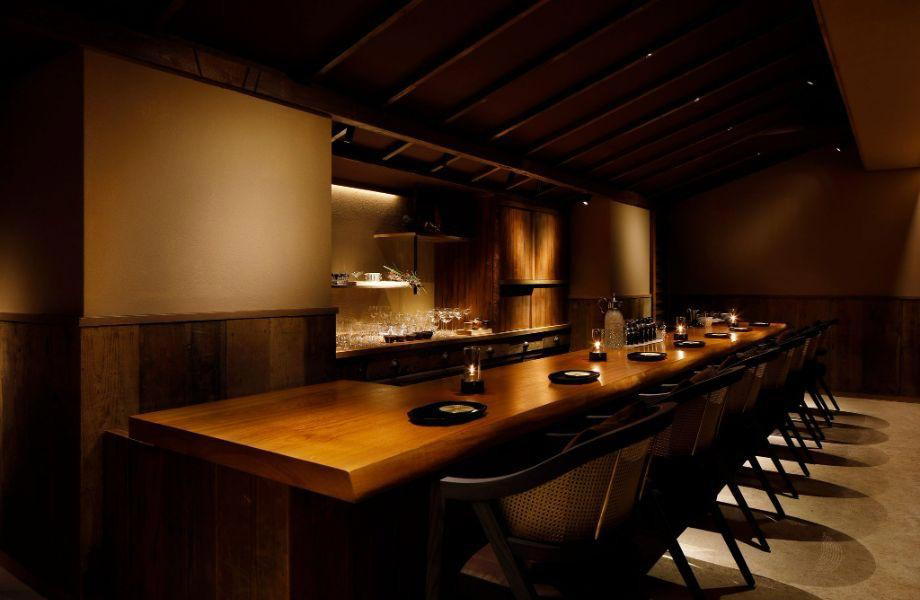
No-frills, minimalist counter seating with a hole-in-the-wall aesthetic; intimate and focused on the noodles themselves.