Michelin Plate · Tabelog 100 #95
Our verdict
Among Tokyo's Italian restaurants, TACUBO Shirokanedai occupies a specific niche: a cave-like basement room in Minato-ku where guests share a single long table, eating simply constructed pasta and wood-grilled dishes designed for collective pleasure. It is the Italian communal table format at its most disciplined, positioned against Tokyo's wider Italian scene with a format that rewards returning guests over first-timers.

Pearl is the En Primeur Club membership app, where members save venues, book tables and use the concierge.
The menu
What to order
- Capellini with tuna tartare and caviar
- Pici amatriciana
- Wood-grilled beef steak
- Conger eel fritters
The Room Comes First
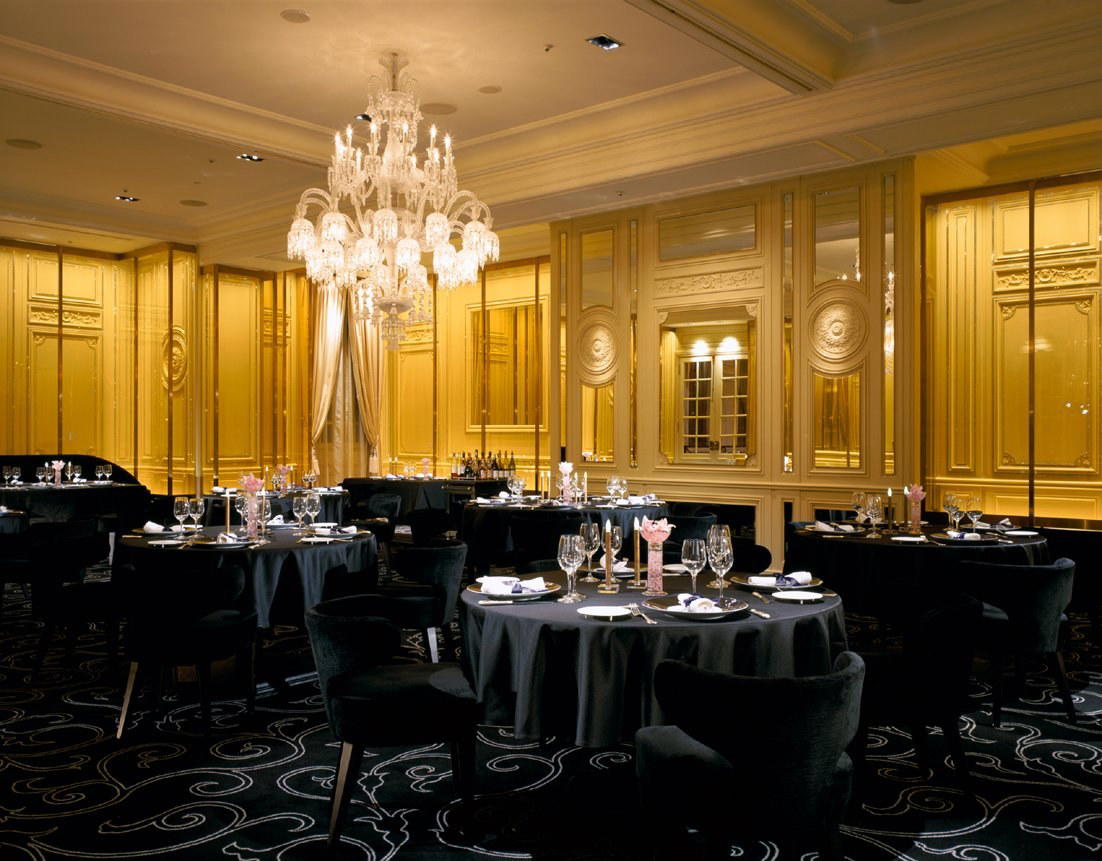
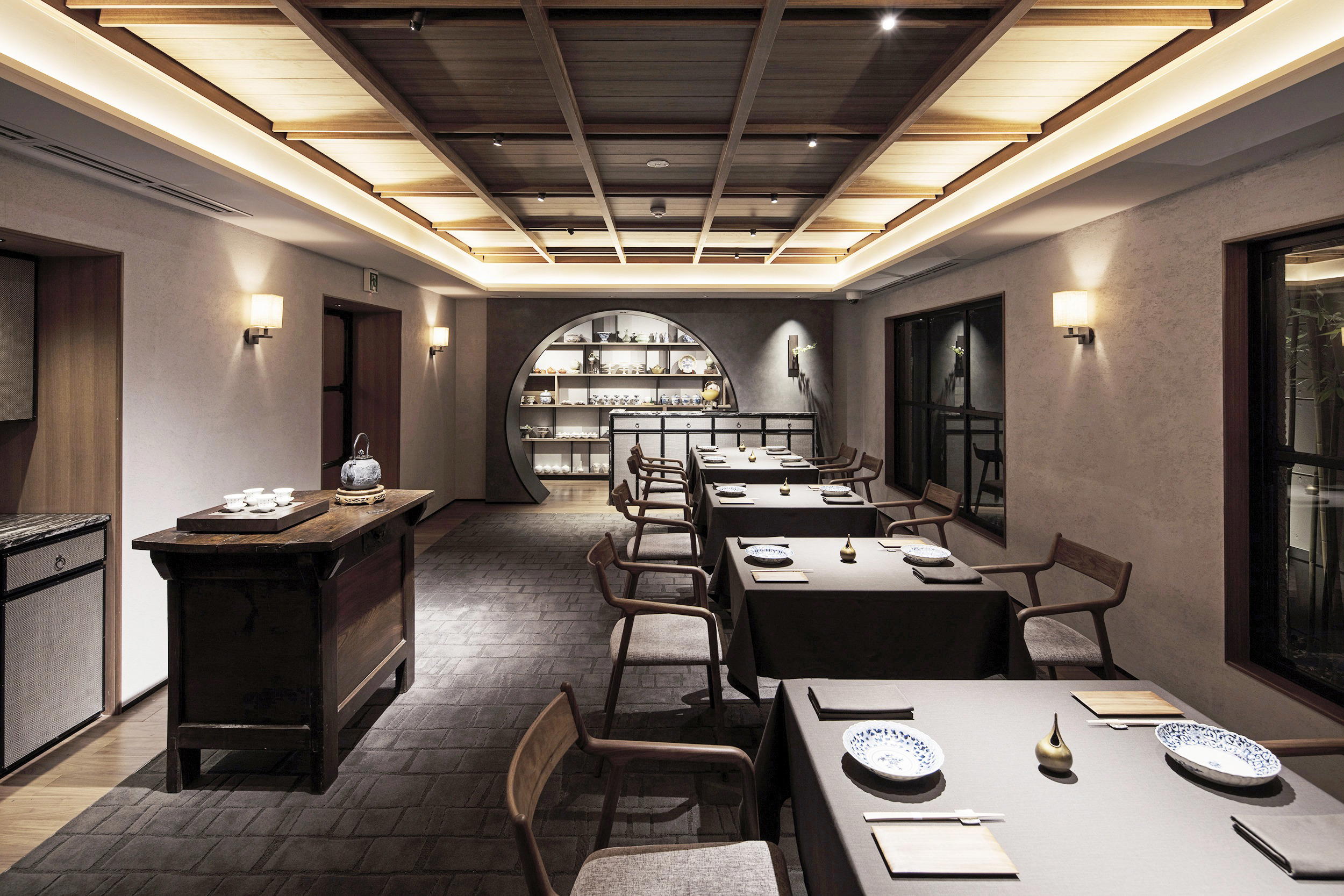
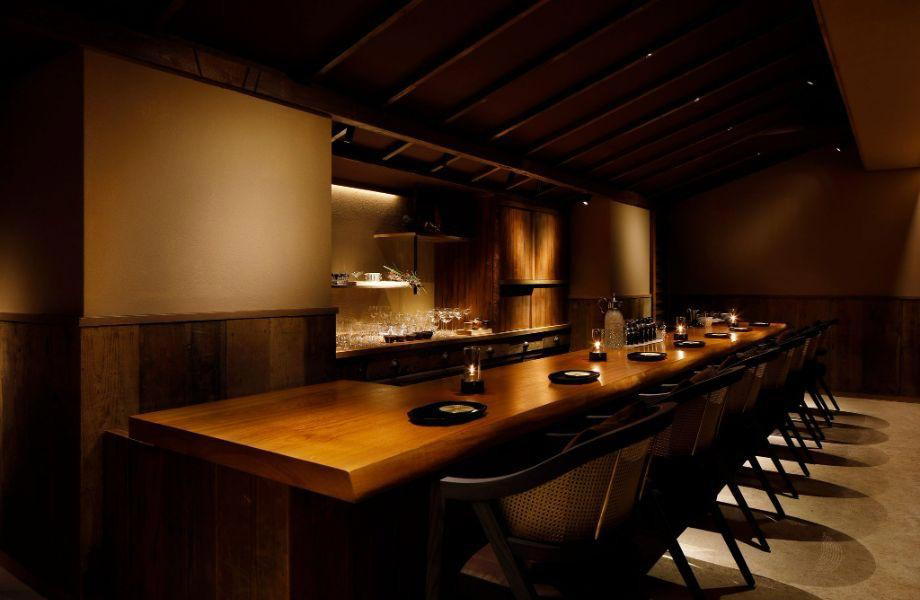
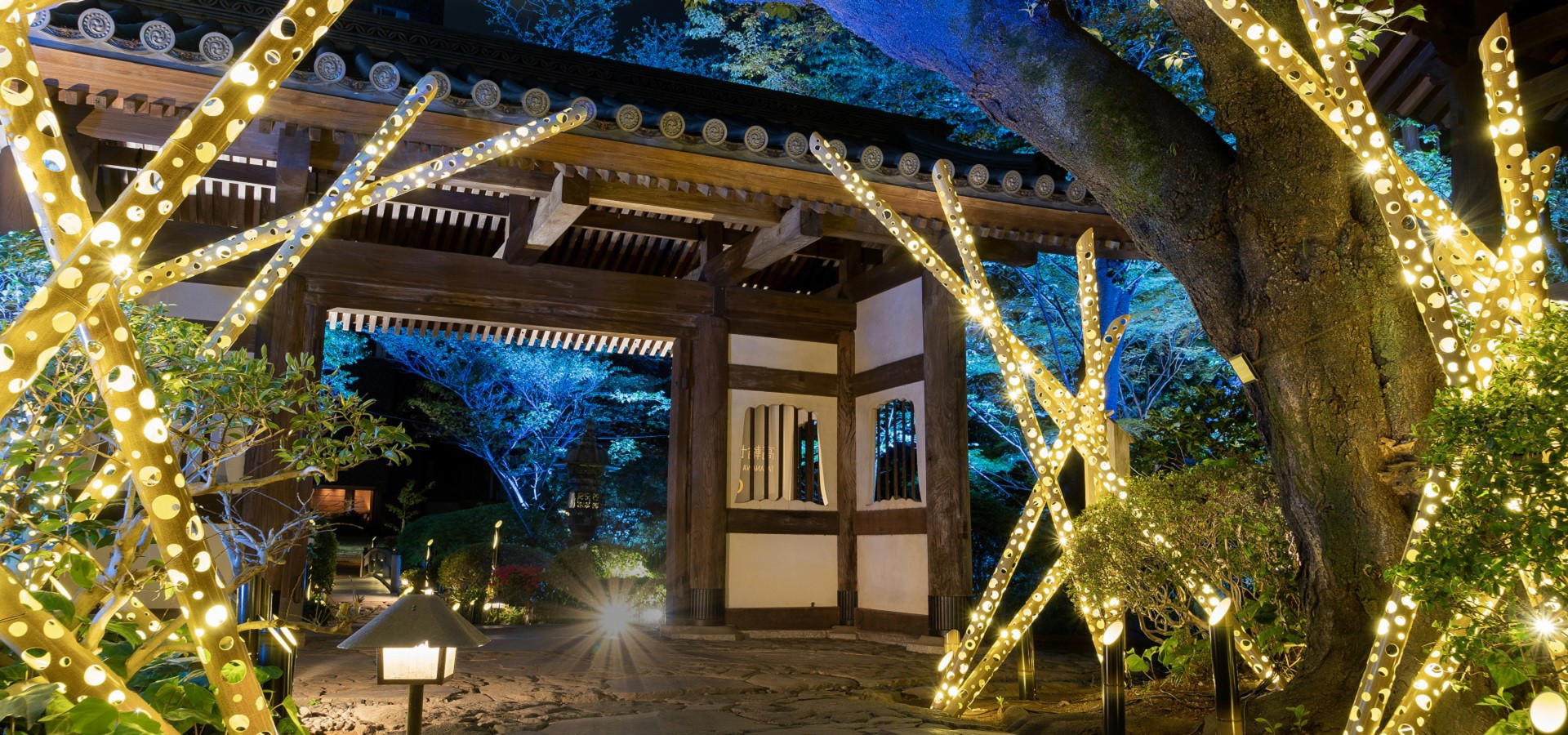
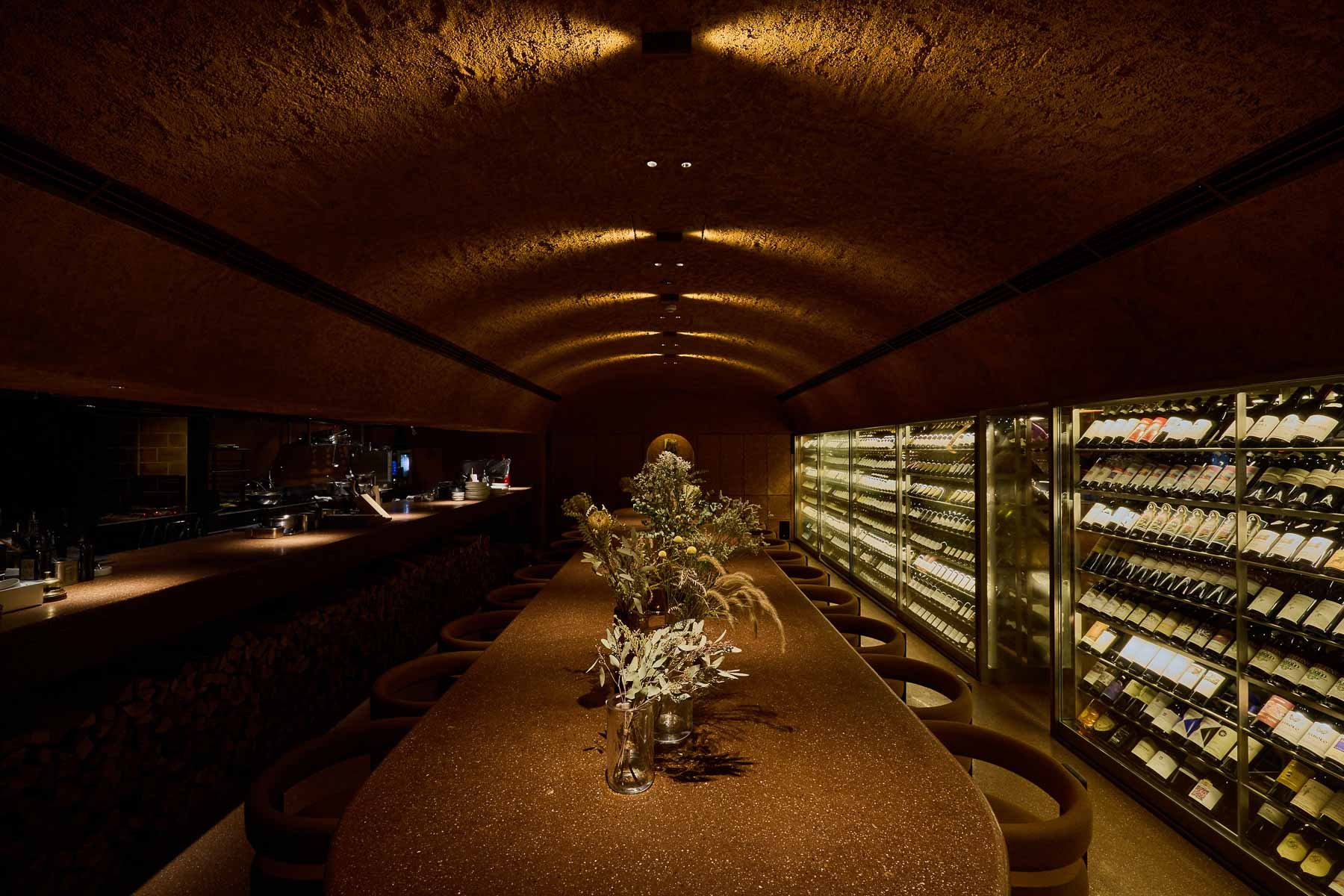
Descend below street level on a quiet Shirokanedai block and the entry sequence does something that most Tokyo restaurants, Italian or otherwise, do not attempt: it slows you down deliberately. The corridor is dim, the door unobtrusive, and the walk toward the dining room functions as a transition rather than a threshold. By the time the arched interior opens up, with its earthen walls and curved ceiling, the pace of the neighbourhood above has already receded. That architectural compression, cave-like and warm, is a specific argument about how Italian food should be eaten, not as a series of composed individual plates delivered to isolated diners, but as a shared, unhurried event around a common table.
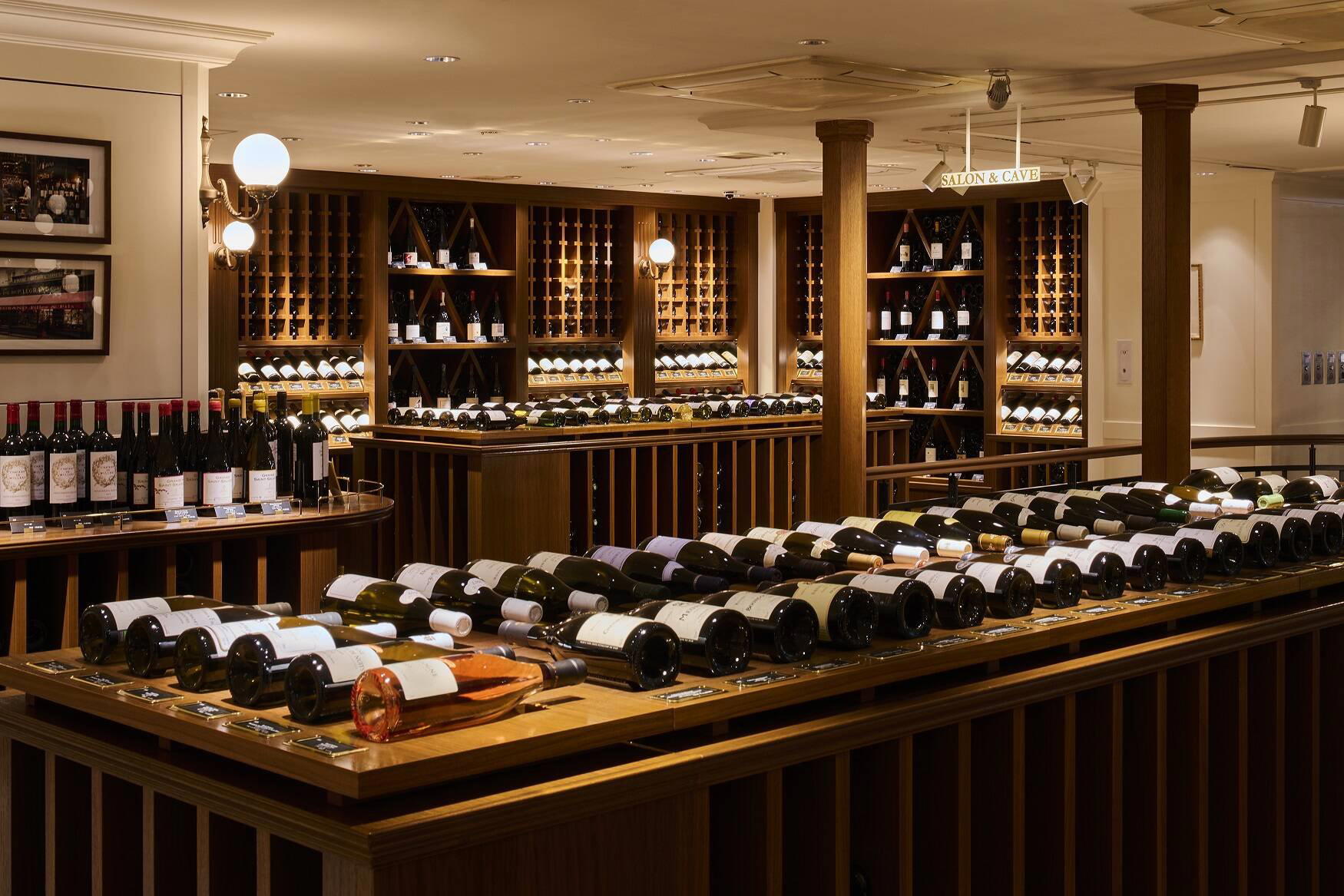
The single long table is the most direct statement TACUBO makes about its format. In a city where many high-end Italian rooms seat guests in conventional two- and four-tops, the communal arrangement signals something closer to a Milanese or Bolognese Sunday lunch than to the standard Tokyo Italian template. The glass-walled wine cellar is visible from the table, functional and architectural at once, and the open kitchen adds kitchen noise and movement to the room rather than concealing the work. The effect is convivial in a precise sense: the room creates the conditions for conversation between strangers, not just between the people who arrived together.
Who Keeps Coming Back, and Why
The format rewards regulars more than first-timers. A diner on their first visit is still reading the room, still working out the pace, still deciding how to share. A regular already knows: the appetisers are simple and shareable, the pasta is the structural centre of the meal, and the wood-grilled meat dishes are the register where the kitchen's technique shows most clearly. That progression is consistent enough to become familiar without becoming static, and it is exactly the kind of consistency that builds a loyal dining room rather than a rotating audience of curious visitors.
Shared-table format also self-selects its clientele over time. Guests who return are, almost by definition, guests who are comfortable with a certain loss of control over the evening. You do not choose your neighbours. You do not set the pace entirely. The meal unfolds at the table's collective rhythm, and the kitchen's timing is calibrated to that rhythm rather than to individual preference. For the people who find that appealing, TACUBO offers something that the broader Tokyo Italian scene, with its many accomplished but conventionally structured rooms, does not routinely provide.
Tokyo's Italian restaurant scene has deepened considerably over the past two decades. The city now supports multiple tiers of Italian dining, from casual neighbourhood trattorias to Michelin-recognised rooms operating at the same price level as leading French and Japanese kaiseki tables. Venues like L'Effervescence and Sézanne anchor the French end of that premium register, while RyuGin defines the kaiseki tier. TACUBO sits in a different competitive set entirely: Italian, format-led, and oriented around the communal rather than the individual experience. That positioning makes it less comparable to a tasting-menu Italian room and more comparable to a specific European model of restaurant that Tokyo has rarely replicated with this degree of commitment.
The Food as a Function of the Format
The kitchen's output is shaped by its context. Simple, refined appetisers work in a shared-table room because they are designed to be passed, divided, and discussed rather than inspected in isolation. Pasta in this register is not a vehicle for complexity signalling, it is a reason to slow down and stay at the table. Wood-grilled meat dishes carry the honest directness that comes from a cooking method with very few variables: heat, time, and the quality of what goes over the fire.
That simplicity is a form of discipline. Italian cooking in a city as technically ambitious as Tokyo can drift toward elaboration, toward the incorporation of Japanese ingredients and Japanese precision into what then becomes a hybrid rather than an Italian restaurant. The approach at TACUBO, as described by the room and the menu format, resists that drift. The cave-like room, the long table, the sharable structure of the meal: all of it is pulling in the direction of the original rather than the adapted. Whether that reading holds across a full season of visits is something a regular would know better than a newcomer.
For reference, the Italian communal table format has a longer tradition in Japan than it might appear. Yoshihiro Narisawa's broader influence on how Japanese chefs engage with European culinary ideas, the success of format-driven rooms like Crony in the innovative French space, and the appetite Tokyo diners have shown for restaurants with a clear structural argument all create a context in which TACUBO's format is legible rather than eccentric. Japan's regional Italian scene has also produced serious practitioners in unexpected locations: akordu in Nara and giueme in Akita represent the depth of European cooking across the country. Tokyo is simply where the concentration is highest.
Shirokanedai as a Setting
Minato-ku's Shirokanedai district carries a specific residential character that distinguishes it from the denser dining corridors of Ginza or Roppongi. The neighbourhood is quieter, the streets wider, and the clientele of its better restaurants tends to be local in the meaningful sense, people who live nearby and return regularly rather than visitors completing a list. That demographic suits a shared-table restaurant well. A dining room populated by regulars who know each other, or who have shared the long table before, produces a different atmosphere than one populated by first-timers who arrived because of a ranking or a review.
The address, B1F 4-19-21 Shirokanedai, Minato-ku, is below street level in a residential pocket of the ward, a detail worth noting for anyone who has wandered past it without finding the entrance on first attempt. Reservations are advisable; the format and the room size both argue for a table secured in advance rather than a walk-in approach.
For those building a broader Tokyo itinerary around serious dining, Harutaka anchors the sushi tier, and the full Tokyo restaurants guide covers the range from kaiseki to French to the Italian category where TACUBO operates. The Tokyo hotels guide, bars guide, and experiences guide round out the practical planning. Beyond Tokyo, the Italian and European dining conversation extends to HAJIME in Osaka, Gion Sasaki in Kyoto, Goh in Fukuoka, and Bleston Court Yukawatan in Nagano, all of which demonstrate how seriously Japan's regional dining scene takes European technique and format. For international comparison, Le Bernardin in New York City and Emeril's in New Orleans represent the Western hemisphere's equivalent commitment to format-led fine dining. The Tokyo wineries guide is also worth consulting if the wine cellar at TACUBO prompts further interest in Japanese wine culture.
Frequently asked questions
Where exactly is TACUBO Shirokanedai?
TACUBO Shirokanedai is located at B1F, 4-19-21 Shirokanedai, Minato-ku, Tokyo.
What awards or recognition does TACUBO Shirokanedai have?
TACUBO Shirokanedai has received recognition including: From the unobtrusive door, subdued lighting guides you along the corridor to a cave-like interior. Earthen walls describe an arched ceiling. The bustle of the open kitchen; the glass-walled wine cellar that is both functional and decorative….
What dish is TACUBO Shirokanedai famous for?
The kitchen is built around simple, refined appetisers, pasta, and wood-grilled meat, all of which are served as shareable dishes at the communal long table. The wood-grilled meat in particular anchors the menu's identity, given that the open kitchen is oriented around that cooking method. No single signature dish is documented, but the shared-plate format means the experience is cumulative rather than single-dish focused.
How hard is it to get a table at TACUBO Shirokanedai?
The room is organised around a single long table in a cave-like basement space in Shirokanedai, which limits covers significantly. That format, combined with its residential neighbourhood setting away from the higher-traffic corridors of Ginza and Roppongi, means word-of-mouth drives demand rather than passing foot traffic.
What's TACUBO Shirokanedai best at?
The room itself is the clearest strength: earthen walls, an arched ceiling, subdued lighting along an entry corridor, and a glass-walled wine cellar that functions both practically and visually. The format rewards the kind of convivial, shared Italian dining that is rare in Tokyo, where individual counter seating or formal table service is far more common. The kitchen's output, shaped by that shared-table context, is calibrated for passing and dividing rather than individual plating.
What if I have allergies at TACUBO Shirokanedai?
The menu centres on shared appetisers, pasta, and wood-grilled meat, so guests with dietary restrictions should communicate requirements clearly at the time of booking. Because the kitchen operates in an open format visible from the communal table, it is well-positioned to accommodate requests with advance notice. No specific allergy policy is documented; direct contact with the venue before dining is the appropriate step.
Is TACUBO Shirokanedai suitable for a group dinner in Tokyo?
The room is structured around a single long communal table, making it an inherently group-oriented space by design rather than by accident. Located below street level in the residential Shirokanedai district of Minato-ku, it offers a degree of separation from the busier dining areas of central Tokyo. The shared Italian format, with appetisers, pasta, and wood-grilled dishes passed between guests, aligns well with a celebratory or social group occasion.
A Lean Comparison
Comparable venues nearby, for context on price, style, and recognition.
| Venue | Cuisine | Price | Awards | Notes |
|---|---|---|---|---|
| TACUBO ShirokanedaiThis venue (the venue you are viewing) | Wood-Fired Italian | $200–300 | Michelin Plate · Tabelog 100 #95 | Not listed |
| Orchestra | Modern Italian with Japanese Ingredients | $500+ | Michelin Plate | Shibuya, Modern Italian with Japanese Ingredients |
| Fiocchi | Northern Italian Piedmontese | $150–200 | Michelin Plate · Tabelog Bronze #70 | Setagaya, Northern Italian Piedmontese |
| Il Teatrino da Salone | Italian-Japanese Fusion Kaiseki | $150–200 | Tabelog 100 #69 | Minato, Italian-Japanese Fusion Kaiseki |
| Aman | Modern Italian with Japanese Influences | $150–200 | Michelin Plate | Chiyoda, Modern Italian with Japanese Influences |
| sio AOYAMA | Modern Italian with Japanese influences | $150–200 | Michelin Plate | Minato, Modern Italian with Japanese influences |
Recognition history
Dated appearances from independent guides and award organizations, with the underlying list record or original source where available.
Michelin Plate
Michelin · 2026 Michelin Plate
Tabelog 100 #95 · No. 95
Tabelog · Tabelog 100 - Italian - TOKYO - 2025