
Michelin Bib Gourmand
Our verdict
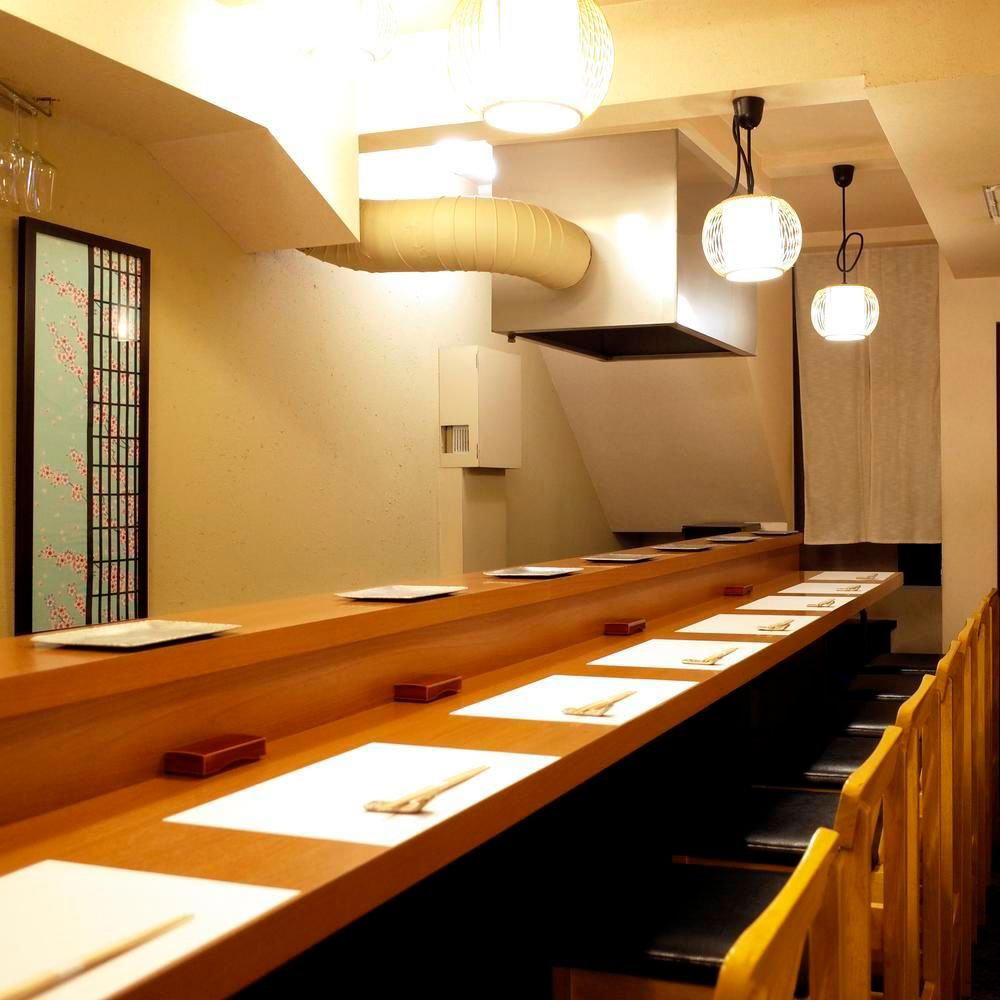
A Michelin Bib Gourmand counter in Osaka's Kita Ward where self-taught chef Onuma Kiyotaka shapes nigiri around thick-cut fish and matched soy sauces. The mid-range price point makes it one of the more accessible omakase addresses in a city that takes sushi seriously, and the format rewards guests looking to work through a wide range of fish in a single sitting.

Pearl is the En Primeur Club membership app, where members save venues, book tables and use the concierge.
The menu
What to order
- Omakase Course
- Uni Sushi
A Counter Worth Marking in the Calendar
Osaka's sushi scene occupies a different register from Tokyo's. Where Ginza omakase tends toward theatrical restraint and premium pricing locked well above the ¥20,000 mark, the Osaka approach has historically favoured generosity over ceremony. Kita Ward concentrates several of the city's more respected counters, and within that cluster, Sushidokoro Kaihara has earned two consecutive Michelin Bib Gourmand awards (2024 and 2025), the guide's shorthand for cooking that significantly overdelivers relative to its cost. At a ¥¥ price tier, it occupies a different bracket from the kaiseki and French-influenced rooms that define Osaka's leading end, including ¥¥¥¥ addresses like Hajime, La Cime, and Fujiya 1935, making it one of the few counter-format sushi rooms where a milestone meal doesn't require a premium price to justify itself.
That distinction matters when thinking about occasion dining. Anniversary meals, birthday dinners, and the kind of low-key celebrations that call for real food rather than a production tend to land differently at this price point. The occasion is still marked, but the financial pressure that can accompany a four-symbol dinner simply isn't there.
The Structure of the Meal
The format follows the omakase logic that has defined counter sushi for generations: the chef makes the decisions, and the guest follows. What sets the approach at Kaihara apart from mid-tier peers is structural rather than incidental. The meal opens with grated vegetables and appetizers, establishing a composed pacing rather than opening straight with rice. The nigiri section prioritises the fish: pieces are cut thick, while the sushi rice is deliberately more modest in quantity than the Tokyo norm. The effect is a sequence of bites where the quality and character of each topping registers clearly, rather than being balanced against a substantial rice portion.
The ratio philosophy has a practical benefit for occasion dining: it makes eating through a wider range of fish manageable within a single sitting, which the format actively encourages. Smaller sushi pieces mean the arc of the meal can cover more ground without the saturation that sometimes cuts a tasting menu short.
Soy sauce variation is the format detail that generates the most word-of-mouth. Rather than a single bowl of soy on the side, each topping is matched to a specific soy preparation: shrimp arrives with egg yolk steeped in soy sauce, fatty tuna with a foamed version. The idea is direct in principle but requires sustained testing to execute consistently, and it reflects a methodology that treats condiment matching as a course-level decision rather than an afterthought. For guests celebrating something specific, this kind of considered detail tends to be what gets remembered and discussed afterward.
Self-Taught in the Context of Japanese Sushi
Japan's sushi world places considerable weight on apprenticeship lineage. The dominant career path runs through years at an established counter, often a decade or more, before a chef's own knife appears on a signboard. Chef Onuma Kiyotaka's trajectory sits outside that orthodoxy: the Michelin documentation describes him as self-taught, a classification that carries real significance in a category where formal training and named mentors function as primary credentials.
In practice, Bib Gourmand recognition in consecutive years functions as an external verification that the cooking meets a credible standard regardless of its origin. Across the Osaka sushi category, other Bib and starred counters include Sushi Harasho, Matsuzushi, Sushi Hoshiyama, Sushi Murakami Jiro, and Sushi Sanshin.
The Michelin description notes that the chef continues to learn and incorporates the results into the experience, which in practice means the menu isn't fixed year to year. For a celebration meal, that carries some implication: guests returning for a second occasion can expect the format to hold while individual preparations evolve.
Occasion Framing: What This Counter Is Good For
Osaka's high-end dining corridor runs through restaurants like Gion Sasaki in Kyoto or the kaiseki rooms that sit at ¥¥¥ and above. For travellers moving through the Kansai region, akordu in Nara represents a different register entirely. Kaihara fills a more specific gap: a counter-format sushi meal in Kita Ward that carries Michelin validation, operates at an accessible price, and offers enough structural detail in its format to feel considered rather than casual.
That positioning makes it well-suited to a particular kind of occasion: the celebratory dinner that doesn't need ceremony to feel significant. The soy sauce matching and the thick-cut nigiri sequence give the meal a coherent identity.
For context on how this counter fits within the broader Japan omakase spectrum, Harutaka in Tokyo and Shoukouwa in Singapore and Sushi Shikon in Hong Kong represent the higher-priced tier of Japanese counter sushi operating internationally, while Goh in Fukuoka and 1000 in Yokohama illustrate how regional Japanese cities build their own distinct high-end dining identities. Kaihara's price point and format place it at an accessible entry into the counter sushi occasion, not a compromise version of something more expensive.
Planning a Visit
The restaurant is located at 5-4 Ikedacho, Kita Ward, Osaka 530-0033. Kita Ward is central and well-served by subway, making it direct to incorporate into a longer Osaka evening. The ¥¥ pricing tier means budget planning is less complex than for the city's higher-end rooms.
| Venue | Cuisine | Price Tier | Recognition | Format |
|---|---|---|---|---|
| Sushidokoro Kaihara | Sushi (Omakase) | ¥¥ | Michelin Bib Gourmand 2024, 2025 | Counter omakase |
| Sushi Hoshiyama | Sushi | N/A | Michelin-listed | Counter |
| Kashiwaya Osaka Senriyama | Japanese | ¥¥¥ | Michelin-listed | Kaiseki |
| Hajime | French, Innovative | ¥¥¥¥ | Michelin-listed | Tasting menu |
For broader planning across the city, see our full Osaka restaurants guide, our full Osaka hotels guide, our full Osaka bars guide, our full Osaka wineries guide, and our full Osaka experiences guide. For sushi elsewhere in Japan, 6 in Okinawa represents the format in a very different regional context.
Frequently asked questions
What do people recommend at Sushidokoro Kaihara?
The shrimp-with-egg-yolk-soy and fatty-tuna-with-foamed-soy pairings are the details most commonly cited as memorable. As an omakase counter, specific dish recommendations are less relevant than they would be at an à la carte restaurant, since the chef determines the progression. The consistent Bib Gourmand recognition in both 2024 and 2025 suggests the overall sequence, rather than any individual piece, is what justifies the visit.
Style and Standing
| Venue | Cuisine | Price | Awards | Notes |
|---|---|---|---|---|
| Sushidokoro KaiharaThis venue (the venue you are viewing) | Traditional Edomae Omakase Sushi | $50–100 | Michelin Bib Gourmand | Not listed |
| HAJIME | Avant-Garde Japanese Fine Dining | $300–500 | 3 Michelin Stars · World's 50 Best #83 | French, Innovative |
| La Cime | Modern French with Japanese Ingredients | $150–200 | 2 Michelin Stars · World's 50 Best #13 | French |
| Kashiwaya Osaka Senriyama | Seasonal Kaiseki Omakase | $200–300 | 3 Michelin Stars · La Liste Top Restaurants | Japanese |
| Taian | Traditional Japanese Kaiseki Omakase | $150–200 | 3 Michelin Stars · La Liste Top Restaurants | Kaiseki, Japanese |
| Fujiya 1935 | Modern Japanese with European influences | $100–150 | 2 Michelin Stars · La Liste Top Restaurants | Innovative |
Recognition history
Dated appearances from independent guides and award organizations, with the underlying list record or original source where available.
Michelin Bib Gourmand
Michelin
Full recognition history (3 entries)
Michelin Bib Gourmand
Michelin
Michelin Bib Gourmand
Michelin
Continue exploring
More in Osaka
Restaurants in Osaka
All restaurants in Osaka →

Bars in Osaka
All bars in Osaka →
Hotels in Osaka
All hotels in Osaka →


Wineries in Osaka
Browse all →
Details
- Intimate
- Cozy
- Elegant
- Date Night
- Solo
- Special Occasion
- Chefs Counter
- Sake Program
- Omakase
- Counter Dining
Current opening hours
- Monday
- 5–10 PM
- Tuesday
- 5–10 PM
- Wednesday
- Closed
- Thursday
- 5–10 PM
- Friday
- 5–10 PM
- Saturday
- 5–10 PM
- Sunday
- 5–10 PM
Hours can change for holidays and private events. Hours as of .
Cozy yet sophisticated atmosphere at a small sushi counter with meticulous chef preparation.