
1 Michelin Star
Our verdict
Sushidokoro Amano in Osaka delivers Edomae-style sushi at an intimate chef’s counter where seasonality and precision meet warm hospitality. Must-try bites include melt-in-your-mouth toro nigiri, clean-edged uni (sea urchin) nigiri, and the chef’s clear warm fish soup served between courses. Chef Yoshihiro Amano forms each piece on fragrant red-vinegar sushi rice, finishing select fish with a light nikiri glaze. The Michelin-starred omakase and an eight-seat counter create a personalized, conversational service that highlights Setouchi seafood and a sake program. Expect quiet elegance, close-up preparation, and focused flavors that reward travelers who seek refined sushi without Tokyo formality.

Pearl is the En Primeur Club membership app, where members save venues, book tables and use the concierge.
The menu
What to order
- Miso-marinade sujiko
- Toro nigiri
- Uni nigiri
A Counter in Tennoji, Where Each Nigiri Is Built to Temperature
The approach to Sushidokoro Amano along the quieter residential edges of Tennoji Ward sets expectations before a single piece of fish is pressed. Osaka's premium sushi scene is not concentrated in Namba's tourist corridors or along Shinsaibashi's main drags; it operates in the city's wards and residential pockets, where small counters run by a single chef serve a largely local and referral-based clientele. Tennoji, with its mix of older neighbourhood character and proximity to Shitennoji temple grounds, hosts that kind of operation. Amano occupies a ground-floor space in a residential building on Shitennoji 1-chome, and the format is exactly what that address signals: compact, without ornamentation, and entirely focused on what happens at the counter.
Fish, Temperature, and the Logic Behind the Counter
In Osaka's ¥¥¥¥ omakase tier, a small cluster of Michelin-recognised counters has formed in recent years that price and operate against peer restaurants in Kyoto and Tokyo rather than against casual sushi chains. What the Michelin assessors documented with unusual specificity reads less like an award citation and more like a technical report: sushi rice changed frequently to hold body temperature; nigiri formed with what the Guide describes as a gathering of rice in the palm "as if capturing air"; wasabi applied by index finger in a quantity calibrated to the fish rather than defaulted to a fixed portion; nikiri soy brushed with the same proportion of intention.
That temperature discipline is not incidental. The insistence on body-temperature rice is a position within ongoing debate among top-tier shari preparation. Rice that has cooled even a few degrees compacts differently on the tongue, changes the rate at which it releases flavour against the neta, and affects the perceived harmony of the bite. Maintaining it across an entire service requires constant recooking or working from small batches at speed, which in turn requires the pace and economy of movement Michelin's inspectors noted in the chef's hands. The technique is not decorative; it is the mechanism by which the flavour logic of each piece is delivered.
Sourcing, Knife Work, and What the Fish Brings to the Counter
Premium Osaka sushi at this tier sources through Osaka's Namba or Kuromon market networks, with many chefs maintaining long-standing relationships with specific wholesalers who have access to Toyosu trade flows from Tokyo. The city does not have a dedicated wholesale fish market of Toyosu's scale, but its position as a distribution hub in the Kansai region gives serious operators access to fish moving through multiple channels, including direct from fishing ports along the Sea of Japan and the Pacific coasts of Mie, Wakayama, and Hyogo prefectures. What distinguishes a chef operating at Amano's level is not access alone but the ability to read fish quality on arrival, make sourcing decisions by species and by individual specimen, and adjust the preparation accordingly.
The Michelin assessment of Amano's chef states directly that his knife technique is "informed by a deep understanding of the characteristics of each fish" and that it "raises the flavour to a new level." In practical terms, this means the geometry of cuts changes by species, by the angle of fat deposits in the flesh, and by the thickness required to bring the piece to the right temperature at the point of eating. Lean fish served too thick stays cold at the centre. Fatty fish cut too thin loses textural contrast with the shari. The knife decisions are thermal and flavour decisions simultaneously, and the ability to execute them consistently through a multi-course service is what separates a single-star counter from the broader ¥¥¥¥ omakase category.
Within Osaka's current Michelin-starred sushi cohort, Amano sits alongside counters including Sushi Harasho, Matsuzushi, Sushi Hoshiyama, Sushi Murakami Jiro, and Sushi Sanshin. Each of these counters operates within similar price parameters and competes for the same base of local regulars and informed visiting diners. What differentiates them is not category but emphasis: the specific fish relationships a chef has built, the stylistic approach to shari seasoning, and the degree to which tsumami courses extend before the nigiri sequence begins.
The Side Dishes as Evidence
Michelin's write-up notes that the chef's deftness with side dishes matches his sushi work, which is a meaningful signal. In the omakase format operating at this level, tsumami courses carry increasing editorial weight. A counter that presents only technically correct nigiri is doing one thing well; a counter whose tsumami sequence demonstrates the same sourcing intelligence and knife discipline as its nigiri program is making a different kind of argument about its tier. The side dishes at Amano appear to function as the latter, extending the chef's reading of the day's fish across the full service rather than front-loading all expression into the nigiri sequence alone.
This approach connects Osaka's premium sushi counters to broader developments in the form across Japan. At counters like Harutaka in Tokyo, the tsumami section has expanded in ambition and complexity over the past decade. The shift is partly driven by diner expectations shaped by kaiseki culture, particularly in Kansai, where Kyoto's Gion Sasaki and analogous kaiseki houses have set a standard for multi-course vegetable and protein preparation that influences what diners expect from any serious counter format. Osaka's sushi chefs operating at the Amano tier are implicitly in dialogue with that standard even when serving a format defined by fish and rice.
Osaka's Broader Fine-Dining Tier
Amano sits within a city where the ¥¥¥¥ restaurant tier spans multiple cuisines and formats. Osaka's current Michelin cohort at that price level includes French and innovative houses such as Hajime, La Cime, and Fujiya 1935, alongside Japanese formats anchored by kaiseki and sushi. For a visitor positioning a dining itinerary, the operative question is what kind of evening the format suits: the extended narrative arc of a kaiseki service versus the compressed precision of an omakase sushi counter. Amano's counter operates in the latter mode, with the entire sequence built around a single craft rather than genre-spanning course progression.
For regional context, serious sushi counters operate throughout Kansai. Akordu in Nara and Goh in Fukuoka anchor other points on the Kansai and Kyushu fine-dining map. Internationally, the same trained diner base that tracks Amano tends to follow counters like Sushi Shikon in Hong Kong and Shoukouwa in Singapore, both of which export the Edomae counter format to international markets with their own sourcing logistics. What those counters cannot replicate is the supply-chain geography that an Osaka-based chef can maintain through direct Kansai market relationships.
For more on Osaka's wider restaurant scene across cuisines and formats, see our full Osaka restaurants guide. To extend your stay, consult our full Osaka hotels guide, our full Osaka bars guide, our full Osaka wineries guide, and our full Osaka experiences guide. For further reading across Japan, see also 1000 in Yokohama and 6 in Okinawa.
Planning Your Visit
Reservations: Amano operates at the counter level typical of Osaka's starred sushi tier, where bookings are taken well in advance and are primarily accessed through direct contact or referral; advance planning of at least several weeks is standard for this category. Location: Shitennoji 1-chome, Tennoji Ward, Osaka, ground floor of a residential building. Budget: Priced at ¥¥¥¥, consistent with Osaka's leading omakase counters. Dress: Smart casual is the observed standard at counters of this type. Timing:
Frequently asked questions
Where is Sushidokoro Amano in Osaka?
Sushidokoro Amano is located at Japan, 〒543-0051 Osaka, Tennoji Ward, Shitennoji, 1 Chome−13−2 夕陽丘マンション 1階, Osaka.
Has Sushidokoro Amano won any awards?
Sushidokoro Amano has received recognition including: The movements of the owner-chef’s fingers as he works are a marvel to watch. This deftness is apparent in his side dishes and sushi. His knife technique, informed by a deep understanding of the characteristics of each fish, raises the flavo….
What's the best thing to order at Sushidokoro Amano?
The format is omakase, so the sequence is the chef's decision from the moment you sit down. What the Michelin committee specifically flagged is the nigiri itself: rice held at body temperature, wasabi applied by hand with calibrated restraint, and knife work shaped by the structural logic of each fish. The side dishes carry the same precision, making them worth equal attention rather than treating them as preamble to the nigiri.
A quick snapshot of similar venues for side-by-side context.
| Venue | Cuisine | Price | Awards | Notes |
|---|---|---|---|---|
| Sushidokoro AmanoThis venue (the venue you are viewing) | Edomae Sushi Omakase | $300–500 | 1 Michelin Star | Not listed |
| HAJIME | Avant-Garde Japanese Fine Dining | $300–500 | 3 Michelin Stars · World's 50 Best #83 | French, Innovative |
| La Cime | Modern French with Japanese Ingredients | $150–200 | 2 Michelin Stars · World's 50 Best #13 | French |
| Kashiwaya Osaka Senriyama | Seasonal Kaiseki Omakase | $200–300 | 3 Michelin Stars · La Liste Top Restaurants | Japanese |
| Taian | Traditional Japanese Kaiseki Omakase | $150–200 | 3 Michelin Stars · La Liste Top Restaurants | Kaiseki, Japanese |
| Fujiya 1935 | Modern Japanese with European influences | $100–150 | 2 Michelin Stars · La Liste Top Restaurants | Innovative |
Recognition history
Dated appearances from independent guides and award organizations, with the underlying list record or original source where available.
Michelin 1 Star
Michelin
Full recognition history (2 entries)
Michelin 1 Star
Michelin
Continue exploring
More in Osaka
Restaurants in Osaka
All restaurants in Osaka →


Bars in Osaka
All bars in Osaka →
Hotels in Osaka
All hotels in Osaka →


Wineries in Osaka
Browse all →
Details
- Intimate
- Elegant
- Sophisticated
- Quiet
- Cozy
- Date Night
- Special Occasion
- Solo
- Chefs Counter
- Open Kitchen
- Sake Program
- Local Sourcing
- Sustainable Seafood
- Omakase
- Counter Dining
- Sake Program
- Allergy Accommodating
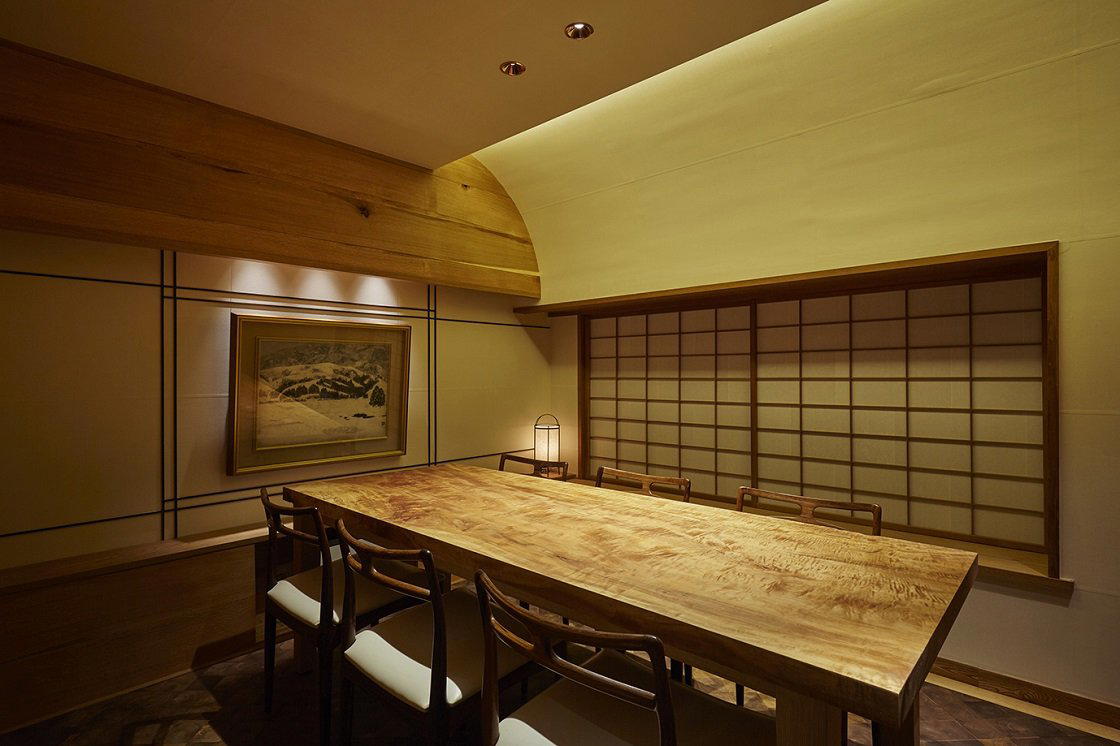
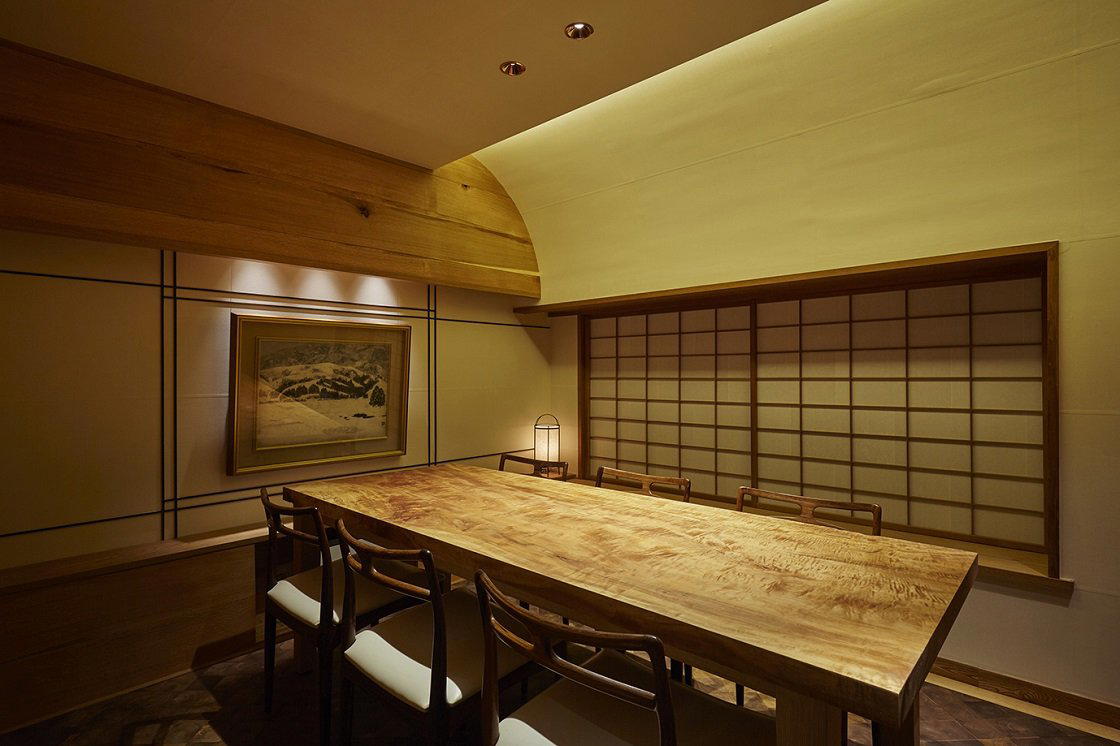
Quiet refinement with soft lighting, low wooden L-shaped counter, handcrafted Yoshino cedar chairs, and warm inviting decor focused on the chef's craft.